
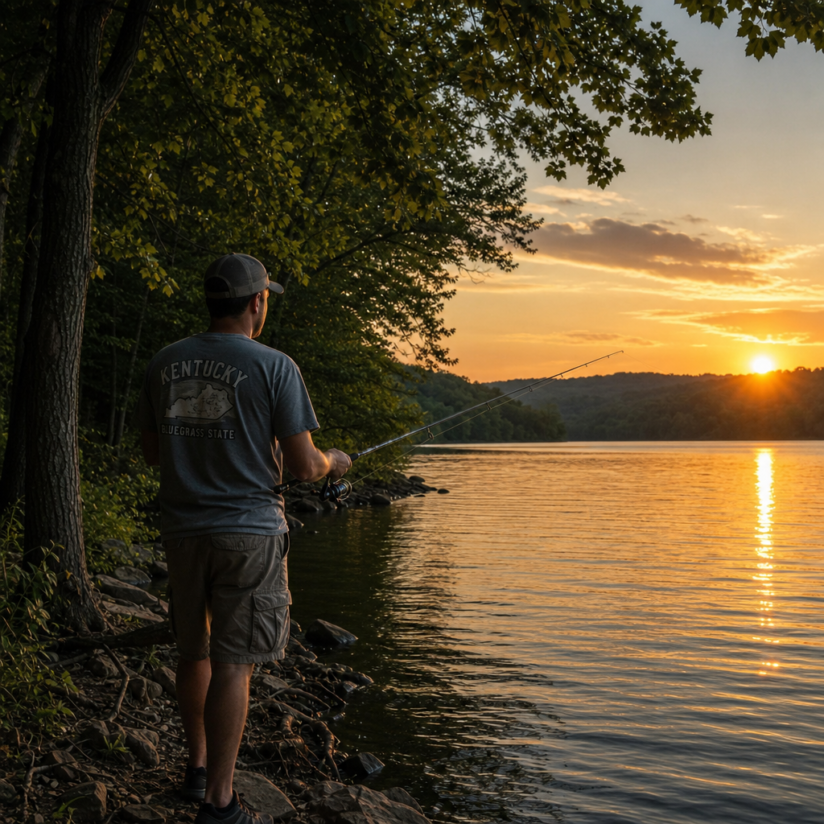
Read the Water Before You Reach for Another Lure
Use wind, shoreline features, depth changes, and visible cover to choose better water before making your first cast.
The Lure May Not Be the Real Problem
Many bank anglers arrive at a lake, choose the nearest open spot, and begin casting toward the middle. When nothing happens, they change colors, switch baits, or move to a completely different technique.
Sometimes that works. More often, the problem is not the lure.
The problem is that the angler has not yet identified the part of the lake most likely to hold fish.
The Kentucky Wind & Structure Cheat Sheet was created to make that decision easier. It gives beginners, families, and busy anglers a fast visual system for evaluating reachable water before making the first cast. Instead of trying to understand an entire lake at once, you can use a few observable clues to narrow your attention to the areas offering the strongest combination of food, cover, depth, comfort, and fish movement.
This is especially useful for Kentucky bank anglers. Many local trips take place at small FINs lakes, neighborhood ponds, community park lakes, riverbanks, tailwaters, and large reservoirs where shoreline access may be limited. You may not be able to reach every point, cove, channel, or drop-off. You can still learn to recognize the best features available from where you are standing.
Why Wind Matters More Than Many Anglers Realize
Wind does more than make casting difficult. A steady breeze can create surface current, move insects and microscopic food, reposition baitfish, add oxygen to shallow water, and reduce visibility beneath the surface. These changes can make one shoreline noticeably more productive than another.
The windward bank—the shoreline receiving the wind—often deserves attention because food and surface activity may be pushed in that direction. Fish may move closer to shore to take advantage of the opportunity, especially when the wind has remained consistent for a while.
That does not mean you should automatically fish the windiest bank in every situation. Strong waves, muddy water, unsafe footing, extreme cold, or heavily disturbed water can change the decision. The cheat sheet helps you treat wind as evidence rather than a rigid rule.
Structure Gives Fish a Reason to Stop
Wind can influence where fish move, but structure helps explain where they may pause, feed, rest, or travel.
From shore, useful structure may include a point extending toward deeper water, the inside corner of a cove, a visible weed edge, an overhanging tree, a rocky bank, a drain or inflow, the end of a fishing pier, or the place where shallow water suddenly becomes darker and deeper.
Some of these features look dramatic. Others are easy to miss. A small bottom change can create a travel route. A narrow strip of shade can provide comfort during a bright summer afternoon. Submerged vegetation may hold insects, minnows, bluegill, bass, or stocked trout.
The best location is often not the most obvious structure or the strongest wind. It is the place where several useful clues overlap.
A Field Tool for the L.A.K.E. Method
The cheat sheet supports the Every Lake Guide L.A.K.E. Method™, a simple process for reducing random casts and choosing water with a reason behind it.
Notice wind direction, water clarity, shade, surface activity, visible cover, changing weather, and safe shoreline access.
Identify points, corners, flats, drop-offs, inflows, vegetation, shoreline curves, and other reachable features.
Choose the small percentage of shoreline that gives fish the strongest combination of food, cover, depth, and comfort.
Fish deliberately, give each area a fair test, and move with purpose when the conditions or evidence change.
This approach is not meant to turn a relaxing fishing trip into a complicated classroom exercise. A short observation period can save time, simplify lure selection, and help you understand why one section of shoreline deserves attention before another.
Keep the Cheat Sheet With Your Fishing Gear
The Kentucky Wind & Structure Cheat Sheet is meant to be used, not merely read once and forgotten.
Review it before visiting a new lake. Save a copy on your phone or keep a printed version inside your tackle bag. Refer to it when the bite slows, the wind changes direction, cloud cover moves in, or every open section of shoreline begins to look the same.
It will not guarantee a catch. No responsible fishing guide can promise that. What it can do is help you make your first cast with a clear reason behind it—and help you recognize when a thoughtful move may be more valuable than another lure change.
Watch the wind. Find the structure. Look for the overlap.
Then start with the lake—not the lure.
Take the Kentucky Wind & Structure Cheat Sheet With You
Use this quick field reference to make more confident bank-fishing decisions at Kentucky FINs lakes, park lakes, ponds, reservoirs, rivers, and tailwaters.