
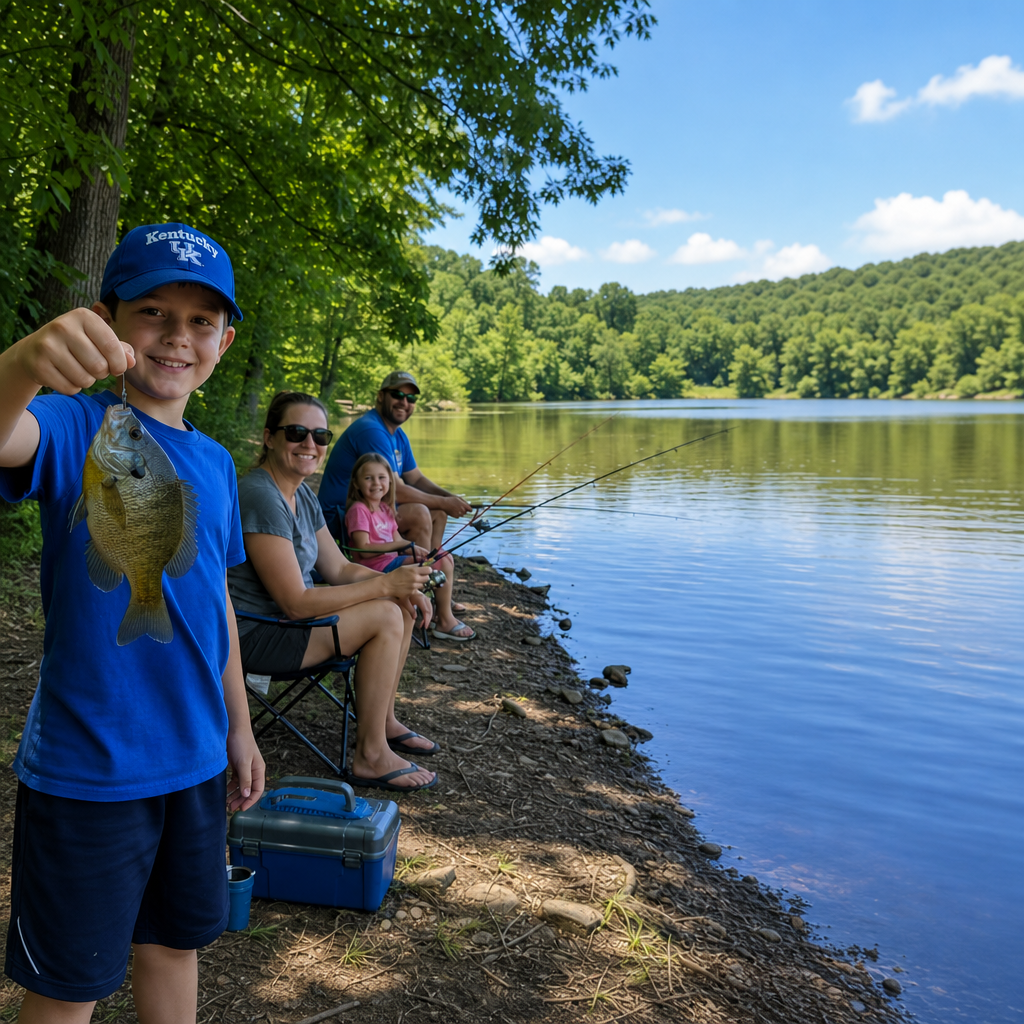
Kentucky bank-fishing guidance for beginners
Read the Lake First Make Every Cast Mean Something
Every Lake Guide helps beginners, families, and busy bank anglers turn wind, structure, depth, cover, shade, access, and fish activity into a plan that fits the water—and the time—they actually have.
The quick answer
What is Every Lake Guide?
Every Lake Guide is a Kentucky-first bank-fishing resource built around one practical idea: the lake should help choose the first cast. Beginners learn how to read wind, edges, cover, depth, shade, water color, access, and visible activity before reaching for another lure. The goal is not a guaranteed catch. It is a trip guided by evidence instead of guesswork.
Choose the help you need today
Start with the trip you can actually take.
You do not need to study the whole site before fishing. Start with the question that is keeping you from the bank today.
Build a Kentucky fishing foundation
Learn how Kentucky water types, public access, seasonal conditions, beginner species, and current-rule checks shape a sensible first trip.
Open the Kentucky Fishing Guide →Plan a focused bank-fishing trip
Give each part of a short outing a job so limited time leads to better comparisons—not rushed lure changes.
Use the Busy Angler Guide →Find Kentucky water that fits the trip
Choose among neighborhood lakes, reservoirs, rivers, and trout water by travel time, shoreline access, and the experience you want.
Explore Where to Fish in Kentucky →A repeatable decision framework
Use the Every Lake Guide L.A.K.E. Method.
An unfamiliar shoreline is not one giant fishing spot. The L.A.K.E. Method helps you narrow it into a small number of decisions you can explain and test.
Look Before You Cast
Notice wind, water clarity, cover, shade, baitfish, access, weather, and visible signs of activity.
Analyze the Lake
Identify reachable points, coves, flats, drop-offs, inflows, vegetation, channels, and useful edges.
Key In on Productive Water
Narrow the shoreline to areas where food, comfort, safety, depth, movement, and access overlap.
Execute a Simple Plan
Test the strongest clue, adjust one variable at a time, learn from the response, and move when the evidence weakens.
The realistic fishing plan
Two hours can be enough when every phase has a purpose.
A short trip has a hidden advantage: it forces the lake to answer a smaller question. Observe first, test your best explanation, change one meaningful variable, and finish where the evidence points.
Free tool and deeper field guides
Choose the resource that matches your next decision.
Use the free cheat sheet when you need a reminder at the water. Choose a digital field guide when you want a complete process to practice on short trips, unfamiliar shorelines, or one specific Kentucky lake.
Free digital field download
Kentucky Wind & Structure Cheat Sheet
Use one compact reference to compare wind with points, corners, flats, drop-offs, vegetation, and safe casting access.
- Save it to your phone
- Print it for the tackle bag
- Use it when the shoreline all starts to look the same
Free digital PDF. Review the current download terms before checkout.
Best for busy anglers, beginners, and families
The Two-Hour Kentucky Bank-Fishing Plan
Turn a small opening in the day into a complete outing with a before-you-leave check, a shoreline-reading routine, timed decision points, and a simple way to record what the lake taught you.
Explore the Two-Hour Field Guide →Best for learning a reusable system
How to Read Any Lake
Build the broader habit of ranking food, comfort, safety, edges, depth, wind, cover, and movement on unfamiliar water.
Explore This Digital Guide →Best for coves, flats, and drop-offs
Kentucky Shore Fishing
Study the shoreline shapes a bank angler can actually reach and learn how each feature changes the next decision.
Explore This Digital Guide →Best for Alexandria Community Park Lake
Alexandria Park Lake Guide
Arrive with a location-specific framework for access, pressure, wind, seasonal targets, and reachable depth transitions.
Explore This Lake Guide →Best for Robert J. Barth Park Lake
Barth Lake Guide
Use this compact Cold Spring lake to practice deliberate movement, family-friendly planning, and seasonal target selection.
Explore This Lake Guide →Not sure which one fits? Choose by the decision you need to make: manage your time, read any lake, understand shoreline structure, or prepare for one exact destination.
View All Field GuidesNew questions from the bank
Three moments that can change your next cast.
The newest lessons begin where real fishing decisions begin: one bite, one surface clue, or one pattern that suddenly stops working.
You Got One Bite—Now What?
Treat the bite like a coordinate: depth, angle, speed, cover, and timing. Replay the useful part before changing the whole setup.
Find the next fish →Was That a Fish? Seven Clues to Notice
Learn which rings, swirls, bubbles, baitfish signals, and quiet patches deserve another look before the first cast.
Read the surface →The Bite Died After Sunrise—Where Next?
When early shade disappears, follow the nearest replacement: cover, depth, wind, or a darker reachable edge.
Plan the next move →A note from Kevin
Fishing should feel possible again.
I built Every Lake Guide around a frustration I know well: standing on the bank with limited time and wondering whether the problem is the lure, the location, or the plan.
Fishing Kentucky waters with family taught me to stop treating a quiet lake as a verdict. The shoreline still offers information. Wind moves. Shade grows. Bait appears. An edge becomes reachable. This site turns those small observations into plain-English decisions a beginner can use without making fishing feel like homework.
Useful guidance without false promises
Conditions change. The decision process still helps.
Water levels, stocking schedules, public access, weather, seasonal movement, and regulations can change. Confirm the exact water before every trip.
Confirm public access
Find the park, pier, ramp area, or approved shoreline you intend to use. A famous lake is not automatically useful from the bank.
Put safety first
Watch weather, heat, cold water, steep or muddy banks, current, dam releases, lightning, and unstable footing.
Check current rules
Verify licenses, seasons, limits, bait restrictions, stocking information, waterbody rules, and posted signs.
Release fish with care
Wet your hands, prepare pliers, minimize air exposure, keep fish off the ground, and consider barbless hooks or crimped barbs.
Helpful answers before you begin
Common questions about Every Lake Guide
What does it mean to read a lake for fishing?
Reading a lake means studying wind, edges, structure, cover, shade, water color, depth changes, access, baitfish, and visible activity before choosing where and how to fish. Compare at least two reachable areas before making the first cast.
Is Every Lake Guide only for experienced anglers?
No. The site is designed especially for beginners, returning anglers, families, and busy bank anglers who want plain-English help. More experienced anglers may also find the observation-first framework useful on unfamiliar water.
Do I need a boat, sonar, or expensive tackle?
No. Every Lake Guide focuses on clues a bank angler can observe or test from shore. Maps and electronics can add information, but shoreline shape, vegetation, wind, water color, bottom feel, and visible activity can already tell you a great deal.
Can a two-hour fishing trip really be worthwhile?
Yes. A short trip can include observation, a focused test, one meaningful adjustment, a comparison area, and a final decision. It may not solve an entire reservoir, but it can teach you one repeatable pattern without consuming the whole day.
Which Every Lake Guide resource should I use first?
Use the free Kentucky Fishing Guide for a broad starting point. Choose the Two-Hour Plan when time is your main constraint, How to Read Any Lake when you want a transferable system, Kentucky Shore Fishing when structure is confusing, or a lake blueprint when you already know the exact destination.
Are the digital guides a replacement for official fishing regulations?
No. Every Lake Guide helps with lake reading, bank-fishing strategy, and trip planning. Always confirm current licenses, seasons, size limits, daily limits, bait restrictions, public access, and posted rules through official sources.
Your next cast should have a reason.
You do not need the perfect lake, a full day, or a tackle box full of answers. Begin with one reachable edge, one useful clue, and one decision you can test.