
Your family probably caught fish from the same bank all summer with the same few baits. Now the nights are cold, the leaves are dropping, and the bites that came easily in July have slowed. The spot didn’t stop working. The fish moved, what they eat changed, and the cooler water has slowed down how they feed.
This guide covers Kentucky fall bank fishing for beginner families: where to stand, what to tie on, which small gear changes help, and how to keep kids warm and interested. It uses no temperature charts, because on a bank you can tell what you need from what you see.
Why your summer spot feels different once the nights turn cold
In summer, warm water holds fish in predictable places: shade, shallow weeds, the edges of docks and fallen trees. Bluegill sit close to the bank and hit nearly anything. Bass lurk near cover and ambush whatever swims by.
As nights cool, the lake cools with them, slowly at first and then faster. Fish are cold-blooded, so their energy follows the water. They still eat, and many fish feed hard in fall, but they move around more and feed in shorter windows. A bank that held fish for weeks may be empty on a given morning because the small fish they eat have moved on.
The fish also care less about chasing. A summer fish will race across a cove for a fast lure. A fall fish is more likely to look at something that moves slowly and close to it, and ignore the rest.
So the plan changes in three parts: find where the baitfish have gone, offer smaller and slower baits, and plan trips around the shorter, cooler day.
Follow the baitfish: where to stand on the bank in fall
Bass, crappie and other predator fish stay near their food. In many Kentucky lakes that food is small baitfish such as shad, which drift into different parts of the lake as the season changes. In fall they often work toward the shallower water at the back of coves and creek arms, and the bigger fish follow them in.
Here is how to use that from the bank.

- Look for the back of a cove or the mouth of a creek. Water running in from a creek attracts small fish, and the fish that eat them follow. If your lake has a feeder creek reachable on foot, it is a good place to start.
- Watch the surface. Small fish jumping nervously, or birds such as gulls and herons gathering and diving, usually mean baitfish nearby. Stand where you can cast to that spot.
- Try points and bends. A bank that sticks out into the water gives you access to deeper water on both sides. Fish moving between shallow and deep pass through these spots.
- Stay a bit flexible on depth. Fall fish often move up shallow in the morning and evening and slide back to deeper water in the bright, cold middle of the day.
Reading the shape of the bank helps with all of this. Our guide to finding drop-offs when bank fishing explains how the slope at your feet suggests what the water does out in front of you, and that matters more in fall, when fish use the edge between shallow and deep.
Leaves change what you see. They float on the surface, pile up along the bank and sink to cover the bottom, so fish may sit under or near a leaf-covered shallow area. A bank you knew well in summer can look different, so take a minute to look before you cast.
Don’t give up on the old spot too quickly
Your summer spot may still produce, especially if it has cover and deeper water close by. Give it a short, honest try. If you get no bites after a reasonable stretch of casting and moving a few steps along the bank, walk to the next spot. In fall, walking and trying new water usually pays off more than waiting.
Swap your summer baits for a smaller, simpler fall lineup
Cooler fish are less eager, so a big, noisy bait that worked in July can scare them off or just get ignored. Choose smaller, more natural offerings and fish them slowly.

Here is a simple lineup that keeps your tackle box light:
- Small jigs. A small jig with a soft body, fished slowly along the bottom or under a bobber, imitates the small prey fish are looking for. They work for bass, crappie and bluegill alike.
- Live bait, where the rules allow. Worms and small minnows are easy for kids to use and tempt fish that won’t chase a lure. Check Kentucky’s current fishing regulations for rules about live bait at your specific lake before you go.
- Small soft plastics. Short, slim worms and small grub-style baits look like the food fish find in the cooler months.
- A small spinner or similar lure. Reel it slowly. A slow retrieve is the biggest adjustment kids need to learn.
Put the large, flashy lures from summer away for the season, or at least don’t make them the first thing you tie on. A smaller lineup also helps beginners, because they stop agonizing over choices and spend more time actually fishing.
Color matters less than most people think. As water clears in fall, natural shades such as brown, green and silver often work well, and a bright color is a fine backup.
For a deeper look at how bait choice changes as the sun moves, see our article on what bait to use for bank fishing in Kentucky by time of day. Season and time of day work together: a slow, small bait suits a cold morning, and a slightly more active one may suit a warmer afternoon.
Small gear tweaks that help in cooler water
You do not need new rods or reels for fall. A few small changes to what you already own make a real difference.
Check your line
Line that sat in a hot car or a garage all summer can be brittle and weak. Run your fingers along the first few feet. If it feels rough, kinked or curly, strip it off and replace it. Fresh line costs little and saves you from losing a fish, and a lure, on a weak spot.
Fall water also tends to be clearer than summer water, and fish can see heavier line more easily. If your rods carry thick line, a lighter line may get you more bites. Keep it strong enough for the fish you expect and for the snags along your bank.
Go smaller on hooks and bobbers
Smaller hooks suit smaller baits and the smaller bites that come with cool water. A small, light bobber shows a gentle nibble that a big one would hide. Kids can see a light bobber twitch and shout, which is half the fun.
Slow everything down
Reel slowly, pause often and let the bait sit. Many fall bites feel like a faint weight or a tiny tap rather than a hard pull. Teach kids to lift the rod gently when something feels different. If they reel too quickly, a simple rhythm helps: reel a few turns, count to three, repeat.
Bring a few extras
Cold fingers drop things, and tangles happen more often in cold hands. Pack a spare spool of line, a few extra hooks, small split-shot weights and a pair of line clippers on a cord. A grab-and-go setup keeps all of this together. See how to build one grab-and-go tackle kit for a way to pack it once and use it every trip.
Dress the kids for the bank, not the car
The car is warm and the bank is not. Standing still by the water, with wind coming off it, feels much colder than the same temperature while walking. Kids who are cold stop having fun quickly, so warmth decides whether your trip lasts twenty minutes or two hours.
Layers beat one big coat. Start with a snug base layer, add a fleece or sweater, and top it with a windproof or waterproof jacket. Kids can then take off a layer when they warm up from running around and add one back when they slow down.

Avoid cotton against the skin. Cotton holds moisture and chills. Wool and synthetic fabrics stay warmer when damp.
Protect the extremities:
- A warm hat that covers the ears
- Gloves or mittens, with a spare pair in the bag, since kids will get them wet
- Thick socks plus a spare dry pair
- Waterproof boots with good grip, because banks get muddy and leaves hide slippery spots
Add comfort items. A folding chair or a foam pad keeps kids off cold ground. A thermos of hot chocolate or warm soup gives them a break and something to look forward to. Hand warmers in pockets are a cheap, welcome extra.
Keep safety in the picture. Cold water is more dangerous if a child falls in, and banks can be slick with wet leaves. Young or less confident swimmers should wear a life jacket near the water. Our list of bank fishing safety gear families forget covers what to keep in the bag.
Shorter days, shorter trips: planning a fall outing kids will finish happy
Daylight runs out earlier each week, and when the clocks go back in early November, the sun sets noticeably sooner in the evening. Plan to be packed up and headed to the car before dusk, because a dark, cold bank is hard on kids and on gear.
A fall trip can be shorter than a summer one and still be good. A couple of hours at the right time often beats a full day of waiting.
- Pick the warmer part of the day. A late morning or early afternoon start gives the air a chance to warm and the kids a more comfortable time.
- Fish the edges when you can. Early morning and late afternoon often bring more feeding. If you fish those windows, dress warmer and keep the outing short.
- Choose a spot with an easy walk. In cold weather, nobody wants a long hike with tired kids and wet boots. A bank near the parking area makes retreating to a warm car simple.
- Set a simple goal. Instead of “catch a big fish,” try “everyone catches one fish” or “we try three spots.” Small goals keep kids feeling successful.
- Build in breaks. Snacks, a short walk along the bank, skipping stones and looking for animal tracks fill the quiet moments between bites.
A good stopping point is while the kids are still enjoying themselves, not when they are cold and miserable. A child who leaves happy asks to come back, and that matters more than the size of the catch. If you want a bigger plan, our Friday-to-Sunday weekend guide shows how to keep kids busy between bites across a longer trip.
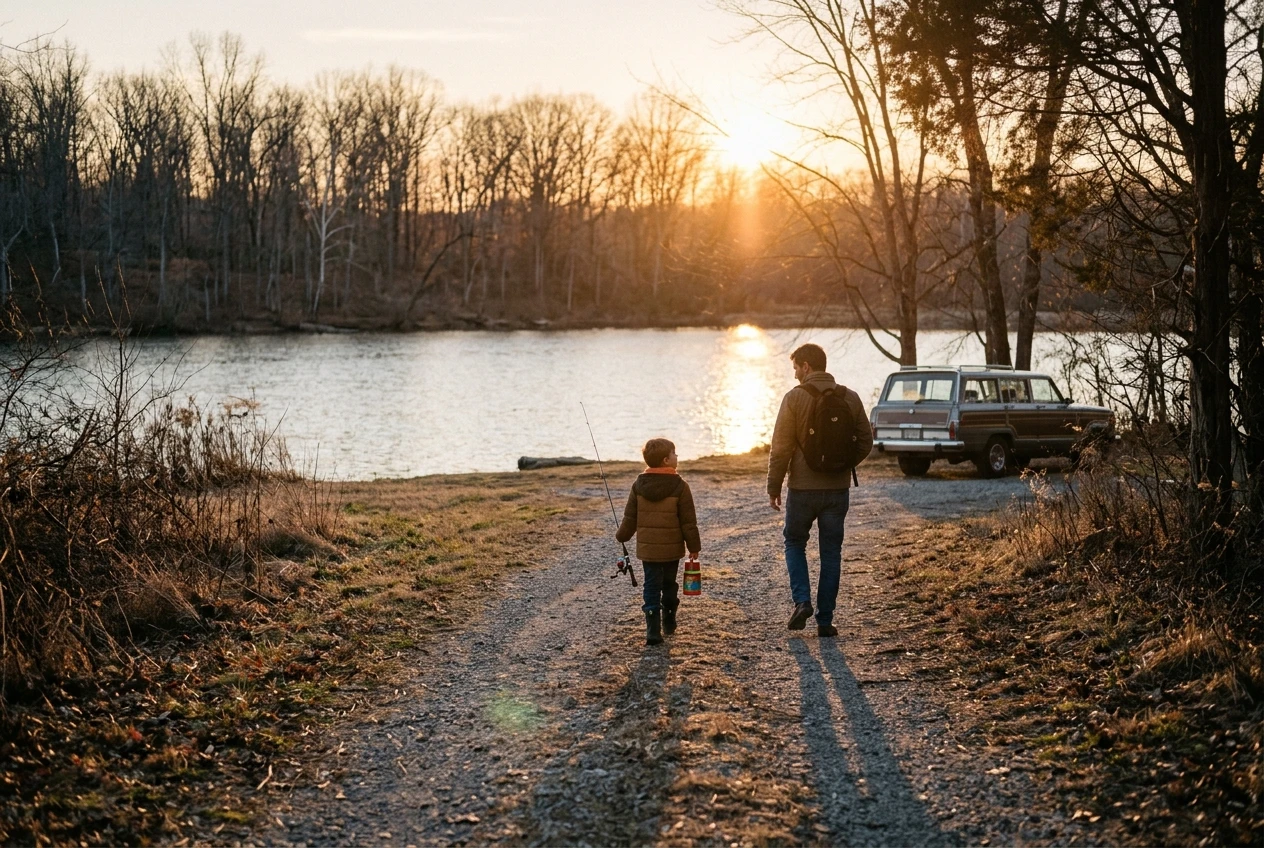
A fall checklist to add to your driveway routine
If you already run through a gear check before leaving home, add the cold-weather items below. Our Kentucky bank fishing gear checklist covers the basics, and this list adds what fall needs.
Fishing items
- Fresh line on every rod, checked for rough or curly spots
- Small jigs, small soft plastics and a small spinner
- Small hooks, light bobbers and split-shot weights
- Worms or minnows if you plan to use live bait, and a check of the lake’s rules
- Line clippers, pliers and spare line
Warmth items
- A base layer, a middle layer and a windproof or waterproof jacket for each child
- Warm hats and two pairs of gloves per child
- Spare dry socks and waterproof boots
- A folding chair or foam pad
- A thermos with a hot drink and a few snacks
- Hand warmers
Safety and timing items
- Life jackets for young or weak swimmers
- A first aid kit and a towel
- A flashlight or headlamp, in case the trip runs late
- A plan to leave before dusk
Check the weather before you go. Wind, rain and a sudden drop in temperature all change how comfortable the day will be, and it is fine to postpone a trip. Fall in Kentucky often gives you a run of bright, mild days, and a rescheduled outing usually works out better than a miserable one.
Take your next fall trip with a plan
Once you know where the fish go, which baits to use and how to keep the kids warm, fall is a very good time to be on a Kentucky bank. The crowds are thinner and the air is crisp. The fish are feeding before winter.
Get the Kentucky bank fishing ebook that fits your family’s next trip. Our roundup of five ebooks, each solving a different problem, will help you pick the right one.