
Most families who bank fish in Kentucky pick a bait at home, tie it on at the water, and keep it there until the cooler is empty. That works for the first hour. After that, the bites often stop and nobody can say why. What bait to use for bank fishing in Kentucky by time of day comes down to two things you can check without any gear: where the sun is and how the water feels.
This guide covers which bait to tie on and when to change it. For how deep to set it, the bobber bait depth post covers that side of the question.
Why the bait that worked at 8 a.m. goes quiet by noon
Fish do not stay in one place or eat the same way all day. In low morning light, fish such as bluegill and bass feel safe moving into shallow water along the bank. The water there is cool, and they eat whatever is easy to catch.
As the sun climbs, light reaches deeper into the water and the shallows warm up. Fish move toward shade, cover or deeper water, and they get pickier about what they will go after. A worm you left sitting at the edge at 8 a.m. may now be in front of fish that have moved ten feet away or are not hungry.
The bait itself matters too. A fast, flashy lure suits fish that are active and chasing. When fish slow down, a small bait that sits still or moves slowly is easier for them to commit to. So the bait that worked early can be the wrong bait by noon even if the fish are still in the lake.
Changing bait through the day means matching three things to what the fish are doing: how big the bait is, how much it moves, and how close to the bank you present it.
Two quick checks before you open the bait box
Do these two checks when you arrive, and again every hour or so. They take about a minute.
Check 1: Where is the sun?
Look at your own shadow. A long shadow stretching across the bank means the sun is low, which is early morning or late afternoon. A short shadow right under your feet means the sun is high overhead, which is the middle of the day.
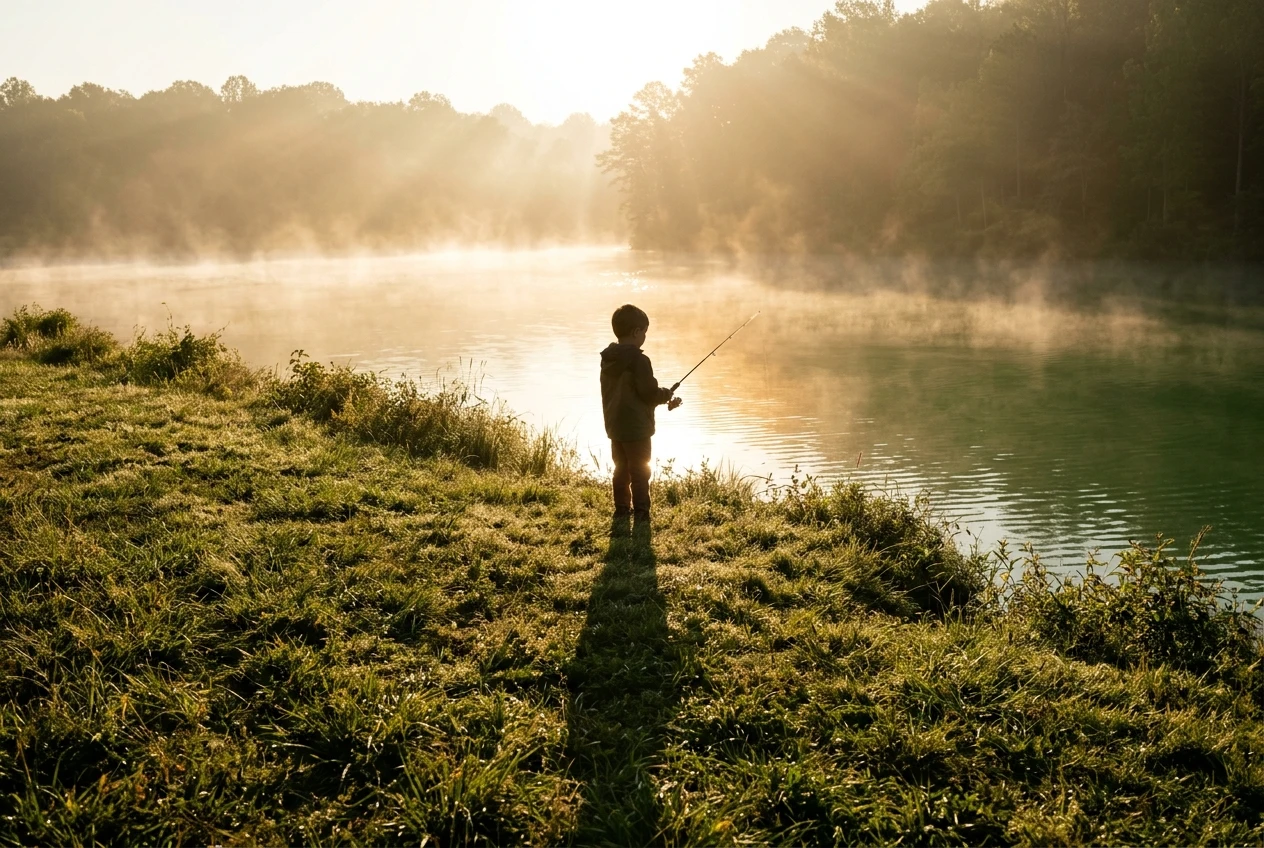
Also notice which parts of the bank are shaded. Overhanging trees, a dock, a steep rocky bank, or a stand of brush all throw shade that moves as the sun moves. Make a mental note of where the shade is now and where it will be in an hour.
Check 2: How does the water feel?
Crouch at the edge and put your hand in. Is it cold enough to make you pull back, cool, mild, or like bathwater? Do the same a little farther out if you can reach safely, or wherever the bank drops off. Shallow water changes temperature faster than deep water, so the difference between the two tells you something.
You do not need a number to use this. What matters is how the water compares with your last check. If the shallows felt cool at 8 a.m. and feel warm at 1 p.m., fish have probably moved. If you would like a number, a floating thermometer on a string is an inexpensive addition to a tackle box. Your hand is enough to follow the trend.
Keep track on your phone with a quick note of the time, the sun, and the feel of the water. You will start to see which combinations produce bites at your lake.
Early light and cool shallows: what to put on the hook and where to stand
Early morning is when the bank is most productive, so start with simple baits near the edge.
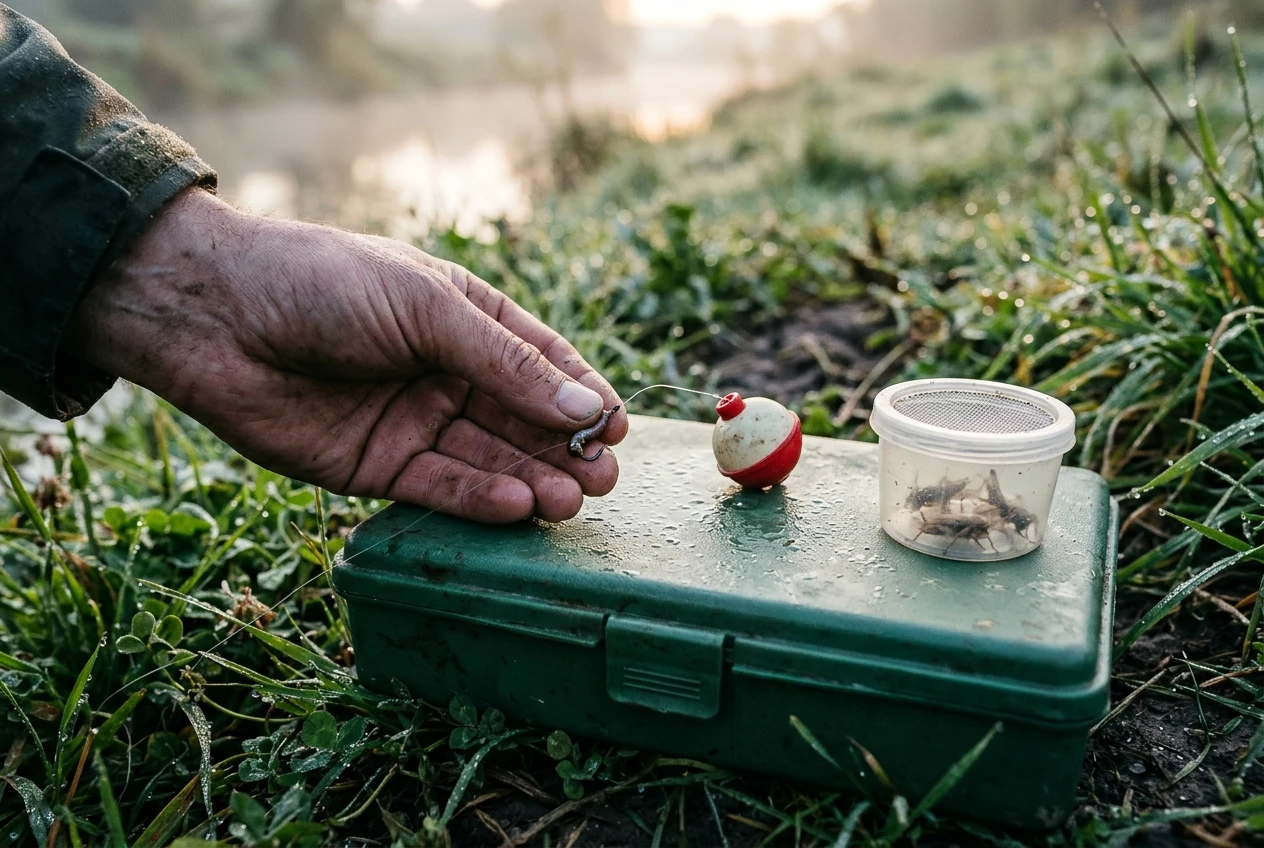
- For bluegill and other panfish: a small piece of nightcrawler or a cricket on a small hook, under a bobber, cast close to the bank. A small piece on a small hook gets more bites than a whole worm.
- For bass: a small soft plastic worm or a small spinner, retrieved slowly and steadily along the bank. Fish that are cruising the shallows will often follow and strike something that moves at an easy pace.
- For catfish: early morning can still produce bites, but plan on fishing bait on the bottom if that is what your family is after.
Where you stand matters as much as what you tie on. Shallow fish spook easily. Stand a step or two back from the waterline, keep your footsteps light, and keep kids from stomping along the edge. Your shadow falling across the water can also scare fish, so try to keep the sun from putting your shadow over the spot you are casting to.
Cast along the bank first rather than straight out into the middle. If your kids want to fling it as far as possible, where to cast first explains why the near water is worth trying before the far water.
If the bobber sits for ten or fifteen minutes with no interest, move a few steps down the bank before you change the bait. Early fish are often spread along the edge, and a new spot can help more than a new bait.
Bright midday sun: how to adjust bait and move to shade, cover or deeper edges
When the sun is high and the shadows are short, treat the open shallow water as the least likely place to catch anything. Change three things.
1. Move to shade or cover. Look for overhanging branches, docks, fallen trees, rocks, weed edges, or any place that breaks up the light. Fish wait there out of the sun. Cast beside the shade, not onto the brightest water.
2. Find the deeper edge. Along many banks the bottom drops off faster in some spots than others. A steeper bank gives fish cooler, darker water within casting distance. If you can see where the bank angles sharply down, that is a good place to try.
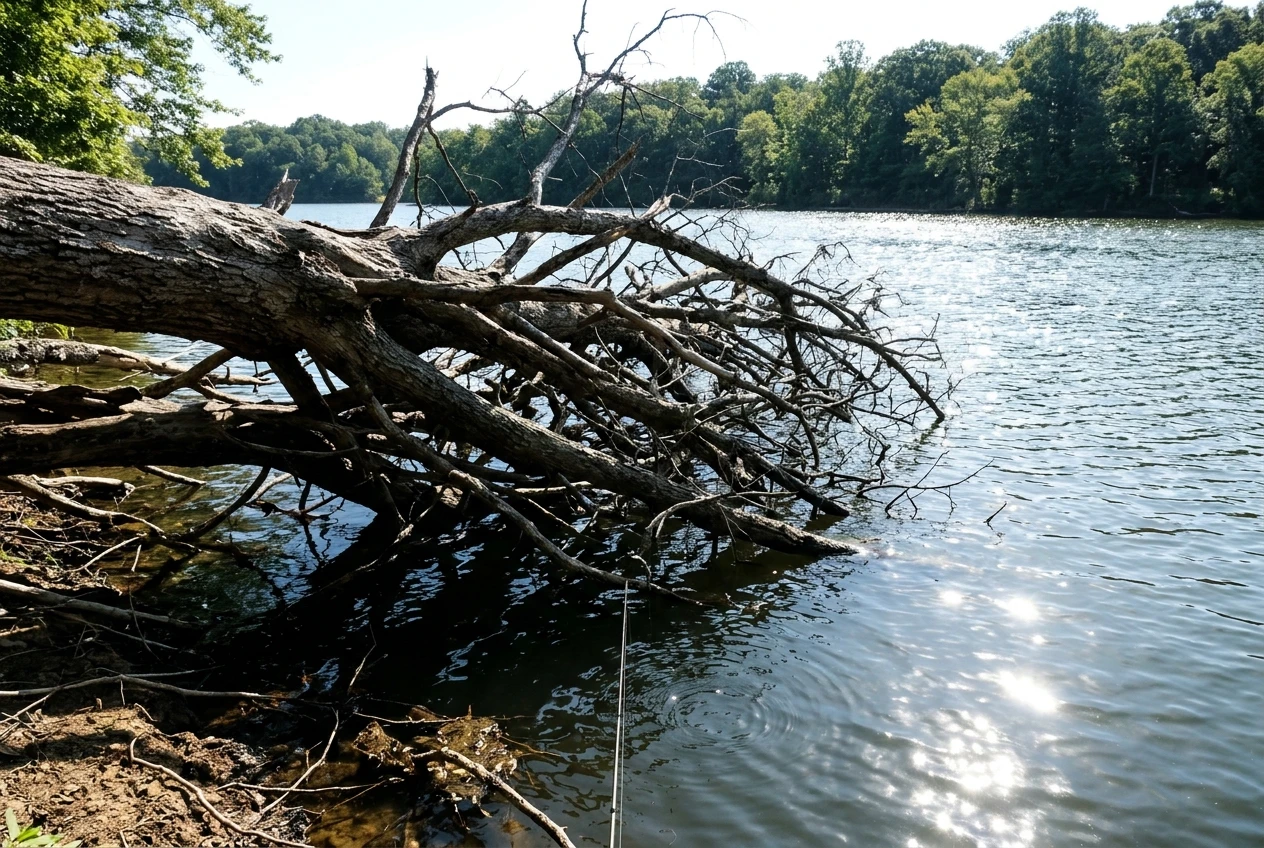
3. Slow the bait and make it smaller. Switch from a moving lure to something that stays put or moves very little:
- A small piece of worm on a light hook with a split shot, left on the bottom or near it.
- A soft plastic worm dragged a few inches and then paused for a long time.
- A small jig worked slowly beside cover.
Midday fish often need the bait to be right in front of them for a while before they bite. That takes patience, and kids do better with a job to do. Give them the rod with the bobber and let them watch it.
Depth matters a lot here, because fish in the shade and along deeper edges are usually lower in the water. The bobber bait depth post explains how to test before you move.
Midday is also a good time to sit in the shade yourselves, drink water, eat lunch, and let a line soak while everyone rests. A quiet line next to a shaded log is a reasonable way to spend the hottest hours.
Late afternoon and evening: bringing the bait back toward the bank
As the sun drops and your shadow stretches out again, fish move back toward the bank to feed. Treat it like the morning plan.
- Move out of the shade and back along the open bank, especially in spots where you saw bites earlier in the day.
- Bring back the bait that moves. A small spinner or a soft plastic retrieved at a steady pace works again, because fish are active.
- Use the worm and bobber setup near the edge for panfish, which often bite well as the light fades.
Evening is also a good window for channel catfish. Put a bait with a strong smell, such as cut bait or chicken liver, on the bottom and let it sit. Catfish find it by scent, so you do not need to move it. Be sure to check Kentucky’s current fishing regulations for any limits or bait rules that apply to your lake.
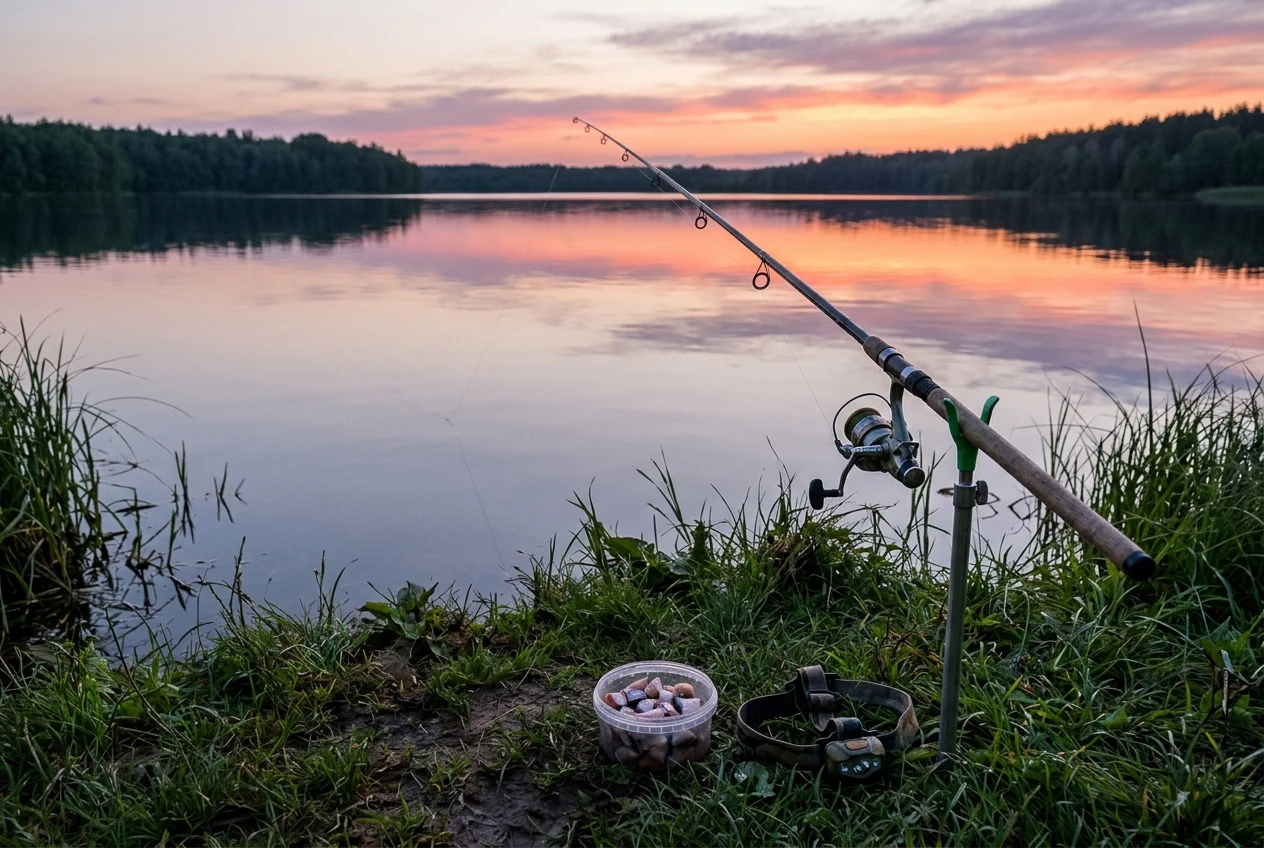
If your family wants to stay after dark, do the preparation in daylight. The first night fishing from a Kentucky bank post covers what to set up before the light goes.
Cold water, warm water: how season changes the whole hourly plan
Everything above shifts with the season, because water temperature sets how active fish are. Use your hand check to tell which plan you are in.
Cold water (late fall, winter, early spring)
Fish are slow and eat less. The warmest part of the day is usually the best, so the bite window moves toward the middle of the afternoon. Use small baits, fish them very slowly, and give each spot more time. Cold water often means fewer bites in total, so a day with two or three fish can be a good day. Spring in particular has its own pattern, covered in Kentucky spring bank fishing.
Mild water (spring and fall)
This is the easiest time to fish from the bank. Shallows warm up enough to draw fish in, and the whole day can be productive. Follow the sun-based plan as written: shallow and moving early, slower and nearer cover at midday, back to the bank by evening.
Warm water (summer)
Fish get most active when it is coolest, so early morning and evening do the most work. Midday shallows can be too warm, so shade, cover and deeper edges matter more. Plan your family’s trip around the cooler ends of the day if you can.
A good rule is to let the water temperature move your bite window and let the sun move your spot within the window.
A pocket bait-switch cheat sheet to keep in your tackle box
Copy this onto an index card or take a photo of it. It works for most Kentucky lakes where you are fishing from the bank.
Time and sun Where to stand and cast Bait to tie on Early, low sun, long shadow Along the bank, standing back from the edge Worm or cricket under a bobber; small spinner or soft plastic, retrieved steadily Mid-morning, sun climbing Edges of shade, points, and near cover Same baits, slower retrieve, a bit deeper Midday, high sun, short shadow Shade, cover, steeper drop-offs Small worm piece on the bottom; soft plastic dragged slowly with long pauses Late afternoon, sun dropping Back along open bank, spots that produced earlier Worm and bobber for panfish; small spinner for bass Evening and dusk Open bank, still water Spinner or soft plastic for bass; cut bait or liver on the bottom for catfish
Water feel adjustments:
- Cold: smaller bait, slower, fish the warmest hours.
- Mild: follow the table as written.
- Warm: favor early and late, and spend midday in shade or deeper edges.
Before you change bait, ask:
- Where is my shadow, and is the sun higher or lower than my last check?
- Does the water feel warmer or cooler than it did an hour ago?
- Have I tried a different spot along the bank for at least ten minutes?
If the answer to the third question is no, move first and change the bait second.
Want the full bait and lake plan in one place? Browse the Kentucky bank fishing ebooks and pick the one that fits your family’s next trip.