
If you search for fishing advice, most of it assumes you have a boat, a lot of experience, or both. A family standing on a lake bank with two kids and three rods has a narrower question: where do we stand, what do we bring, and what do we do when nothing bites? A Kentucky bank fishing ebook is worth reading only if it answers that question for the water you will actually visit.
This site’s catalog has five ebooks, and each one covers a different point where bank-fishing families tend to get stuck. This article walks through them in the order a family usually needs them.
Why general fishing advice leaves Kentucky bank anglers guessing
General advice is written for the average angler on the average water, and no family fishes the average lake. Kentucky has big reservoirs, small county lakes, and state park ponds, and they differ in bank access, water clarity, and which fish are close enough to cast to. A tip like “fish the drop-off at dawn” is useless if you cannot reach the drop-off from shore or do not know which bank has one.
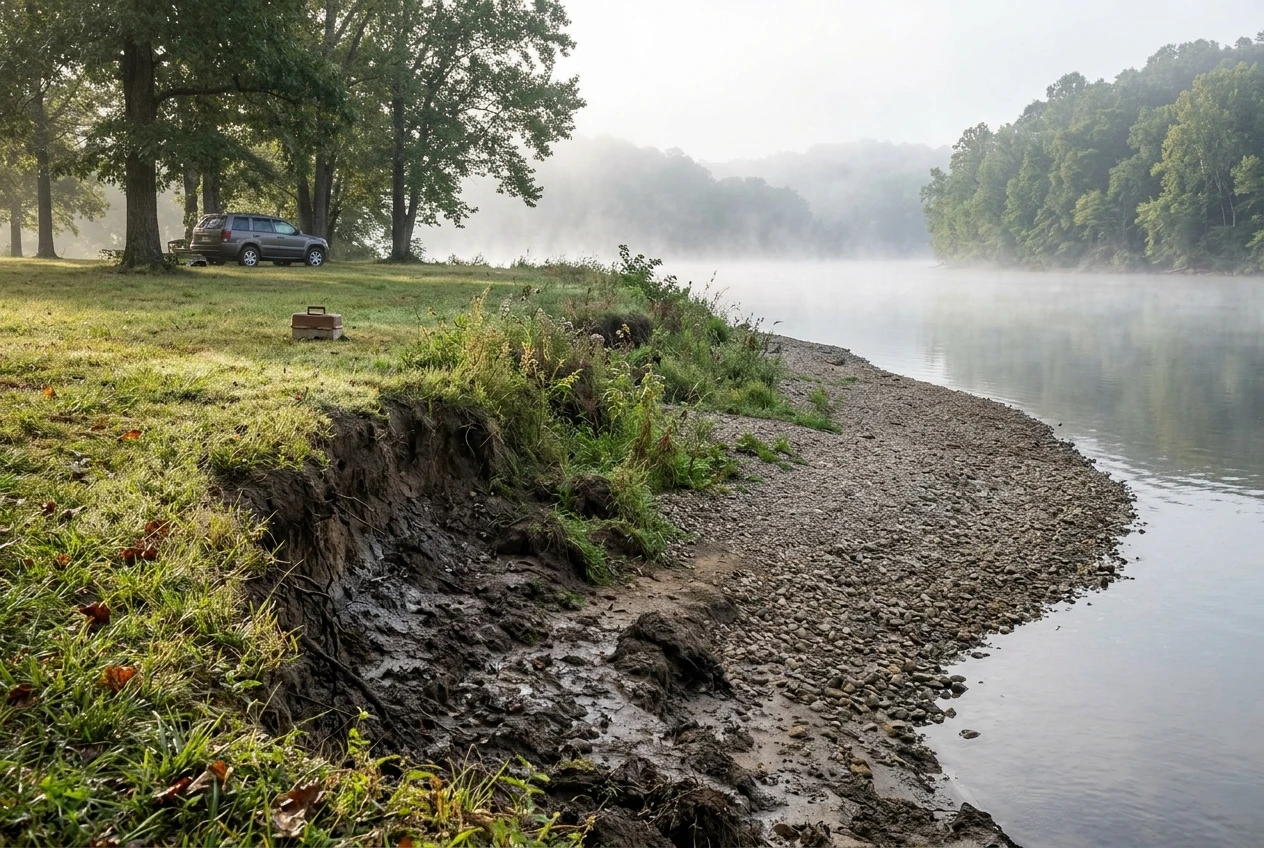
Bank access is the biggest gap. Many articles tell you where fish hold, but they assume you can go to them by boat. From the bank, your options are limited to the stretch of shoreline you can walk to, so the useful questions are about parking, footing, and which spots are safe for children. If you want a sense of how much the bank alone can offer, our post on bank fishing versus boat rental in Kentucky covers that choice directly.
A Kentucky-specific guide fixes this by narrowing the problem. It works from one state’s lakes, one fishing style, and one kind of angler: a beginner with kids. That narrowing is what you are paying for. The five ebooks below each apply it to a different problem.
The ebook to read before your first trip
The problem here is that you do not know what you do not know. First trips go wrong in ordinary ways: the family arrives at a bank with no place to set down a tackle box, the bait is wrong for the fish nearby, or someone forgets a license. None of these is hard to fix, but all of them are hard to predict when you have never done it.
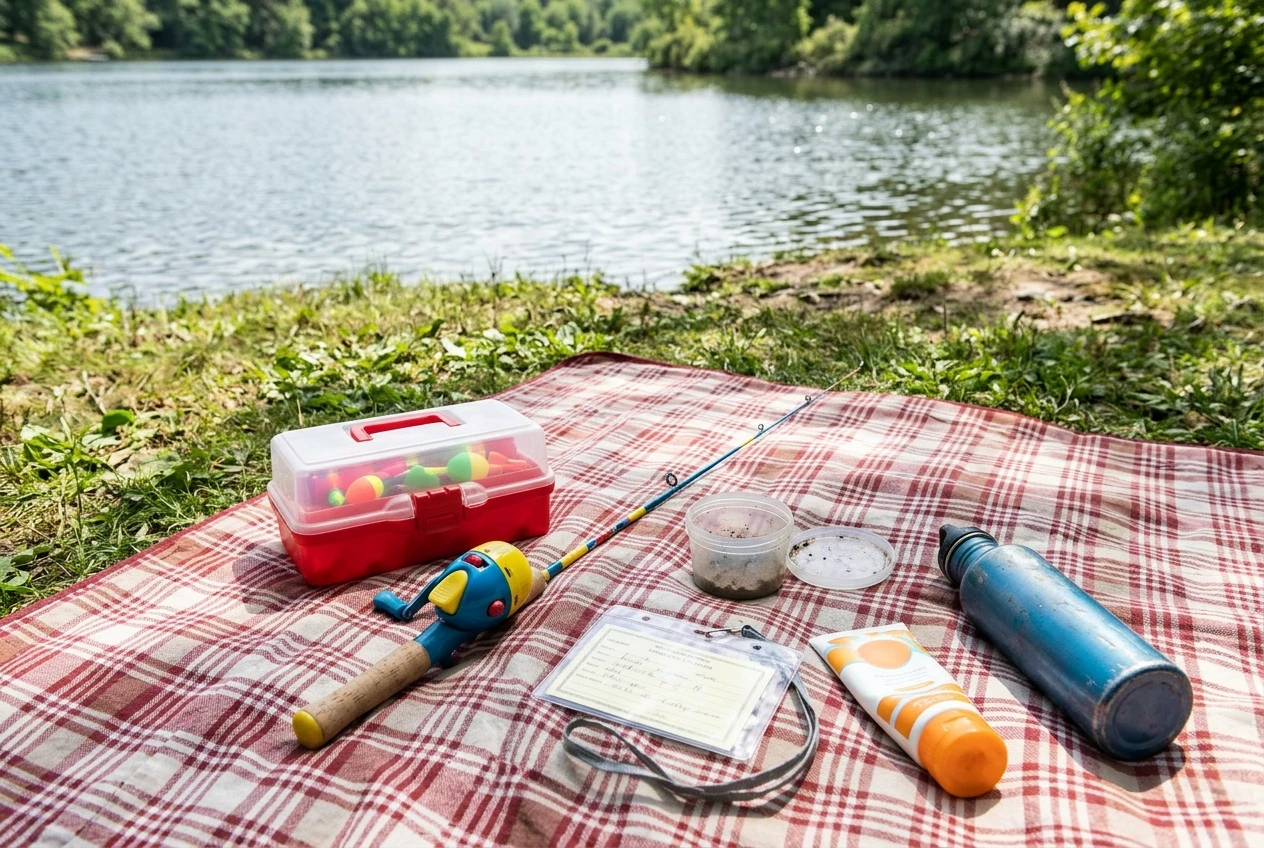
The first-trip ebook is the one to open if nobody in your family has fished from a bank before. When you read it, check that it does these things:
- Puts the trip in order, from what to settle at home to what to do when you arrive at the water.
- Keeps the gear list short enough that you can finish it in an evening.
- Tells you what a realistic first outing looks like, including how long to stay and what counts as a good day.
- Points you to the current Kentucky fishing regulations, since license rules and limits change and the official source is the one to trust.
A good first-trip guide also sets expectations. A first outing with a young child is better judged by whether everyone wants to come back than by how many fish you land. If the guide you are reading promises a full stringer on day one, be skeptical of the rest of it.
If you want a quick supplement before you read, our two-hour family packing list covers what to carry for a short outing.
The lake guide that tells you where to stand and what to expect
Choosing a lake is the second problem, and it is where Kentucky-specific writing helps most. A general article cannot tell you which bank at a particular lake is walkable with a stroller, where the shoreline drops off steeply, or which areas get crowded on a Saturday. A lake guide can, because it covers one body of water.
The catalog’s lake guides are written for exactly this. Each one is about a single lake, so you can read it the night before and arrive knowing where to park and where to start. When you open one, look for answers to these questions:
- Where can a family reach the water without a long or difficult walk?
- Which parts of the bank are comfortable for children, and which are better skipped?
- What fish are you most likely to catch from shore, and what do they tend to bite?
- What should you expect on a busy day compared with a quiet one?
The point of a lake guide is that you spend your two hours fishing instead of walking the shoreline looking for a place to stand. If you are still deciding which lake to visit, start with our posts on Kentucky lakes where families can bank fish and then choose the lake guide that matches your pick.
Seasons matter too. Water that is productive in summer can be slow in early spring, and a guide that ignores this will leave you guessing again. Check whether the guide tells you what changes through the year at that lake.
The gear ebook that keeps you from overbuying
The third problem is cost and clutter. Beginners often walk into a tackle aisle and leave with a cart full of lures, three rods, and a vest. Most of it goes unused. Gear advice written for general audiences tends to make this worse, because it covers every kind of fishing at once.
The gear ebook narrows the list to what a Kentucky family fishing from the bank needs. Judge any gear guide by whether it separates the items you need on day one from the items you might add later. A useful one will cover a rod and reel that a child can handle, simple terminal tackle, bait choices, and a few safety items, and it will tell you what to leave at home.
It should also be honest about money. Some links in this site’s content are affiliate links, which means the site may earn a commission if you buy through them. A guide that recommends products should explain why each one earns its place, and it should be fine with you buying a cheaper alternative.
Two posts here pair well with the gear ebook. Our gear checklist for the driveway is useful on the morning you leave, and the post on choosing a kids fishing combo goes deeper on the one item that tends to break first.
The ebook for keeping kids interested past the first twenty minutes
The fourth problem is attention. Children often start excited, then lose interest when the bobber sits still. This is normal, and it is the most common reason a family outing ends early. The fix is rarely more fishing skill. It is giving the child something to do and something to look forward to.

The kids ebook is built around that. When you read it, look for ideas that fit a bank setting, where space is limited and a child cannot wander freely near the water. Useful guidance usually includes:
- Simple jobs for each child, such as watching the bobber, checking the bait, or carrying the net.
- A plan for the waiting time, with short activities that keep hands busy without tangling lines.
- Ways to make a small catch feel like a win, including what to do before the photo and how to release a fish gently.
- A sensible time limit, so the family leaves while everyone is still having a good time.
The details matter because a child’s patience runs out long before the fish do. A trip that ends on a good note gets repeated, and repetition is how a child becomes a young angler. You can build on this with our post on what happens after your child catches a fish.
The ebook to open when nothing is biting
The fifth problem comes up for everyone eventually: you did what the guide said, and the fish are not interested. A skunked trip is discouraging, particularly for a beginner who has no way to tell whether the problem is the spot, the bait, the depth, or the weather.
The no-bites ebook is a troubleshooting guide, and that is how you should read it. Open it at the water, with the problem in front of you. A good troubleshooting guide works as a sequence of checks that you can run one at a time. It should help you tell the difference between a few common situations:
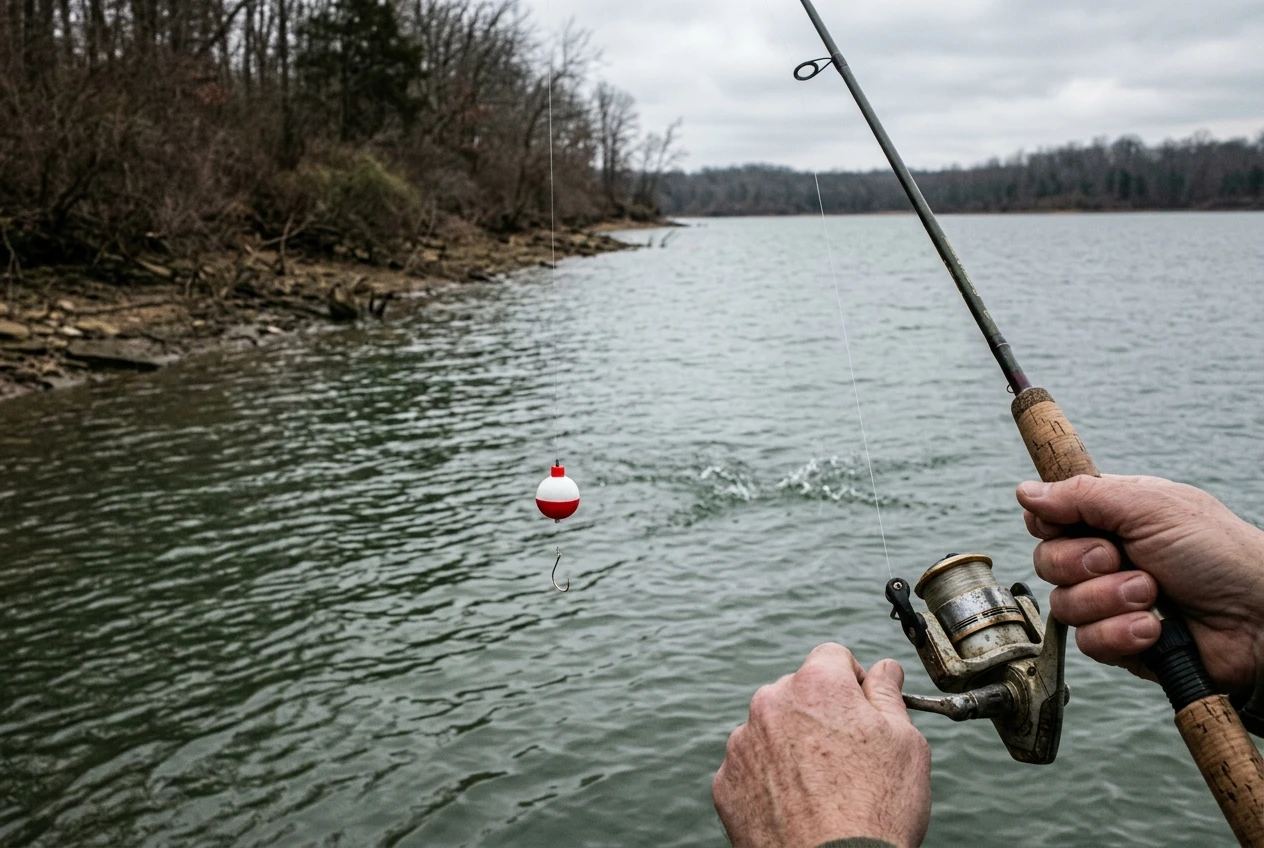
- The bait is not reaching the fish, which is often a depth or distance problem.
- The fish are taking the bait without moving the bobber.
- The spot is empty, and moving twenty yards would help.
- The conditions are poor, and the right choice is to try again another day.
Changing one thing at a time is the main habit to take from any such guide. If you change the bait, the depth, and the spot together, you cannot tell what worked. Our short posts on bait that disappears without a bite and bobber depth show this approach on specific problems, and the ebook applies the same thinking more broadly.
Which one to open first, based on where your family is right now
You do not need all five at once. Match the ebook to the next problem you will face:
- Nobody in the family has fished from a bank: start with the first-trip ebook.
- You know you want to go but have not picked a lake: read the lake guide for the water closest to you.
- You are standing in a store with a cart half full: open the gear ebook before you buy.
- Your kids have lost interest on past outings: read the kids ebook before the next one.
- You have been out and caught nothing: open the no-bites ebook and work through it.
Many families will use them in roughly this order over a season, and that is a reasonable plan. If you are unsure about the format itself, our comparison of three types of Kentucky bank fishing guides explains where an ebook fits among the options, so you can decide whether it is the right choice for you.
Pick the ebook that matches your family’s next trip and download it, then browse the lake guides for the water you plan to fish.