
Bluegill are the fish most families can find with a little homework, and most of that homework can be done on a phone or laptop at the kitchen table. This 15-minute routine turns any lake map and the free satellite view into a short list of bank spots you can walk to with kids. When you arrive, a few quick cues tell you whether to stay or move.
You do not need a boat, a fish finder, or any special vocabulary. You need a map, a little patience, and a willingness to pick spots that are easy to reach.
Why bluegill are the right fish to scout for with kids
Bluegill are small, plentiful in many Kentucky lakes and ponds, and willing to bite simple baits like a piece of worm under a bobber. A child can see the bobber move, feel the tug, and reel in something within a few minutes of the first cast. That quick feedback matters more for a beginner than the size of the fish.
Bluegill also live close to the bank, especially in warmer months. They like to sit near something that gives them cover, such as a dock, a fallen tree, a weed edge or a pile of rocks. Cover shows up clearly on a satellite image, and that is what makes them easy to scout from home.
If your kids are still learning to tell bluegill from bass, this guide to telling a bluegill from a bass and holding each safely is worth reading before the trip.
Start with the lake map: shallow coves, points and where you can actually park and walk
Begin with a basic lake map. It can be the state or lake authority’s map, a printable PDF, or a mapping app. If you are unsure which kind to use, our piece on which Kentucky fishing map actually shows where your family can fish from the bank covers that choice. For this routine, any map that shows the shoreline and the access points will do.
Look for three things in this order:
- Access first. Find the parking areas, boat ramps with bank room beside them, fishing piers, and trails that reach the water. A great spot that takes a long hike with a small child and a cooler is not a great spot for your family.
- Shallow coves. These are small bays or inlets that look like a notch cut into the shoreline. Shallow water warms faster and tends to hold more weeds, wood and small food items, all of which draw bluegill.
- Points and bends. A point is a piece of land that sticks out into the lake. The edges on both sides of a point often give you two different kinds of water to cast to from one standing spot.
If your map shows depth lines, shallow areas sit where the lines are far apart. Lines packed tightly together mean the bottom drops quickly. You do not need the numbers exactly. You are looking for gentle shallows near the places where you can stand.
Circle every spot where good-looking water and easy walking overlap. Aim for five to eight candidates. You will trim them in the next step.
Switch to satellite view: docks, brush, trees in the water, riprap and weed edges
Open the same area in satellite view and zoom in on each circled spot. You are looking for cover that fish use. Here is what each type looks like from above:
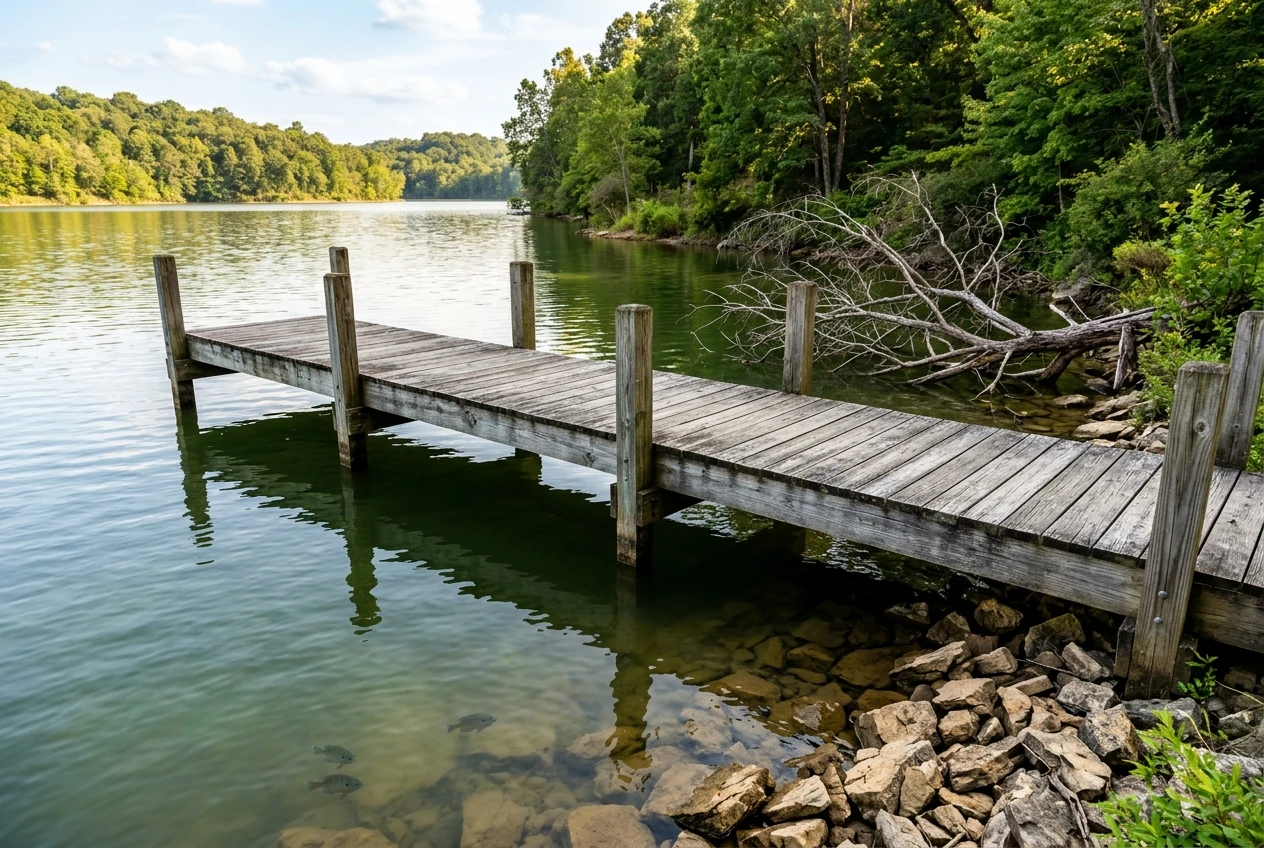
- Docks. Straight lines or rectangles extending from the shore. The shade under a dock is a classic place for bluegill to sit. Many docks are private, so check for signs and fish only where public access is clear. A public fishing pier is usually the safest bet, and some lakes have them.
- Brush and fallen trees. Dark tangles along the water’s edge, or branches reaching into the lake. Bluegill like to hang around these because they can hide and feed nearby. Your line can snag in them, so a spot where you can cast near the tangle rather than into it is better for beginners.
- Riprap. Piles of large rock along a dam, bridge approach or shoreline, often lighter gray than the surrounding bank. The gaps hold small creatures that bluegill eat. Riprap can be slippery and uneven, so judge whether it is safe for your kids before choosing it. Our piece on what the bank under your feet tells you about the water in front of you helps with that judgment.
- Weed edges. Patches of darker green or brown in shallow water, with a visible line where the plants stop. Fish often sit along that line, where they have cover on one side and open water on the other.
- Shade. Trees leaning over the water cast shadows on bright days. Shaded banks stay cooler and give fish a place to rest out of the sun.
Also check for flat, open ground near the water. Kids need room to stand, a spot to set down a tackle box, and enough clearance behind them for casting. A thick wall of trees at your back makes casting hard for everyone.
Mark three spots, not one: a simple shortlist and backup plan
From your circled candidates, pick three. Choose them by two questions: can the whole family walk there comfortably, and is there cover within casting distance of the bank?
Give each one a simple label:
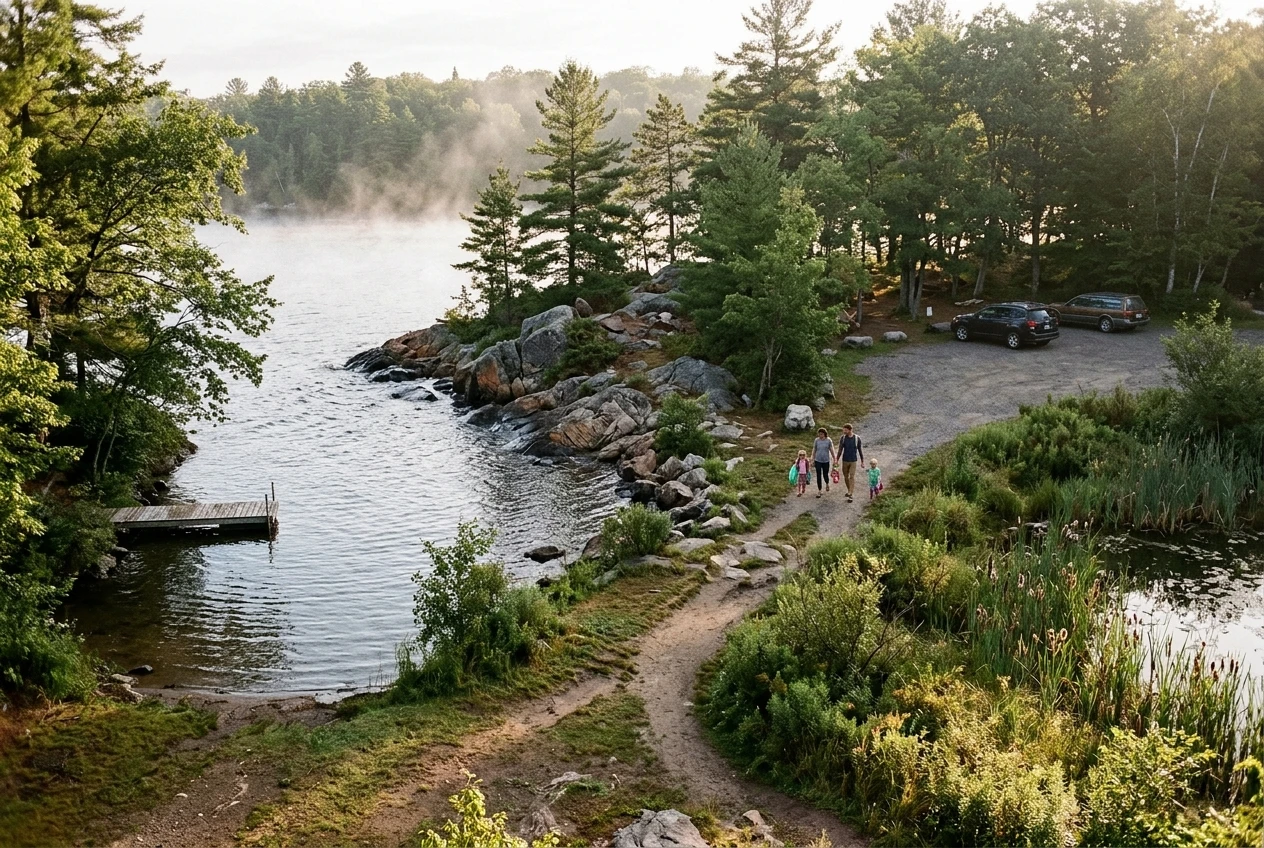
- Spot A, the best guess. The one with the most cover and the easiest access.
- Spot B, a different kind of water. If Spot A is a cove with a dock, choose a rocky point or a weedy edge for B. Different cover tests a different idea.
- Spot C, the easy fallback. Closest to the car, best for a child who is tired or restless. It may not look the most exciting, but it keeps the day going.
Save the pins in your map app or take screenshots, and write down the parking location for each. If two spots share a parking area, that saves time. Bring the shortlist with you on your phone, and download the map for offline use in case there is no signal at the lake.
Having three choices protects you from a common problem: arriving to find your one spot is crowded, muddy or closed. You walk to the next one and keep fishing.
At the water: five quick cues that tell you to stay or move on
Before you unpack everything, spend a couple of minutes just looking at the water. These five cues help you decide.
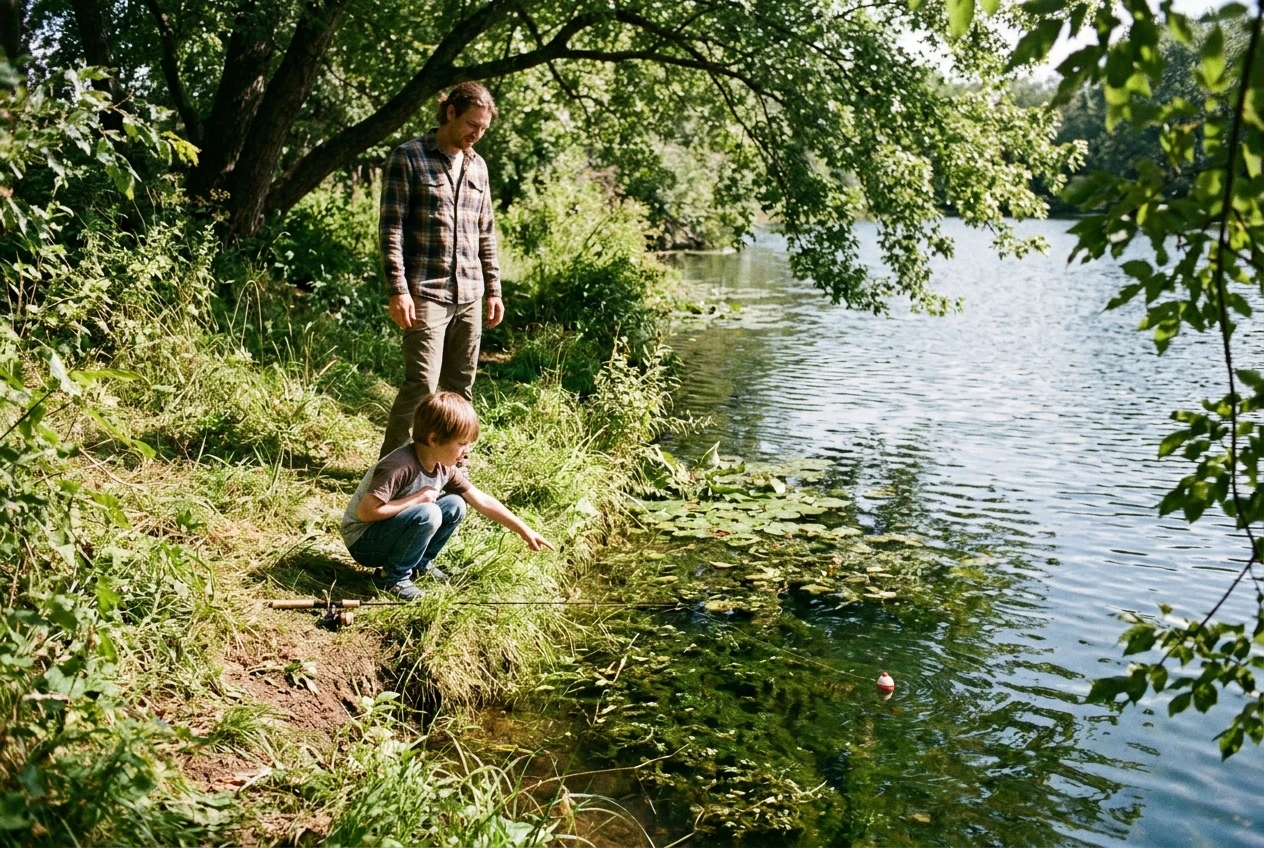
- Cover within casting reach. Can your child cast to the dock, branch, rock pile or weed edge you saw on the map? If the cover is too far away or on private ground, move to your next spot.
- A change you can see in the water. Look for a color change, a line where weeds end, or a shadow line from a tree or dock. Fish often use these edges.
- Signs of life. Tiny fish flicking near the surface, insects landing on the water, or small rings on the surface mean something is feeding. Standing still and watching for 30 seconds helps.
- Shade and wind. On a hot, bright day, shade is usually more attractive. Wind that pushes onto a bank can carry food toward it, though a strong wind makes casting hard for beginners.
- A first bite on a small bait. Set your own time limit before you start, perhaps 15 or 20 minutes. If no one gets a nibble, move to the next spot rather than waiting hopefully. Our article on when to switch bait on a Kentucky bank is useful if you suspect the bait rather than the spot.
During warm months, you may also see round, cleared patches in the shallows where fish have fanned out the bottom. If you see a cluster of them, that is a strong sign bluegill are nearby, though local rules on fishing during certain periods can vary, so check current regulations for the lake.
Keep a scouting notebook so every trip makes the next one easier
A notebook, a notes app or a shared album all work. After each trip, take two minutes and write down:

- The lake and the exact spot, with the parking location
- The date, the time of day and the weather
- What cover was there, and how close it was to the bank
- What bait you used and what happened
- How the kids did: were they comfortable, bored, or begging to stay?
Over a few trips, patterns appear. You may find that shaded banks work better in the afternoon, or that a certain kind of cover keeps producing. You will also learn which spots are good for kids even on slow days, and that is worth recording as carefully as the fishing results.
Add a photo of the spot if you can. A quick picture of the bank, the parking area and the water takes ten seconds and saves you from guessing next time.
What to do when the map says yes and the fish say no
Sometimes a spot looks perfect on screen and gives you nothing. That is normal. A map shows where fish could be, not where they are on that particular day.
Run through these checks in order:
- Move before you change everything. Go to your Spot B or C first. A different spot tells you more than swapping lures for the fifth time.
- Adjust your depth. If you are fishing under a bobber, try moving the bobber up or down on the line. Fish may sit shallower or deeper than you set it.
- Try smaller and slower. A smaller piece of bait or a gentler movement can help when the fish seem uninterested.
- Think about the season. Water temperature changes where bluegill sit. If the weather is turning cold, our piece on how to change your Kentucky bank fishing as the water cools in fall explains what to adjust.
- Keep the kids in the game. If the bite is slow, let them skip rocks safely, watch for turtles or look for small fish in the shallows. A good day can still be a good day without a full stringer.
Write the result in your notebook either way. A blank spot is still information, and it narrows your list for the next trip.
Scout the lake once, then fish it with confidence
If you want the scouting already done for a specific lake, browse our Kentucky bank fishing ebooks and lake guides at five Kentucky bank fishing ebooks and the problem each one solves and pick the one that fits the lake you are heading to.