
Most of what decides where fish sit is underwater, and from the bank you cannot see it. The shoreline you are standing on is a decent preview, though. The land and the lake bottom are made of the same ground, and the way the bank behaves above the waterline usually tells you something about how it behaves below. Once you can read a few signs, you can answer how to find drop-offs when bank fishing with nothing more than your eyes, a bobber, and a weight.
This guide covers the signs in the order you will meet them: the slope under your feet, the shapes along the shore, the wood and rocks you can only guess at, and a quick set of tests for confirming your guesses.
Why the shore above the water hints at what’s below it
Many Kentucky lakes are reservoirs, made by damming a river valley and letting water fill it. Under the surface are old hillsides, creek beds, fallen trees, and rock ledges. The shoreline is simply where the water happens to meet that landscape on the day you visit.
Fish pay attention to the underwater parts for practical reasons:
- Cover. Logs, stumps, rocks, and weeds give fish a place to hide from predators and to wait for food to pass by.
- Depth changes. A drop-off lets a fish move from shallow to deep water in a few fin strokes, so it can feed in the shallows and retreat when the sun is bright or the weather turns.
- Shade and temperature. Deeper or shadowed water is often a different temperature than the open shallows, and fish move toward whichever suits the day.
So your job from the bank is not to find fish directly. It is to find the places where cover and depth changes are likely, then put your bait near them. Those clues start with the ground you are standing on.
Steep bank or gentle slope: the first clue to a drop-off
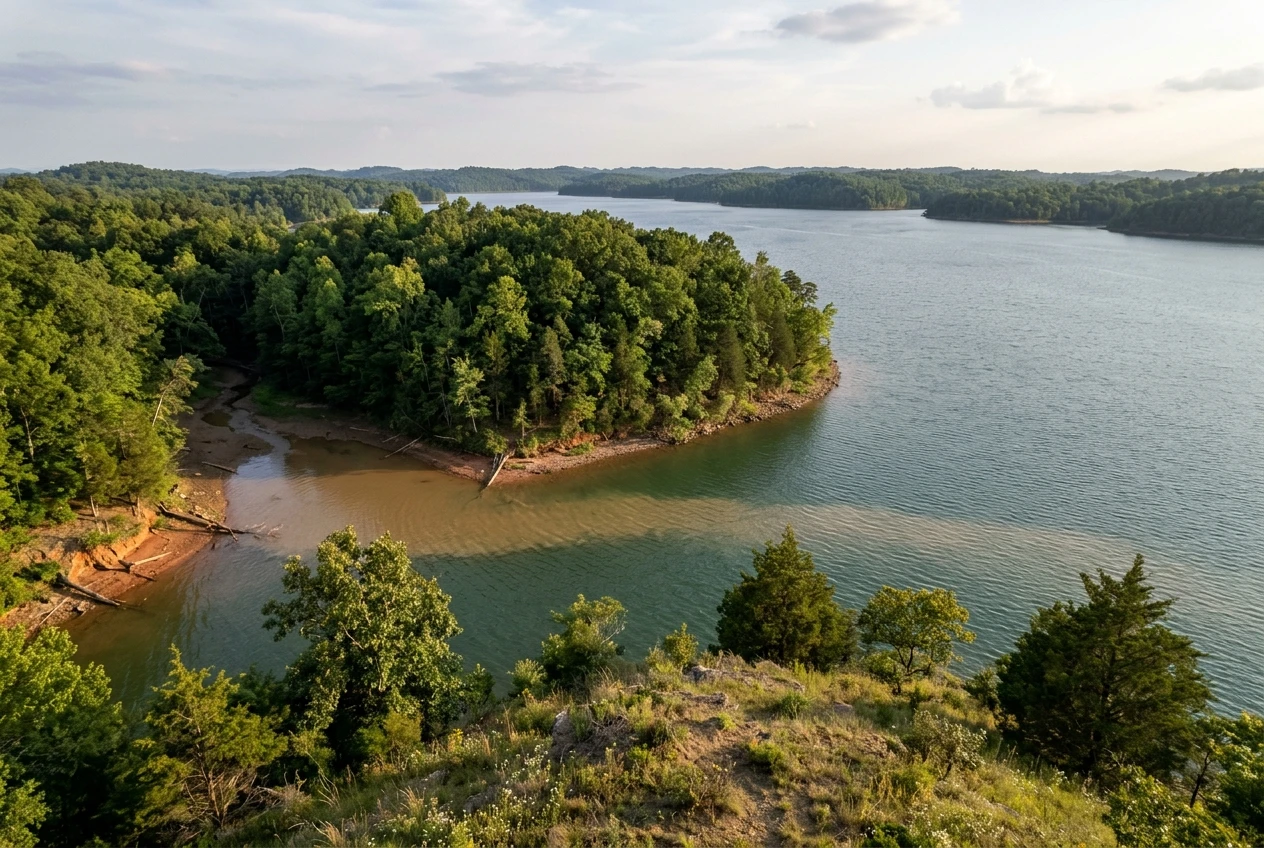
Look at how the bank meets the water. If you are standing on a steep slope and the land drops sharply into the lake, the bottom often keeps dropping at a similar angle. A rock bluff or a high, eroded dirt bank commonly means deep water close to shore.
A flat, gentle bank, such as a mowed lawn or a gravel beach that slides slowly into the water, often continues as a shallow, gradual bottom. Fish may be further out, and a long cast matters more.

Neither type is better. They give you different information:
- Steep bank: Deep water is probably within a short cast. Fish a few feet from the edge, not at the far end of your cast.
- Gentle slope: The shallows run out a long way. Look for something that interrupts the slope, such as a rock pile, a log, or a change in the color of the water.
- Mixed bank: A gentle slope that suddenly turns steep, or the other way around, marks where the bottom changes character. That spot is worth a few casts.
Keep in mind that this is a hint and not a guarantee. A steep bank can have a shelf a few feet out, and a flat bank can hide a ditch. That is why the cast tests later in this guide matter.
Reservoir water levels also rise and fall over a season. A band of bare dirt or exposed rocks above the water shows where the lake sat earlier, and it tells you the slope you see is one the fish may have used when the water was higher.
Points, coves and creek mouths: spotting the shapes that change the bottom
Look at the whole shoreline from a distance before you pick a spot. Three shapes are easy to recognize.
Points
A point is a piece of land that sticks out into the lake. It usually continues underwater as a ridge or a shelf, and the water on either side of it is often deeper. Fish can move along a point at different depths depending on the day, which is why points are popular with anglers. Cast along both sides of the point and off its tip, instead of straight out.
Coves
A cove is a bay that cuts into the land. The back of a cove, away from the main lake, tends to be shallow and muddy or weedy. The mouth of the cove, where it opens to the lake, is often where the bottom starts dropping toward deeper water. If you are fishing a cove from the bank, the stretch near the mouth is usually a better bet for finding depth than the very back.
Creek mouths and gullies
Where a creek enters the lake, you can often see a small channel of moving or slightly different-colored water. Under the lake, that creek frequently continues as a channel cut into the bottom, deeper than the ground around it. Moving water can also carry food in, especially after rain. A dry ravine running down to the water may keep going underwater as a depression too.
If you want help deciding which spot to try first once you have picked a general area, the piece on where to cast first from a Kentucky bank works through that choice. This article is about reading what the shoreline is telling you.
Spotting wood, rocks and weeds you can’t see
Cover is harder than depth because it hides in murky water. Several signs above the surface point to it.

Leaning and fallen trees. A tree leaning out over the water will eventually fall in, and trees that have already fallen leave trunks and branches in the water. Fish like the shade and the hiding places. Cast beside the trunk and branches, not on top of them where you will snag.
Stumps and standing timber. In reservoirs that flooded wooded valleys, stumps can remain below the surface. If you see a few stumps poking out at low water, expect more of them hidden nearby. A straight line of dead tree tops or stumps heading out from shore can mark an old fence line, road, or creek bank.
Rocks. Riprap, the broken stone piled along a dam or road, and boulders along a bank usually continue under the water. Rocks give fish places to hide in the gaps and hold warmth from the sun.
Weeds and lily pads. Weed tops or lily pads at the surface show that the bottom is shallow enough for plants to grow there. The outside edge of a weed bed is a spot where shallow water ends, and a quick change in depth is likely.
Ripples, swirls and calm patches. On a windy day, a small calm patch or a swirl in an otherwise rippled surface can mean something below is breaking the flow, such as a rock or a submerged log. Foam and floating debris often gather along edges where currents meet.
Polarized sunglasses help you see through the glare, and they cut the surface shine on a bright day. You may spot shapes or color changes you would otherwise miss.
The three-cast test: a bobber, a bare hook and a weight to feel for depth changes
Your eyes give you guesses. This simple test turns them into something you can check. You need a bobber you can slide to set the depth, a hook with no bait, and a small weight such as split shot. Use an older hook, because a bare hook can snag. Do this before you put bait on.
Cast 1: the count. Clip the weight on and cast a short distance. Let it sink and count seconds until the line goes slack, which means the weight has reached the bottom. Now cast to the middle and then far out with the same weight. A longer count means deeper water. If the count jumps sharply between two casts, the drop-off is between those distances.
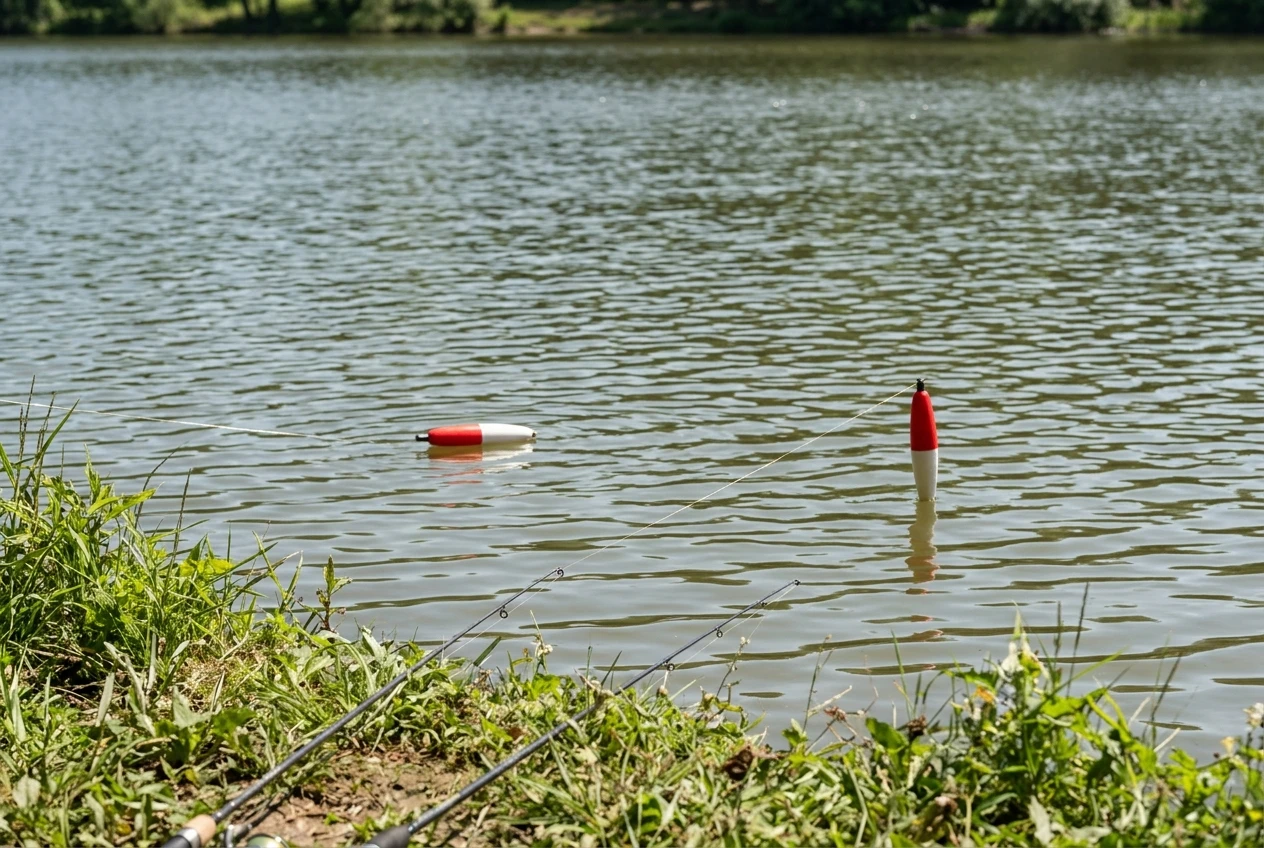
Cast 2: the bobber check. Set the bobber about four feet above the hook and weight. Cast and watch it. If the bobber stands upright, the water there is at least four feet deep. If it lies on its side, the weight is resting on the bottom and the water is shallower. Move the bobber stop deeper and repeat to find where the bobber starts to stand.
Cast 3: the slow drag. Reel in slowly along the bottom with the bare hook and weight, and feel what comes back through the rod:
- A steady climb in resistance followed by the weight popping up can mean you are pulling up a slope or a drop-off edge.
- A tap, tap, tap means rocks or gravel.
- A sudden hard stop is likely a log or stump. Do not yank hard. Try gentle pulls in different directions to free it.
- A soft, mushy drag with green on the line points to weeds.
Run the three casts at the same spots, such as left, center, and right of where you stand, and you will build a picture of the bottom in about ten minutes.
A ten-minute shoreline walk your kids can help with before the first cast
Walking the bank before fishing gives kids a job and gives you information. Keep everyone back from steep or muddy edges, and have younger children hold a hand along slippery ground. For more on what to carry for safety, see the guide to bank-fishing safety gear.
Give each child one thing to look for:
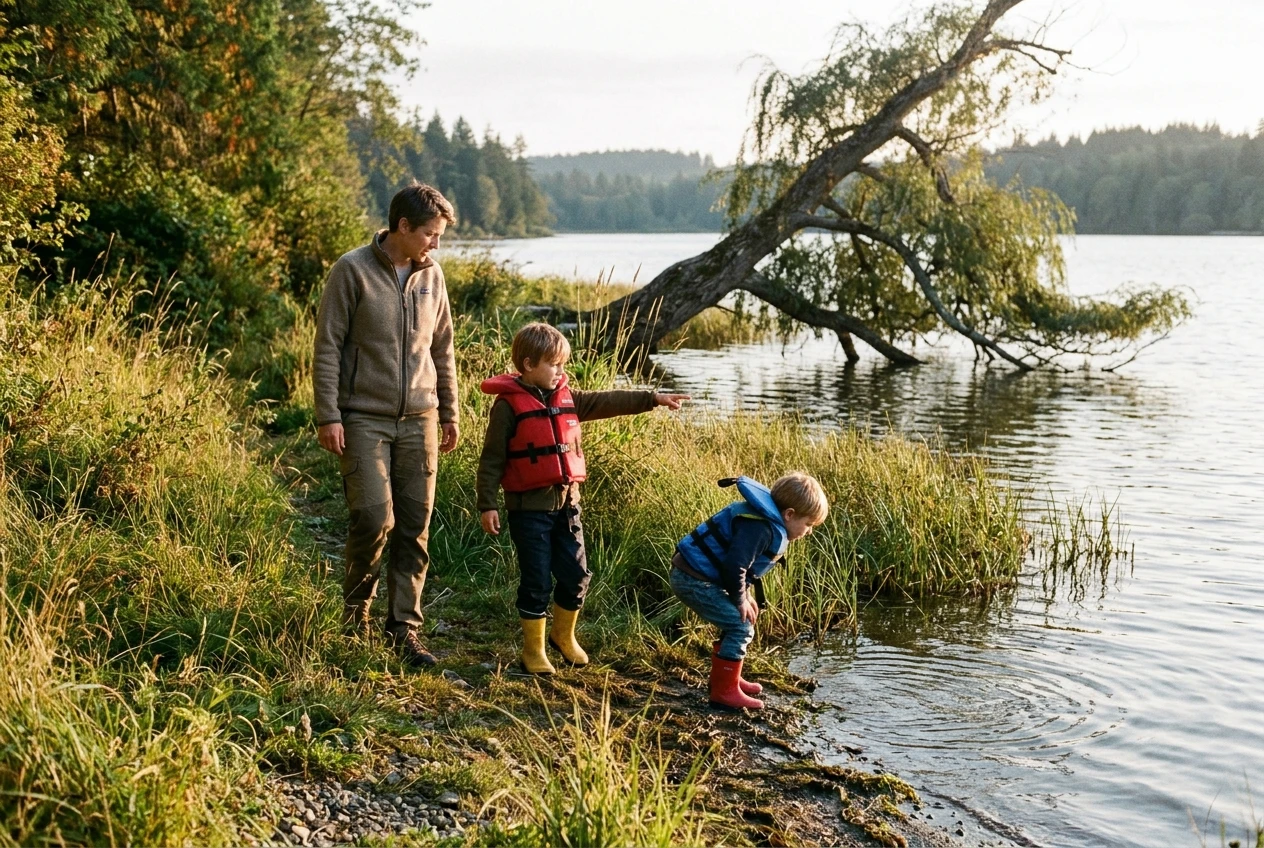
- The slope spotter points out where the bank turns steep or flat.
- The wood finder counts leaning trees, stumps, and logs.
- The water watcher looks for ripples, swirls, foam, and color changes on the surface.
- The shape tracker points out points, coves, and any creek or gully meeting the water.
Walk slowly along a short stretch of bank, stop where the kids call out something, and ask them what they think is under the water there. Their guesses are fun, and you can check them with the three-cast test. When you see two or three signs close together, such as a point with a leaning tree and a steep bank, start there.
A walk like this takes ten minutes and keeps kids interested during the stretch before the first bite, which is often the hardest part of a family trip.
Marking what you learn so the next trip starts smarter
Whatever you find is useful on the next visit, but only if you can recall it. A small notebook or the notes app on your phone works well. Write down:
- The lake and the spot, using landmarks like “second dead tree past the picnic table.”
- The date and whether the water looked high or low compared with the shoreline.
- Where the count jumped, where the bobber stopped standing, and where the line snagged.
- What the kids spotted, and whether anyone got a bite near it.
A quick phone photo of the shoreline helps, and a rough sketch drawn by a child can be better than a photo because it shows what they noticed. After two or three trips to the same lake, patterns show up: where the drop-off is close, which points are productive, and how the spot changes when the water rises or falls.
Pick a guide that matches your lake
Reading the shoreline gets you started, and lake-specific notes fill in the rest, such as which banks have deep water close in and where the access points are. The Kentucky bank fishing ebooks and lake guides are each written around a different problem families run into. Pick the one that matches the lake you are visiting next, and take it along with your notebook.