Most trips to a Kentucky lake bank end with nothing worse than a few tangled lines. Still, the same handful of problems cause nearly all the trouble for families: a hook in a finger, a slip on wet mud, a child standing too close to the edge, too much sun, a storm that arrives faster than expected, and bites or stings. Bank fishing safety gear is easier to pack when you start from those problems, because each item then has a clear job.
This article goes through them one at a time. If you want the full gear picture, the packing list for a two-hour family trip covers the rest of what goes in the bag. Here the focus is on what keeps everyone unhurt, and on the habits that make the gear useful.
The Five Things That Actually Go Wrong on a Family Bank-Fishing Trip
Think of a bank trip as six small risks that you can manage:
- Hooks in skin, clothes, or faces, usually during casting or while unhooking a fish.
- Slick footing, from mud, wet grass, algae-covered rocks, or a steep edge.
- Kids too close to the water, especially young ones who are focused on the bobber and not on their feet.
- Sun and heat, which build up quietly over a few hours with little shade.
- Sudden weather, such as a summer storm or a drop in temperature.
- Bites and stings, from mosquitoes, ticks, wasps, and the occasional snake or poison ivy patch.
None of these needs a large pile of equipment. Each one needs one or two inexpensive items and a habit that goes with them.
Hooks and Hands: Pliers, Hook Covers, and Eye Protection for Everyone
Hooks cause the most common injuries on a bank trip, and most of them happen in the first few casts when kids are still learning. Three items handle most of the risk.
Needle-nose pliers. Use them to take hooks out of fish, so small fingers stay away from the sharp end and from teeth and spines. They also help you grip a hook you are straightening or removing from a snag. Keep one pair for each adult.
Hook covers or a safe parking spot. When a rod is not being fished, the hook should not dangle. A small foam hook cover, or hooking the point onto a rod guide or the rod’s hook keeper, stops it from catching a sleeve, a bag, or a leg. Make “park the hook” the first thing a child does after reeling in.
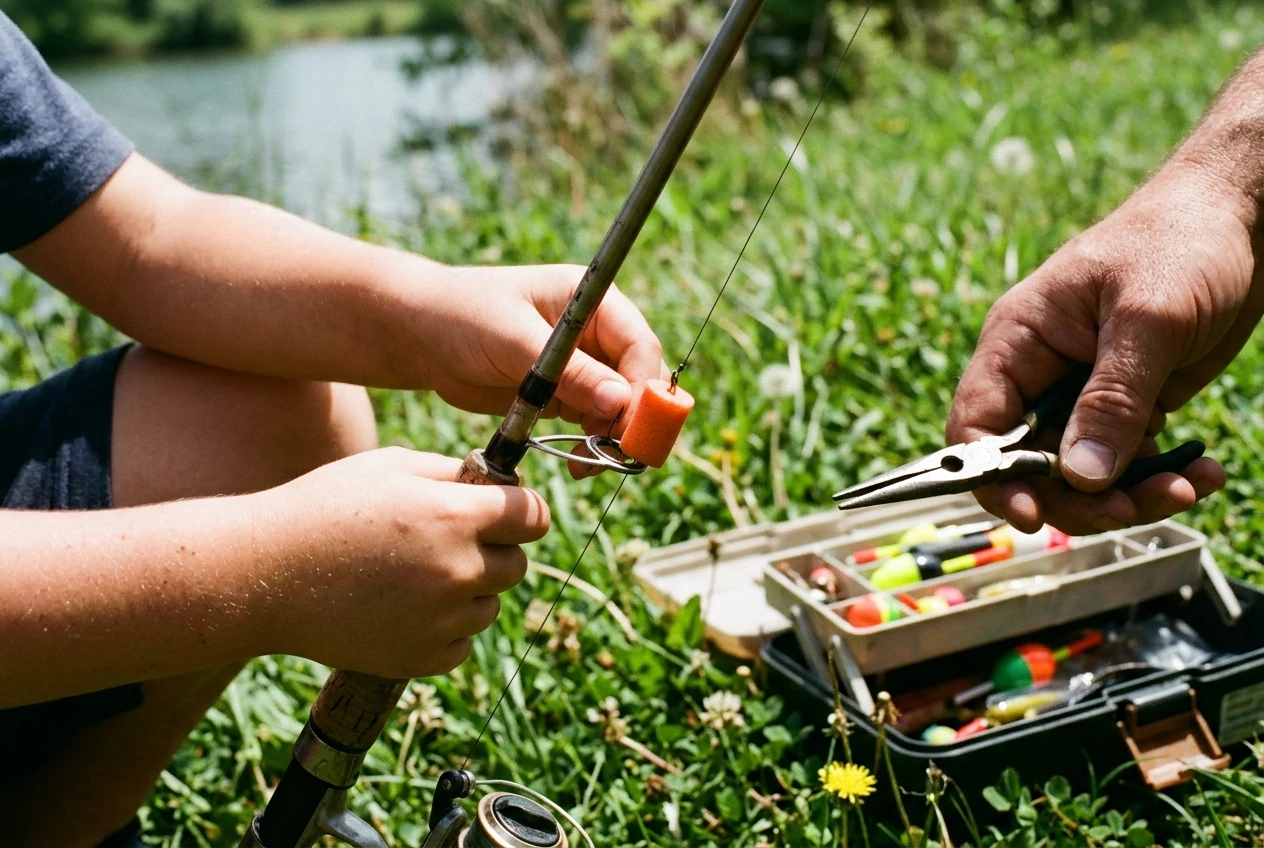
Eye protection. Sunglasses count. A hook that swings back on a bad cast, or a lure thrown in the wind, can reach a face, and glasses give your eyes some cover. Everyone who is casting or standing nearby should wear them. Polarized lenses also cut glare on the water, which helps you see your bobber.
Some families also pinch down the barb on each hook with the pliers. A barbless hook comes out of skin or clothing more easily, though it can also slip out of a fish more easily, so you may lose a few more catches.
If a hook goes into skin, stay calm and stop fishing for that person. A hook that is only in the surface of a finger may be manageable with first aid. A hook near the eye, in the face, or deep in the skin needs medical care. Do not try to dig it out yourself. Cut the line and get help.
Life Jackets on the Bank: When Kids Should Wear One Even Though You’re Not in a Boat
Many parents think of life jackets as boat gear. A bank can be just as risky for a small child, because a slip at the edge can put a child in deeper water than the shallows suggest. Lake banks often drop off steeply, and mud can pull shoes and feet in different directions.
A good rule for families: any child who is not a confident swimmer wears a life jacket whenever they are within a few steps of the water. That includes the moments when they are only standing and watching. Toddlers and preschoolers should wear one the whole time, and an adult should be close enough to reach them.
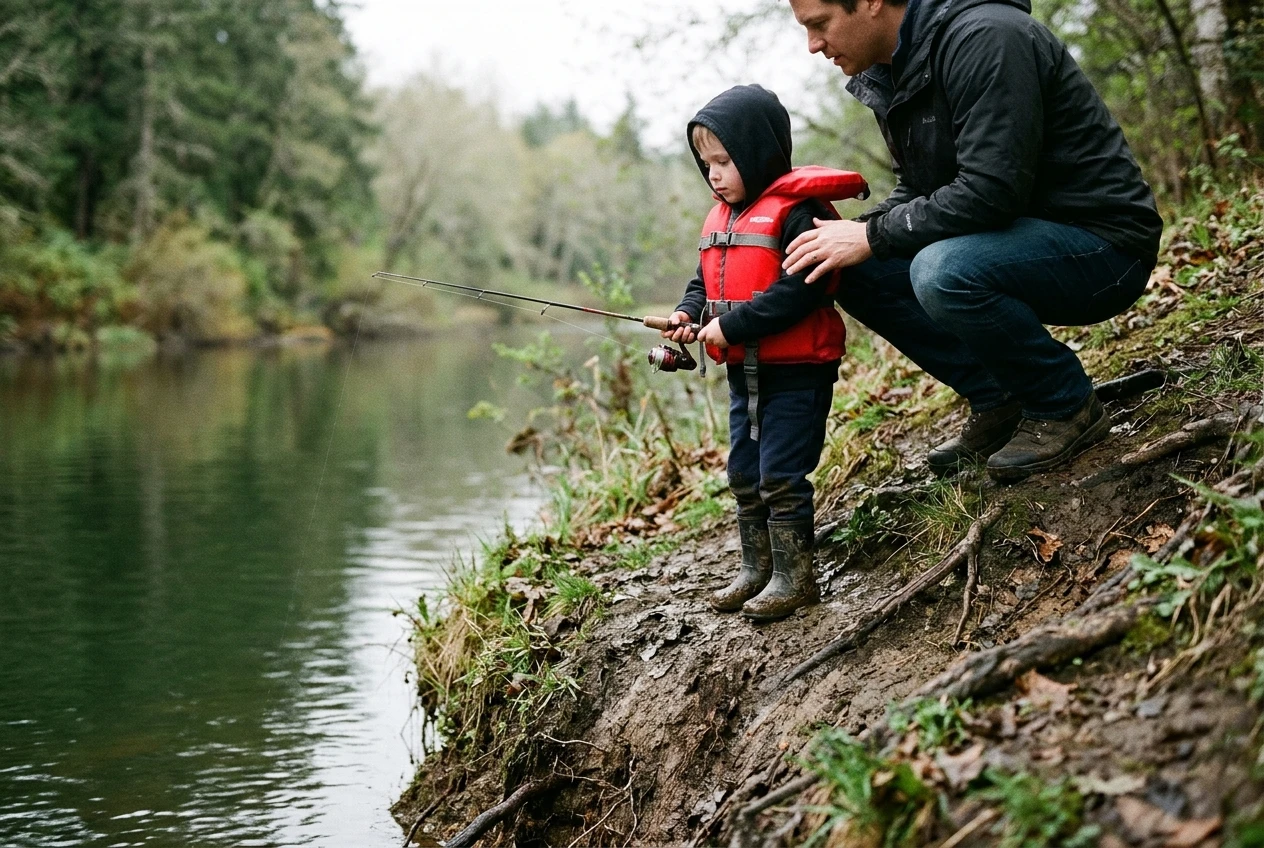
Fit matters more than style. Look for a jacket labeled as U.S. Coast Guard approved, and match it to your child’s weight and chest size using the label. A jacket that is too big can ride up over the chin in the water. Check that it buckles snugly and does not lift much when you pull up on the shoulders.
Older kids who swim well may not need one in every situation, but steep banks, high water after rain, and cold weather are good reasons to put one on anyway. Adults who are not strong swimmers should wear one too, because it sets a clear example.
Slick Mud and Steep Edges: Footwear and a 30-Second Bank Check Before You Cast
Most falls on the bank happen because of the footing, and footing is something you can check before anyone picks up a rod.
Footwear. Closed-toe shoes with real tread are the best choice. Water shoes or sturdy sandals that strap on can work for kids who will wade a little. Flip-flops slide off in mud and leave toes open to hooks and rocks, so leave them at home or in the car.
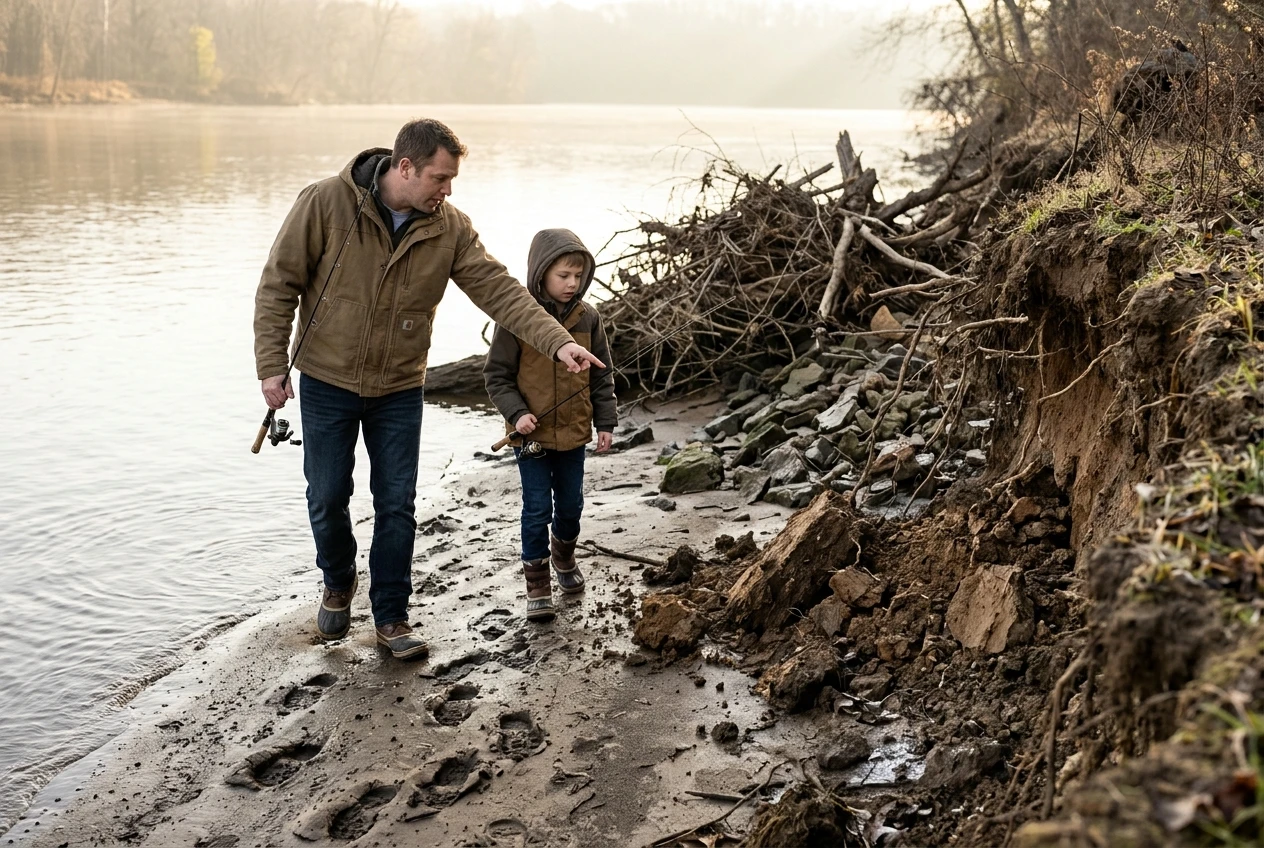
The 30-second bank check. Before anyone casts, walk the stretch of bank you plan to use, together with the kids if they are old enough to learn the habit. Look for:
- Steep or undercut edges, where the ground may give way.
- Wet clay, algae, or mud, especially near the waterline.
- Loose rocks that roll when stepped on.
- Broken glass, old line, or hooks left by other anglers.
- Overhanging branches and bushes that will catch a backcast.
- Poison ivy and spots where a snake could be resting, such as rock piles and thick brush.
Pick a flat, stable spot with enough space for everyone to stand without crowding. If the bank is steep or muddy at the edge, have kids fish from a few steps back. A longer cast is easier to manage than a rescue. For ideas on picking a good spot in the first place, see our article on choosing a family bank-fishing spot in Kentucky.
Sun, Heat, and Water: Protection and a Simple Hydration Plan
A lake bank often has little shade, and water reflects sunlight back at you. Kids can burn within a couple of hours, and heat can make them cranky or unwell before they say anything.
Pack these items:
- Broad-spectrum sunscreen, applied before you leave the car and again during the trip. Ears, the back of the neck, and the tops of feet get missed.
- Hats with a brim, and sunglasses, which do double duty with hook protection.
- Light, long-sleeved clothing that dries quickly, for kids who burn easily.
- A pop-up shade or a chair set under a tree, when the bank has one.
A simple hydration plan. Bring more water than you think you need, and offer it on a schedule instead of waiting for a child to ask. A reasonable habit is a drink each time someone reels in a catch or resets a rig, since that happens often. Add a snack that has some salt, such as crackers or pretzels. Skip sugary drinks as your main supply.
Know the warning signs of heat trouble: heavy sweating followed by a flushed face, headache, dizziness, unusual tiredness, or nausea. If you see any of them, move to shade, give water, cool the skin with a wet cloth, and end the trip if the child does not recover quickly.
Weather, Bugs, and First Aid: A Small Kit That Fits in the Tackle Bag
Kentucky weather can change within an hour, especially in summer. Check the forecast before you leave and again on arrival. Watch the sky while you fish, because dark clouds building to the west or a sudden wind shift is a signal to start packing up.
Thunder means leave. Rods are long and stand up above a flat bank, and you are next to open water. If you hear thunder, take the rods down, walk to the car or a sturdy building, and wait. A commonly given guideline is to wait about 30 minutes after the last thunder before going back out. Cold, wind, and rain are also reasons to cut a trip short with young children.
Bug protection. Insect repellent is the main item. Tuck pants into socks near tall grass and brush, and check everyone for ticks after the trip, including the scalp, behind ears, and waistbands. Keep a small tweezer in the kit for removing a tick.
A compact first aid kit can sit in a zip bag in the tackle bag. It needs:
- Adhesive bandages in several sizes
- Antiseptic wipes
- Tweezers and a small pair of scissors
- Sting-relief wipes or cream
- Any medications your family needs, such as an allergy kit for a child with a known allergy to stings
- A cold pack, if the cooler has room
Add your own phone, charged, and keep it in a dry bag so that you can call for help if you need it. Check the signal at your spot before you settle in, since some lake banks have weak coverage.
If you want to compare this kit with other gear before you buy anything, our guide to the family bank-fishing gear that matters and what you can skip can help you avoid overpacking.
Set the Safety Rules Before the First Cast: A Kid-Friendly Routine
Gear works best when kids know how to use it. Spend two minutes at the car or on the bank going over a few rules, and repeat them at the start of every trip. Short, concrete rules are easier for children to remember.
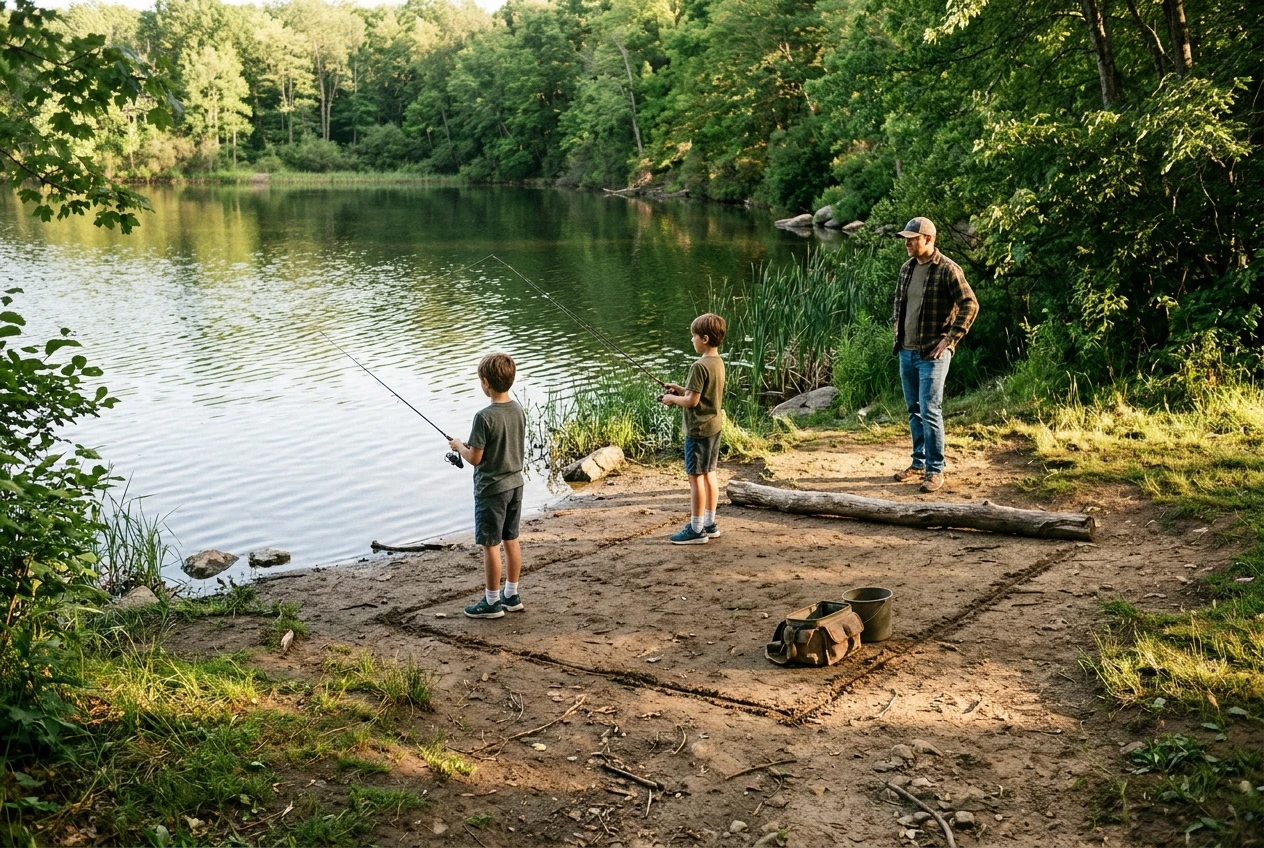
Set a casting zone. Mark an area on the bank, using a log, a rock, or a line scratched in the dirt, and tell kids that casting happens only from inside it, facing the water. Keep a safe distance between anglers, about the length of two rods, so no one gets hit on a backcast. Put the youngest child closest to an adult.
Teach a few simple phrases:
- “Look behind you” before every cast.
- “Hook parked” when a rod is not in use.
- “Walk, don’t run” anywhere near the water.
- “Stop and call” if a hook catches skin, a line snags, or anything seems wrong.
Give kids jobs. One child can be the weather watcher, another the water-break reminder. A child with a job pays more attention to the routine, and fishing stays fun instead of feeling like a list of orders.
Finally, end the trip with a quick check: count the hooks, pick up line and trash, and make sure everyone has all their shoes and gear. That last scan protects the next family who fishes your spot, too.
Safety gear for bank fishing does not need to fill a car. A life jacket, pliers, sunglasses, sturdy shoes, water, sunscreen, repellent, and a small first aid kit cover almost every risk on this list, and the habits cost nothing.
Planning your next trip? Browse the lake guides and ebooks to choose a Kentucky bank with easy footing and room for the whole family.