Choosing a guide before you choose a rod is a reasonable order of operations for a beginner family. The guide decides where you park, where the kids can stand safely, and what you do in the first ten minutes at the water. A good one saves a trip. A mismatched one sends you home early with bored kids and tangled line.
Digital Kentucky bank fishing guides come in three kinds: the single-lake ebook, the multi-lake overview, and the free agency or access map. Each answers a different question. This article explains what each does well, what it leaves out, and how to match one to your family. It ends with a five-minute test you can run on any guide before you pay for it. If you are looking for the best Kentucky bank fishing guide for beginners, the answer depends on whether you have already picked a lake.
What a beginner family actually needs from a lake guide
Experienced anglers read a guide for fish patterns. A beginner family needs something more basic: practical answers to the questions that come up in the first hour.

- Where do we park, and how far is the walk to the water? Carrying kids, a cooler and rods across uneven ground is a real consideration.
- Where can the kids stand safely? A gentle, open bank is very different from a steep or brushy one.
- Where do we cast first? A guide that names a starting spot saves you from standing at the water with no plan.
- What should we use? Simple bait and rig advice beats a long list of lures.
- What if nothing bites? A family needs a next move, such as a second spot or a change of depth.
Any guide you consider should answer most of these for the specific water you plan to visit. General fishing advice is easy to find. Lake-specific advice is the part that is hard to get, and it is what you are paying for or looking for.
Type 1: The single-lake ebook, best when you already know where you’re going
A single-lake ebook covers one body of water in depth. For a beginner family it is usually the most useful type once you have chosen where to go, because the advice can be specific instead of general.
What it does well
Because it covers one lake, a good single-lake guide can name individual bank access points, describe what each one is like for children, and suggest where to start casting at each. It can also describe how the lake behaves across seasons and what a family should bring for that particular shoreline.
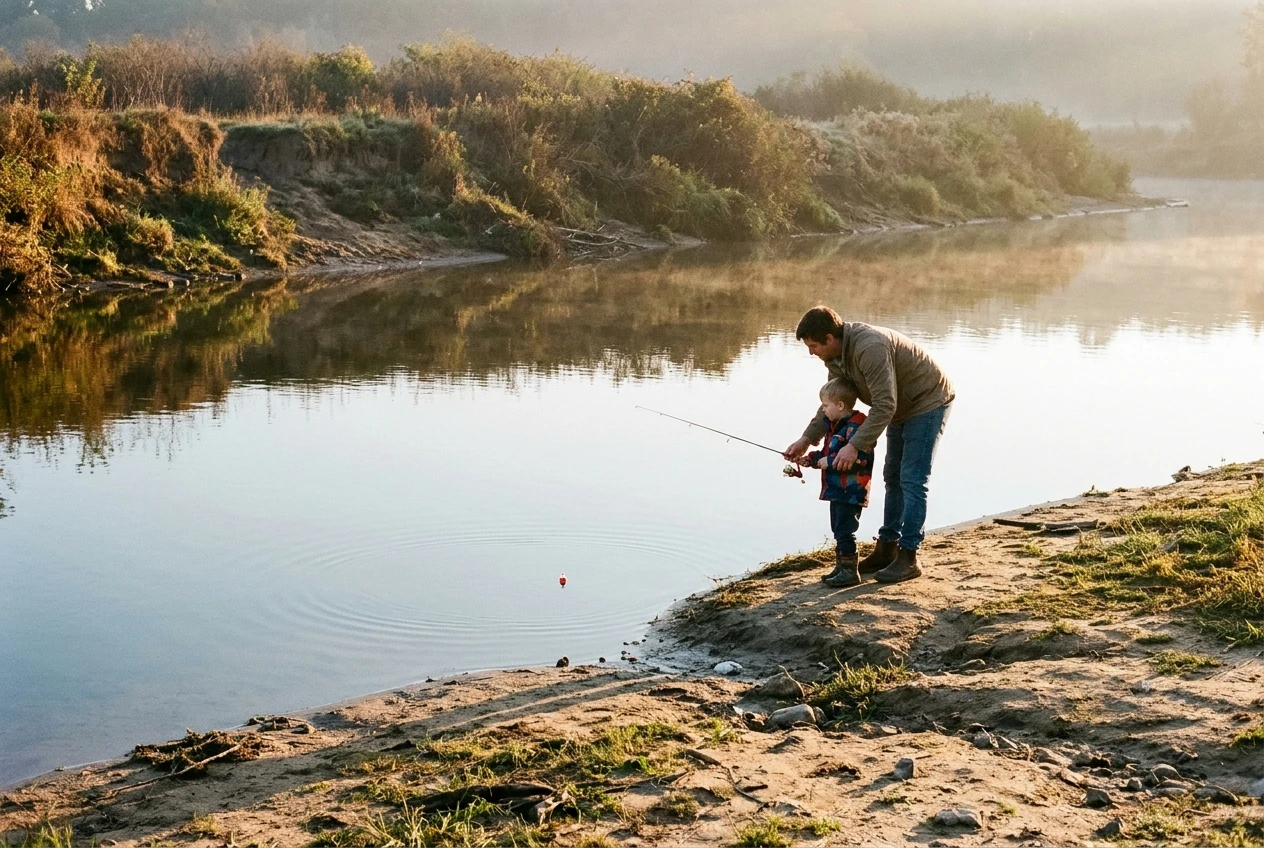
It tends to work like a trip plan rather than a reference book. You read it the night before, pick one access point, and follow it.
What it leaves out
It tells you nothing about the other lakes you might have chosen. If you bought it before deciding on a lake, you may find the lake is farther away than you wanted, or that the access points suit teenagers better than a five-year-old.
It also ages. Shorelines change, access points get closed or improved, and lake levels move. Check when the guide was last updated, and treat the agency’s current information as the final word on access and rules.
Best fit
Families who have picked a lake, ideally because of a short drive or a recommendation, and who want step-by-step help with their first trip there.
Type 2: The multi-lake overview, best when you’re still choosing a first lake
A multi-lake overview covers several lakes at a lighter level. Think of it as a comparison tool. It helps you decide which lake suits your family before you commit to anything deeper.
What it does well
A good overview lets you compare lakes on the things families care about: distance, how easy the bank is to reach, how much open shoreline there is, and what facilities are nearby. It can also point out which lakes suit very young children and which suit older kids who can handle more walking.
If you have not chosen yet, reading an overview first is cheaper in time and money than buying several single-lake guides. Our own roundup, five Kentucky lakes where your family can fish from the bank, is an example of this kind of comparison.
What it leaves out
Depth is the tradeoff. An overview rarely tells you which exact spot to stand on, where to cast first, or how to adjust when the bites stop. It gets you to the right lake and leaves the first cast to you.
Some overviews also read like general fishing articles with lake names attached. Look for specifics such as named access areas and notes about the shoreline. If every lake gets the same advice, the guide is not really about the lakes.
Best fit
Families still deciding between two or more lakes, or families who want to fish a few different places over a season and need a quick way to pick the next one.
Type 3: Free agency maps and access listings, and what they leave out
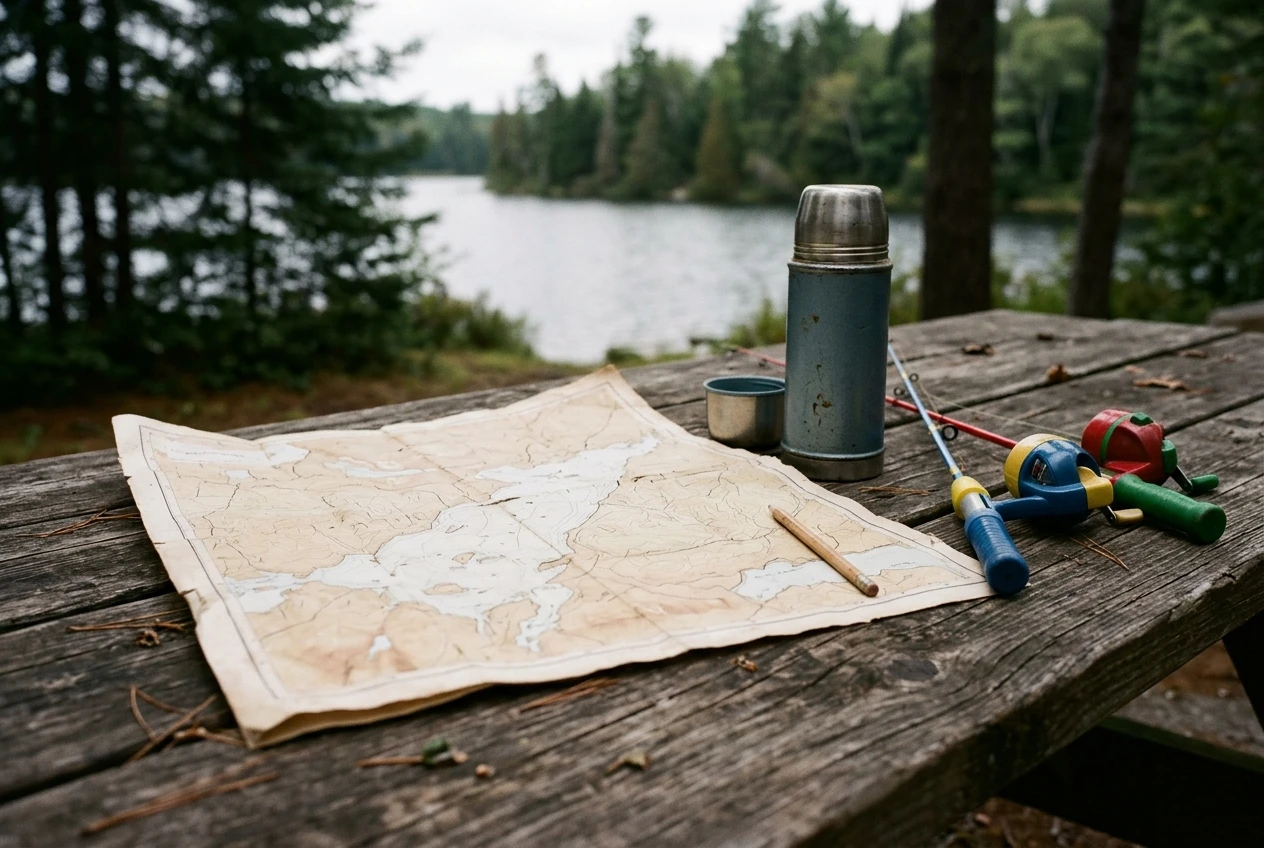
State wildlife agencies and lake managers publish maps and access listings at no cost. For Kentucky, the Kentucky Department of Fish and Wildlife Resources is the natural place to start, and some lakes also have their own management pages. Free information deserves a place in your planning, and for some families it is enough.
What it does well
Agency sources are the best place to confirm the basics: that an access area exists, where it is, and what rules apply. Regulations, licensing and any closures belong in this category, and you should check them regardless of which paid guide you use. A guide can summarize the rules, but the agency is the source that stays current.
Maps also show you the layout of a lake, so you can see how far access points are from each other and from where you live.
What it leaves out
A map tells you a place exists. It does not tell you whether it is a good place for a six-year-old with a bobber. Access listings are usually written to cover everyone who uses the lake, including boaters, so they rarely say which bank spots are gentle, which are steep, or where beginners tend to do best.
Free sources also say little about technique. You will not find advice on where to cast first or how deep to set a bobber. If you are relying only on a map, you are planning the logistics but not the fishing.
Best fit
Confirming rules and access, planning the drive, and double-checking any paid guide. They are also enough for families who already fish a lake and just need to check what has changed.
Match the guide to your family: first trip, second trip, and confident regulars
You do not need to choose one type forever. Most families use different types at different stages.
The first trip
Your goals on a first trip are modest: get the kids to the water, get a line in, and leave while everyone is still having fun. Two things matter most, which are a lake you can reach easily and a specific plan for the first two hours.
- If you have not chosen a lake, start with a multi-lake overview, then use the agency map to confirm access and rules.
- If you have chosen one, a single-lake ebook gives you the spot-by-spot plan.
Pair either with a short packing list. Our two-hour family packing list is a good starting point, and the first trip is not the time to buy every piece of gear.
The second trip
By the second trip, you know what worked and what did not. Maybe the kids lasted longer than you expected, or maybe the bank was crowded. This is when a single-lake guide earns its price, because you can try a second access point on the same lake and compare. If the nearest bank was busy, our article on choosing a family spot when the closest bank is crowded covers the decision.
You may also want to widen your options. An overview helps you pick a second lake once you know how far the family is willing to drive.
Confident regulars
Once your family can rig a line, read a bobber and settle into a spot without instructions, you need less hand-holding. Agency maps and updates are often enough, supplemented by a single-lake guide for any new water you want to try. Regulars tend to buy guides for places they have not fished yet, not for places they already know.
A five-minute test to run on any guide before you pay for it
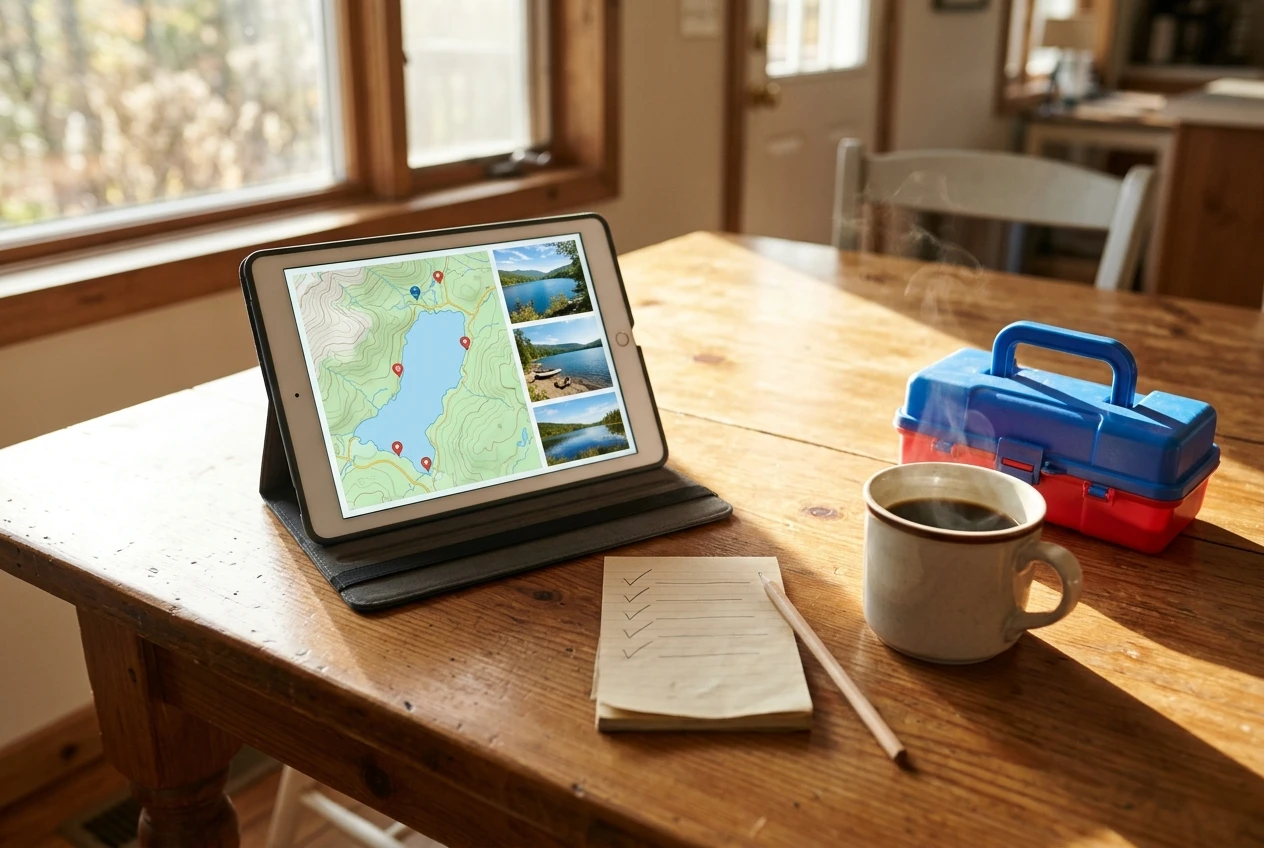
Before buying a guide, look at its description, preview pages, table of contents or sample, and run through these checks. Each takes about a minute.
- Does it name specific places? Look for named access points or shoreline areas, not just the lake name. A guide that says “fish the banks” without saying which banks has not done the work.
- Does it say where to cast first? A beginner needs a starting point. If the guide gives you only general technique, you will still be standing at the water wondering where to begin.
- Does it address children? Look for comments on how easy the bank is to walk, how steep it is, and whether the spot suits small kids. If the guide never mentions family use, it was probably not written for you.
- Does it tell you what to do when nothing bites? The best guides include a next move: a second spot, a change of depth, or a reason to wait. Our posts on when to stay and when to move show the kind of guidance to look for.
- Is it dated, and does it point you to current rules? A guide that tells you to confirm regulations and access with the agency is being honest about what it can and cannot keep current. A guide that claims to replace the agency’s information should be treated with caution.
If a guide passes four of the five, it is probably worth your money. If it passes two or fewer, keep looking or fall back on free sources. You can also run the test on a free guide, since free does not guarantee useful.
One more check costs nothing: see whether the guide’s claims can be confirmed elsewhere. If it names an access point, find that point on the agency map. If the two disagree, trust the agency and be careful with the guide.
Where our own lake guides fit, and when a free option is enough
Our site sells lake-specific bank fishing guides, written for beginners and families, plus a printable family checklist to take along. They belong in the first category above: single-lake guides for families who have picked a lake and want a concrete plan for it.
They are a good fit if you want named spots, starting points and family-oriented advice for one lake without piecing it together from several sources. They are not a replacement for the agency’s current rules and access information, which you should check before any trip.
A free option is enough in several situations:
- You already fish the lake and only need to confirm access or regulations.
- You are scouting for a possible lake and have not decided yet, so a map and an overview will do.
- You are planning a very short, close-to-home trip and the main question is simply whether the bank is open.
If you want a hand with the bigger picture of a trip, our guide to planning your first guided fishing trip in Kentucky with your family covers the planning side, and our family gear guide helps you decide what is worth bringing.
Whichever type you use, the aim is the same: a first trip your kids remember as fun, so there is a second one.
If you’ve picked your first lake, see our lake-specific bank fishing guide for it and take the printable family checklist along on your next trip.