Picking a lake is the hardest part of a first family fishing trip. Kentucky has a lot of water, and most of it is easier to reach by boat than by foot. These five lakes all have public land along the shore, and each one is managed by an agency that publishes where you can park, walk and fish.
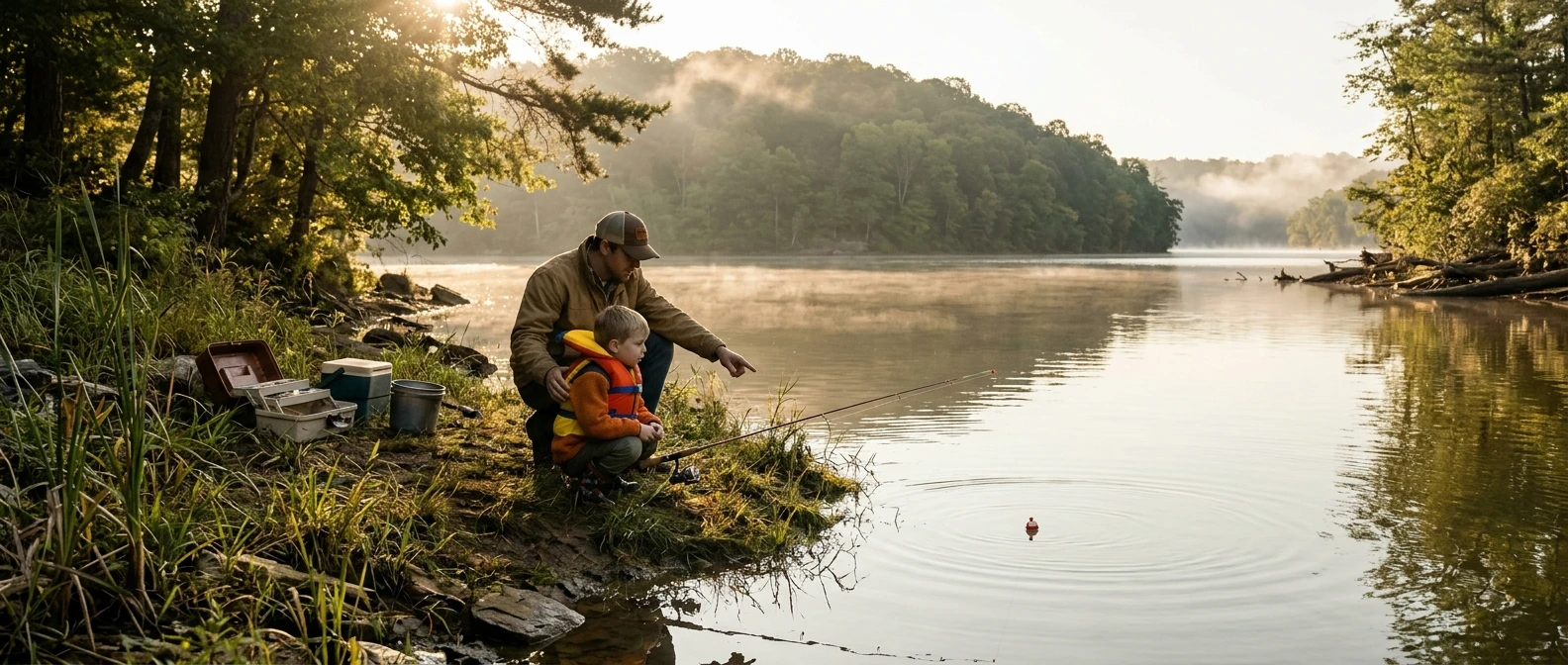
Rather than ranking by size or reputation, this guide compares the lakes the way a parent has to: how easy the walk from the car is likely to be, how safe the bank is for children, and whether a beginner has a realistic chance at a bite. If you are searching for the best Kentucky lakes for bank fishing with kids, start with the checklist below and use it on any lake you are considering.
One note on specifics. Parking areas, fishing piers, fees, hours and closures change, and the agency that runs each lake is the only reliable source. Each section names that agency so you know who to check with before you load the car.
How we judged a lake as family-friendly from the bank
Every lake in this guide gets the same four questions.
- The walk from the car. Kids carry rods, tackle and snacks, and they get tired. A short, flat walk to the water means more time fishing. A long hike over rocks means a short day.
- The bank itself. Gentle slopes, mowed grass, a pier or a dock are easy for kids. Steep, muddy or rocky edges need a closer eye and sometimes a different spot.
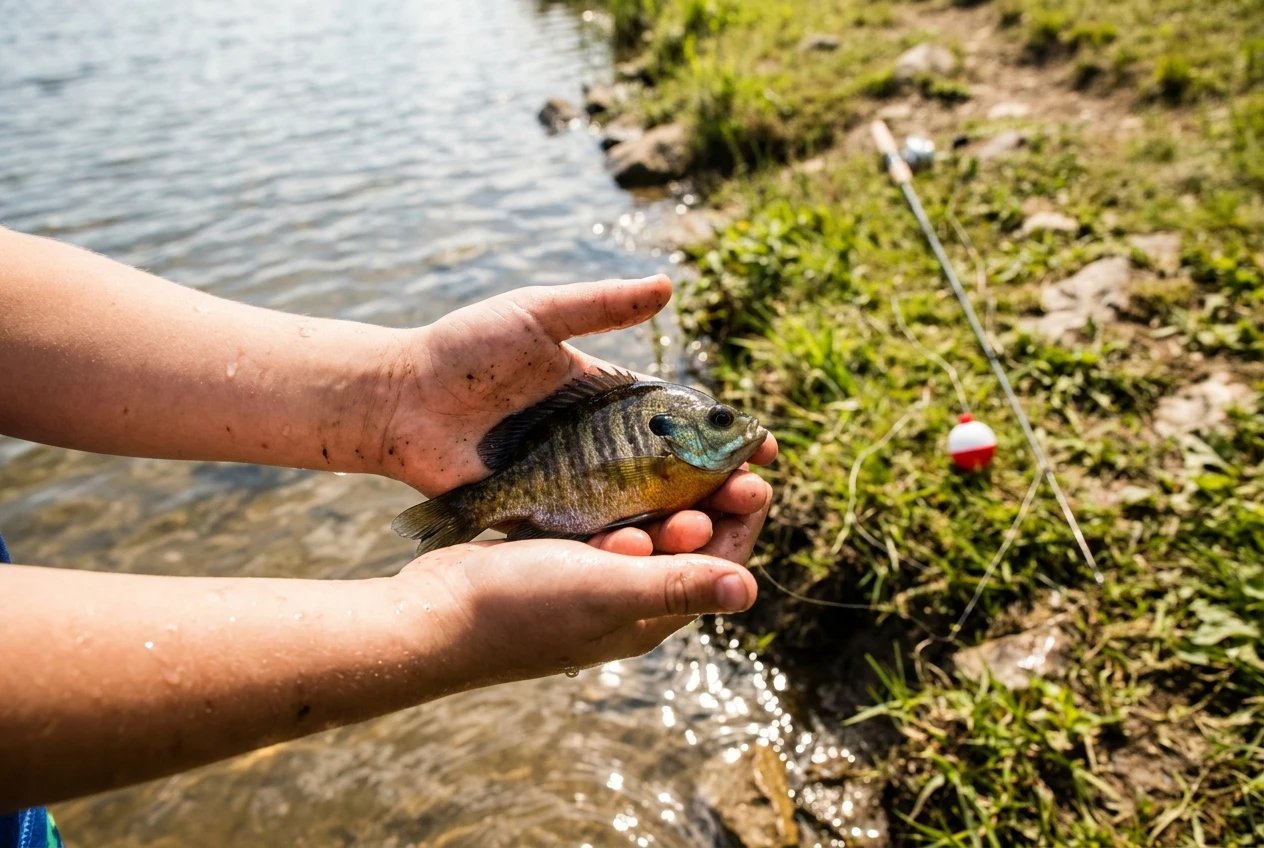
- A realistic first bite. Beginners do best with fish that are common, willing and close to shore. Bluegill and other sunfish are the classic first fish because they bite small baits under a bobber in shallow water. Crappie and catfish are also reachable from the bank at the right time of year.
- Services nearby. Restrooms, drinking water and a place to sit make a two-hour outing manageable with young children. Developed recreation areas and state parks are more likely to have them, but confirm that with the managing agency.
None of these lakes guarantees fish on any given day. What they offer is public access, the right kind of fish, and a setting where families can learn without much pressure.
Lake 1: Kentucky Lake, easy shoreline and where to start
Kentucky Lake is the biggest lake on this list by a wide margin. It sits in western Kentucky on the Tennessee River, and its shoreline is shared among state parks, Land Between the Lakes (run by the U.S. Forest Service), and other public areas.
That size is the main thing to plan around. Open water means wind, and wind makes casting harder for children and pushes bobbers out of place. Families do best picking a developed area with a defined bank, and looking for a sheltered cove or a spot with a pier rather than a long stretch of open shoreline.
- Walk from the car: Depends entirely on which area you choose. Developed areas near parks and campgrounds are the better starting point for families.
- Bank safety: A big lake can have drop-offs close to shore. Keep younger kids away from the water’s edge until you have looked at the slope.
- First-timer odds: Good. Kentucky Lake is well known for crappie, bluegill and catfish, all reachable by bank anglers at the right time.
- Check before you go: Look at the Land Between the Lakes site or the state park you are visiting for access points, and confirm whether the area has fishing piers or bank access suited to kids.
Start small here. One cove, one bank, two hours. The lake is big enough that you do not need to see all of it on the first trip.
Lake 2: Cave Run Lake, bank spots with room for kids
Cave Run Lake is in the hills of eastern Kentucky, near Morehead, and is surrounded by the Daniel Boone National Forest. The U.S. Army Corps of Engineers manages the dam and lake, and the Forest Service manages much of the land around it.
Cave Run is best known for muskie, a big predator that is not a realistic target for a beginner on the bank. The same lake also holds bluegill, crappie and bass, which are much better fits for a family’s first trip.

- Walk from the car: Forest land can mean trails and uneven ground. Look for recreation areas with a marked shoreline access rather than walking in from a pull-off.
- Bank safety: Wooded and rocky shorelines can be uneven or slippery. Choose a spot where you can stand a few feet back from the water with room for several people.
- First-timer odds: Reasonable, if you fish for sunfish and crappie close to shore and leave the trophy fish for later.
- Check before you go: Contact the Corps or the Daniel Boone National Forest office about which recreation areas have bank fishing, and about any fees or seasonal closures.
The scenery is a real draw here, and it gives children something to do between bites.
Lake 3: Taylorsville Lake, a closer-to-the-city option
Taylorsville Lake is in central Kentucky, within a reasonable drive of Louisville, Shelbyville and Frankfort. For families in that part of the state, it removes the long drive that can wear out a child before the first cast.
The lake is managed by the Army Corps of Engineers, with a state park and a wildlife management area on the surrounding land. Because several agencies are involved, rules and access can differ from one side of the lake to the other. That makes it worth confirming which agency manages the exact spot you picked.
- Walk from the car: Park-managed areas are the likeliest to offer shorter, maintained walks. Confirm the specific area before you go.
- Bank safety: Reservoir banks vary a lot, and low water can leave muddy slopes. Look at the bank from above before you let kids near it.
- First-timer odds: Good for a mix of bluegill, crappie, bass and catfish, the species a beginner can realistically catch from shore.
- Check before you go: The Corps, the state park and Kentucky Fish and Wildlife (KDFWR) each publish information. Check them for access points and any rules for the area you plan to fish.
A closer lake means you can make a short trip of it. A two-hour outing is a good first target for a young family.
Lake 4: Green River Lake, quieter banks for a slower day
Green River Lake is in south-central Kentucky, near Campbellsville. The Army Corps of Engineers manages the lake, and a state park sits on its shore.
This is the lake to consider if the busiest developed areas feel like too much. Families who want fewer people nearby, or who have a child who gets distracted by a crowd, may prefer a quieter bank. The tradeoff is that quiet spots are often less developed, with a longer walk, fewer facilities and less maintained ground.
- Walk from the car: Weigh the quiet against the distance. A short walk to a calm bank suits kids better than a long one to a perfect spot.
- Bank safety: Less developed banks can be steep, brushy or uneven. Walk the area yourself first and set the kids up where the footing is firm.
- First-timer odds: Good for a slower day aimed at sunfish and crappie, which can be found close to shore.
- Check before you go: Ask the Corps office or the state park where bank fishing is open and which areas have restrooms and parking close to the water.
Bring patience for this one. A slower lake teaches children to watch the bobber and wait, which is half of fishing.
If you hit a busy bank on arrival, the post on where to fish first when the closest bank is crowded covers how to move without losing the whole trip.
Lake 5: Rough River Lake, a simple pick for a first trip
Rough River Lake is in west-central Kentucky, in the Breckinridge, Grayson and Hardin county area. The Army Corps of Engineers manages the lake, and a state resort park sits beside it. That combination, a Corps lake with a developed park on the shore, is a practical setup for a family’s first trip.
State resort parks usually have restrooms, picnic areas and clearly marked access, which takes a lot of friction out of the day. That is why Rough River is the simple pick here. It asks the least of a beginner in planning.
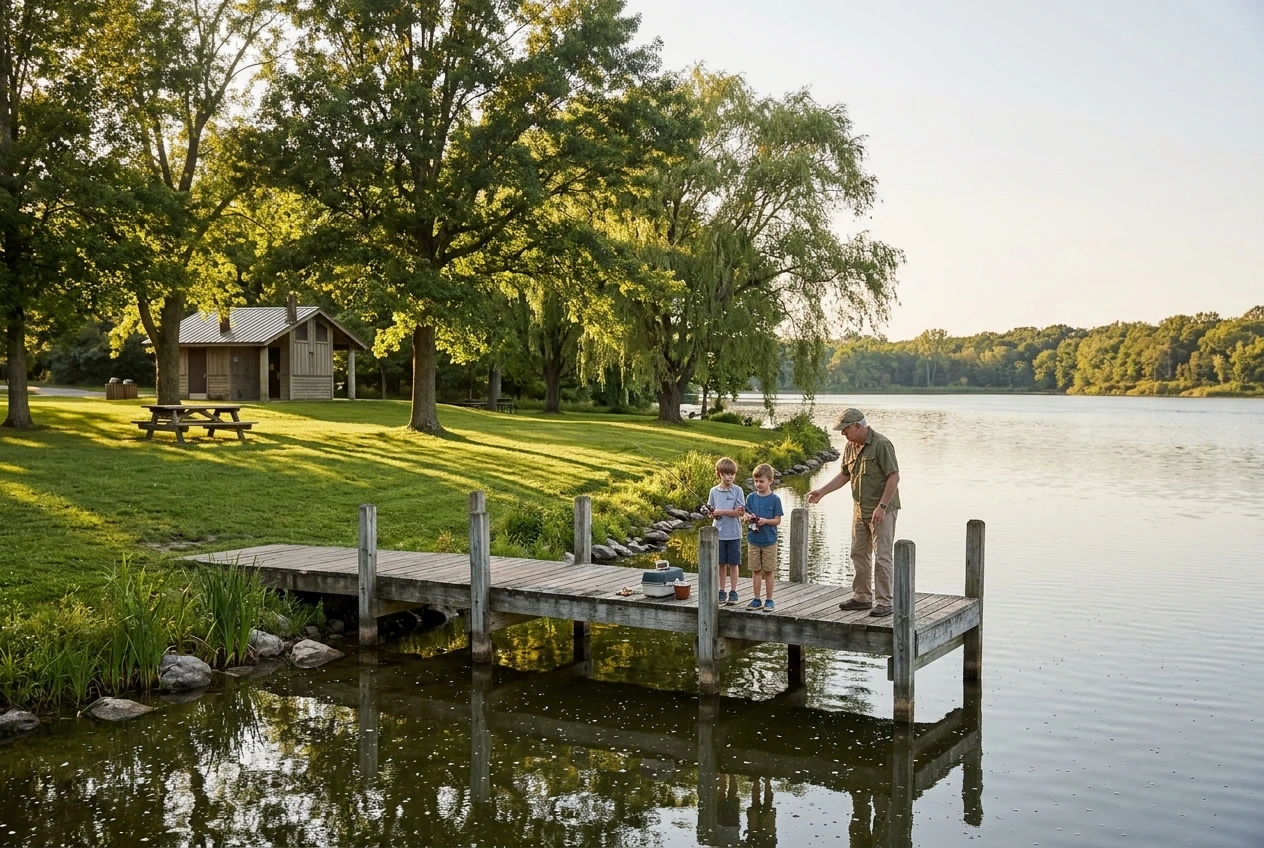
- Walk from the car: Developed park areas are the best bet for short, maintained walks. Confirm which parts of the shoreline are open to fishing.
- Bank safety: Maintained banks are easier for kids, but the water can still deepen quickly. Keep young children within arm’s reach of an adult.
- First-timer odds: Good for bluegill, crappie and catfish, the fish most families should be aiming for on a first trip.
- Check before you go: The Corps and the state park both post information about fishing access, facilities and any closures.
If you have never taken the kids fishing and want one lake to try, this is where the guide points first.
Safety on the bank: steep edges, shallow water and kids near the rod tip
A good lake still has hazards. These apply to every bank in this guide.

- Look at the edge before you settle. Check the slope, the footing and how fast the bottom drops. Wet clay, loose rock and algae are slippery. Many Kentucky reservoirs are lowered in fall and winter, which can leave long, muddy banks, and the post on where to cast first as the lake level falls covers that situation.
- Keep small children within arm’s reach. Shallow water near shore can still be dangerous for a toddler, and a bank that looks flat can drop away close to the edge. A properly fitted life jacket on a young child is a sensible precaution on any bank near deep water.
- Give casters room. A hook on a back-cast can land in a sibling’s ear or hand. Set one rule: only one person casts at a time, and everyone else stands behind the caster. Space children several feet apart along the bank.
- Watch the rod tip. Kids tend to swing the rod toward whatever interests them. Show them how to point it at the water, and keep hooks covered or in a closed box between casts.
- Check the weather and the water. Wind, rain and thunderstorms all end a family trip. Leave the bank when thunder is audible, and give yourself time to walk back to the car.
- Know the rules. Licensing, creel limits and any area-specific rules come from KDFWR and the managing agency. Check both before you go rather than relying on a general guide.
Which lake to pick for your family, and what to read next
Choose by what your family needs most.
- Easiest first trip: Rough River Lake, because the developed state park setting simplifies logistics.
- Closest to the city: Taylorsville Lake, if a short drive matters more than scenery.
- Quieter, slower day: Green River Lake, for families who want fewer people and are willing to check the walk in advance.
- Scenery and a hill-country setting: Cave Run Lake, aimed at sunfish and crappie rather than muskie.
- A big-water day with a lot of room to explore: Kentucky Lake, starting at one developed area rather than trying to cover the whole shoreline.
Whichever lake you pick, call or check the managing agency’s page first. A five-minute check on parking, access and closures saves a lot of disappointment with children in the back seat.
If you would like to arrive knowing exactly where to park, where to walk and where to cast, get the Hub’s lake guide or ebook for the lake you chose. It is written for families fishing from the bank, so you can spend the trip fishing instead of figuring out the layout.
Then round out the plan. The post on family bank-fishing gear that actually matters explains what to buy and what to skip, and the two-hour family packing list covers what goes in the bag. Pick a lake, check with the agency, and plan a short first trip. The first bluegill is usually enough to bring the kids back.