
If you are working out how to plan a guided fishing trip in Kentucky, the most useful thing to know is that most of the work happens before you get in the car. The guide handles the boat, the tackle, and the knowledge of where fish are. Your job is to pick the right kind of trip, ask the right questions, and arrive with a family that knows roughly what to expect.
This walkthrough is written for families who have never hired a guide, and especially for those who are more comfortable on a bank than in a boat.
Is a guide worth it for your first trip? What you actually get
A guide sells you a short cut. Instead of spending several outings figuring out which part of a lake holds fish, which bait they are taking, and how deep to set it, you spend one outing with someone who already knows. For a family with young kids, that matters because children lose interest quickly when nothing is biting.
Here is what a good guide typically provides:
- Local knowledge of where fish are on that lake at that time of year
- Hands-on teaching, such as baiting a hook, casting, and handling a fish
- Help with the parts that make beginners nervous, like unhooking a fish or reading a bobber
- A safer, more organized day if a boat is involved
What a guide cannot do is guarantee fish. Weather, water level, and the time of year all affect how well fish bite. A good first trip is judged by whether your family learned something and enjoyed being outside, with the catch as a bonus.
A guide is also worth considering if you have limited time. If you only have one weekend at a lake, paying for experience can be more efficient than hoping the closest bank works out.
Pick the kind of trip your family needs: boat, bank, or a mix
Before you search for guides, decide what kind of outing suits your family. Guided trips generally fall into three types, and the right one depends on how comfortable everyone is around water.
Boat trips. A boat can reach parts of a lake that no bank can, and fish are often easier to find from one. The tradeoffs are that everyone has to sit fairly still, space is limited, and a nervous child or a nervous parent may spend the morning thinking about the water instead of the fishing. If anyone in your group cannot swim, ask about life jackets in the right sizes before you book, and plan for everyone to wear one.
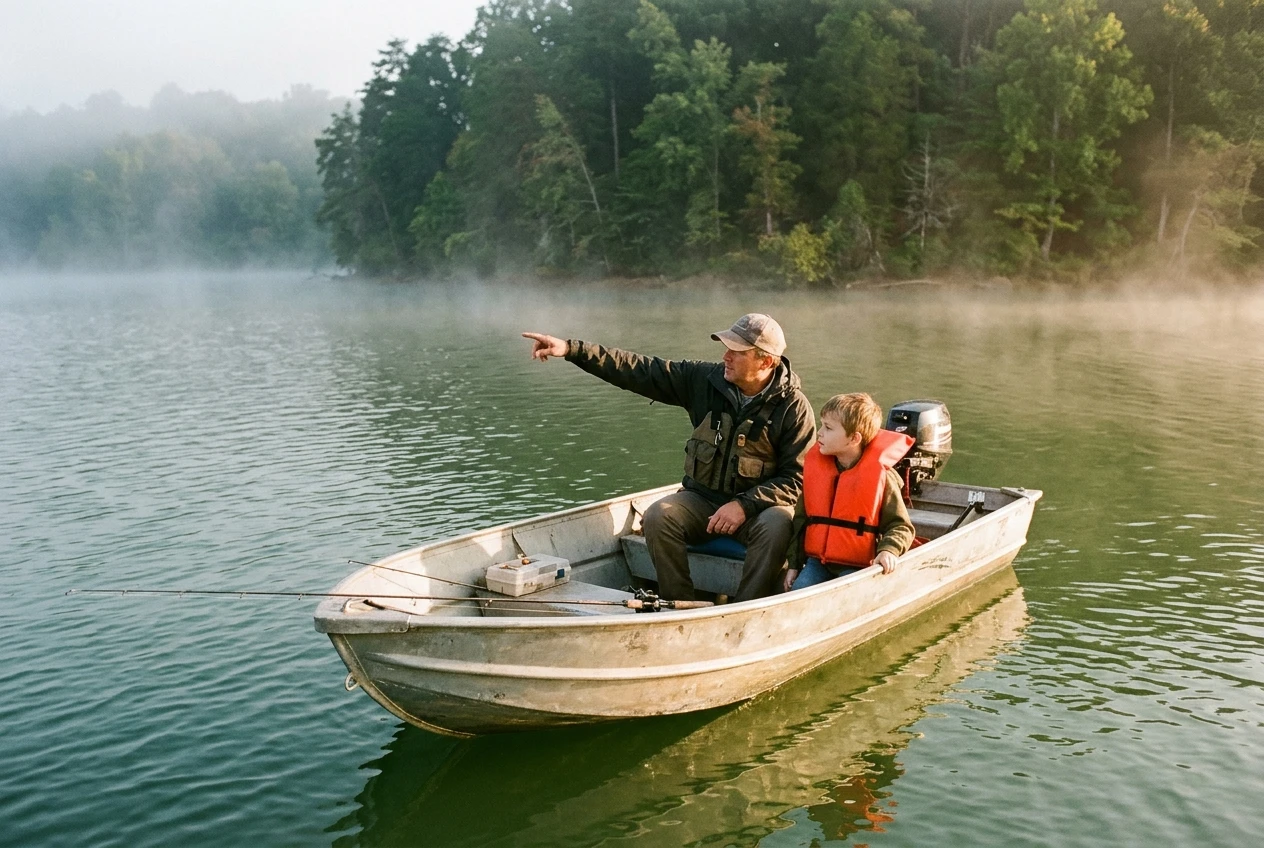
Bank trips. Some guides take clients to the shoreline instead of out on the water. This suits families who are comfortable with bank fishing, have very young children, or want to learn skills they can repeat on their own. Kids can walk around, take breaks, and skip stones without anyone worrying about the edge of a boat.
A mix. Some guides will start on the bank to teach basics and then move to a boat, or the reverse. If your family is unsure, a mixed or flexible trip lets you find your comfort level without committing to a whole day on one or the other.
If your family is more at ease on the shore, say so plainly when you contact a guide. Many will tell you straight away whether they offer what you need. If a guide only runs boat trips, that is a useful answer, and you can look for someone else.
Choose a lake and season that suit beginners
The lake affects the whole day: how far you drive, what facilities are nearby, and how easy it is to fish with kids. Some lakes have plenty of accessible shoreline, which makes them a good place to practice later. Our post on five Kentucky lakes where your family can fish from the bank is a good starting point if you have not picked one yet.
When you choose, think about these points:
- Drive time. A long drive can wear out children before the trip begins. A closer lake leaves more energy for fishing.
- Facilities. Restrooms, parking, and shade make a real difference to a family outing. Ask the guide what the launch or meeting spot offers.
- Season. Fish behavior changes through the year, and so does comfort. Very hot afternoons and cold, windy mornings are both hard on kids. Ask the guide which months they find best for beginners and which time of day they prefer.
- Water conditions. Lake levels and recent weather can change where the guide fishes. A good guide will tell you if conditions call for a different plan.
If you have a choice of dates, ask the guide to recommend one rather than choosing based on your own calendar alone. They know the lake’s patterns far better than a general forecast does.
Questions to ask a guide before you book
This is the part nervous beginners tend to skip, and it is where you set up a good day. A reputable guide expects these questions and will answer them directly. Ask by phone or message before you pay.
About the trip itself
- How long is the trip, and can it be shortened if the kids get restless?
- Is it a boat trip, a bank trip, or both?
- What is the maximum group size, and how many children can come along?
- Have you taken families with beginners before? What ages?
- What do you do when fish are not biting?
About what is included
- Are rods, reels, bait, and tackle included?
- Are life jackets provided, and do you have child sizes?
- Is a fishing license included, or do we buy our own?
- Are food, drinks, or ice provided, or do we bring everything?
About the practical side
- Where do we meet, and what time?
- What is your cancellation and weather policy?
- What is the total price, and what does it cover? Is there a deposit?
- Is tipping customary?
Pay attention to how the guide answers as well as what they say. Patient, clear answers to beginner questions are a good sign. If the response feels rushed or annoyed, move on to the next name on your list.
Licenses, ages, and rules to confirm with the guide and Kentucky Fish and Wildlife
Fishing licenses are the item most likely to cause a problem on the day, and the rules can change. Confirm the current requirements before you go, because the answer depends on who is fishing and where.
Two sources will give you a reliable answer. Ask the guide whether the trip includes licenses or whether each adult needs their own. Then check with the Kentucky Department of Fish and Wildlife Resources, the state agency that issues licenses and publishes the regulations, for current rules on license requirements, age exemptions, and any special permits.
When you check, ask about:
- Whether each adult in your group needs a license, and whether any exceptions apply
- Whether children need a license at their ages
- Any limits on the number or size of fish you can keep
- Whether the lake you chose has special rules
If a guide’s trip covers licenses, get that in writing in your booking confirmation. If it does not, buy licenses ahead of time so you are not dealing with it in a parking lot while the group waits.
What the guide usually brings and what you should pack
Guides differ in what they supply, so the answers you collected in the previous step decide your packing. Many provide rods, tackle, and bait, but never assume. If the guide says they cover the fishing equipment, you can concentrate on comfort and keeping the kids happy.
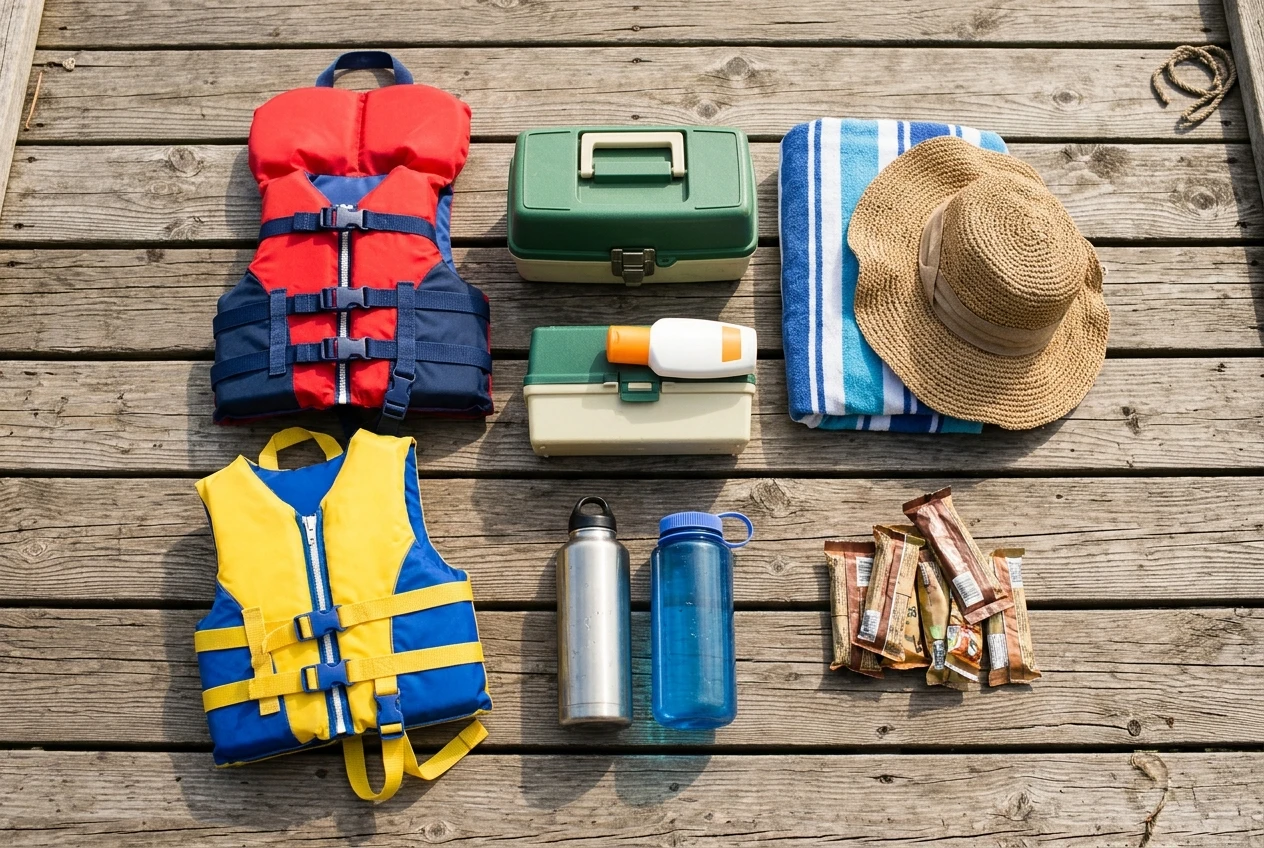
Even with a guide, bring the basics for a day outdoors:
- Sunscreen, hats, and sunglasses
- Layers, since mornings on the water can be cooler than the forecast suggests
- Water and snacks, especially ones kids will actually eat
- Closed-toe shoes with good grip
- A towel and a change of clothes for children
- A small bag for trash and wet items
Our packing list for a two-hour family bank-fishing trip covers the essentials in more detail, and most of it applies to a guided day too. If you want to buy your own equipment for later outings, the family bank-fishing gear that actually matters explains what is worth spending money on and what you can skip. It is worth waiting until after the guided trip, so you can see what the guide uses and ask what they would recommend.
How to get kids and first-timers ready the week before
A little preparation makes the day calmer, especially for children who have never held a fishing rod.
Talk through the day. Tell kids where you are going, how long it will take, and what will happen. Children handle unfamiliar situations better when they know the outline.
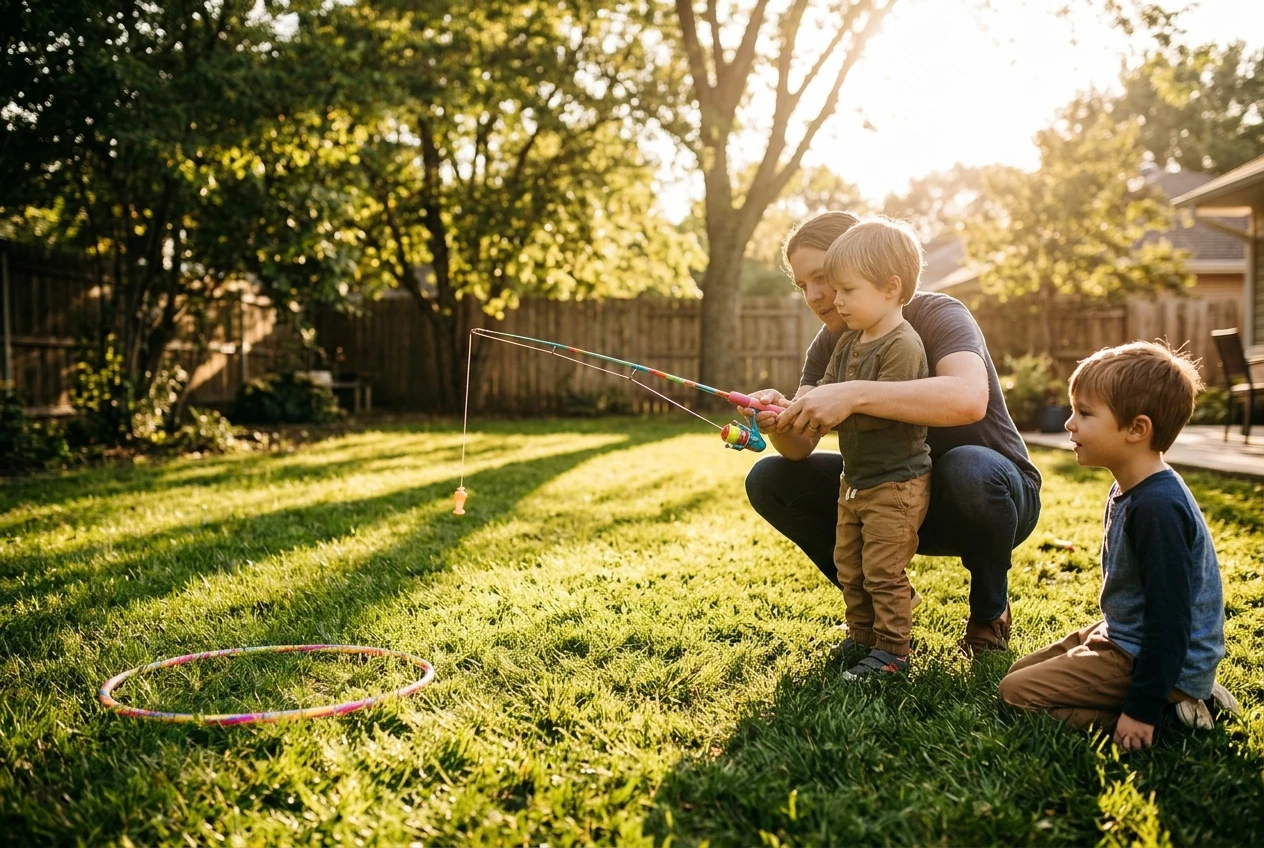
Practice a cast in the yard. Even without a hook, a few practice casts at a target on the lawn give children a feel for the motion. Ask the guide whether they can recommend a cheap practice setup, or whether it is better to simply learn on the day.
Set expectations about fish. Some trips produce a lot of fish and some produce only a few. Let kids know that waiting is part of fishing and that the guide is there to help them make the most of it.
Prepare for fish and bait. If children might be squeamish about worms or touching a fish, mention it to the guide in advance. Many guides will handle that part for the child or gently coach them through it.
Check the forecast and the basics. Two days before, confirm the meeting time and place with the guide, check the weather, and pack the car the night before so the morning is not rushed.
What the day looks like, and how to tip, ask questions, and keep it fun
Arrive a few minutes early. Guides usually start with a short talk about safety, how the day will run, and what they expect from the group. If you are on a boat, this is when life jackets go on.
From there, a typical day follows a loose pattern: the guide takes you to a spot, shows each person how to set up and cast, and adjusts as the fish respond. Expect to spend some time moving from place to place.
A few habits keep the day pleasant:
- Ask questions freely. Why this spot? Why this bait? Why this depth? Guides generally enjoy explaining, and the answers are the part you can take home.
- Let kids take turns. If there is one child who is eager and another who is shy, ask the guide to make sure everyone gets a turn at the rod.
- Keep sessions short and snacks close. Children enjoy fishing more in bursts. A snack break is a good reset when attention fades.
- Follow the guide’s instructions about the boat or the water. Safety directions are not a suggestion, and children should hear that from a parent too.
- Celebrate small things. A first nibble, a good cast, or a small fish deserves a cheer.
On tipping, ask the guide when you book whether it is customary and whether they prefer cash. If you were happy with the day, tipping is a normal way to say thanks. If you are unsure, asking in advance is better than guessing afterward.
Practice the skills you learned on your own at the bank afterward
The best part of a guided trip is how much it teaches you. Within a week or two, take the family to a bank at a lake and repeat what you learned while it is fresh. Practicing at a shoreline is cheaper, simpler, and a good way to turn a single outing into a habit.
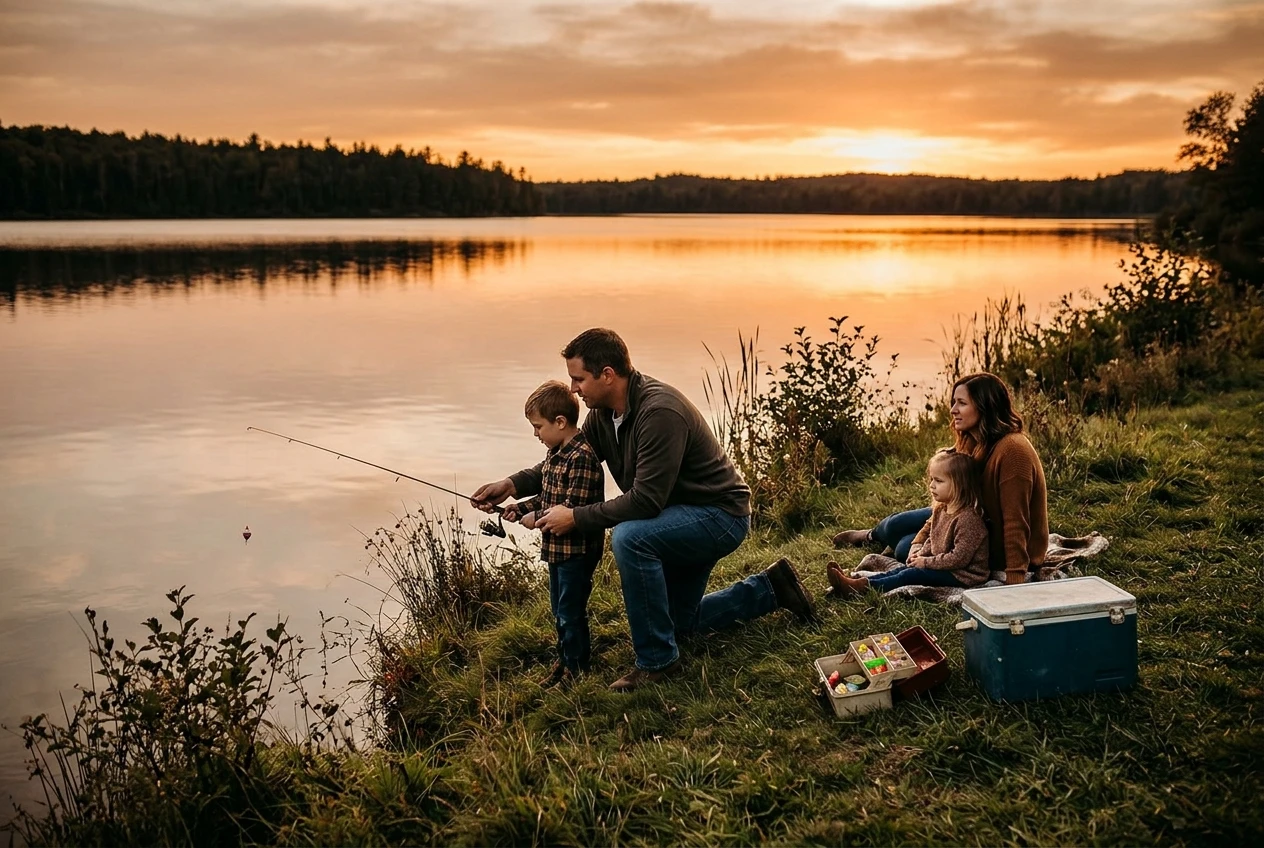
Start by writing down what you remember: the knots, the bait, the depth the guide used, and what the guide said about where fish were holding. If your guide showed you how to set a bobber, the post on how deep to set your bait under a bobber can help you test different depths one at a time. Pick a spot with easy access, keep the first trip short, and let the kids lead where possible.
A guided trip works best as the first of several. Your family gets a confident start, and from there you can keep fishing together on your own.
If there is a lake you are considering for your guided trip, pick up the Kentucky lake guide for that lake so you have a plan for bank fishing there once the guided day is over.