If you are working out what to bring on a first fishing trip with kids, the useful question is what you can leave at home. A family that has never fished needs a small amount of gear, and most of the popular stuff can wait until the kids have shown they want to go again.
This guide sorts the gear into three piles: what to buy, what to borrow, and what to skip for now. It aims for a cheap, low-stress first outing from a Kentucky bank, not a complete kit.
Plan for one easy hour, not a perfect day
Young kids’ attention runs out faster than most parents expect. A trip planned around one good hour of fishing, at a spot you can reach with a short walk from the car, changes what you pack. You do not need a bag that supports a full day, because the whole outing might last less time than a movie.
Planning for one hour also lowers the stakes. If the fish do not bite, you have lost an hour and a little bait, not a weekend and a pile of money. Kids tend to enjoy the parts adults overlook: digging in the bucket, watching a bobber, getting a snack on the bank. A short, successful trip gets a “can we go again?” much more reliably than a long one that ends in meltdowns.
Here is how that shapes the packing:
- Fewer rods, so nobody spends the hour untangling lines.
- One kind of bait and one way of fishing, so there are fewer decisions to make.
- Gear that fits in one trip from the car, so you are not hauling anything twice.
- Snacks and water treated as part of the plan, since a hungry child ends a trip faster than a slow bite.
If you want the full tick-box version of what to check before you leave, the Kentucky bank fishing gear checklist covers that. This article is about deciding what belongs on that list in the first place.
The short list of gear worth buying for trip one
A few items are worth owning from the start, because borrowing them is awkward or they are cheap enough that it does not matter. Keep the list short.
Rods and reels
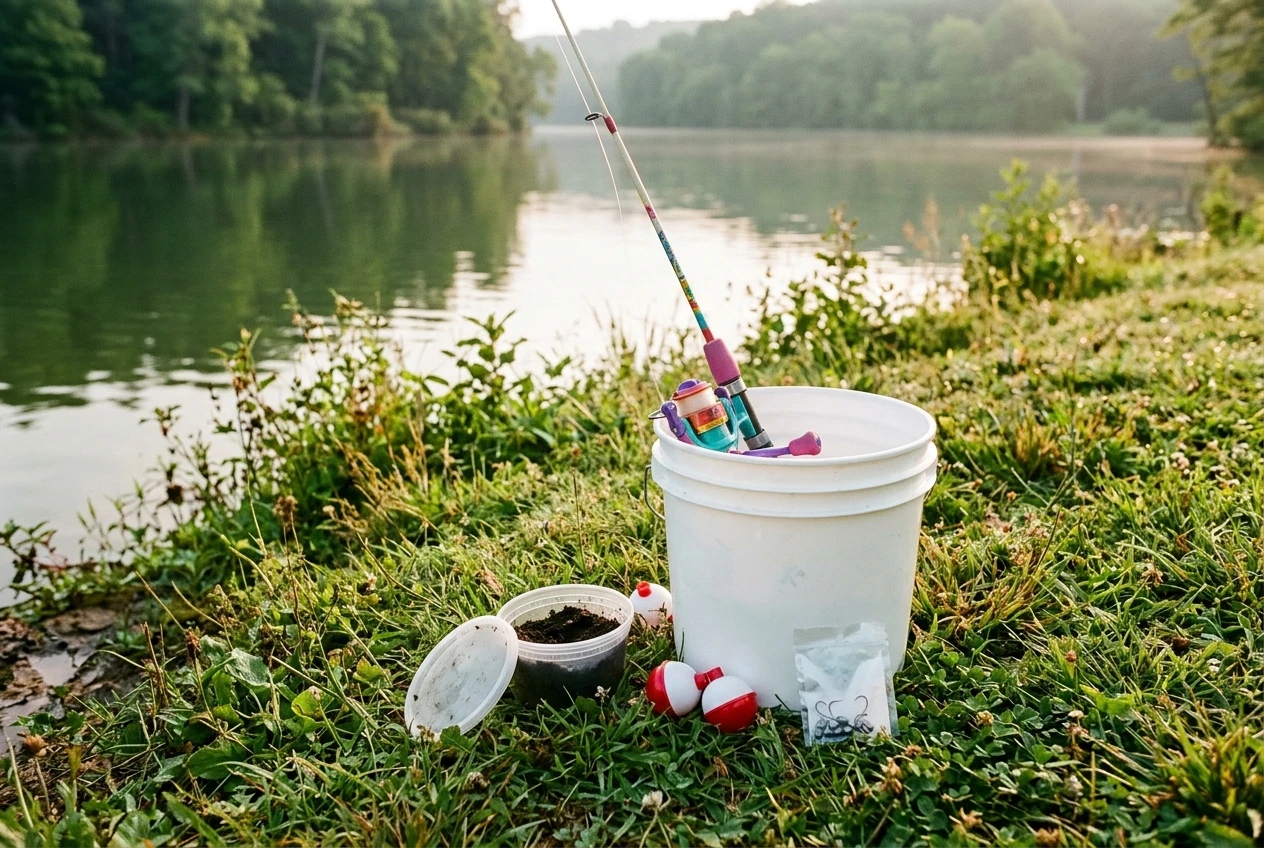
Each child who is old enough to hold a rod needs one they can operate alone. For most beginners that means a kid-sized combo with the reel already attached and line already on it. A push-button style reel is simpler for small hands than a reel with an open spool, because there is less to tangle and less to explain.
You do not need to buy a rod for every adult. One adult rod, or none, is fine for trip one, because the adults’ main job is baiting hooks, untangling line and helping with the first fish. If you want help choosing, the guide on how to pick a kids fishing combo that survives a Kentucky lake bank goes through what to look for.
Basic terminal tackle
“Terminal tackle” just means the small pieces at the end of the line. For a first bank trip with a bobber and bait you need only three things:
- A small pack of hooks sized for panfish such as bluegill.
- A few split-shot weights, which are tiny lead balls you pinch onto the line.
- A few bobbers, ideally the kind that clip on and off.
Buy a few more of each than you think you need. Kids lose rigs on snags, and a spare hook turns a lost rig into a two-minute fix instead of the end of the trip.
Bait
Worms are the easy choice for a first trip. They are inexpensive, sold at bait shops and many sporting goods stores, and bluegill and other panfish will take them. Ask the person at the counter how many to buy for an hour of fishing with your number of kids. They will usually give you a sensible answer, and it keeps you from overbuying.
A bucket
A plain bucket does several jobs. It carries the small gear, holds the bait, serves as a seat for a small child and, if you plan to keep or briefly hold a fish, gives you somewhere to put it with some water. Any clean bucket you already own will do.
What to borrow, share, or pick up locally before you spend anything
Before you buy anything beyond the short list, see how much you can get for free or nearly free. The point of trip one is to find out whether your family likes fishing, and you can learn that with borrowed equipment.
Good places to look:
- Relatives and friends who fish. Many people have a spare rod or a tackle box gathering dust in a garage, and most are happy to see it used.
- Local bait and tackle shops. The staff can tell you what is biting at nearby lakes, and they often know whether anyone nearby lends gear.
- Parks and libraries. Some lend rods or run family fishing programs. It is worth a phone call to ask whether yours do, since this varies by location.
If you have several children, sharing matters even more. One adult rod and one or two kid combos can be passed between children in turns, and the idea of getting the whole group equipped without buying everything twice is covered in how to equip several kids for bank fishing without buying.
Borrowing also teaches you something. After one trip with a friend’s rod, you will know whether your child prefers a lighter rod, a different reel or a longer cast, and your first purchase will be an informed one.
What to skip until trip two
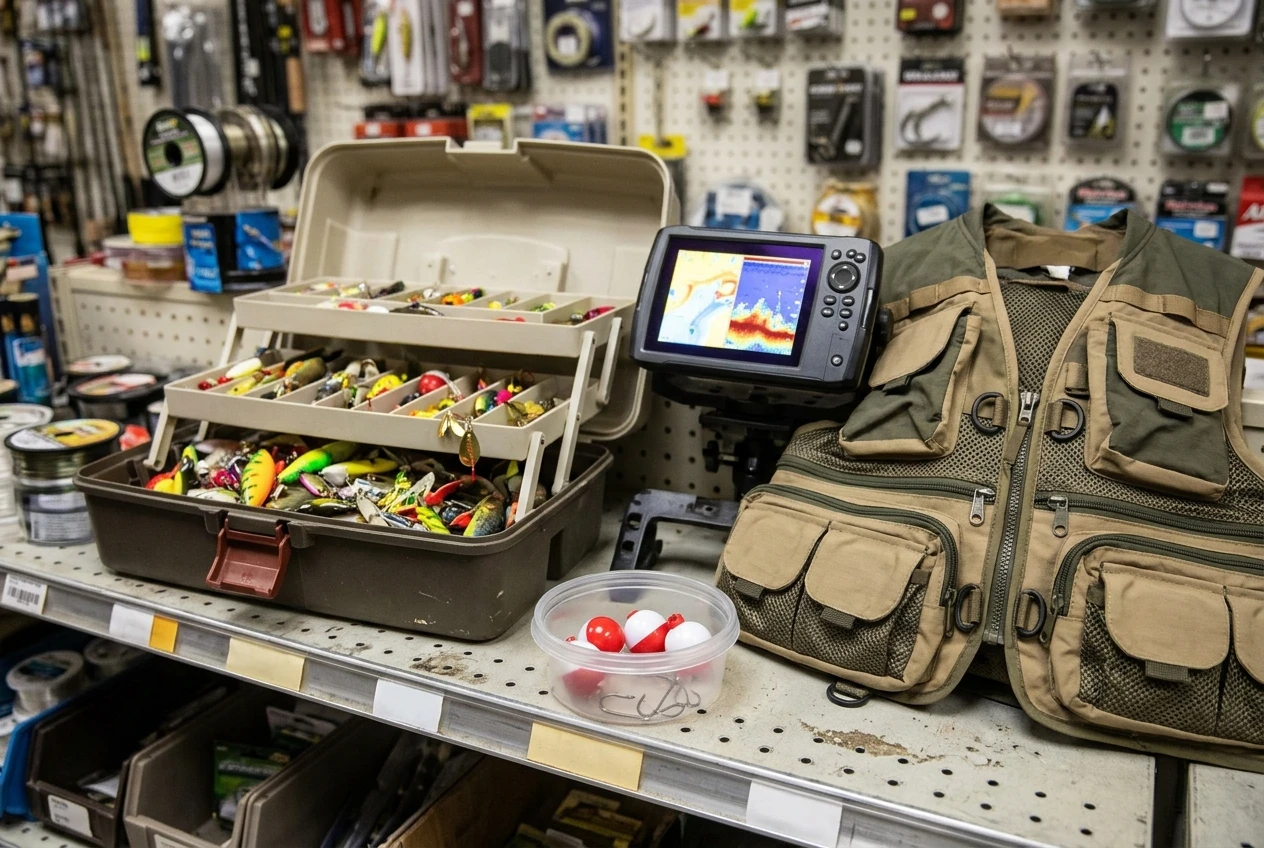
Fishing aisles are full of items that look necessary. For a first one-hour bank trip, these can stay on the shelf:
- A full tackle box. A big box of lures, hooks and gadgets gives a beginner too many choices. A small container with a few hooks, weights and bobbers is enough. You can organize a proper box later.
- Artificial lures. They take more skill to use than a bobber and a worm, and young kids get frustrated when nothing happens.
- Electronics and gadgets. Fish finders, scent attractants and similar items do nothing for a family fishing a bank for an hour.
- A rod for every person. Extra rods mean extra tangles. Add them only if kids clearly want to fish at the same time.
- A big reel and heavy rod. Large gear built for big fish is harder for a child to handle and does not suit panfish.
- Specialty clothing. A fishing vest or technical shirt is not needed. Old clothes and shoes you do not mind getting muddy work well.
- Fancy chairs and rod holders. Comfort is nice, but a bucket and a blanket handle trip one. If your family keeps going, look at options like the ones in this piece on portable fishing chairs for muddy banks.
None of these items is bad. They just do not help you find out whether your kids like fishing, and every one you skip is money you still have if the answer turns out to be no.
The comfort and safety items first-timers forget
The gear that decides whether the hour goes well is often not fishing gear at all. These are the things first-time families forget most often:

- Water and snacks. Bring more than you expect to need, especially in warm weather.
- Sunscreen, hats and bug spray. Banks often have little shade, and mosquitoes and ticks can be a problem near the water’s edge.
- A towel or wet wipes. Worms, fish slime and mud get everywhere.
- A basic first aid kit with bandages. Hooks and scrapes happen even on careful trips.
- A way to remove hooks safely. Needle-nose pliers help you take a hook out of a fish’s mouth without putting your fingers near it.
- Life jackets for small children and weak swimmers. Banks can be steep, wet and slippery, and a child who slips in needs flotation already on.
- A phone, charged, and a plan for where you will meet if someone wanders off.
Adults should also take a minute to set simple rules before the first cast: stay behind the adult when someone is casting, keep a safe distance from the water’s edge for the youngest children, and never run on the bank. The article on bank fishing safety gear families forget until something goes wrong goes into more detail on these items.
Check your license and lake rules before you load the car
This step costs nothing and can save you from a ruined trip or a fine. Fishing rules in Kentucky depend on the angler’s age, residency and the specific body of water, so do not rely on a friend’s memory or an old forum post.
The official source is the Kentucky Department of Fish and Wildlife Resources. Its website covers license requirements, who needs a license and who does not, and the current fishing regulations. Check these before you go:
- Who in your family needs a license. Age and residency both matter, so confirm it for every person who will have a rod in their hands, adults included.
- Where licenses are sold. The Department’s website lists how to buy one, and many bait shops and sporting goods stores sell them as well.
- Rules for the exact lake. Some lakes, ponds and parks have their own rules on bait, size and catch limits, or on where bank access is allowed. Check the lake’s page, call the park office, or ask the local shop.
- Access and hours. Make sure the spot you chose is open to the public for fishing at the time you plan to go.
If something is unclear, call the Department or the park instead of guessing. Staff answer these questions every day, and a short call is better than finding out at the water.
A simple rule for deciding what to add after the first trip
When you get home, resist the urge to shop right away. Instead, wait until the trip shows you a specific problem, then buy the item that solves that problem.
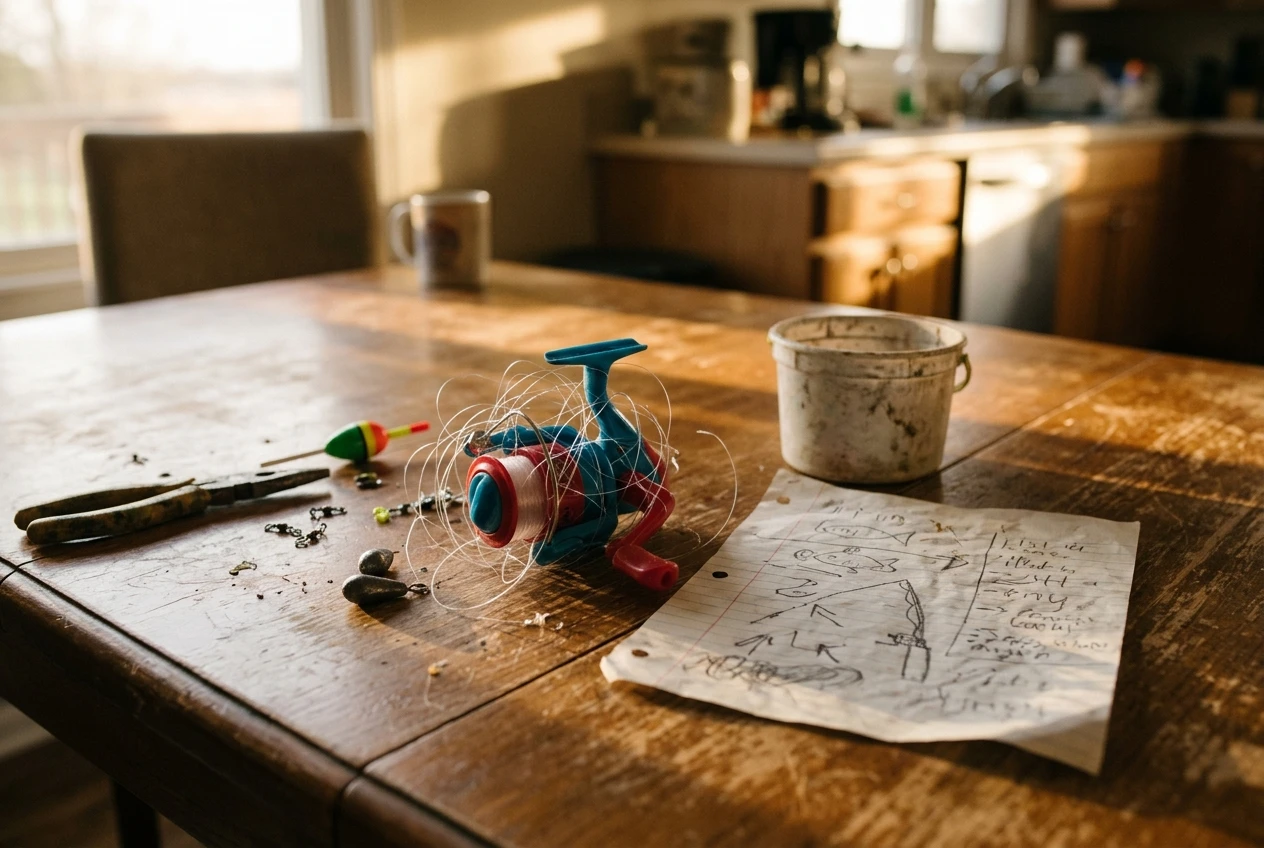
The rule is one problem, one purchase. Some examples:
- Lines kept tangling, so the next purchase is a simpler reel or a quick lesson in casting.
- Kids got hot and bored, so you add shade, a chair or more snacks.
- You lost all your hooks on snags, so you buy more hooks and weights and look at a different spot.
- Everyone wanted to fish at once, so you add one more kid-sized combo.
If you cannot name a problem, you do not need the item yet. This keeps the cost low and means each new piece of gear gets used. When your gear grows to the point where you want to organize it, the guide on building one grab-and-go tackle kit is a good next step.
A family that fished once, enjoyed it and added only what it needed will usually fish more often than one that bought a full kit before the first cast.
If your family caught the fishing bug, take a look at the Kentucky bank fishing ebooks, which show which guide fits the problem you ran into on your first trip.