
A kids fishing combo for the bank gets treated differently than one for a boat. On a boat, the rod rides in a holder and the child sits on a cushion. On a Kentucky shoreline, the rod gets leaned against rocks, laid in the mud, dragged through brush, and occasionally dropped while a child runs to see a turtle. The best kids fishing combo for bank fishing is the one that tolerates that treatment and still works for the kid holding it.
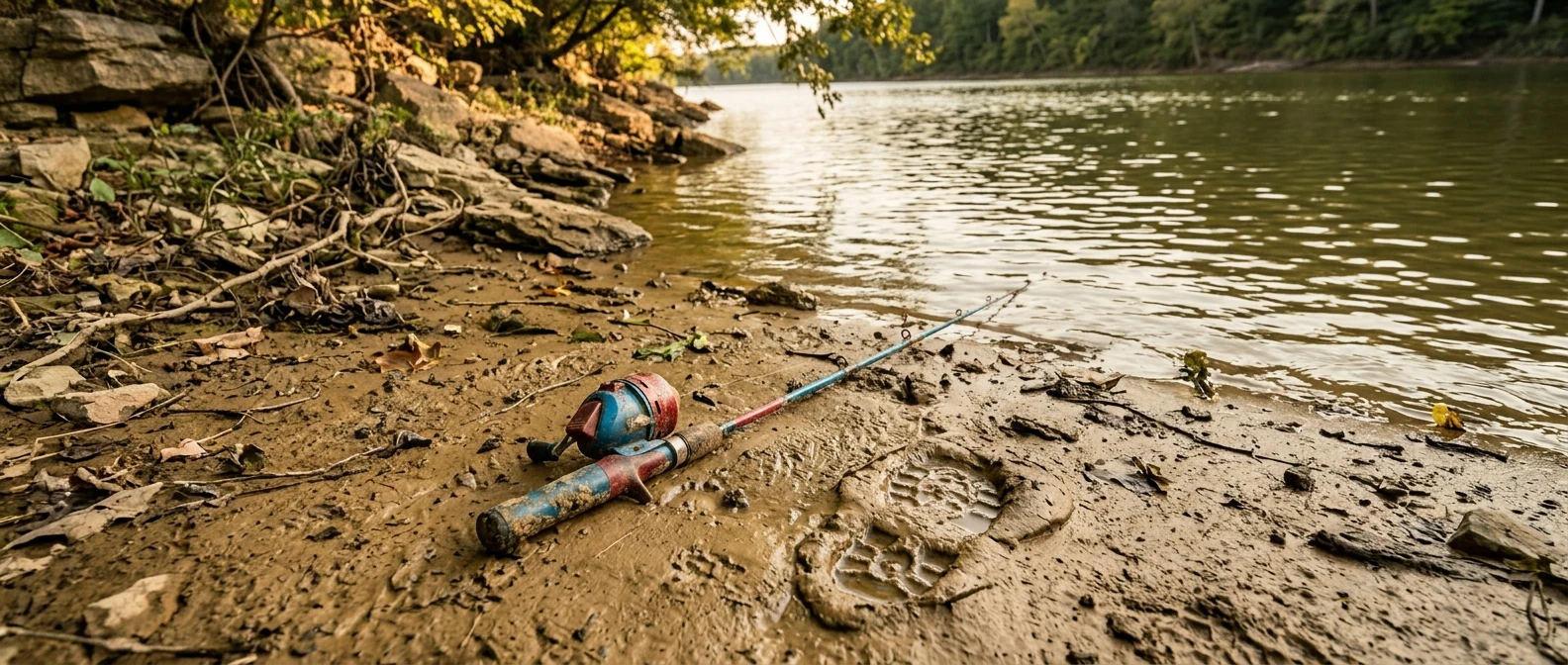
This guide covers how to choose a complete rod-and-reel combo by the child’s age and size, which reel type suits a first-timer, what budget gear usually does on a rough bank, and five checks you can run in a store or on a product page. If you are also deciding how to pair a rod with the adult’s, the rods for kids and parents article covers that side.
Why a bank-fishing combo needs different things than a boat or pier combo
A boat or pier gives you a flat, stable place to stand and a lot of room to cast. The bank gives you uneven footing, overhanging branches, and often a narrow strip of dry ground with water in front and brush behind. Each of those changes what you want in a combo.
- Space behind you is limited. A rod that is too long for the child will clip branches on the backswing, so length matters more than it does on open water.
- The rod spends time on the ground. Reels that sit exposed to mud and sand collect grit, and grit stops a handle from turning.
- Snags are common. Lake edges hold brush, rocks, and sunken wood. A combo that cannot tolerate a hard pull when a hook catches will be a short-lived purchase.
- Nobody is standing guard over the gear. A bank trip with kids means the rod gets set down, stepped over, and picked up again constantly.
Look for gear that is simple, sturdy, and forgiving, not gear with the most features. A child’s first trips are about getting a line in the water and keeping the rod working through the afternoon.
Match the combo to your child’s age, height, and patience
Age is a rough guide. Height, hand size, and attention span tell you more.
Height and reach. A child should be able to hold the rod with both hands, lift the tip, and swing it forward without the butt end jamming into their stomach. If you can, have them hold the combo in the store and make a casting motion. If you are shopping online, pay attention to the listed rod length and the age range, and keep the return policy in mind, because you are buying partly on faith.
Hand size. Small hands need a reel handle and a button or lever they can operate without help. If your child cannot turn the handle smoothly while holding the rod, they will hand it to you within five minutes.
Patience. A younger child who gets bored in ten minutes needs a combo that does not demand fiddling. An older child who wants to feel like a real angler will put up with more complexity, and may feel insulted by a toy-looking rod with cartoon characters on it.
Buying a combo for the child to “grow into” usually backfires. A rod that is too long and too heavy makes casting harder, and a child who struggles in the first hour tends to lose interest. Buy for the child who is standing in front of you.
Spincast or spinning: which reel a first-timer can actually cast from a muddy bank
Most kids combos come with one of two reel types, and the choice affects how the whole day goes.
Spincast reels have a cover over the spool and a push button on the back. You press the button, swing the rod, and release the button to send the line out. The line is enclosed, so it is less likely to loop off the spool and tangle, and the cover keeps some mud and sand away from the working parts. For a young child, that simplicity is the main appeal. It is the usual first reel for a 4-year-old for good reason.
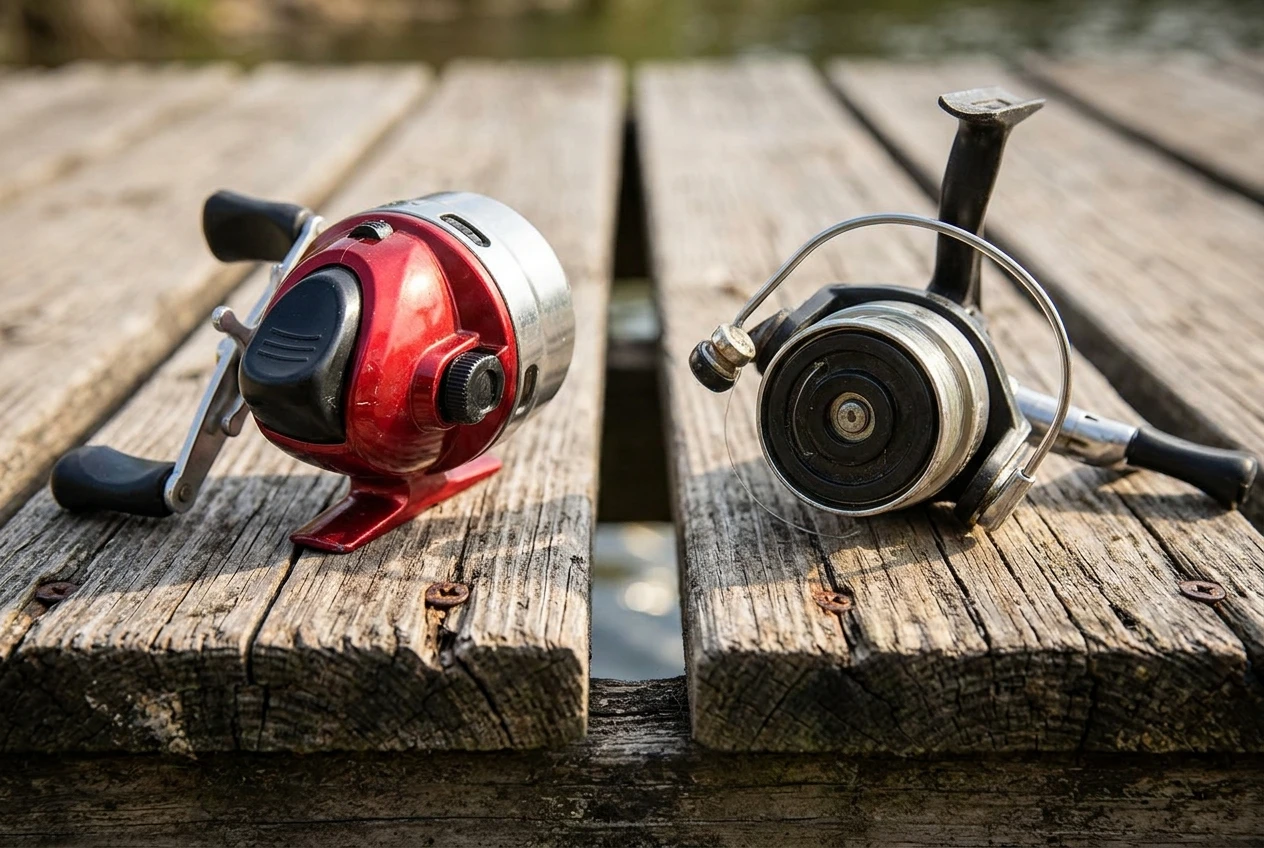
Spinning reels have an open spool and a wire arm called a bail that you flip open before casting. You hold the line against the rod with a finger, release it as you swing, and close the bail afterward. This takes more coordination, and the line can twist or tangle if it is spooled badly or reeled under slack. In return, spinning reels generally cast farther and more smoothly, and they are the type a child will keep using as they get better.
For a muddy bank, the practical differences are these:
- A spincast reel tolerates being set down more than an open spinning reel, because the working parts are covered.
- A spinning reel needs the bail flipped and the finger placed correctly, which is harder to do with cold, wet, or muddy hands.
- If a spinning reel does get dirty, it is usually easy to rinse, but you will have to do that.
A reasonable rule: choose spincast for a child under about eight, or any child who has never held a rod. Move to spinning once the child asks to cast farther or has mastered the button. A confident 12-year-old can often start on spinning, particularly if an adult will practice with them first.
What Kentucky shorelines do to cheap gear: rocks, mud, snags, and dropped rods
Budget combos are a reasonable choice for a first rod, since children outgrow gear and a first trip may not lead to a second. What matters is knowing what a bank is likely to do to them.
Rocks. Riprap and rocky shoreline scrape reels and chip rod finishes. A dropped reel that lands on stone can bend the handle or crack the housing. Metal parts hold up better than thin plastic, though a combo that feels solid in the hand is a better indicator than the materials list.
Mud. Mud gets into the reel seat, the handle, and the spool. If a reel’s handle stops turning smoothly after being set down once, it will be a source of frustration all season. Rinse the combo with clean water after muddy trips, and let it dry before storing. The article on how to store fishing gear between Kentucky trips covers that routine.
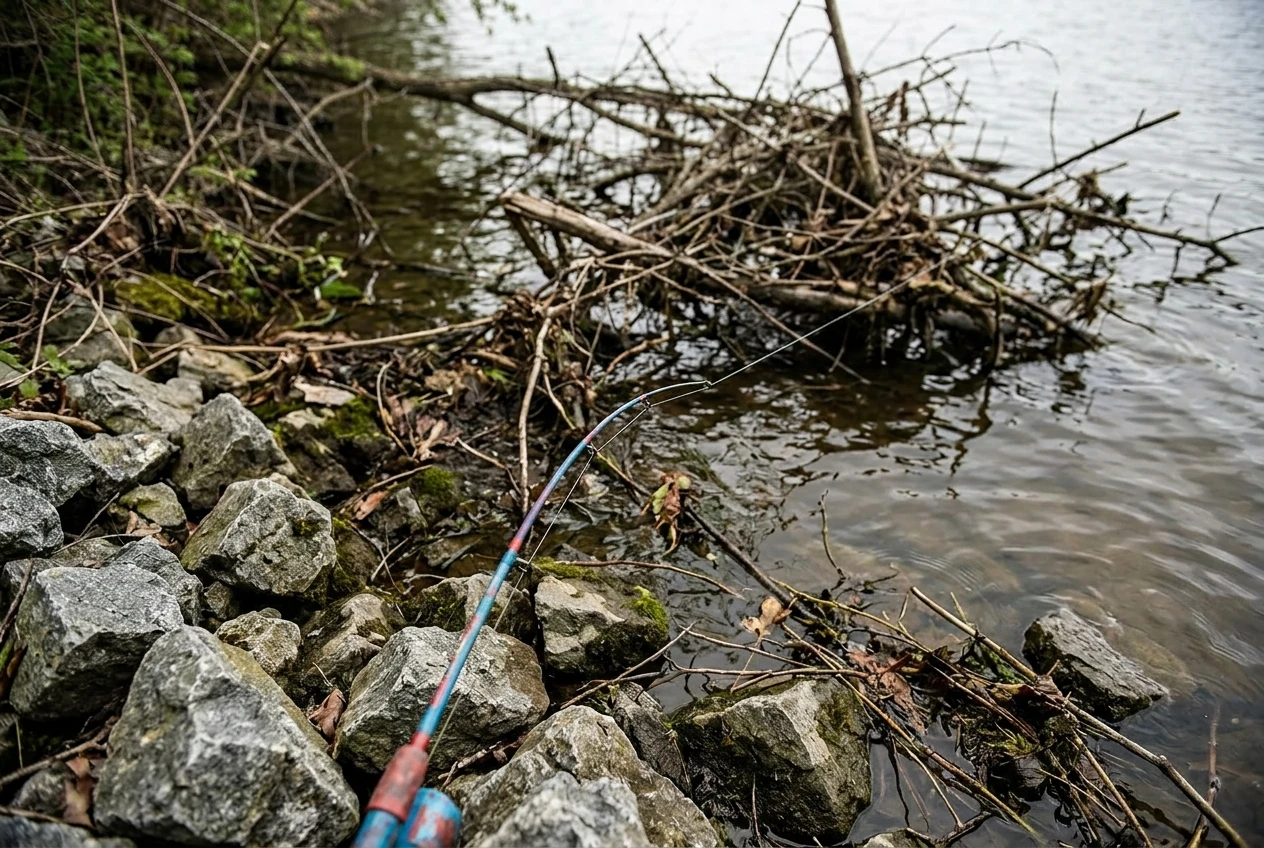
Snags. Brush and submerged wood grab hooks. Pulling hard on a snagged line can bend a cheap rod tip or snap the line at the knot. Teaching a child to point the rod at the snag and pull the line by hand, or just walk toward it and tug gently, saves more gear than any buying decision does.
Dropped rods. Children drop rods. Rods land on rocks, in mud, and sometimes in the water. A combo with a short, sturdy rod, a closed-face spincast reel, and a warranty or return window gives you a margin for that.
Expect budget gear to show wear faster than better gear. Line may be low quality, guides may be thin, and reel handles may loosen. That is normal for the price range, and it is the reason to check return terms before you commit.
A five-point checklist to run before you buy
Run these in a store, or read the product page with these five questions in mind.
- Length. The rod should suit the child’s height, with room for a casting swing that does not catch brush behind them. Shorter is easier for small kids and better on a tight bank. If the child can stand the rod upright and the tip clears their reach comfortably, it is a reasonable fit.
- Weight. Hold the combo out in front of you at arm’s length with one hand for ten seconds. If your wrist wobbles, a child will struggle for much longer. A light combo matters more than a stronger one, because a child will use what they can hold.
- Line. Check what line is on the reel, and look at the line range the rod and reel list on the box or page. Pre-spooled line on budget combos is often not great, and it may be old if the combo has sat on a shelf. Plan to respool, or at least replace the first several feet. Stay within the listed line range, and choose a limp, easy-handling line over a stiff one for a beginner.
- Handle. Turn the reel handle several times. It should move smoothly, without grinding or wobble. Check that the spincast button or the spinning bail operates easily with a child’s finger strength. A handle that is awkward in the store will be worse in the field.
- Warranty or return terms. Read these before buying. A return window lets you swap a combo that turns out to be too big, and a warranty covers defects. Keep the receipt or order confirmation where you will find it, because the point of this check is that a first combo is partly a trial.
If a combo passes four of the five checks and you are unsure on the fifth, return terms are usually the best tiebreaker.
Combos worth looking at by type of child
Instead of naming products, here is what to look for for three common situations. These are types of combo and a way to judge them, not specific recommendations.
The 4-year-old
Look for a short, light spincast combo, often sold as a complete kit with the line already on the reel. The button should be large enough for a small thumb, and the whole thing should be light enough that the child can hold it without help. A bright color helps you spot it in the grass when it gets dropped. At this age, expect to do the casting yourself or supervise a short lob, and expect the child to spend as much time reeling as fishing.
The 8-year-old
A spincast combo works well here, and a basic spinning combo is worth considering if the child has fished before. Prioritize a rod that is a bit longer than the 4-year-old’s, a smooth reel handle, and a design that is still simple to operate. This is also the age to start teaching them to rinse and dry the gear after a trip, which makes it last. Eight-year-olds tend to be proud of owning their own rod, so a combo that looks like a real one often matters.
The reluctant 12-year-old
A reluctant older child often feels that a kid-branded rod is beneath them. A plain, adult-looking spinning combo in a shorter, lighter size can be a better choice than anything marketed to children. Let them help choose it. Ownership matters more at this age than at any other, and a child who picks the rod is more likely to pick it up again. Keep the setup simple enough that early casts land in the water instead of in a bush, because early failures are what end the interest of a teen who was not sure about fishing in the first place.
Set it up before the trip: spooling, a practice cast in the yard, and a spare rig in the bucket
A combo that works in the store can still fail on the bank if you have not set it up. Do these three things at home.
Check and respool the line. Reel off the first stretch of the factory line and look for kinks, coils, or discoloration. If the line looks tired, replace it. Spool the new line onto the reel with even tension, and stop filling when the spool is about full, not overfilled, since overfilled spools produce tangles. The four knots article shows how to tie the knots you will need to attach a hook.
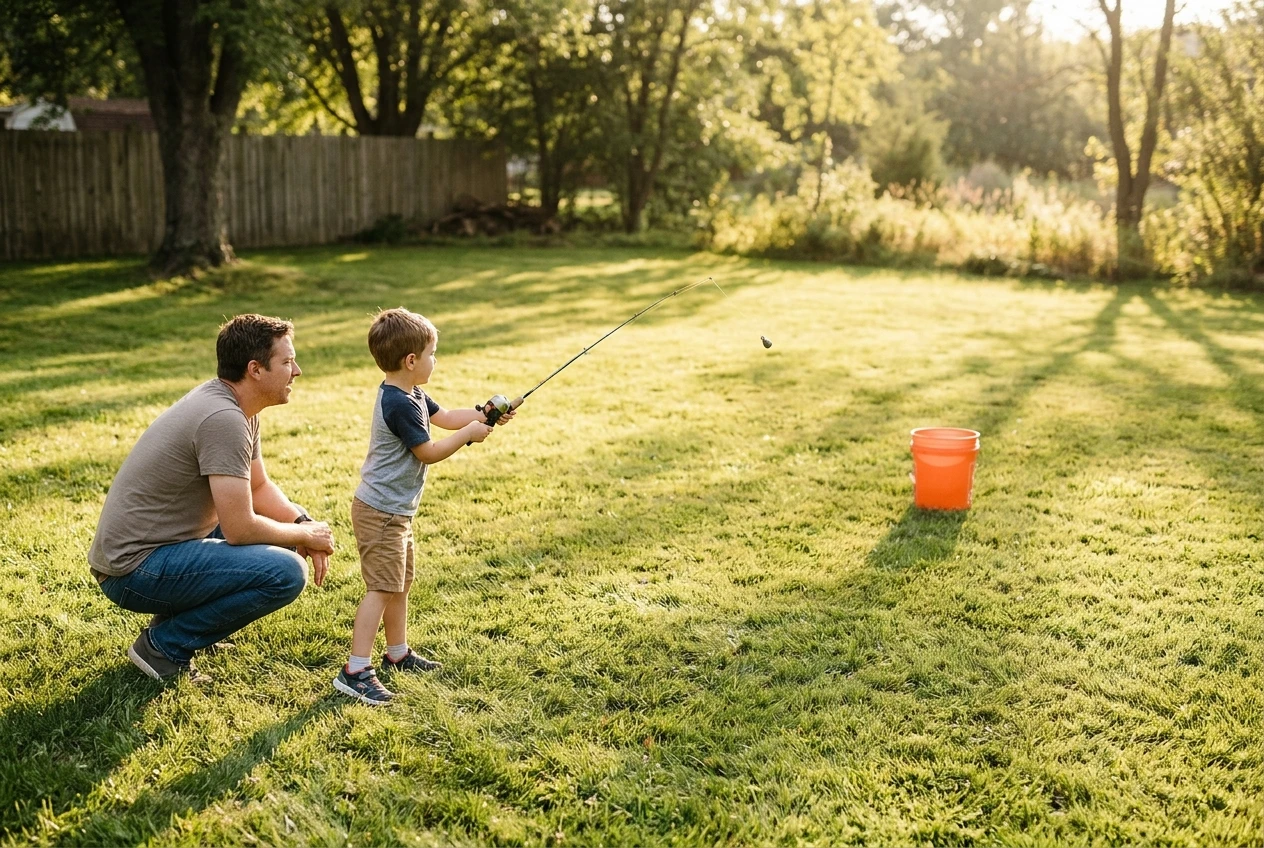
Practice casting in the yard. Tie on a small weight with no hook, or use a practice plug, and let the child cast at a target such as a bucket or a hula hoop on the grass. Ten minutes at home removes most of the first-cast frustration that would otherwise happen at the water’s edge, where footing is bad and an audience of other anglers may be watching.
Keep a spare rig in the bucket. Pack extra hooks, a few bobbers, spare weights, and a small pair of line cutters or scissors. If you can afford it, bring a second simple rod or a pre-tied backup rig. Snags, tangles, and dropped rods are likely over a few hours, and a spare rig turns a ruined trip into a short pause.
Where to go next
A good combo makes the first trip easier, but where you stand and what you do once you are there matter just as much. The Hub’s Kentucky lake guides and ebooks pair a lake-specific plan with the gear you have just chosen, so you can walk onto a real bank with a clear idea of where to set up and what to expect.
For next reads, the family bank-fishing packing list covers what to bring besides the combo, and the rods article explains how to choose the child’s rod and the adult’s as a pair.