
Spring fishing in Kentucky asks for a different pace than summer. The water is cooler, the fish are slower, and the weather can change between breakfast and lunch. Families who show up expecting summer-style action often leave early, and kids pick up on that disappointment.
Once you know how fish behave in cool water, you can choose a spot and a pace that fit them. This guide covers how to read a spring shoreline, what to adjust, and how to plan a short trip that works for fish and kids alike.
Why Spring Fish Act Differently, and What That Means for Your Kids’ Patience
Fish are cold-blooded, so their body temperature follows the water around them. When the water is cool, they move less, eat less, and take longer to decide that something is worth chasing. A fish that would race across a cove in July may sit near the same rock and watch your bait drift past.
That changes what a good trip looks like. In summer, a child may get a bite every few minutes. In early spring, you may wait much longer between bites, and a bite may be a gentle weight on the line rather than a sharp tug.
Telling kids this before you leave helps more than any gear choice. A simple version works well: “The fish are still waking up, so we’re going to find the warm spots and give them time.” Children handle waiting better when they know it is expected and have a job to do while they wait, like watching the bobber, checking the bait, or looking for the sunniest patch of bank.
Plan for fewer bites and shorter trips. A family that catches one fish in two hours and enjoys it will want to go again.
Check the Weather and Water Before You Load the Car
A few minutes of checking at home saves a cold, muddy outing. Look at three things.
- Recent rain. Heavy rain can send muddy runoff into creeks and coves, which makes banks slick and the water cloudy and cold. If it rained hard in the past day or two, expect the best spots to be messy.
- The temperature trend. A few mild days in a row usually put fish in a better mood than a single warm afternoon after a cold snap. Cool nights after a warm day can slow things down again.
- Wind and sun. Wind changes how a bank feels for people and affects where the water is warmest. A bright day with light wind is far more comfortable for kids than a gray, gusty one.
Check the forecast for the hours you plan to fish, not just the daily high. Also look up current license and regulation rules through Kentucky’s fish and wildlife agency before you go, since requirements can depend on age and location.
If the forecast looks rough, moving the trip a day or two costs you nothing. A comfortable family on a decent day will outfish a miserable family on a perfect-looking spot.
Shoreline Spots That Tend to Warm First
Water warms unevenly in spring, and fish tend to gather where it warms first. You can often see these places from the car before you set anything down. If you are still deciding where to begin on a bigger lake, the post on where to cast first from a Kentucky bank can help you narrow it down once you are standing there.
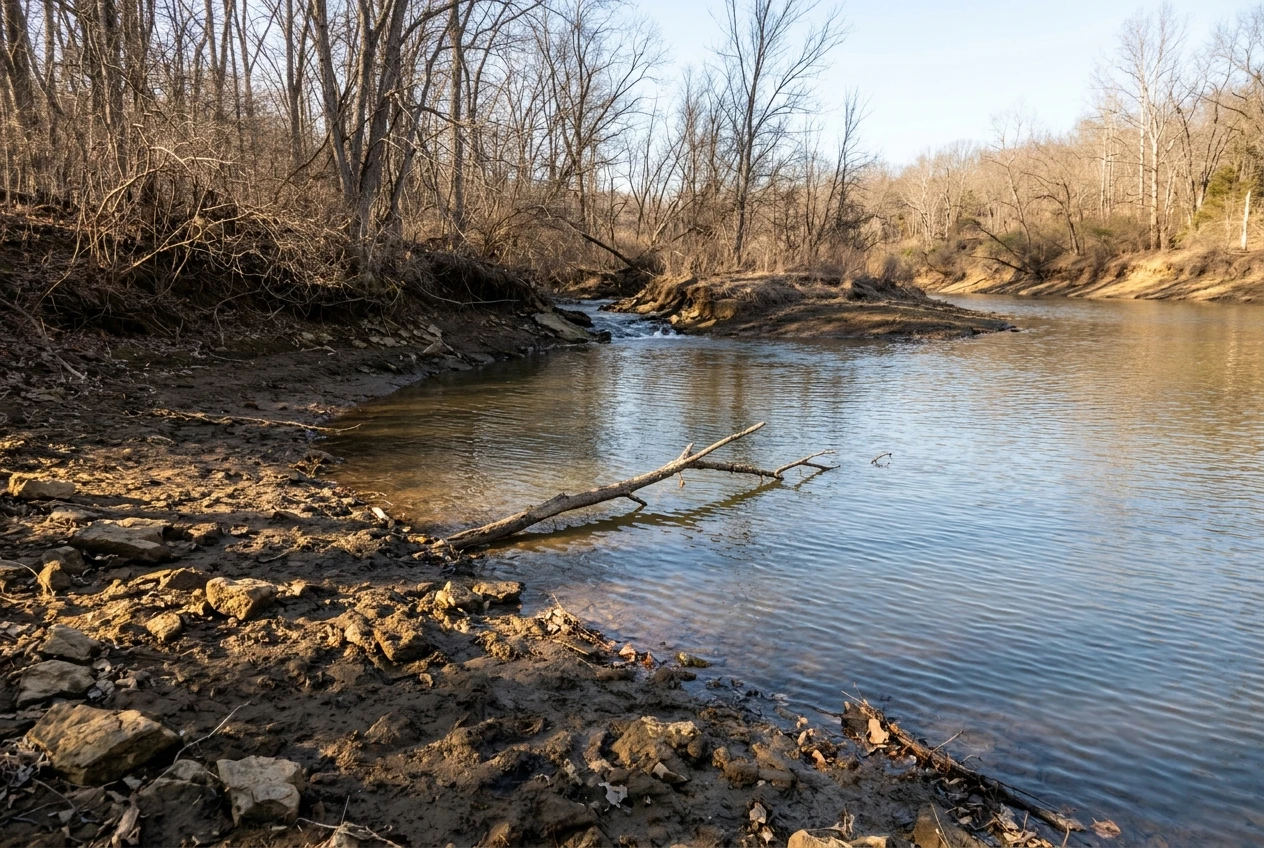
Sun-warmed banks
Shallow water takes in heat faster than deep water, and a bank that gets direct sun for most of the day warms fastest. In Kentucky, that usually means a bank facing south or southwest, especially one sheltered from a cold north wind. Dark mud or rock soaks up heat too, so a dark, sunny edge tends to be a few degrees warmer than a pale, shaded one.
Put your hand in the water. If one stretch feels noticeably less chilly than another, that is a good place to start.
Shallow coves
A small cove off the main lake heats up faster than open water because there is less water to warm. On a sunny afternoon, a protected cove can hold warmer water than the main body of the lake, and small fish and bait often move in. Larger fish follow them.
Look for coves with some cover, such as a few fallen branches, a stump, or the edge of weeds. Fish that are moving slowly like having something nearby to rest beside.
Creek mouths
Where a creek or drainage enters the lake, you often find moving water and food washed in from the land. That can draw fish in spring.
There is one caution. After a hard rain, a creek mouth can run muddy and cold, and the flow can be strong or the bank unstable. If the water is brown and rushing, fish a calmer spot nearby, or return when it settles. When the water is running clear and gentle, a creek mouth is worth a good share of your time.
Wind-blown edges
Wind can push warmer surface water, along with floating food, toward the shore it blows into. A bank with a light wind coming onto it can be productive. A strong, cold wind is different, because it chills your family faster than it helps the fishing.
A practical rule: light wind into a sunny bank is a bonus. A hard, cold wind is a reason to pick a sheltered cove instead.
Slow Down Your Presentation for Cool Water
Your bait has to be easy for a sluggish fish to find and easy to eat. Most of that comes down to patience.
- Let the bait sit. Cast, then leave it alone for a while. Constant reeling and recasting works against you when fish are slow. A bait that stays in one place gives a cool-water fish time to notice it.
- Use natural, small baits. Beginners often do well with live bait like worms under a bobber. Smaller pieces are easier for a slow fish to take than a large mouthful.
- Check your depth. In cool water, fish often stay low or near cover rather than cruising near the surface. If you are not getting bites, try adjusting how far your bait hangs below the bobber. The guide on how deep to set your bobber bait walks through a simple way to test it.
- Expect soft bites. A cold-water fish may nudge the bait or pick it up gently. Watch for a bobber that wiggles slightly, tilts, or moves slowly, and give it a moment before reacting.
Cast near the features you identified: the edge of a cove, the line where sunlight meets shade, a branch or stump, or the spot where creek water enters the lake. Kids tend to want to throw as far as they can, but in spring the fish are often close to the bank in the shallow warm water, so a short cast to a good spot usually beats a long cast to open water.
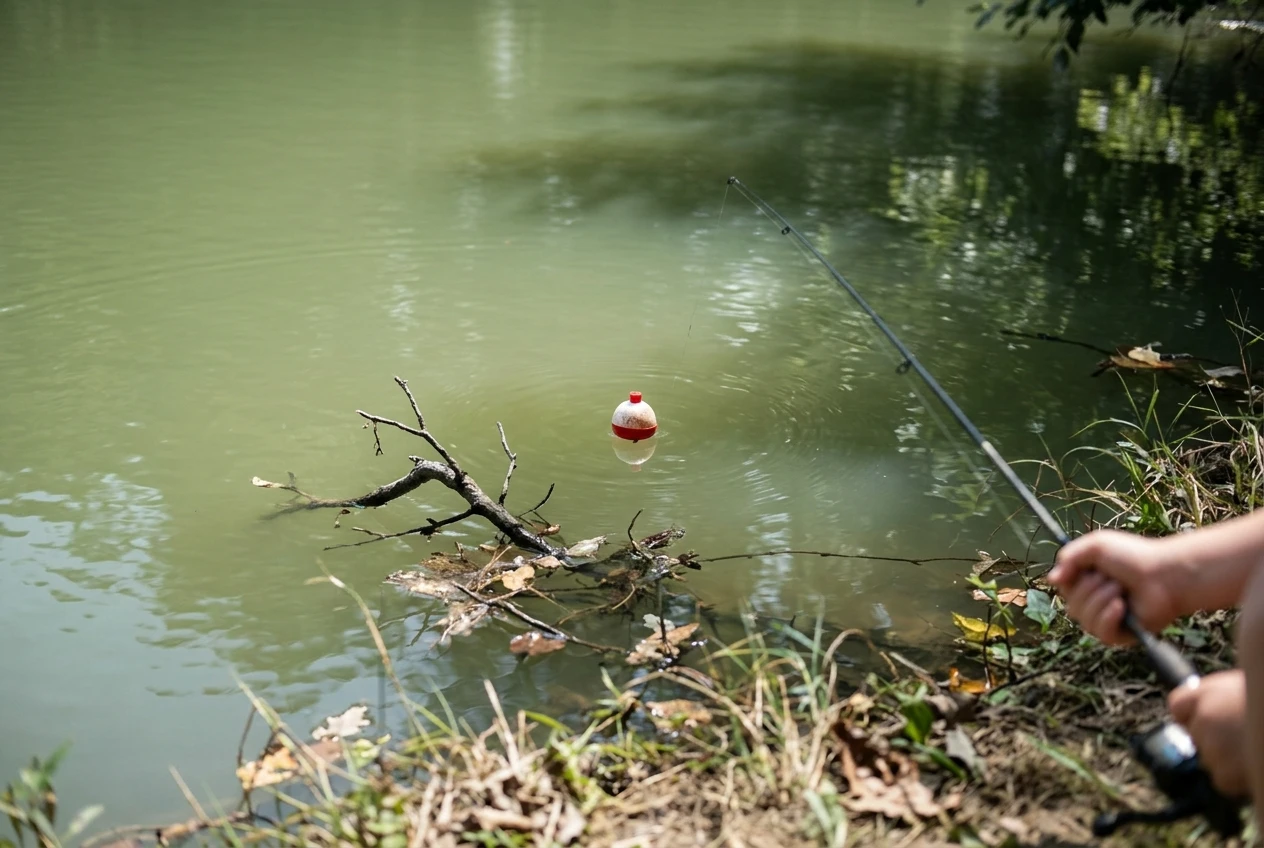
Why the Warmest Part of the Day Is Often Your Best Window
In summer, early morning and evening often get the praise. In early spring the pattern flips. The water is coldest after a chilly night, and it warms as the sun climbs. Fish tend to become more active as that happens, and the stretch from late morning through mid-afternoon is often the best time.
That works well for families. You do not have to get small children up in the dark, and you can have breakfast, pack up, and arrive when the air has started to warm. Everyone is more comfortable, and your fishing time lines up with the fish’s most active hours.
A trip that starts around late morning and runs a couple of hours gives the sun time to work on the shallows. If the day turns cloudy, fish may stay quiet, so lower your expectations and lean on the other parts of the trip, like snacks, skipping rocks, and watching for birds.
Keeping Kids Warm and Safe on Cold, Muddy Banks
Cold hands and wet shoes end a fishing trip faster than slow fish. Dress kids in layers they can add or remove, since a bank in full sun can feel warm at noon and cold when a cloud passes. A hat, dry socks, and waterproof boots or shoes you do not mind getting muddy make a big difference. A spare pair of socks for each child costs little and can save the afternoon.
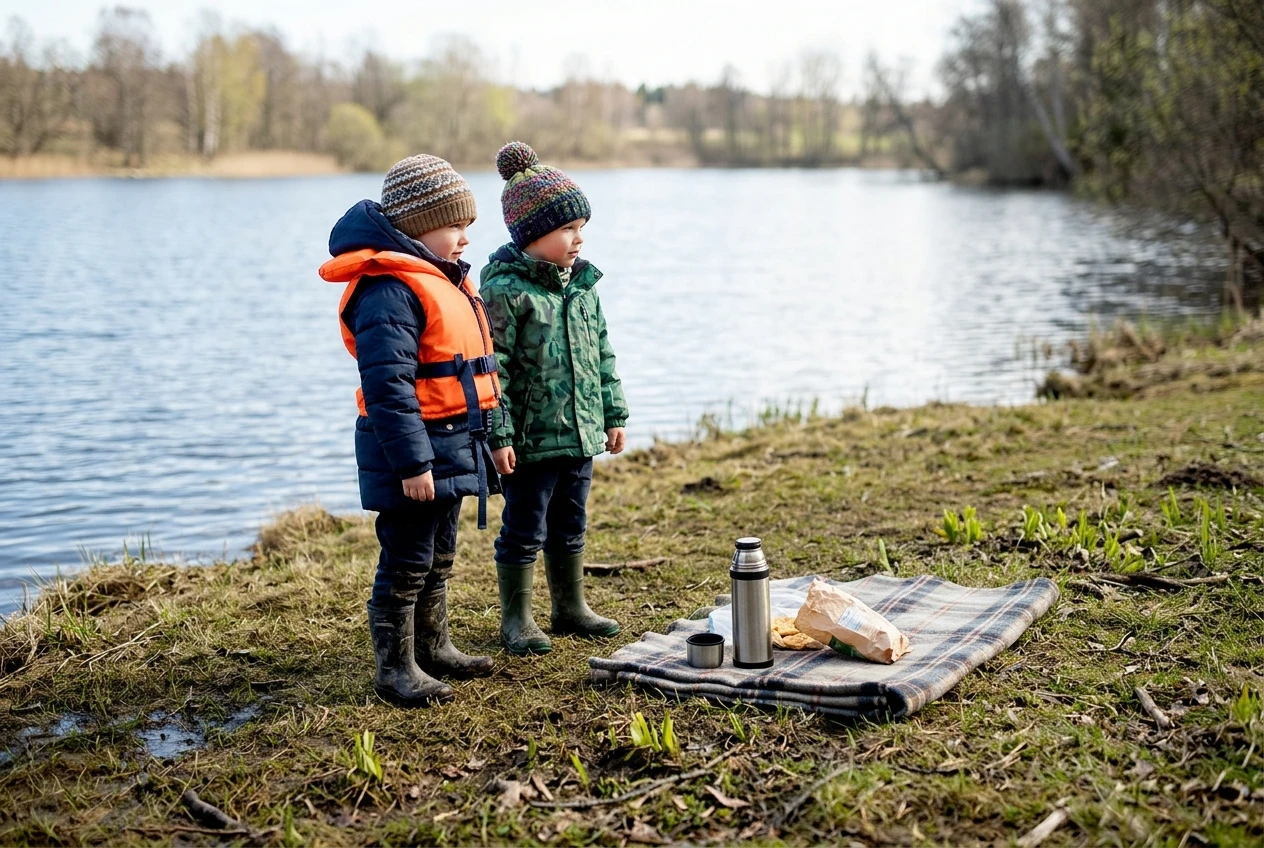
Spring banks are often soft and slippery. Pick a spot where kids can stand on firm ground, away from steep, crumbly edges, and keep little ones within arm’s reach. Water that is cold enough to be a shock is dangerous even if it is shallow near the shore. Young or weaker swimmers should wear a properly fitted life jacket near the water. The article on bank-fishing safety gear families forget covers what to have on hand.
Bring something warm to drink and a snack that comes out at a set time. Food is the best tool for resetting a child’s mood, and a break at the halfway point gives everyone a chance to warm up.
A Simple Two-Hour Spring Plan
Two hours is enough to learn a spot, give the fish a fair chance, and stop before anyone is cold and cranky. Here is one way to use it.
First 20 minutes: arrive and look
Walk the bank before you fish. Find the sunniest edge, check for a cove or a creek mouth, and feel the water. Choose a firm, safe place to set up with room for kids to stand. Let the children help pick the spot, since they will stay interested in a place they chose.
Minutes 20 to 70: fish the best spot, slowly
Cast to your chosen feature and leave the bait alone. Keep kids busy with small jobs: watching the bobber, checking whether the bait is still on, or taking turns holding the rod. Remind them that the fish are slow today and that waiting is part of it.
Minutes 70 to 80: snack and warm-up break
Take a break away from the water’s edge, with hot chocolate or whatever you brought. Check everyone’s hands and feet. If someone is already cold, this is the time to decide whether to stay.
Minutes 80 to 110: move once, then settle
If nothing has happened after the first stretch, move to a second spot, perhaps the other side of the cove or the next sunny stretch of bank, and give it the same patience. If you are unsure whether to stay or go, the post on when to move when your bobber stops getting bites gives a clear way to decide.
Last 10 minutes: wrap up on a good note
Reel in, pack up, and ask the kids what they noticed: the warmest water, a bird, a splash, the first nibble. A good trip in early spring is one where the family learned something about the shoreline and wants to come back. One fish makes it a great day. No fish still counts if everyone left warm, dry, and curious about next time.
If you already know which lake you’re heading to, check out the Kentucky lake guides and ebooks for spot-by-spot bank-fishing help for your family.