
You followed a simple two-hour family packing checklist, buckled the kids’ life jackets at the car, and took five calm minutes to walk past the crowded parking-lot pier to choose a family bank-fishing spot in Kentucky with level grass and open backcast room.
Now you set the tackle bag six feet back from the water’s lip and unhook the bobber rig. Instantly, your child winds up like a baseball pitcher, ready to heave the bait as far toward the middle of the lake as it will go.
Deciding where to cast first from the bank is the quiet turning point of a short family trip. Swinging hard for the middle of the lake usually leads to whipped-off bait, line tangles, a bobber floating too far out to see, and a bait soaking over empty bottom while bluegill, bass, and autumn-stocked trout cruise the shoreline edge twenty feet away.
Where Should Your Family Cast First From the Bank?
Skip the long heave toward the middle and fish the nearshore edges first using a simple 3-Cast Shoreline Fan Plan within 15 to 30 feet of the bank. Stand six feet back from the water’s edge so your shadow stays off the shallows, then make three gentle casts in order:
- Cast 1 (45° Left Along the Bank): Pitch 15 to 25 feet out beside a visible shoreline clue such as an outside weed edge, shade line, or clean seam beside floating autumn leaves.
- Cast 2 (45° Right Along the Bank): Test the opposite shoreline angle or corner transition at the same comfortable distance.
- Cast 3 (Straight Out to the First Transition): Cast 25 to 35 feet straight out where the shallow shoreline flat meets slightly deeper water—still close enough for a child to watch every twitch of the bobber.
Keep one active rod, one bait size, and one starting depth for the first round, then test one measured depth change before moving.

1. Why Heaving Toward the Middle Works Against Beginners
To a child—and to plenty of returning adults—the center of a small Kentucky park lake looks like the “deep, fishy part.” When a bank angler feels rushed, casting as far as possible feels like covering more water.
In practice, an overpowered first cast creates three immediate headaches on a two-hour family outing:
- Hard swings cause midair wraps and lost bait: Whipping a fixed bobber, split shot, and worm at full power makes the hook spin around the main line in flight—one of the primary reasons your bobber rig keeps tangling or your worm flies off before the float even lands.
- Distant bobbers hide subtle autumn bites: In late October and early November, cooling water often turns aggressive summer strikes into light dips, sideways glides, or a bobber that briefly tips flat. At 60 feet out in surface glare, a young angler cannot see those signals cleanly or take up the big bow of slack line on the surface.
- You cast right over the shoreline highway: At small public waters—including Kentucky’s Fishing in Neighborhoods (FINs) lakes—the richest mix of cover, shallow warmth, fallen insects, minnows, and depth transitions sits within 15 to 35 feet of the bank.
Field Infographic 1: Why the First 15–30 Feet Beat the Middle
Start With the Lake, Not the LureStand 6 Feet Back First
Before anyone casts, keep feet and shadows 6 feet back from the bank lip. Fish cruising just off the grass or gravel edge spook when a shadow crosses the water before the bait arrives.
Target the 45° Edge
Pitching 15 to 25 feet at a 45-degree angle keeps your bait in the nearshore feeding lane longer and prevents the sinker from splashing directly on top of the fish’s head.
Keep the Float in Focus
At 20 feet out, a child can use a gentle underhand or sidearm swing, keep a straight line to the float, and spot the first slight dip or sideways drift immediately.
2. Use the 3-Cast Shoreline Fan Plan on Arrival
Once you have set your basecamp six feet back from the water and confirmed two rod-lengths of open casting clearance, give your young angler three named targets in order. Instead of saying “Cast out there,” point to a specific patch of water no farther away than a backyard driveway.
Field Infographic 2: The 3-Cast Shoreline Fan Plan (15–35 Feet)
Cast in Order: 1 → 2 → 31. Left 45° Seam (15–25 ft)
Pitch into clean water 1–3 feet outside the weed or floating autumn leaf edge.
2. Right 45° Seam (15–25 ft)
Test the opposite shoreline shade line or corner at the same easy distance.
3. First Drop-Off (25–35 ft)
Cast straight out to the dashed depth transition before adjusting bobber depth.
How to Run the Fan: Keep one active rod, pliers ready, and USCG life jackets buckled at your basecamp 6 feet back from the water’s lip. Give each target two to three calm casts (45–60 seconds per cast), then adjust your bobber depth by 6 to 12 inches and repeat the fan once before moving.
3. Middle-of-the-Lake Heave vs. The 3-Cast Shoreline Fan
Use this side-by-side comparison to see why shortening the first cast makes a two-hour outing calmer for parents and more productive for kids:
| Fishing Factor | Hard Heave Toward the Middle (50–80+ ft) | 3-Cast Shoreline Fan Plan (15–35 ft) |
|---|---|---|
| Casting Motion & Tangle Risk | Full-power overhead whip spins the hook and split shot around the main line and often throws soft bait off the hook. | Relaxed sidearm or underhand pitch keeps the hook and bobber separated in flight and lands the bait intact. |
| Shoreline Fish Spooking | Walking right up to the muddy lip to swing hard sends footstep vibrations and shadows directly over nearshore fish. | Standing 6 feet back and pitching at 45° angles approaches cruising fish from the side without spooking the bank. |
| Bobber Visibility & Line Control | Glare and wind push a wide belly of slack line across the surface, delaying hooksets and hiding light autumn bites. | Short, direct line allows children to spot slight dips, sideways movement, or a flat-lying bobber right away. |
| Habitat & Feeding Clues | Often lands over featureless silt bottom away from visible shoreline cover or shade edges. | Places the bait directly beside weed seams, shade lines, corner transitions, and the first depth break. |
| When to Use Each Option | Reserve for heavier bottom rigs or slip-float setups when targeting deeper offshore channel edges after checking the shallows. | Default starting routine for every family bank-fishing trip with a fixed bobber at Kentucky park and FINs lakes. |
4. How to Read Late-October Leaf Lines, Shade Seams, and Local Lakes
In late October and early November, Kentucky park lakes add a seasonal wrinkle: falling oak, maple, and sycamore leaves. A light breeze often gathers floating leaves along the very same wind-brushed bank or corner that attracts baitfish and cruising panfish or trout.
If your child casts straight through a dense raft of floating leaves, the line drapes over dry leaves and the hook fouls on every retrieve. Instead, apply the Every Lake Guide L.A.K.E. Method—covered step by step in How to Read Any Lake: A Beginner’s Fishing System and Kentucky Shore Fishing: How To Fish Coves, Flats, And Drop-Offs—to turn autumn surface clutter into a precision target:
Stand six feet back and watch the surface for 60 seconds. Notice where wind pushes ripples, where low autumn sun casts shade, and where floating leaves form a distinct edge.
Find the clean-water seam—the open lane 1 to 3 feet outside a floating leaf mat, dying weed edge, or shoreline corner where your bobber can sit without touching debris.
Name your three fan targets out loud with your child before opening the bail: Cast 1 (left seam), Cast 2 (right shade or corner edge), and Cast 3 (straight-out transition).
Fish the 3-cast fan at your starting bobber depth, then adjust depth by 6–12 inches and run the fan once more before deciding whether to stay or walk to your backup bank.
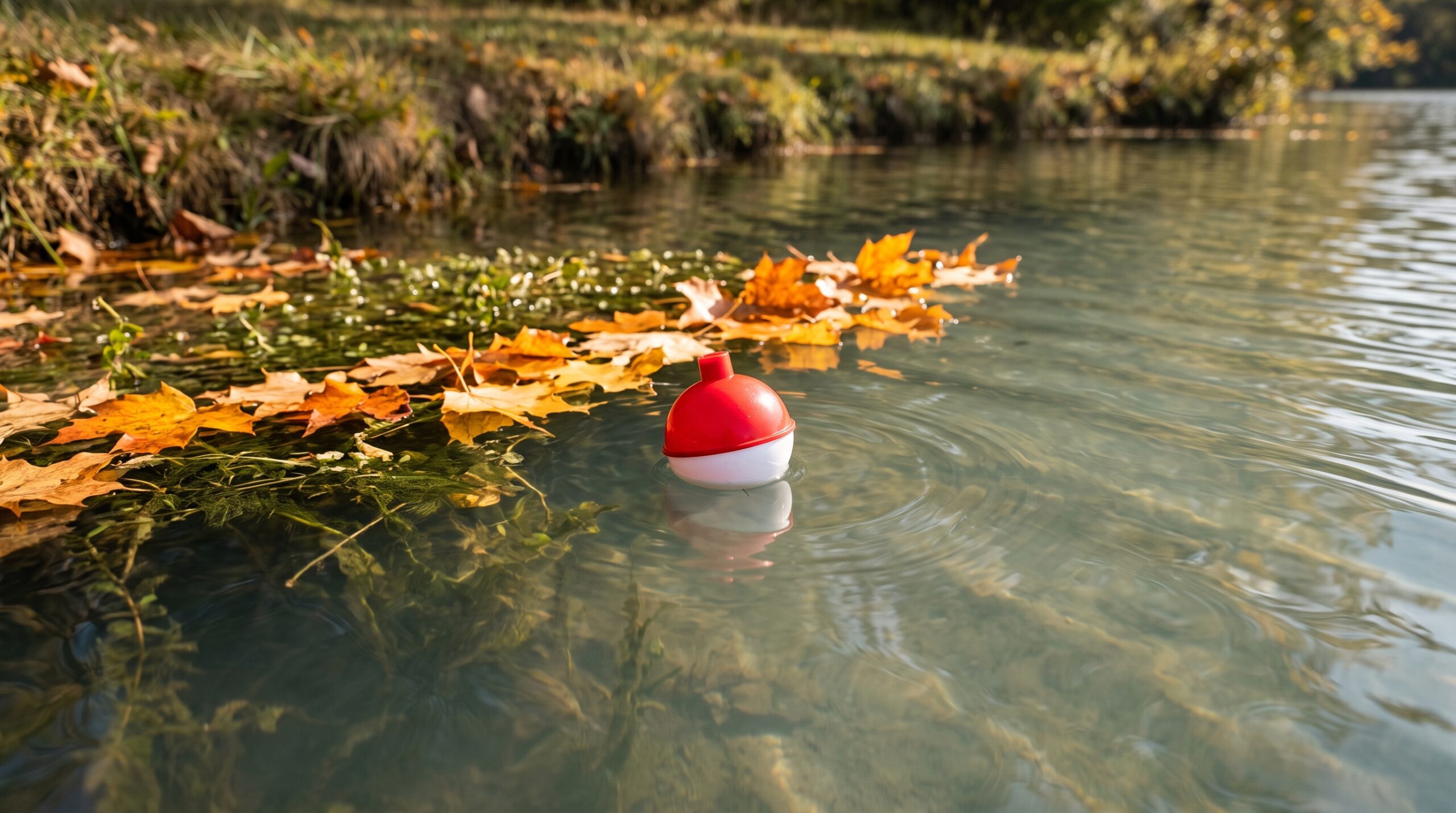
How the First Three Casts Look at Local Kentucky Park & FINs Lakes
Whether you are fishing for resident bluegill or planning around autumn trout stockings listed on the KDFWR FINs Trout Stocking Schedule—such as late-October stockings at Prisoners Lake and Middleton Mills in Kenton County, Jacobson Park Lake in Fayette County, and Whitehall Park Lake in Madison County, or the November 3 stockings in Campbell and Boone Counties—use the local targets below:
| Kentucky Destination | Why the Middle Cast Misses | Better First-Three-Casts Plan |
|---|---|---|
| Alexandria Community Park Lake Alexandria, KY (7.2 acres • Campbell County FINs) |
Anglers often line up and launch heavy floats toward the center, leaving the nearshore transition lanes untouched. | Stand back from the bank lip and pitch Casts 1 and 2 at 45° angles along the first shoreline depth transition before testing 30 feet straight out. |
| Robert J. Barth Park Lake Cold Spring, KY (Campbell County FINs) |
On a compact neighborhood pond, long casts toward the center cross other anglers’ lines and skip right past cruising panfish and stocked trout. | Use the paved walking path to find an open stretch, then pitch 15–25 feet parallel to the shoreline edge and shade seam before testing the slightly deeper middle transition. |
| Any Kentucky FINs or Park Lake Statewide (45 FINs Lakes) |
Recently stocked rainbow trout and resident bluegill frequently travel in small groups parallel to the bank along riprap, corners, and wind seams. | Pair the free Kentucky Wind and Structure Cheat Sheet with the 3-Cast Shoreline Fan at Spot A before walking to Spot B. |
Note: These local examples teach a repeatable shoreline casting routine. They are not live fish-location reports, surveyed depth contours, or catch guarantees. Always check posted park notices and official waterbody regulations on arrival.
5. Fit the 3-Cast Fan Into Your Two-Hour Family Schedule
When your child knows there is a clear three-cast game plan at each bank, nobody rushes into wild casts or begs to switch lures every four minutes. Here is how the casting fan fits into a relaxed 120-minute trip:
Field Infographic 3: The Two-Hour Family Casting Schedule
Flexible 120-Minute PacingInteractive First-Cast Check & Printable Family Field Note
Tick these boxes at your starting bank before opening the bail, or print this section for your tackle bag alongside The Two-Hour Kentucky Bank-Fishing Plan. (Session checkmarks are for your current visit and are not stored online.)
Lake / Town & Date: __________________________________________________
Spot A Starting Bank & Leaf / Wind / Shade Clue: _____________________
Cast 1 Target (45° Left Edge, 15–25 ft) Result: ______________________
Cast 2 Target (45° Right Edge, 15–25 ft) Result: _____________________
Cast 3 Target (Straight Transition, 25–35 ft) Result: ________________
Starting Bobber Depth vs. Second Depth Tested: _______________________
Best Casting Lane to Repeat Next Trip: _______________________________
Keep Rules, Weather, and Gentle Fish Handling Front and Center
- Verify Kentucky Licenses, Trout Permits, and FINs Rules: In Kentucky, resident and nonresident youth ages 15 and younger do not need a fishing license or trout permit (KDFWR FINs Regulations). Any adult age 16 or older who fishes—including casting or retrieving to help a child—must carry a valid Kentucky fishing license unless exempt, and licensed anglers (except Resident Senior License holders age 65+) must hold a Trout Permit to possess rainbow trout. At FINs lakes, daily limits are 5 rainbow trout (no culling), 4 catfish, 15 bluegill/sunfish, and 1 largemouth bass (15-inch minimum size). Confirm all statewide and waterbody-specific rules in the Kentucky Fishing and Boating Guide.
- Head to True Enclosed Shelter When Thunder Sounds: Open park pavilions, picnic shelters, and lakeside trees do not protect against lightning. Follow National Weather Service lightning safety guidance (“When Thunder Roars, Go Indoors!”): move immediately to a substantial enclosed building or enclosed hard-topped vehicle at the first sound of thunder, and wait at least 30 minutes after the last thunder or lightning before returning to the shoreline.
- Practice Wet-Hand Catch-and-Release: Keep needle-nose pliers or hemostats ready before the first cast and closely attend the rod so fish do not swallow bait deeply. Following National Park Service catch-and-release guidance, consider single barbless hooks (or hooks with barbs pinched flat using pliers), wet your hands before touching a fish to protect its mucus coat, never hold a fish by the gills, keep it off dry grass or gravel, and cut the line as close to the hook as possible if a hook is swallowed deeply.
6. Four-Question Interactive First-Cast Knowledge Check
Choose your answer mentally, then tap each question to reveal the explanation.
Where Does Your Family Aim the Very First Cast?
Start with the lake, not the lure. When you arrive at a Kentucky park or FINs lake with your kids or grandkids, how do you talk them out of the “baseball swing to the middle”—and which shoreline clue (shade seam, weed edge, corner, or leaf line) drew your last bite?
Share your favorite first-cast target or local Kentucky lake question with Kevin in the comments below! Your note helps other parents and beginners turn a short two-hour window into a calmer, more rewarding outing.