
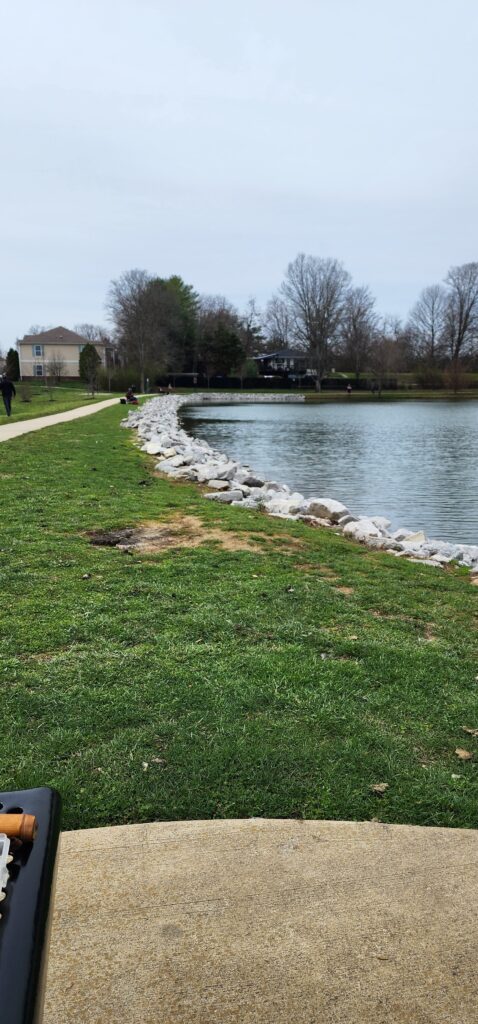
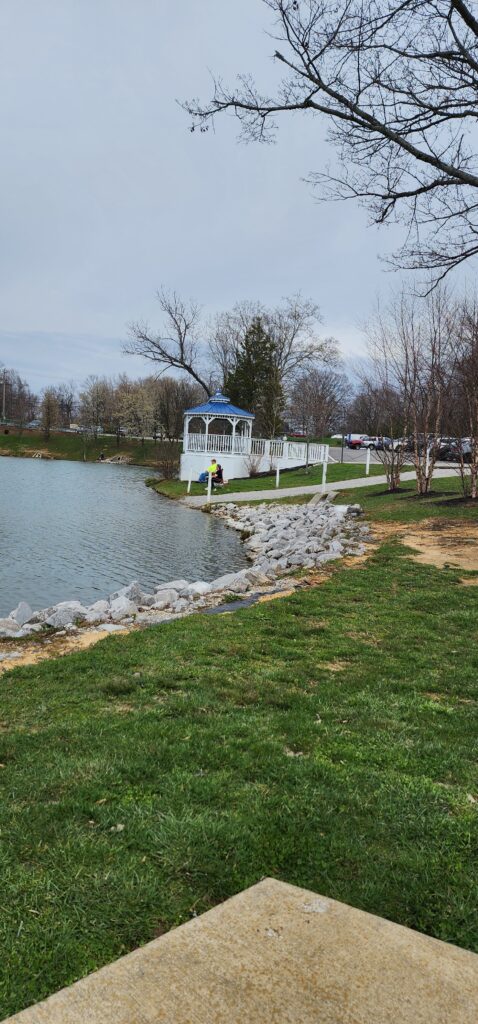
Often just called Barth Lake
Some fishing destinations impress anglers with miles of open water, remote shorelines, and countless places to explore. Robert J. Barth Park Lake offers something different—and for many families, beginners, and busy bank anglers, something even more useful.
Located in Cold Spring, Kentucky, this compact neighborhood lake provides a convenient place to fish without a boat, a long drive, or an entire day set aside. Its paved walking loop, open shoreline, nearby parking, and regularly stocked fish make it one of Northern Kentucky’s most approachable public fishing destinations. You can arrive with a simple spinning rod, walk the lake in a few minutes, and begin fishing without needing specialized equipment or advanced knowledge.
However, a small lake should never be mistaken for an automatic catch.
Robert J. Barth Park Lake can produce exciting fishing, particularly around seasonal trout and catfish stockings, but its fish still respond to weather, water temperature, fishing pressure, wind, light, and available cover. On some days, fish may be active near the bank. At other times, they may move toward the lake’s deeper central water or become more selective after seeing a steady stream of anglers and baits.
That is why this guide does more than provide a list of fish species and recommended lures. It is designed to help you make better decisions once you arrive.
Throughout the following pages, you will learn how to identify the most promising sections of the shoreline, adjust your approach by season, choose a simple fishing setup, and use your available time effectively. You will also learn when to target stocked trout, when catfish become the more dependable option, and how wind can turn an ordinary-looking bank into one of the most productive areas of the lake.
The foundation of this guide is the Every Lake Guide L.A.K.E. Method:
Look Before You Cast. Analyze the Lake. Key In on Productive Water. Execute a Simple Plan.
This method encourages you to begin with observation rather than immediately casting into the first open spot. Even at a lake as small as Barth, a few minutes spent watching the water can reveal important clues. Wind-blown ripples, shaded banks, visible fish activity, freshly disturbed water, or anglers receiving bites can all help you narrow the lake down to the areas offering the best odds.
You do not need to fish every foot of shoreline. The goal is to identify the most productive 10 to 20 percent of the water and spend your time there.
This is especially valuable for anglers with limited schedules. Many people do not have an entire morning or afternoon available for fishing. You may have only a couple of hours after work, before dinner, or while spending time outdoors with your children or grandchildren. The two-hour fishing plan included in this guide was created for those situations. It gives you a clear starting point, a practical progression, and a way to adjust when the fish do not respond immediately.
Families will also find Barth Lake especially manageable. The flat walking path and open banks make it easier to supervise young anglers, change locations, or take a break without ending the trip. A small hook, a bobber, and a piece of worm may be all a child needs to connect with bluegill near the shoreline. Meanwhile, adults can set out a bottom rig for catfish or trout and enjoy the same outing without overcomplicating the experience.
Please remember that stocking schedules, regulations, fish behavior, and park conditions can change. Always confirm current Kentucky fishing regulations before your visit, carry the required license and trout permit when applicable, and follow all posted park rules. Respect other anglers, walkers, pets, and families using the path, especially when preparing to cast.
Most importantly, approach the lake with curiosity rather than pressure. A successful fishing trip is not measured only by the number of fish brought to the bank. It can also be the moment a child watches a bobber disappear, the satisfaction of choosing the right bank based on the wind, or the confidence that comes from understanding why you are fishing a particular spot.
Robert J. Barth Park Lake may be small, but it offers an excellent place to practice the skills that work on almost any lake.
Start with the lake, not the lure—and let the water show you what to do next.