
The bobber dipped three times beside the weeds. Then nothing. The bait is still on the hook, the float sits correctly, and you have an hour left. Do you wait, adjust, or walk to the next spot?
A quiet float is a clue, but it cannot tell you by itself whether fish moved, the light changed, the bait drifted out of the lane, or you have simply waited through a slow spell. Give the spot a short, fair test before deciding.
When should you move after bobber bites stop?
First repeat the productive cast, then test one nearby depth or casting lane. If the bait remains clean and you see no repeatable sign of fish after a brief set of deliberate casts, move to the closest different edge you can reach safely. Stay longer when you still see baitfish, taps, active feeding, or a changing wind or shade line that gives the spot a new reason to produce.
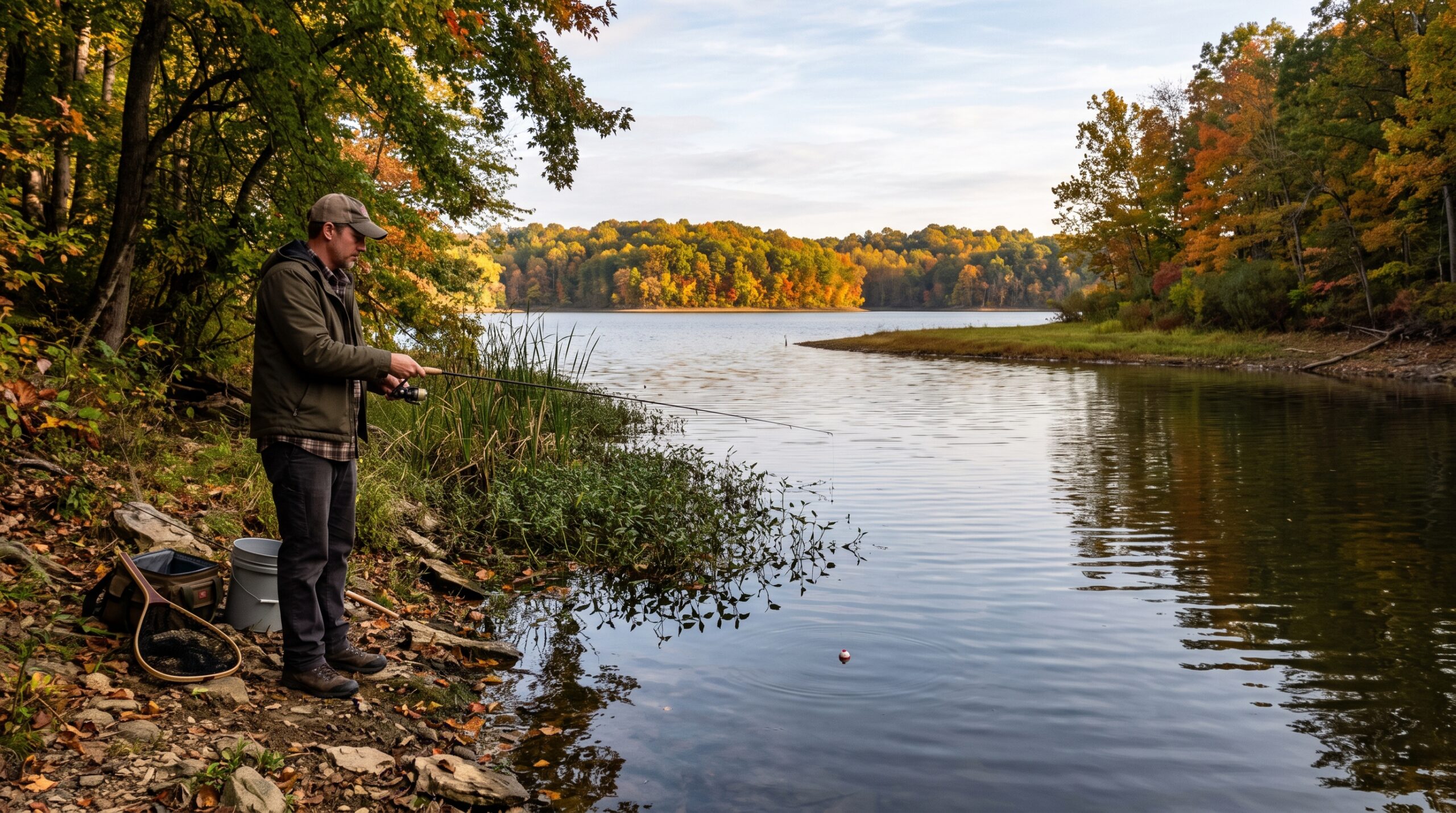
What changed when the bites stopped?
Write down the last useful bite as a location, not just a memory: distance from shore, depth under the float, position beside cover, direction of the drift, and the amount of light. If a fish bit beside the outside weed edge, casting into the middle of open water is a new test, not a repeat.
Check the hook and bait first. Missing bait, a dulled or hidden hook point, a fouled line, or a float dragged into shallower water can make a promising spot appear empty. If you are uncertain whether the bait is above weeds or resting on bottom, use the site’s five-cast bobber-depth guide before changing locations.
One bite is evidence, not a permanent pattern. Repeat the same lane once or twice to see whether the clue holds. A passing fish, a short feeding window, or another angler’s disturbance can all leave the float quiet afterward.
The five-cast stay-or-move check
These casts are a decision tool, not a promise of fish. Keep the bait and hook the same while testing the place.
- Replay the last bite. Cast to the same distance and angle, with the same float setting. Watch the entire drift.
- Repeat it once. A single empty cast is too little information. Check that the bait returns intact and the hook is clear.
- Change depth once. Raise or lower the bait a modest step while keeping the same lane. If the float fouls or leans repeatedly, return to a clear setting.
- Change the lane once. Cast along the nearby shade line, outside weed edge, point, or wind-facing corner you can actually reach.
- Confirm the best clue. Repeat the cast that produced a tap, missing bait, visible follow, or clean access to a promising edge. If none produced useful evidence, select a different reachable feature.
Do not turn “five casts” into a rigid timer. Strong wind, a slow bait presentation, or visible activity may justify a few more minutes. The test keeps you from spending the entire outing in one unproductive lane.
Replay last bite → Test one depth → Try adjacent lane
Repeatable clue? Stay and refine. No clue? Move to a different edge.
Stay, adjust, or move? Compare the evidence
| What you notice | Best next step | Why |
|---|---|---|
| Repeated taps or missing bait in one lane | Stay; inspect bait size and hook exposure | Fish may still be present, even if hookups stopped. |
| Float fouls, leans, or drags after wind shifts | Adjust depth or drift path | The presentation changed before the fish necessarily did. |
| Shade withdraws from the original edge | Test nearby shade or the first reachable deeper edge | A new location may preserve the feature that drew your first bites. |
| Clean bait, no signs of fish across the fair test | Move to a contrasting, legal access point | More identical casts have little new information to offer. |
Move to a reason, not just a new patch of bank
The best next stop changes one important condition. If your original spot was a sunny, shallow flat, look for a reachable shaded corner, weed outside edge, point, or nearby depth change. If the wind now pushes food and surface activity toward a safe accessible bank, compare that area. Avoid assuming that a farther walk automatically means better fishing.
Use the Every Lake Guide L.A.K.E. Method: Look for wind, light, baitfish, and safe access; Analyze which edges you can reach; Key In on the one with the clearest food, cover, or depth clue; then Execute a short test and record what happened. The field guides extend that approach to different Kentucky trips.
A two-hour plan for a spot that goes quiet
- Minutes 0–10: Compare two safe shoreline options and choose the strongest visible edge.
- Minutes 10–45: Fish the first lane; note the precise cast that draws attention.
- Minutes 45–60: If bites stop, run the five-cast check while the earlier clue is fresh.
- Minutes 60–95: Move only when the test gives no repeatable evidence; fish a contrasting edge.
- Minutes 95–120: Follow the better evidence and save one note for your next visit.
The Two-Hour Kentucky Bank-Fishing Plan is Kevin’s downloadable field guide for organizing a short outing. It is a paid guide sold on Every Lake Guide, not an outside affiliate link. For a free planning aid, see the Kentucky Wind and Structure Cheat Sheet listed among the field guides.
Safety, rules, and fish-friendly release
Choose only open, legal shoreline access. Check current licenses, waterbody rules, species limits, bait restrictions, and posted signs through Kentucky Fish & Wildlife before the trip. Some Kentucky waters have special rules.
Do not cross slick riprap, steep mud, unstable logs, or private property to reach a “better” edge. Give others casting room and stop fishing when lightning threatens. If you release a fish, have pliers ready, wet your hands, keep the fish off dry ground, handle it briefly, and return it promptly. A suitable barbless hook or crimped barb may simplify removal when allowed and practical.
Four-question knowledge check
What would you do next?
Choose an answer mentally, then open each answer. These native panels work without scripts.
1. Your float goes quiet, but the bait is missing twice. Move immediately?
No. Stay briefly and inspect bait size, hook exposure, and the lane. Repeated missing bait is evidence that something is still interacting with your presentation.
2. The float leans after wind pushes it toward shore. What changes first?
Check for bottom or weed contact. Shorten the depth or alter the drift path before concluding that fish left.
3. Five deliberate casts show clean bait and no activity. Where next?
A safe, legal, reachable feature with a meaningful difference: a new shade line, point, weed edge, or depth transition.
4. You catch one fish at a precise depth and angle. What should you record?
Record the cast distance and angle, depth, edge, light, wind, and time. Then repeat the successful lane to see if it was a pattern.
Frequently asked questions
How long should I wait before moving bank-fishing spots?
There is no universal number of minutes. Give a productive spot a short controlled check, then weigh current signs of fish against what a different reachable edge offers. Slow presentations and visible activity justify more patience than clean, empty casts in an unchanged lane.
Should I change bait as soon as the bobber stops moving?
First check that the bait remains on the hook and the float is presenting it where you intend. Test depth or lane once. Change bait when the evidence points to bait size, condition, or repeated missed takes.
Can I fish the same spot again later?
Yes. A new wind direction, growing shade, different light, or visible baitfish can make it worth revisiting. Note what changed so the return is a fresh test.
What if I only have one safe place to stand?
Compare casting angles, distances, and depths from that position. A safer, repeatable presentation is better than moving onto unstable or prohibited bank.
Replay the last bite, change one variable, and let the next few casts earn the decision to stay or move. What clue tells you that a bank-fishing spot is finished for now? Share your experience in the comments.