
EVERY LAKE GUIDE · BANK FISHING SKILLS
You reel in to check the hook. The worm is gone. Your bobber never disappeared, and you cannot remember seeing a clear bite.
It is tempting to cast farther or leave the spot. First, find out whether something took the bait—or whether the cast, cover, or the way you attached it removed it before a fish had a useful chance.
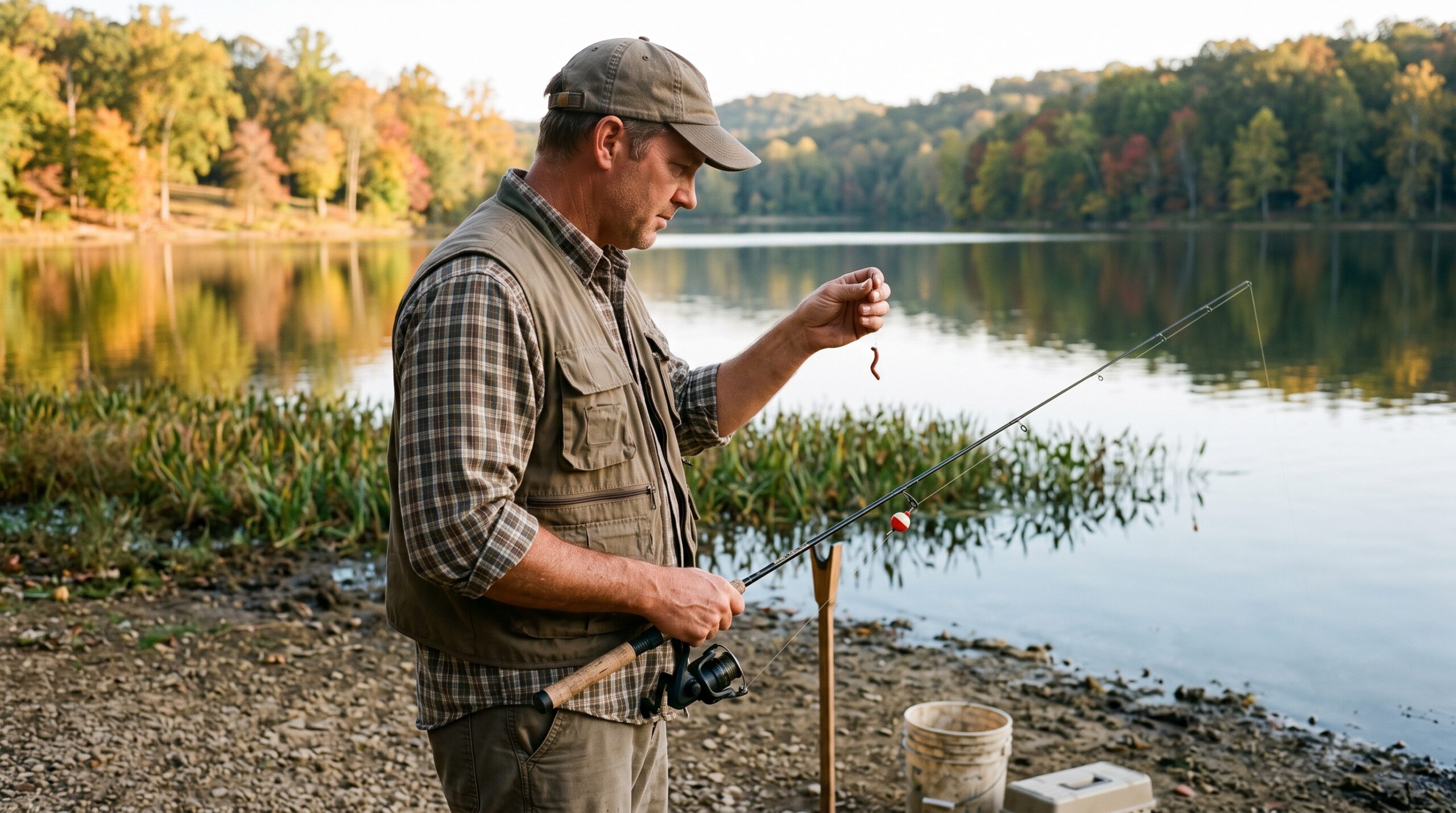
Before changing spots, answer three questions
Field checklist: test one explanation at a time. These clues suggest a next test; none identifies the culprit by itself.
A long worm can feed fish without putting the hook in their mouths
For a simple bluegill setup, a whole nightcrawler trailing well beyond the hook gives small fish something to grab. You may retrieve a shorter worm—or a bare hook—without seeing a decisive pull.
Try a compact section instead. Attach it securely, leave room in the hook gap, and check that the point is not buried in a thick wad of bait. Keep the same casting lane and depth for the next comparison.
The Iowa DNR bluegill guide explains why small mouths make hook size and worm portions matter. Its size 6 or 8 suggestion is a bluegill starting point, not a rule for every species; hook dimensions also vary by manufacturer.
If you shorten the worm first, keep the hook unchanged for that test. If bait still disappears, compare a suitable smaller hook separately. Avoid making the hook so small that your target fish routinely swallows it deeply.
Compare the clues before choosing a fix
| What you observe | Possible explanation | Next controlled test |
|---|---|---|
| Bait is missing after a short cast and prompt retrieve. | Loose attachment or casting force; a quick bite is still possible. | Secure fresh bait and repeat with a gentler cast. |
| The worm gets shorter after repeated faint taps. | Fish may be nipping the exposed end. | Shorten the dangling portion; keep depth and location steady. |
| The hook returns with grass or leaves. | The rig may be dragging through cover. | Raise the bait slightly and repeat the same lane. |
| The float barely reacts while bait repeatedly disappears. | Small takes, too much float resistance, slack, or loss unrelated to fish. | Confirm rig balance and line control before comparing a smaller float. |
| Bait stays attached in a nearby open lane but disappears beside vegetation. | Cover contact or feeding activity may differ between the lanes. | Keep bait clear of vegetation and repeat; do not assume one culprit. |
Run a short bait-loss test
This is a practical comparison, not a scientific way to identify every underwater visitor. Its job is to narrow the next decision.
- Inspect the hook. Check for damage, a blocked gap, tangled line, and weak bait attachment. Put on fresh bait.
- Test the cast. Make a short, smooth cast into clear reachable water. Retrieve promptly and inspect. Repeat if the result is unclear.
- Reduce the bait tail. If it survives casting, use a smaller, securely attached portion in your original lane.
- Watch more than submersion. Notice taps, a pause in the drift, a lean, or purposeful sideways travel. Movement can also come from wind or contact.
- Repeat the useful result. Give the same presentation several comparable casts. Only then change one other factor, such as depth or float size.
If the rig is coming back fouled, use the bobber-depth guide to test whether the bait is sitting in weeds or bottom debris.
Choose a float that can show the bite you are testing
A float needs enough buoyancy to support the hook, bait, and weight. Extra buoyancy can make delicate movement less obvious, but a float that sinks under the rig’s own weight is not useful either.
The Missouri Department of Conservation’s bluegill advice describes a small bobber just large enough to suspend the bait. Check your rig in visible water beside a safe bank before trusting what it shows farther out.
Manage loose line so you can respond without pulling the float out of its lane. Do not keep the line so tight that you tow the bait.
When a bite becomes clear, respond appropriately for the hook you are using. Waiting longer after every tiny tap can increase deep-hooking risk. Circle hooks require a different response from a conventional J-hook.
Use L.A.K.E. to decide what missing bait means
- Look: Notice float movement, returned bait, weeds, wind, and safe access.
- Analyze: Compare bait attachment, casting force, cover contact, and possible feeding.
- Key In: Choose one reachable lane and the strongest explanation.
- Execute: Change one variable and repeat. Keep the adjustment only when the result supports it.
The free Kentucky Wind & Structure Cheat Sheet can help you compare the reachable edges around that lane. You do not need another bait purchase to begin this test.
Fit the test into a two-hour trip
- Minutes 0–10: Check access and weather; compare two reachable areas with room to cast safely.
- Minutes 10–25: Confirm the rig works and run the cast-and-bait checks.
- Minutes 25–60: Fish the clearest presentation. Inspect bait after suspicious movement or an unproductive soak.
- Minutes 60–90: Compare one adjustment or a nearby contrasting edge if the first lane gives little useful evidence.
- Minutes 90–120: Return to the best evidence and record what changed.
Give your next short trip a clearer plan.
Explore The Two-Hour Kentucky Bank-Fishing Plan for a repeatable trip framework. This is Every Lake Guide’s own digital field guide.
Keep the test safe—and the release quick
Confirm current licenses, species limits, bait restrictions, park hours, and exact-water rules through Kentucky Fish & Wildlife and posted signs. This article does not assume every bait or method is permitted at every lake.
Stay on firm ground. Keep hooks and casts clear of children, paths, and other anglers. Collect discarded bait packaging and line; never step onto slippery banks or unknown drop-offs to recover a rig.
If you hear thunder, stop and move to a substantial building or enclosed hard-topped vehicle. The National Weather Service advises remaining sheltered for at least 30 minutes after the last thunder.
Prepare pliers before landing a fish. Wet your hands, support the fish, minimize air exposure, and keep it off dry ground. Consider suitable single barbless hooks or crimped barbs when appropriate and permitted.
For a deeply swallowed hook, avoid forceful extraction; follow the National Park Service catch-and-release guidance.
Four-question knowledge check
Choose an answer before opening each panel. Tap or click the question to reveal the explanation.
1. The bait disappears after a short cast and immediate retrieve. What should you check first?
A. Casting and attachment · B. Water temperature · C. A new lake
Answer: A. Test secure attachment and a gentler cast before assuming fish removed the bait.
2. A long worm returns shorter after faint taps. What is the clearest first change?
A. Change everything · B. Shorten the bait tail · C. Cast twice as far
Answer: B. A compact portion reduces bait that can be nipped away from the hook. Keep the depth and lane consistent.
3. Missing bait proves that bluegill are feeding. True or false?
Answer: False. Fish are one possible explanation. Casting loss, cover contact, and other causes need comparison.
4. Why test a new float separately from a new hook and depth?
A. To isolate the result · B. To guarantee fish · C. To avoid inspecting bait
Answer: A. Separate changes make it easier to see which adjustment helped. No setup guarantees a catch.
Frequently asked questions
Can fish steal bait without pulling the bobber under?
Yes. A fish may nip the part extending beyond the hook. The movement may be slight, especially when the rig or line does not transmit it clearly. Repeated bait loss still needs checking against non-fish causes.
Should I use a smaller hook?
It may help when the hook is too large for your target fish, particularly bluegill. First test a smaller bait portion. Then compare an appropriately sized hook while keeping the other variables steady.
Should I wait longer before setting the hook?
There is no universal countdown. Read sustained movement, manage slack, and use the response suited to your hook type. Waiting longer automatically can let a fish swallow the hook more deeply.
When should I move?
Move when the rig works, you have made a fair controlled comparison, and another safe reachable edge offers a stronger clue. Persistent nipping may indicate fish you are not targeting; it does not oblige you to stay.
What happened to your bait?
Have you shortened a worm and finally connected—or found that your cast was removing it? Share the bait, float style, cover, and adjustment in the comments. Leave out any private fishing location.
Start with the lake, not the lure.
Reviewed September 30, 2026. The diagnostic sequence is a practical fishing framework, not proof of a particular species or a catch guarantee. Official sources support the tackle and safety guidance; conditions and rules can change.