
A bank that worked for your family in July can be a different place in January. The lake sits at a different level, the grass that made a soft path is gone, and the snack bar, restrooms, or gate you counted on may be closed. Kentucky Lake bank fishing in winter with kids is still very doable, but it rewards a short check before you load the car.
This guide gives you four questions to ask about any bank: how close the parking is, whether the winter water level has changed the shoreline, how the ground and edge hold up when cold and wet, and what help is nearby. It does not give you a list of spots. It gives you a way to judge whichever spot you are considering.
Why winter changes a bank you already know
Summer hides most of a bank’s problems. Dry ground is firm, the water is where you remember it, and a four-year-old can wander without much risk. In winter, four things shift at once: the water level, the ground, the daylight, and the number of people around.
Fewer people is the part that matters most for safety. In summer, another family is usually within shouting distance. In winter you may have the whole shoreline to yourselves, which is peaceful and also means nobody nearby to notice a problem. Short days also mean the light fades earlier than you expect, especially in a hollow or under tree cover.
So the question to ask changes. In warm months it is “will we catch anything?” In winter it is “is this place still easy for small kids?” If the answer is yes, the fishing is a bonus. If the answer is no, the best bait in the world will not rescue the trip.
The winter lake level: how a lower shoreline can turn an easy bank into a long, muddy walk
Kentucky Lake is a managed reservoir, and its level is lowered through the fall and winter, then brought back up in spring. When the water drops, the shoreline moves away from where you used to stand. A bank that was a ten-step walk from the car can become a long trip across exposed mud, gravel, or rock.
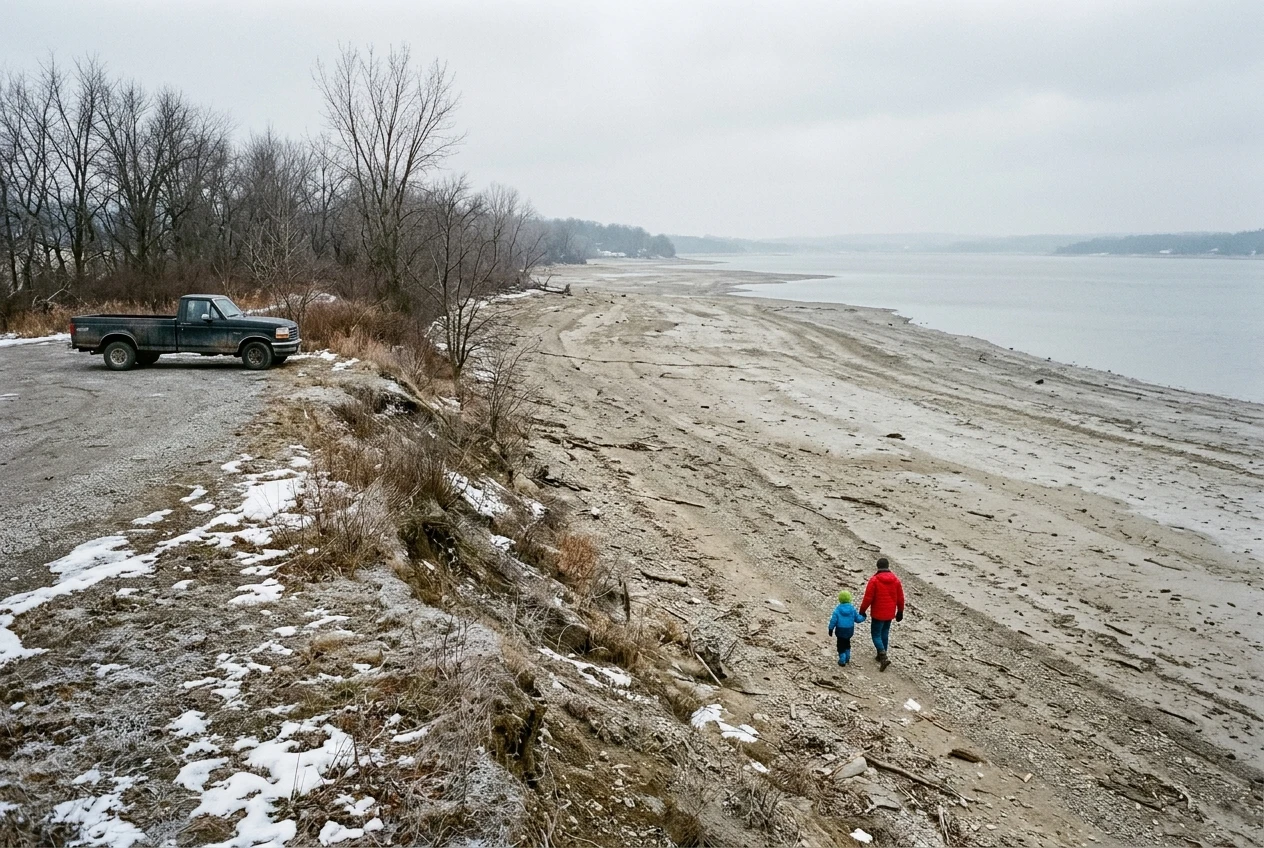
That has direct consequences for kids:
- A longer walk with a cooler, a rod bag, and a small child is harder, and tired kids get cold and cranky faster.
- Newly exposed ground is often soft, silty, and uneven. It can be slick on top and sticky underneath.
- A gentle slope at full summer level may now be a steeper drop to the waterline.
- Old ramps, docks, and rock piles may sit high and dry, or end in a sudden step down.
Before you go, look up the current lake level on the TVA lake information page, and compare it to what the lake looked like on your last visit. If you have photos from a summer trip, look at where the water met the bank in the picture. A big gap between that and today’s level tells you to expect more walking and softer ground. If you cannot tell how much the shoreline has moved, treat the spot as unknown until you have checked it another way.
For a better sense of what the bank itself tells you about the water, see what the bank under your feet tells you about the water in front of you.
Parking and the walk to the water: what to look for with a cooler, a rod bag, and a four-year-old
In winter, the best bank for kids is the one closest to the car. Parking is your first test, and you can often judge it from a satellite view before you leave home.
Look for these things:
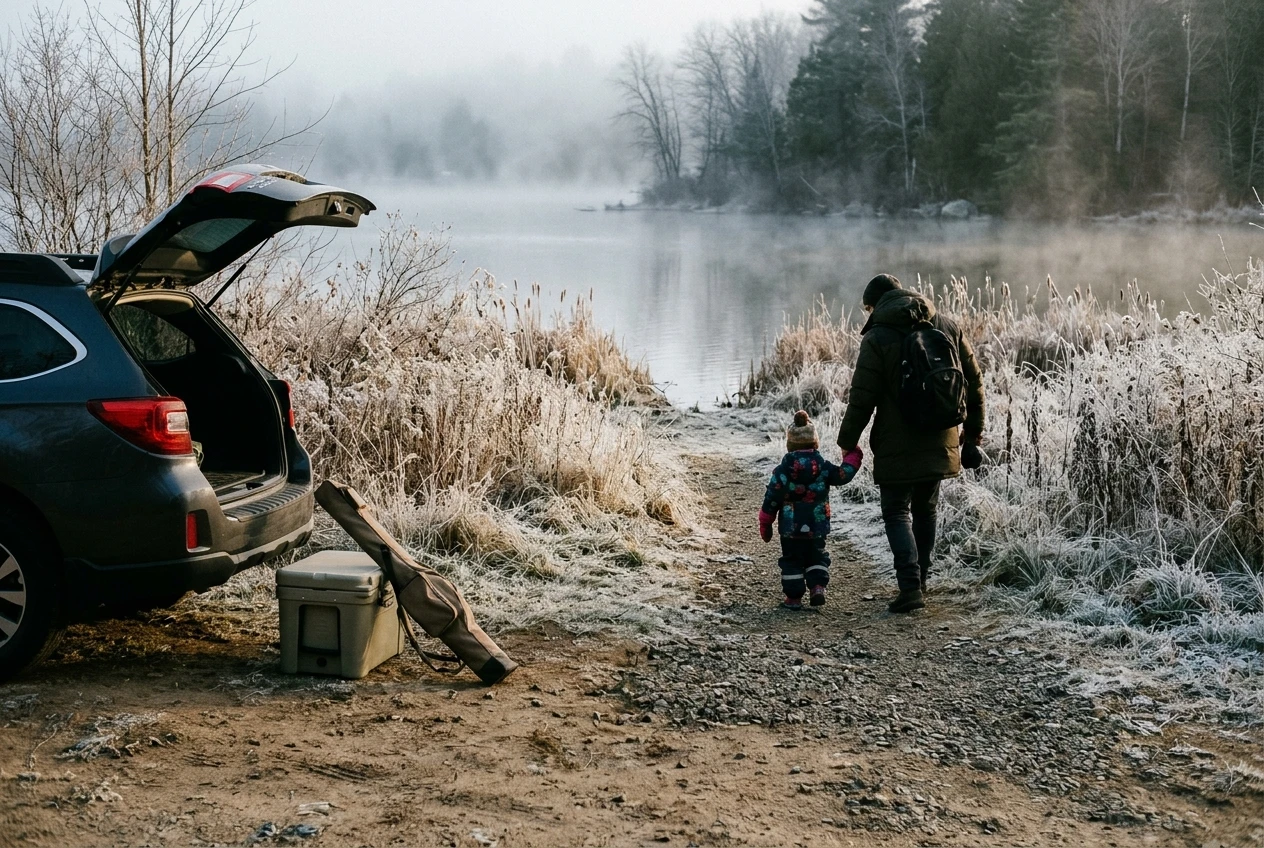
- Distance from the car to the water. A short, direct walk beats a scenic one. Count the walk as a round trip, because you will carry a tired child back.
- Surface of the lot and the path. Gravel drains and stays firmer. Packed dirt can turn to slick mud after rain or a thaw. Pavement can hold black ice in shaded corners.
- Space to pull in and turn around. Winter lots may be unplowed or partly blocked, and cold ground can make roadside shoulders soft.
- A flat place near the car. If you can set up within sight of the vehicle, a kid who needs a break can be back in the heated cab in a minute.
Plan the load as well. One adult carrying everything while holding a small hand is how people slip. Pack fewer items, use a backpack so both hands are free, and make a second trip to the car rather than overloading the first. If you want a checklist for the gear itself, a Kentucky bank fishing gear checklist you can tick off in the driveway covers it.
Gates, ramps, and seasonal closures: what to confirm before you leave home
Many lakeside areas run on reduced schedules in the cold months. Gates may be locked at a set hour, access roads may be closed, and restrooms, bait shops, and visitor facilities may be shut for the season or open fewer days. Rules and hours differ from place to place, and they change, so no general article can tell you what a particular site is doing this week.
What you can do is confirm four things before you drive:
- Is the access road open to vehicles? A closed gate can add a long walk before you even reach the bank.
- What time does the gate lock? If you are inside when it closes, you may be stuck. Plan to be out well before that, with daylight to spare.
- Are restrooms open? Kids get cold, and cold makes them need a bathroom sooner. If none are open, know where the nearest one is.
- Has anything been closed for repairs or high water? Ramps, piers, and walking paths are sometimes closed after storms or maintenance.
The most reliable sources are the managing agency’s own page or a phone call to the park office, marina, or visitor center. Social media posts and old forum threads are often out of date. If nobody answers and nothing online is current, pick a spot you can verify instead.
The bank itself: slick mud, frosty rock, and steep edges that little kids shouldn’t stand on
Once you reach the water, check the ground before anyone casts. Cold weather makes the same bank more slippery than it was in summer.
Mud. Exposed winter shoreline can look solid and give way under a step. Mud near the waterline is slick even in shoes with good tread. Keep kids on firmer ground above it.
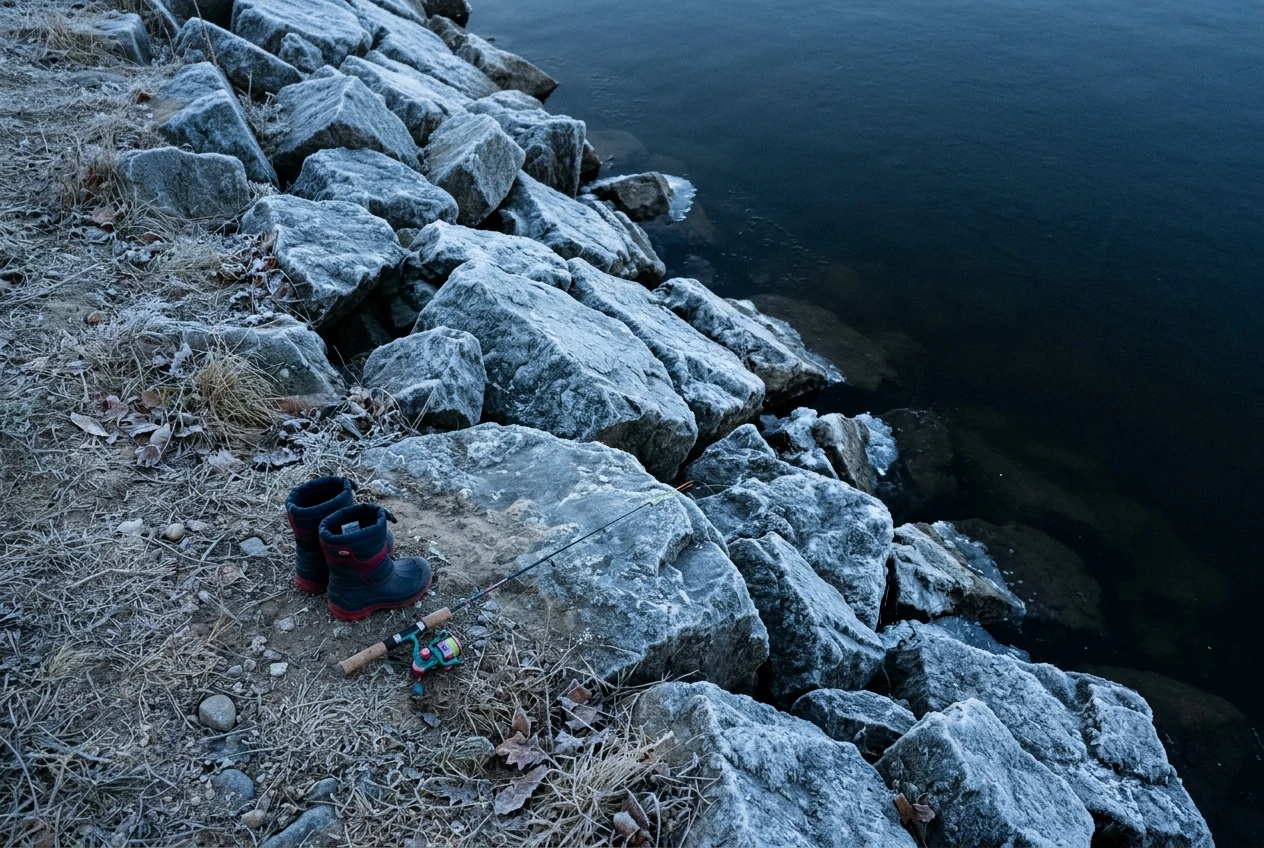
Rock. Riprap and boulders collect frost, algae, and a thin film of moisture. A frosty rock in the morning shade is a fall waiting to happen, and the fall is onto more rock. Let kids sit on a dry, flat spot back from the edge.
Edges. A lowered lake can leave a bank that drops off sharply close to the waterline. If you cannot see where the ground ends and the water begins, or the edge crumbles when you press on it, it is not a place for a small child to stand.
A simple rule works well: the kids fish from a spot where, if they slipped, they would land on level ground, not in the water. Mark that spot yourself, a few steps back from the edge, and ask them to stay on it. A child who is bundled in winter clothing and falls into cold water is in real danger, so a properly fitted life jacket is worth wearing on the bank in winter. For the rest of that gear, read the bank-fishing safety gear families forget until something goes wrong.
Cold-weather safety for children: layers, warm-up breaks, and when to call the trip
Kids lose heat faster than adults and often will not tell you they are cold until they are miserable. Dress them before you think they need it.
- Layers. Start with a warm base layer, add insulation like fleece, and finish with a windproof, water-resistant outer layer. Cotton holds moisture and stays cold when wet, so avoid it next to the skin.
- Hands, head, and feet. Gloves they can still move their fingers in, a hat that covers the ears, and warm socks inside waterproof boots. A spare pair of gloves and socks in the car costs little.
- Warm-up breaks. Plan to return to the car on a schedule, such as every 30 to 40 minutes, instead of waiting for a complaint. Hot chocolate or soup in a thermos makes the break something to look forward to.
- Food. Cold bodies use energy to stay warm, so bring snacks that are easy to eat with gloves on.
Watch the signs that mean it is time to go: shivering that will not stop, a child who goes quiet or unusually clumsy, blue-tinged lips, or hands too stiff to hold the rod. Do not wait for all of them. Any one of these is enough to call the trip and warm them up in the car.
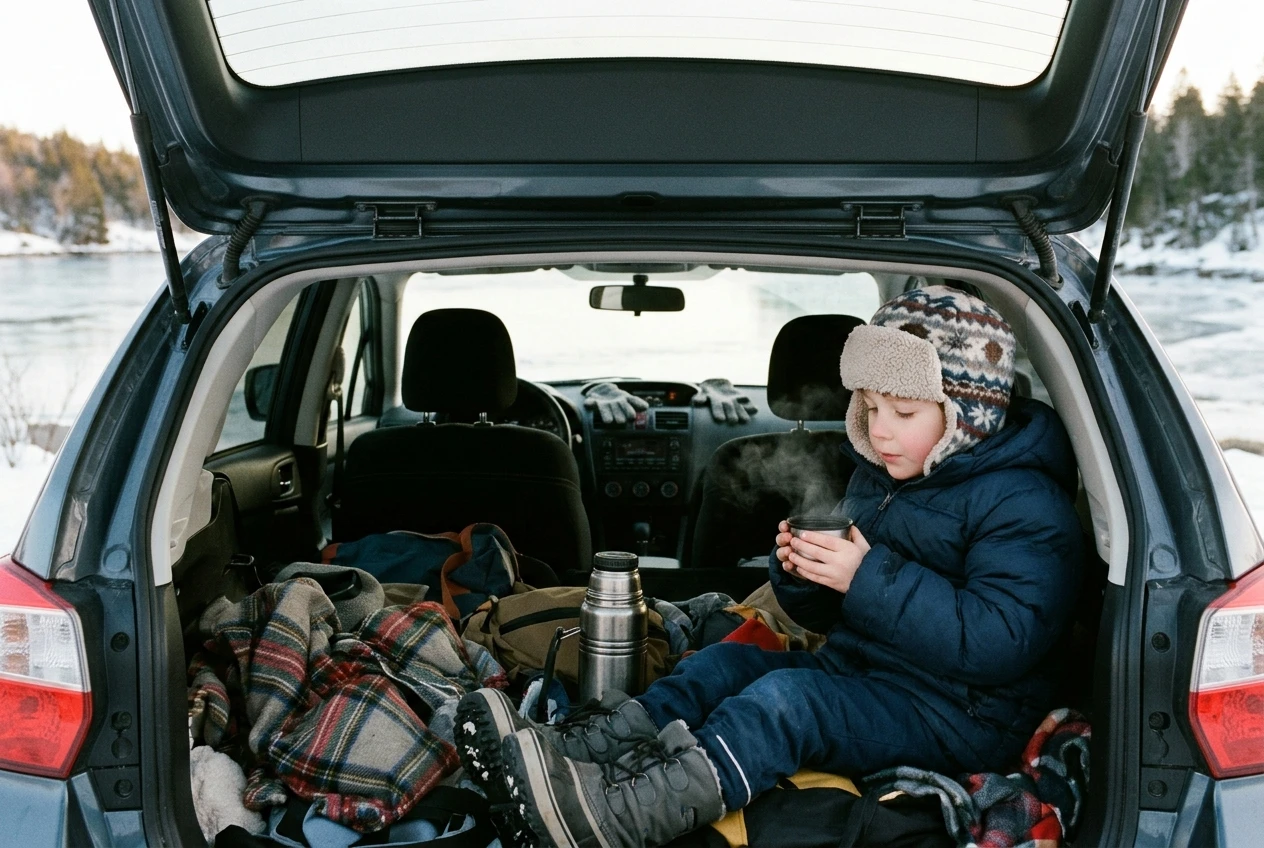
Wind matters as much as the temperature on the thermometer. An open bank with a steady wind feels far colder than the forecast number, so a sheltered cove can be a better winter choice than a point with a good view.
A quick phone-check routine for judging any Kentucky Lake spot in under ten minutes
You can run this at the kitchen table. It works for any bank you are considering, whether you have been there or not.
- Check the forecast for that location. Look at the temperature, wind, and the hour the sun sets. Plan to leave well before dark.
- Check the lake level. Compare it to your last visit or to photos of the shore. A lot of change means a longer, muddier walk.
- Open a satellite view. Measure the distance from the parking area to the water, and look for the flat ground near the car.
- Confirm access. Find the managing agency’s current page, or call. Ask about gate hours, road closures, and restrooms.
- Look at recent photos or reports from the past few weeks. Recent is the key word. A photo from last summer tells you little about winter.
- Identify what help is nearby. Know where the closest open facility is, check whether your phone has signal at the bank, and tell someone at home where you are going and when you expect to be back.
- Decide on a backup. If the first spot looks wrong when you arrive, have a second one picked so the day does not end in the parking lot.
If any step raises a concern you cannot resolve, move to a different bank. For ideas on where to look, where to bank fish with kids in Kentucky, region by region lists places worth running through this check.
What a good winter family outing looks like: short, close to the car, and easy to leave
A good winter trip is small. You park within a short walk of the water, the ground is firm, and the edge is gentle enough that you do not have to watch every step. You fish for an hour or two, warm up when the kids need it, and head home while everyone is still having fun.
Success is not a full stringer. It is a child who wants to go again next weekend. One catch, a few bites, or just a bobber floating in the cold quiet can be enough, as long as the kids left warm and happy. Ending early on a good note does more for a young angler than staying late and cold.
Every bank you check this way teaches you something for the next one. You will start to notice which lots drain well, which shorelines drop off fast, and which spots are practical when the lake is low.
When you are ready to pick a guide for your next trip, the Kentucky bank fishing ebooks page shows which lake guide fits your family’s situation, so you can choose the one that solves the problem you actually have.