Kentucky has big reservoirs, small county lakes, mountain impoundments, and a long river border, and each one asks something different of a family standing on the shore. A lake that is perfect for an experienced angler with waders can be a poor choice for a six-year-old who needs flat ground and a bathroom within walking distance. This guide sorts the state into five regions and runs the same family checks on each, so you can pick a realistic first trip instead of chasing a famous name.
The checks are the same everywhere: how far the parking is from the water, what the bank footing is like, whether restrooms are close, how crowded it tends to get, and what a beginner can reasonably expect to catch. Lake-by-lake detail lives in other guides on this site, and this one links to them where they help.
Start With the Region Closest to Your Driveway, Not the “Best” Lake
The best lake for your family is the one you will actually visit more than once. A two-hour fishing session with kids turns into a six-hour day if you add two hours of driving each way, and children who spend most of the day buckled into a car seat are not ready to sit patiently with a bobber. Short drives mean you can leave when the kids are done, which is usually the most important part of a good trip.
A simple way to sort your options is by drive time from home:
- Under 45 minutes: Your regular spot. This is where first trips, short evening sessions, and “let’s just try it for an hour” outings belong.
- 45 minutes to 90 minutes: A half-day trip. Worth it when the bank is better for kids than anything closer, such as flatter footing or a nearby restroom.
- Over 90 minutes: A day trip or a weekend. Plan these around a state park or campground, and bring more food, water, and layers than you think you need.
Find your region below, read its checks, and choose from the lakes nearest you. If you want a packing list for the short trips, what to pack for a two-hour family bank-fishing trip covers it.
One note that applies to every region: many of Kentucky’s larger lakes are managed by the U.S. Army Corps of Engineers, and lakes built for flood control are usually lowered in fall and winter. Lower water moves the shoreline, so a bank that was a short walk from the parking lot in summer can be a long, muddy slope in late fall. It is October now, so check current conditions before you commit to a spot.
Western Kentucky: Big-Water Lakes and What the Bank Offers Families
Western Kentucky is home to Kentucky Lake and Lake Barkley, two very large reservoirs separated by the Land Between the Lakes. Smaller lakes in the region, such as Lake Beshear and Lake Malone, can be easier for young children than the big water, because they have less open water and often less wind.
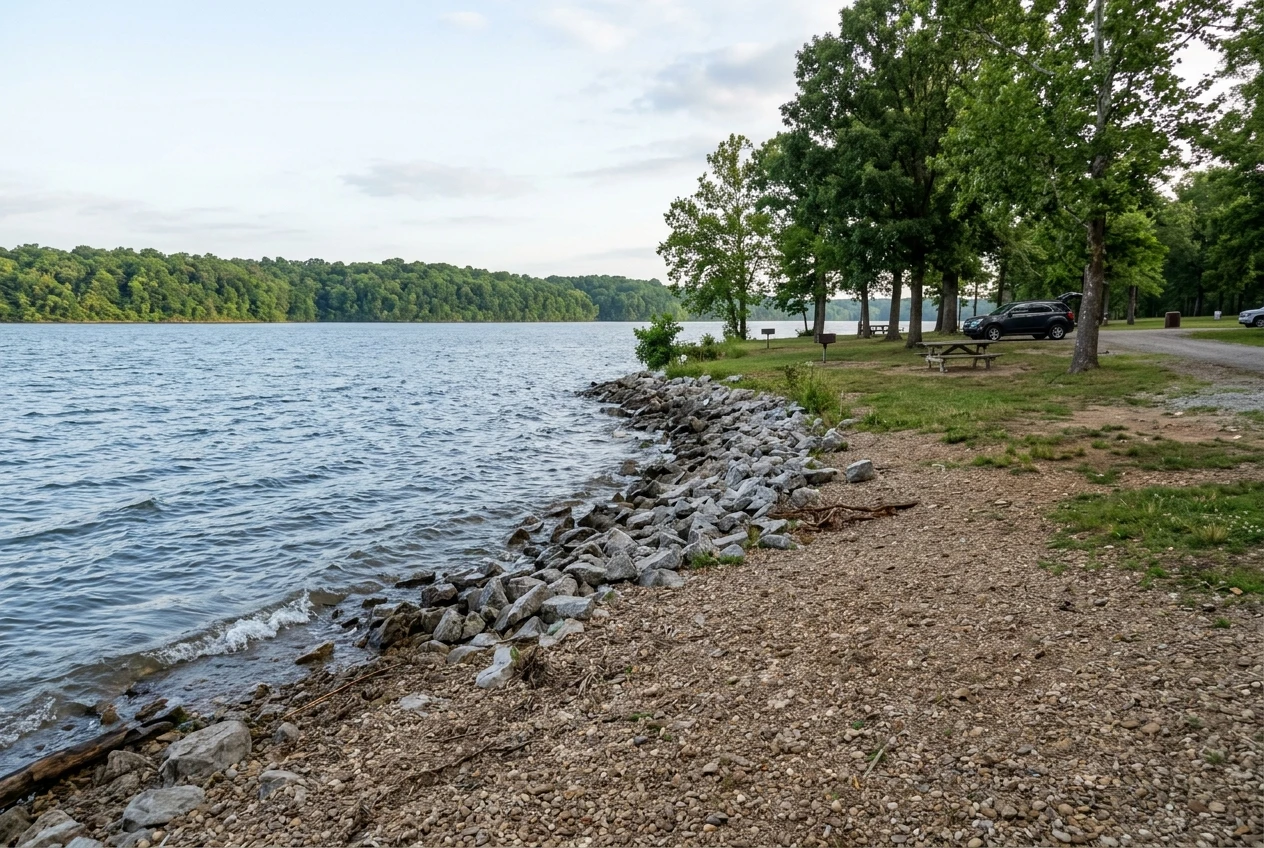
The large lakes have a lot of shoreline, but not all of it is open to a family. Most of the bank access that suits kids is at state parks, Corps of Engineers day-use areas, campgrounds, and marinas or boat ramps with shoreline nearby. Wind is the main trouble on big water, since it pushes waves onto the bank and makes casting harder for small arms.
Family checks for Western Kentucky:
- Parking to water: Often short at developed parks and ramps, where you can park within a short walk of the shore. Pull-offs along roads can be closer still, but the shoulder is not a safe place to unload kids.
- Bank footing: Varies a lot. Developed areas often have gravel, grass, or rip-rap (rock placed to stop erosion). Rip-rap is uneven and slippery when wet, so small children need a hand on it, and it is a bad place to carry a bucket and a rod at the same time.
- Restrooms: Usually at state parks and campgrounds, but confirm before you go, because some are closed outside the busy season.
- Crowd level: Busiest on summer weekends near ramps and campgrounds. Weekday mornings and shoulder seasons are quieter.
- What a beginner can expect to catch: Bluegill and other sunfish are the most forgiving fish for a child with a worm under a bobber. Crappie, catfish, and largemouth bass are also common in the region, and Kentucky Lake has a strong reputation for crappie, though those fish are often caught from boats or around brush and structure.
Stay away from the areas right below dams unless signs say the bank is open to the public. Water released from a dam can rise and flow quickly, and a spot with a lot of current is not one for a first family trip.
South Central Kentucky: Lake Cumberland Country and the Smaller Lakes Nearby
Lake Cumberland is deep, long, and surrounded by hills, which makes it a wonderful boating lake and a harder bank-fishing lake for kids. Much of the shoreline is steep or rocky, and a lot of public access is built around marinas and ramps. Bank fishing is possible at state park areas and certain public sites, but you will want to check the specific spot rather than assume the whole lake is open and easy.
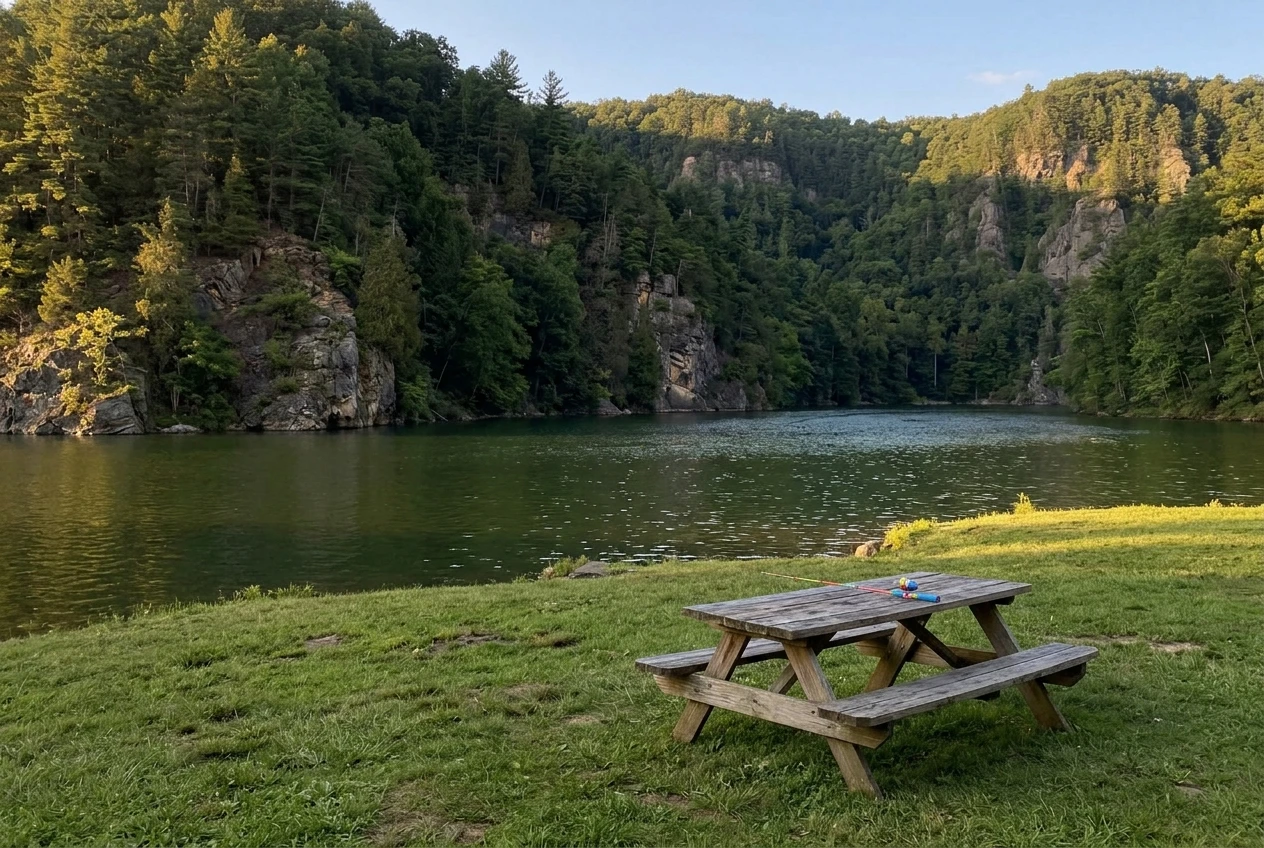
For families, the smaller lakes around the region are often the better choice. Green River Lake, Barren River Lake, and Nolin River Lake all have public recreation areas with campgrounds and day-use shoreline. Dale Hollow Lake sits on the Kentucky and Tennessee border, so check which state’s license and rules apply to the part of the lake where you will be standing.
Family checks for South Central Kentucky:
- Parking to water: Short at beaches, picnic areas, and campgrounds, and longer at wilder shoreline, where you may park at the top of a slope and walk down.
- Bank footing: Steep and rocky around Lake Cumberland itself. Some of the smaller lakes have gentler grassy banks near campgrounds. Look for flat, mowed areas and avoid sheer drops with young children.
- Restrooms: Common at campgrounds and state park areas. Remote access points often have none.
- Crowd level: High in summer, especially near the main marinas and state park. A smaller lake on a weekday is usually much calmer.
- What a beginner can expect to catch: Bluegill and other sunfish near the bank, with bass and crappie possible around cover. Striped bass and walleye are famous at Lake Cumberland, but they are largely a boat-fishing target and not something to promise a beginner from shore.
If the nearest option in this region is a crowded campground shoreline, this guide to choosing a family bank-fishing spot when the closest bank is crowded walks through what to do instead of giving up on the day.
Central Kentucky and the Bluegrass: Short-Trip Spots Near Towns
This is the region where the “closest realistic trip” rule matters most. The Bluegrass has fewer huge lakes and more small ones: county and city park lakes, state-managed lakes, and a few larger reservoirs like Taylorsville Lake. Herrington Lake is a well-known lake in the area, but its shoreline has a lot of private property and steep terrain, so public bank access takes more research than at a typical park lake.
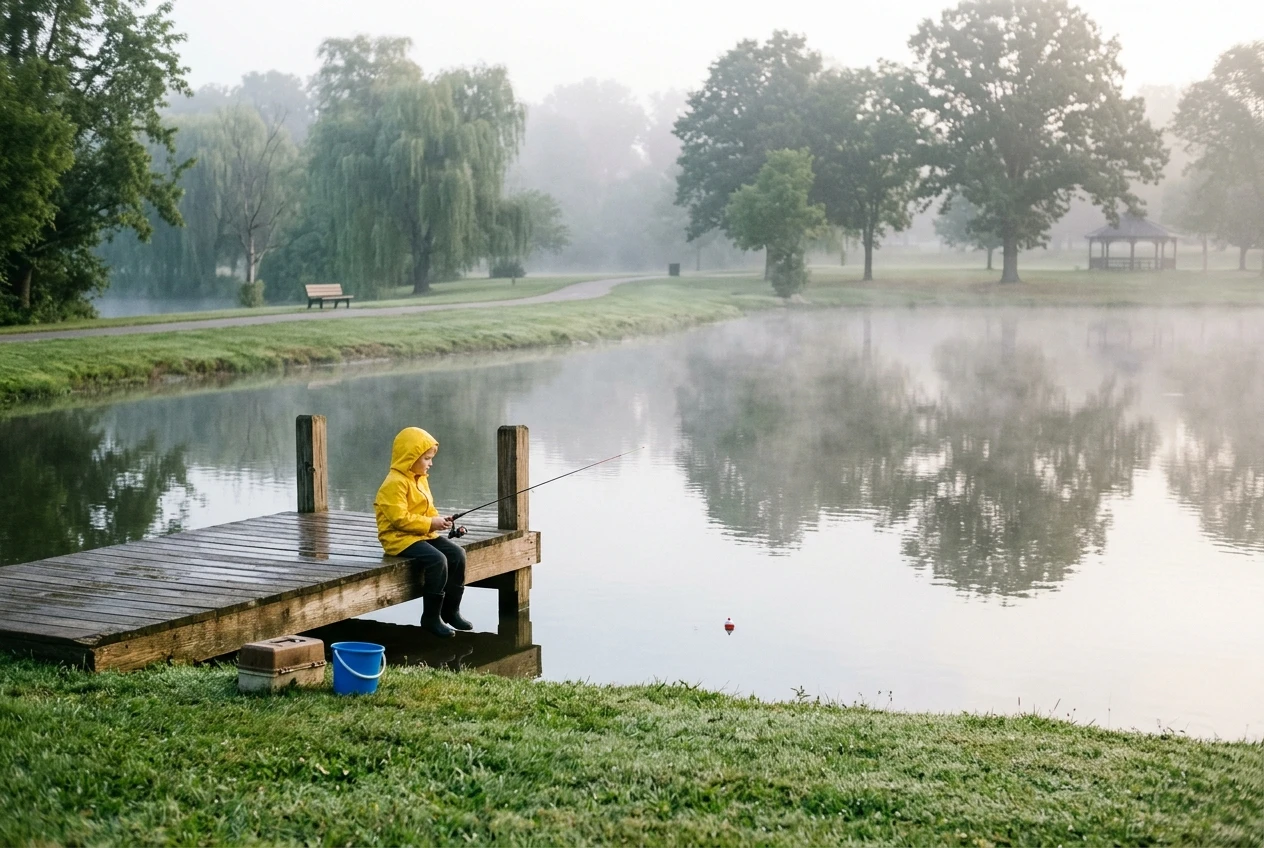
Small lakes are often the best place for a first outing. The water is calmer, the bank is shorter to walk, and the fish you are likely to catch are the fish a child can actually land. Some small lakes and ponds are stocked, and the Kentucky Department of Fish and Wildlife Resources (KDFWR) publishes information about which waters it stocks and when, which is worth checking before you drive.
Family checks for Central Kentucky:
- Parking to water: Usually short at park lakes, sometimes only a few steps from the car. That is great for toddlers and a bucket of gear.
- Bank footing: Often mowed grass, paths, or small piers, which are easier than rock. Wet grass can still be slick, and muddy edges near shallow coves can swallow a shoe.
- Restrooms: Common at city and county parks, though again, confirm they are open. State recreation areas at larger lakes like Taylorsville are more likely to have facilities.
- Crowd level: Park lakes near towns fill up on evenings and weekends, and they are shared with walkers and picnickers. Mornings tend to be quieter.
- What a beginner can expect to catch: Bluegill and other sunfish are the most likely. Small bass, catfish, and crappie show up depending on the lake. Smaller waters can have a lot of fish in a small space, which helps kids stay interested.
If you want to see how this kind of short-trip thinking works across several lakes, five Kentucky lakes where your family can fish from the bank gives lake-specific examples.
Northern Kentucky and the Ohio River Corridor: Easy Access, Different Rules
Northern Kentucky has an unusual mix: the Ohio River, with its public access points and park shoreline, along with some inland lakes such as Kincaid Lake in Pendleton County. For families in the Cincinnati area or along the river, a river trip can be a short drive from home, which is a real advantage.
A river is a different kind of water than a lake. It has current, changing levels, and commercial barge traffic that creates wakes. Banks are often steep rock, riprap, or soft mud, and river levels can rise after rain upstream even when your local weather is clear. The Ohio River is also a boundary shared with other states, so license rules can differ from what you are used to on a Kentucky-only lake. Check the current KDFWR fishing guide for the Ohio River before you go, rather than relying on what a friend remembers.
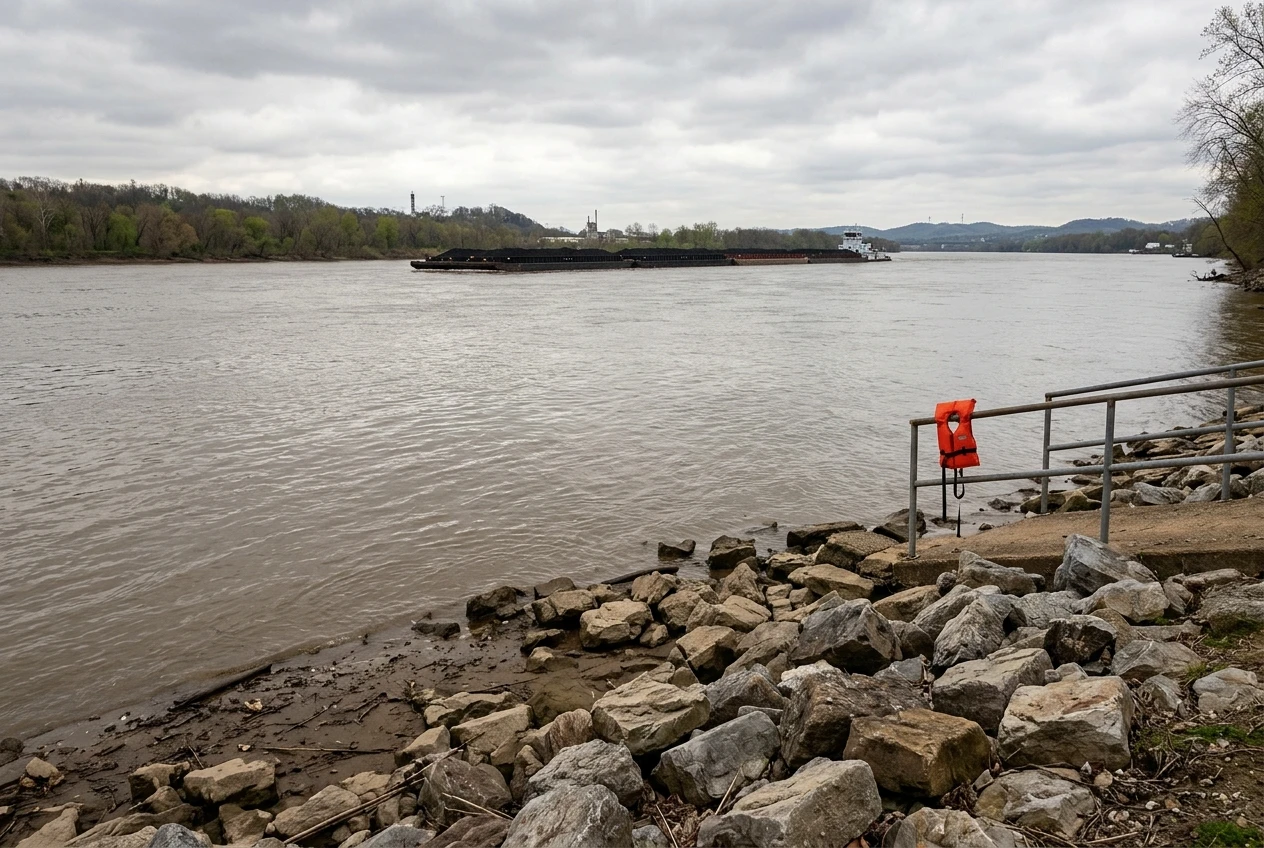
Family checks for Northern Kentucky:
- Parking to water: Often short at riverfront parks and public landings, and sometimes longer where the shoreline is behind a floodwall or railroad.
- Bank footing: The main concern. Riprap is uneven, and muddy banks can be slick right at the water. Children should stay well back from steep edges, and life jackets are a smart choice for young kids near moving water. The bank-fishing safety gear families forget covers what is worth carrying.
- Restrooms: Usually available at developed riverfront parks and at Kincaid Lake State Park, but not at informal pull-offs.
- Crowd level: Urban riverfront parks can be busy with other visitors. Inland lakes like Kincaid fill up on warm weekends.
- What a beginner can expect to catch: On the river, catfish are a common target and sunfish and other panfish are possible near calmer edges. Inland, expect bluegill, bass, and crappie. Remember that fish from busy waters should be checked against any posted advisories and KDFWR guidance if you plan to eat them.
For a first family trip, an inland lake or a calm, well-developed river park is a gentler start than an unmarked riverbank.
Eastern Kentucky: Mountain Lakes and How to Judge the Bank for Kids
Eastern Kentucky has a string of reservoirs set in steep terrain, including Dewey Lake, Fishtrap Lake, Paintsville Lake, Buckhorn Lake, and Carr Creek Lake, with Grayson Lake, Yatesville Lake, and Cave Run Lake in the northeastern part of the state. The scenery is excellent and the crowds are often smaller than in the central or western part of the state, but the terrain makes bank choice more important.
Drive time is harder to judge here. Roads wind through hills, so a destination that looks close on the map can take much longer than the mileage suggests. Cell service can also drop out in valleys, so download directions and tell someone where you are going.
Family checks for Eastern Kentucky:

- Parking to water: Varies widely. Developed areas, campgrounds, and day-use sites often have parking near the shore. Wild shoreline can mean a steep walk down from the road.
- Bank footing: Rocky and sloped in many places. Look for flat, gravel or grassy areas, and treat any steep drop as a place for kids to stay behind you. Shoes with grip matter more here than at a park pond.
- Restrooms: Present at campgrounds and many state or national forest recreation areas, often absent at roadside access.
- Crowd level: Generally lighter than the larger lakes, though campgrounds fill up on summer weekends.
- What a beginner can expect to catch: Bluegill and other sunfish, with bass and crappie around structure. Clear mountain water can make fish more cautious, so patience helps. Larger fish such as musky at Cave Run are a boat-fishing story, not a promise for a beginner on the bank.
To judge a bank for kids, picture the worst moment: a child tripping with a rod in hand. If the ground in front of the water is flat enough that the trip would end in a scraped knee instead of a fall, it is a reasonable choice. If the bank drops sharply, look for a different spot on the same lake.
How to Check Bank Access, Licenses, and Conditions Before You Load the Car
A few minutes of checking at home saves a lot of disappointment at the water. Work through these in order:
- Confirm the access point is public. A shoreline you can see from the road may be private property or a closed area. Use the lake’s official page, the park’s page, or a call to the park office. A good map helps, and this comparison of Kentucky fishing maps for bank anglers explains which ones show where you can actually stand.
- Check license requirements. KDFWR sets the rules for who needs a license, including any age exemptions for children, and for what you may keep. Rules can change, so read the current guide on the KDFWR website instead of relying on memory. Remember border waters, such as the Ohio River and Dale Hollow, may have their own rules.
- Look at water level and area notices. For Corps of Engineers lakes, the lake’s page usually lists current conditions and any closures. Lower water can lengthen your walk, and some areas close for maintenance or high water.
- Check the weather and the wind. Wind is a bigger factor than temperature for casting and comfort, especially on big water. A forecast of strong wind is a good reason to pick a smaller or more sheltered lake.
- Confirm facilities. Call or check the website to learn whether restrooms are open, whether there is a fee, and what the hours are.
- Plan your exit. Decide ahead of time how long you will fish and what you will do if the kids are finished after 40 minutes. A nearby playground, picnic table, or ice cream stop makes leaving an easy choice.
Once you have a spot, the rest is simple: bring a small kit, keep the first trip short, and let the kids decide when it is over.
Pick the region you will fish first, then get the matching lake guide from the shop for lake-by-lake bank spots, parking notes, and what to bring.