
Fishing a few times a season means your gear sits for weeks, sometimes months, between trips. How it sits decides whether the next outing starts with a quick pack or a bag of rusty hooks, a rod with a knotted spool and a bobber that has gone missing. A short routine in the first hour back home, plus one place where everything lives, solves most of it.
This guide covers that routine and that storage setup for how to store fishing gear between trips in Kentucky, where summers are humid, garages get hot and winter brings cold snaps.
Do these five things before you unload the car
Do these while the gear is still in the car or on the driveway, before anything goes back to the garage. Together they take about ten minutes, and kids can handle most of them.
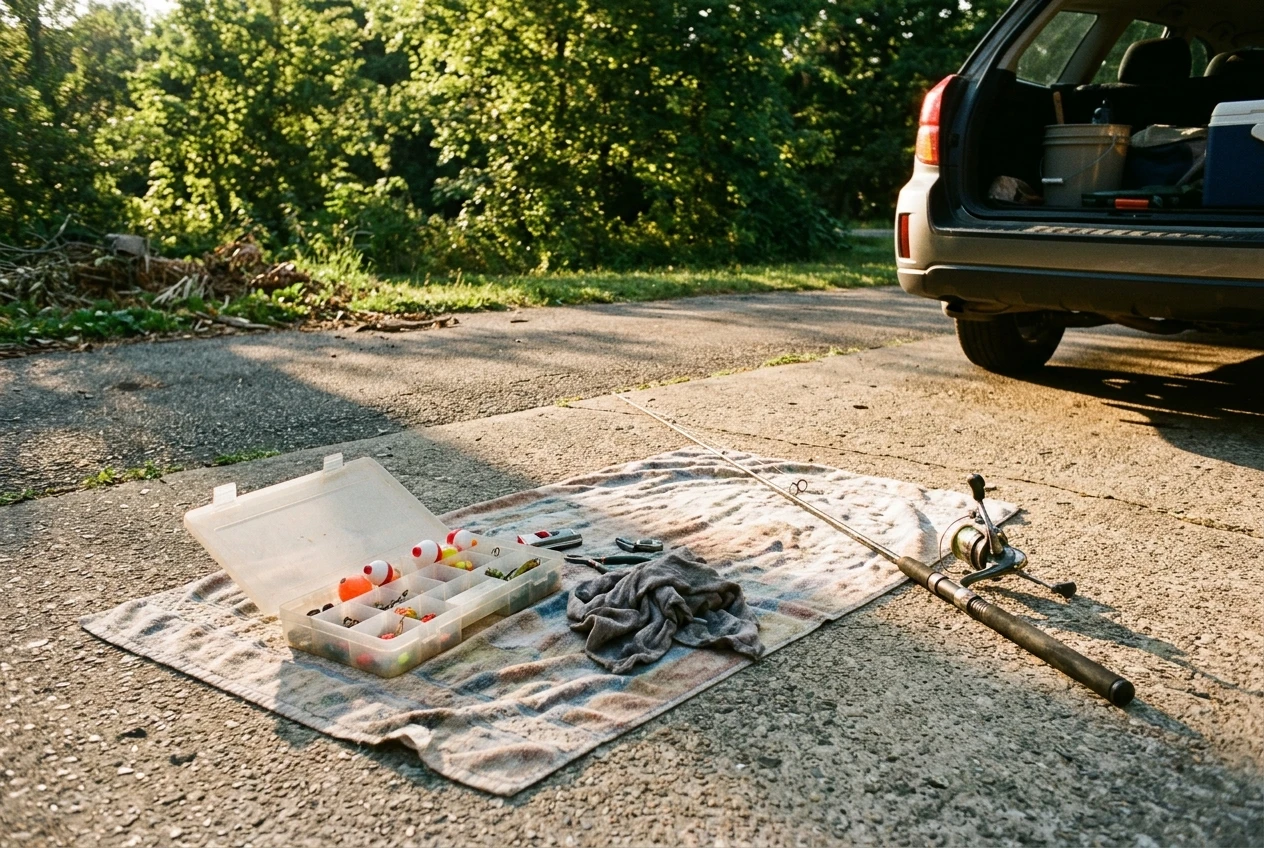
- Secure every hook. Put each hook in its keeper or on the rod’s hook holder, or snip off any rigged hook you will not reuse. An exposed hook in a pile of gear is how a barefoot kid or a reaching hand gets hurt.
- Wipe down rods and reels. Use a damp cloth to remove mud, pond scum and sunscreen, then a dry cloth. Pay attention to the reel seat, the guides and the spool.
- Open every tackle box and tray. Lift the lids and spread the contents on a towel or newspaper. Anything that got wet or splashed needs air before it is shut away.
- Throw out leftover bait and trash. Dump the bait container, bag the line scraps and wrappers, and empty the cooler. Bait left in a car trunk or garage smells within a day.
- Check the line. Run the last few feet of line through your fingers. If you feel nicks or rough spots, or find a tangle you could not work out, cut that section off now.
Leave the gear out to dry for a few hours, ideally overnight in a shaded, ventilated spot. Then it goes into storage, which is covered below.
Why Kentucky’s humidity, hot garages and cold snaps are hard on gear
Each of Kentucky’s seasonal conditions damages gear in a different way.
Humidity keeps moisture in the air all summer. A hook or a metal reel part that is still damp when you close the box will start to rust, and a closed, damp tackle box also grows mildew. Cloth bags and cardboard stay wet longer than plastic.
Hot garages and car trunks are a problem for anything made of plastic or rubber. Heat can warp rod tips and soften plastic lures, and it speeds up the breakdown of fishing line. A rod left in a hot car for a weekend can end up with a permanent bend.
Cold snaps matter most for anything that still holds water. Moisture trapped in a reel or a damp tackle tray can freeze, and temperature swings in an unheated shed encourage condensation inside closed containers.
The common point is that dry gear in a stable, shaded spot lasts the longest. A climate-controlled closet or an interior shelf is better than a garage rafter, a trunk or a shed.
Rods and reels: how to dry them, loosen the drag and keep them from getting bent or tangled
Rods and reels are the most expensive things in the bin, and they are easy to protect.
Dry them completely. After the wipe-down, let the rod and reel sit out for a few hours. Check the guides, the reel seat and the handle, because water pools in those places. If you fished near mud, a lightly damp cloth over the whole rod gets rid of grit before it works into the reel.
Loosen the drag. Turn the drag knob counterclockwise until it is loose. On a spinning reel it is usually the knob on top of the spool. Leaving the drag cranked tight for months can wear the drag washers and flatten them, which makes the drag jerky when you use it again. Loosening it takes five seconds.
Keep the line from unspooling. Reel the line in so it sits snug on the spool, then secure the end under a hook keeper or the line clip on the spool. A loose end is how a spool turns into a tangle by the time you pick it up again.
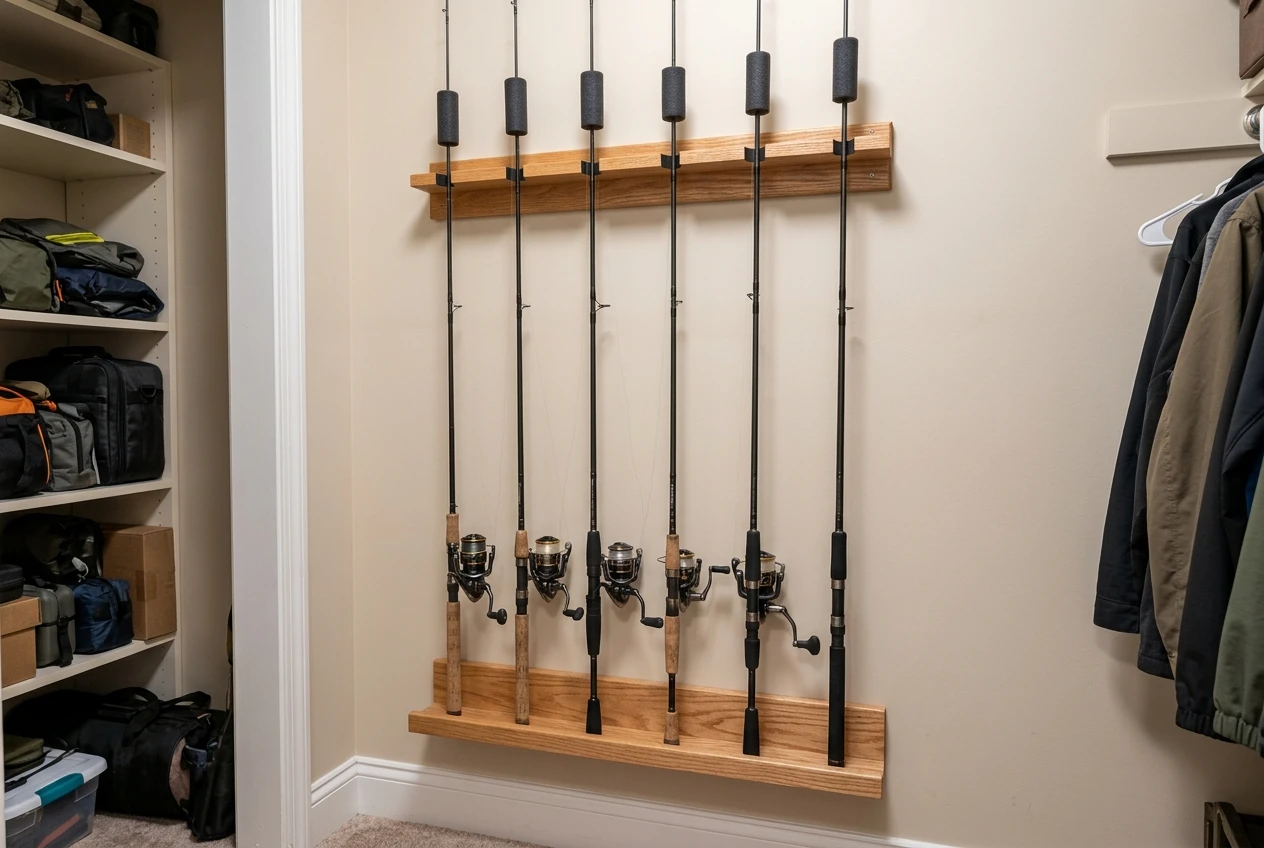
Store rods upright or flat and supported. Leaning a rod against a wall for months can bend it. Better options:
- A rod rack or a wall holder with a slot for each rod.
- A tall bucket or bin with a foam piece in the bottom to protect the butt ends.
- A flat shelf with a support at both ends, for rods that will not stand.
For tips, slip on a rod sock or a short piece of tubing, and keep the rods apart from other gear. The tip is the thinnest and easiest part to snap, and a car door or a garage shelf will do it. If your family uses two-piece rods, store them in their sections or keep a sleeve around them so they do not rub together. The same kind of tangle-prevention applies once the rod is out again, and our post on what to check when your bobber rig keeps tangling covers that stage.
Hooks, bobbers and tackle boxes: stopping rust and the dreaded tangled mess
Small gear causes most of the frustration on a trip, because it is where rust and tangles show up.
Dry the hooks first. Rust forms when a damp hook is sealed in a closed container. After you spread things out on the towel, check hooks, sinkers, swivels and snaps, and leave them out until they are dry to the touch. A rusty hook is weaker and duller, so replace any that show orange spots rather than hoping they hold.
Add a moisture absorber. A few silica gel packets dropped into each tackle box help absorb the humid air that gets in when you open it. The packets that come in shoe boxes and vitamin bottles work the same way. Replace or dry them out every few months.
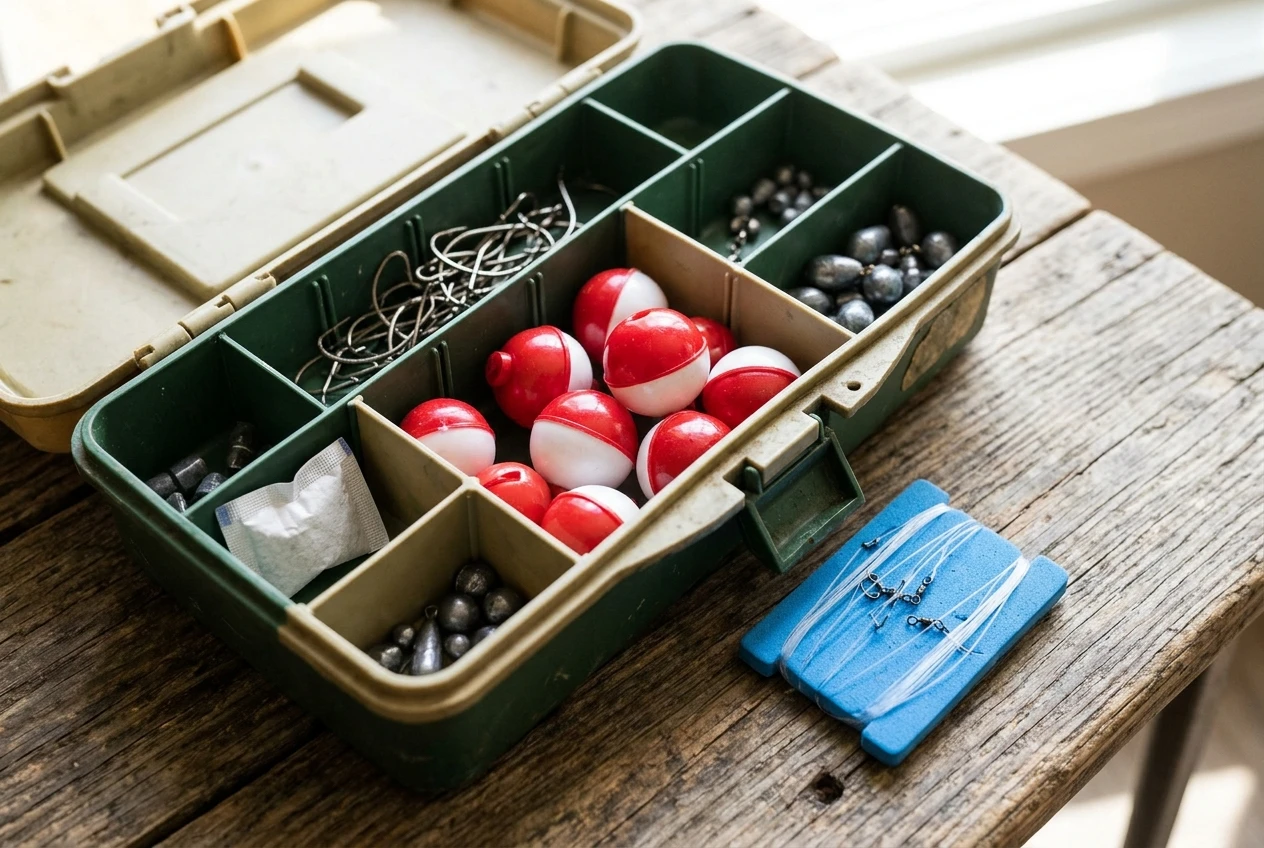
Sort before you close the lid. A beginner’s tackle box tends to turn into a jumble because everything gets thrown back in at the end of the day. Take two minutes to put hooks with hooks, bobbers with bobbers and sinkers with sinkers. Small compartments work well, and so do small zip bags inside a larger box.
Keep pre-tied rigs on cards. If you tie rigs ahead of time, wind each one around a foam card, a piece of cardboard or a plastic rig winder so the hook and line cannot snag the others. If you are still learning to tie, the four knots a Kentucky bank angler actually needs is a good place to practice at the kitchen table.
Keep soft plastics apart. Rubber worms and similar baits can melt into each other, or stain and soften other plastics in the same tray, especially in heat. Store them in their own bag or in the original packaging.
Line and leftover bait: what to keep, what to toss and what to replace each season
Line. Fishing line weakens over time, and heat and sunlight speed that up. Many anglers who fish a few times a season replace the line on their reels once a season, or at least before the first trip of the year. If the line is curly from sitting on the spool, has nicks or breaks easily when you pull it, strip it off and spool new line. That costs little compared with losing a good fish to a weak line. Always store spare spools of line in a cool, dark place, such as a bin lid closed over them, not on a windowsill.
Leftover bait. Live bait that is still alive and has been kept cool and in its container can be used on a later trip if you plan to go again within days. Anything dead, mushy or smelly goes in the trash. Do not tip leftover bait into the lake or pond. Throw it away at home, because releasing bait into the water can introduce animals that do not belong there.
Scented or packaged baits. Check the label for storage directions. Many dough baits and scented plastics dry out and crack once the container is left open, and heat can make them melt together. Seal the container or bag and keep it with the other soft baits, away from a hot shelf.
Bobbers, snaps and swivels. Keep these. Check that the spring clip on a bobber still closes and that the plastic is not cracked. Replace the ones that do not hold.
Build one grab-and-go bin so the next family trip takes five minutes to pack
One bin with a lid, kept in the same place every time, makes packing quick. A plastic tote, a five-gallon bucket with a lid or a large cooler without a drain plug works. Choose one that is easy for you to carry alone.
Pack the bin so everything has a home:

- Top layer: hook keepers, scissors or line clippers, a small towel, sunscreen and bug spray.
- Middle: the tackle box, a bag of spare bobbers and sinkers, and a spare spool of line.
- Bottom or side: a bag with first-aid supplies and a pair of pliers or a hook remover.
- Outside the bin: rods in their rack or sleeve, next to the bin.
Tape a short list on the inside of the lid with the items you replace after each trip, such as bait, snacks, water and sunscreen. When you come home, restock the bin from that list so it is ready the next time. If you want a full list of what goes in the car for a short outing, see our packing list for a two-hour family bank-fishing trip. Keep the bin on an interior shelf or in a closet instead of a hot garage, so the plastic and line are not cooked between trips.
When a child can find the bin, open it and put the gear away, they are part of the trip before it starts. A bin with a clear spot for everything also makes it easy for kids to check items off on their own.
A short seasonal check for spring, and a winter storage routine to use in the off months
Spring check, before the first trip of the year. Set aside half an hour on a weekend:
- Reel the line in and out under light tension and replace it if it is stiff, curly or nicked.
- Turn each reel handle and listen for grinding. If it feels rough, a drop of reel oil on the handle knob and the moving parts usually helps, following the maker’s instructions.
- Look along each rod for cracks in the guides or loose guide inserts, and run a cotton ball along the guides to see if it snags.
- Inspect hooks for rust and replace those with orange spots or dull points.
- Test every bobber clip and swap out the cracked ones.
- Restock the bin from your list and replace any expired sunscreen, bug spray or first-aid supplies.
Winter routine for the off months. Before you put the bin away for the cold season:
- Dry everything fully, since moisture that freezes can damage reels and cause rust.
- Loosen the drag on every reel, and secure the line ends.
- Remove all bait and food from the bin.
- Put fresh silica packets in each tackle box.
- Store the bin and the rods inside the house, in a closet or on an interior shelf, and not in an unheated shed or car trunk.
- Do a quick check once in midwinter. Open the boxes, look for moisture and swap the silica packets if they feel damp.
That midwinter check takes about five minutes and keeps a closed box from turning into a rust problem by March.
Ready for your next trip?
With the gear dry, sorted and in one bin, the next trip comes down to choosing where to go. Check out our Kentucky lake guides to pick where your family fishes first, then pack from your ready bin.