
Fishing tackle subscription boxes look like an easy answer for a family that wants to start fishing without shopping for gear. A box arrives each month, the kids open it, and there is something new to try. Whether that is a good use of money depends on how well the box matches the lake you fish, the age of your kids, and what happens to the budget if the kids lose interest after three trips.
This article gives you a three-question test to settle it. It also covers what a small kit you build yourself looks like, so you can compare the two options directly.
What a tackle subscription box really gives you, and what it can’t
A typical tackle box subscription sends a bundle of lures, hooks, weights or terminal tackle on a schedule. Some are aimed at beginners and some at experienced anglers, and the contents change from month to month. The box offers real benefits:
- Convenience. Someone else picks the items and ships them to your door.
- Variety. You see lures and rigs you might not have chosen yourself.
- A bit of fun. Opening a box is an event, and kids like that.
- Low effort at the start. You do not need to know what to buy before you begin.
The limits come from how a box is made. A company packs one product for every subscriber, whether they fish a farm pond in Kentucky, a Georgia reservoir or a Pacific Northwest river. The box cannot know which lake you fish, whether you fish from the bank or a boat, or whether your seven-year-old can tie a knot yet. It also cannot check what is already in your tackle box, so duplicates are common.
None of this makes boxes bad. It means a box is a general product, and bank fishing at a Kentucky lake is a specific job.
Where boxes tend to miss for Kentucky bank fishing
Boxes vary by company and by month, so read the contents list for any box you are considering. These are the places where a general box most often fails a Kentucky bank-fishing family.
Lure-heavy contents. Many boxes lean toward artificial lures, because they are easy to ship and look good in a photo. A beginner family fishing from the bank often does better with a simple bobber rig and bait. Our guide to how deep to set your bobber bait explains why a basic rig and a little patience catch fish for new anglers.
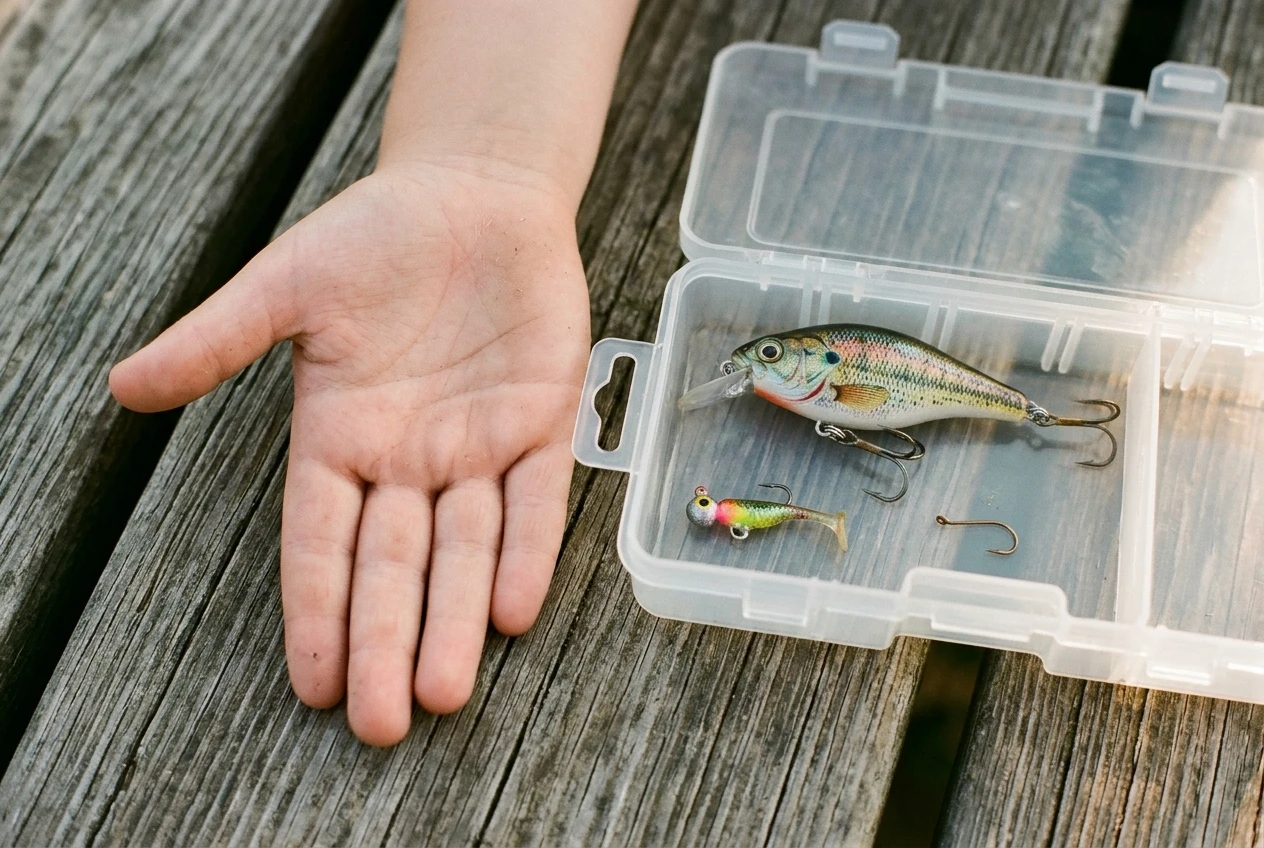
Sizes that suit someone else’s fish. Hook and lure sizes depend on the fish. A box built around big bass lures does little for a child trying to catch bluegill from the shore. Check the sizes against what your lake holds.
Gear built for boats. Some lures and rigs work best when you can cover water from a boat, move quickly or fish deep structure. From the bank, you fish what you can reach with a cast.
Kid-unfriendly tackle. Treble hooks, tiny parts and fiddly rigs are awkward for small hands. They are also a safety concern for a family sharing a narrow stretch of shoreline.
Missing basics. Boxes rarely include the plain items beginners run out of first, such as split shot, spare bobbers and extra small hooks.
The simplest fix is to read the full contents list before you subscribe and compare it with the lake you fish first.
What building your own starter kit looks like, one lake at a time
A kit you build yourself starts with a question: which lake, and which fish? Kentucky lakes differ in size, bank access and the fish people commonly go after, so a kit built for one may not fit another. Our roundup of Kentucky lakes where your family can fish from the bank is a good place to choose a first lake.

Once you have a lake, a small starter kit for a beginner family can be put together from a short list:
- Small hooks in a few sizes. Panfish such as bluegill generally take small hooks, often in the size 6 to 10 range, though your lake guide should confirm what suits the fish you plan to target.
- Bobbers, a few small ones that sit upright and are easy for kids to read.
- Split shot weights, so you can balance the bobber.
- Bait that matches the fish. Worms are a common beginner choice for panfish.
- A few small jigs, if crappie are on your list.
- Heavier terminal tackle, such as circle hooks and egg sinkers, if you plan to fish for catfish.
- Needle-nose pliers and line clippers for removing hooks and trimming line.
- A small tackle box with sections so kids can see what is where.
Knots matter more than most extra tackle. A kit of cheap hooks is useless if the knot slips, so it helps to learn the four knots a bank angler actually needs before the first trip. The rods your family uses also make a difference, and picking rods for kids and parents as a pair is worth doing before you spend on tackle.
If you want the wider view of what to buy and what to skip, the family bank-fishing gear that actually matters covers it.
Subscription box vs your own kit: cost, kid-friendliness and waste side by side
Here is how the two options compare on the points that matter most to a beginner family. I have left prices out on purpose, because box prices change and differ between companies. Compare the current price of any box with what the same items would cost you at a local store.
Monthly tackle box Small kit you build Fit for your lake Depends on the box and the month; often general You choose by lake and target fish Kid-friendliness Varies; check for treble hooks and small parts You pick simple rigs kids can handle Cost pattern Recurring charge, whether or not you fish that month One-time spend, then refill what you use Waste if interest fades Unused items keep arriving You stop buying when the trips stop Fun factor Surprise and novelty each month Satisfaction of choosing and using your own gear Effort Low Moderate at the start, low after
The cost pattern is the biggest difference. A subscription keeps charging on its schedule, and a kit only costs money when you decide to refill it. For a family unsure whether the kids will stay interested, that matters. It also means the kit is the safer choice on waste, since you buy only what you have used up.
A box wins on fun and effort. If a monthly surprise would keep the kids excited, that has value you should count.
Three questions to ask before you click subscribe
Run any box through these questions. If you can answer yes to all three, the box is worth considering. If you answer no to even one, the box probably does not fit your family yet.
1. Does the box match the lake and the fish you will actually target? Look at the product listing or sample contents. Are the hooks, lures and rigs suited to bank fishing for the species at your lake? If the box does not say, it probably is not made for your lake. Check the contents against what your lake guide recommends.
2. Can your kids use what is in it? Look for simple rigs, hooks that are easy to handle and nothing that needs advanced knots or casting skill. If the box is full of items an adult has to rig every time, it adds work to the trip rather than fun.
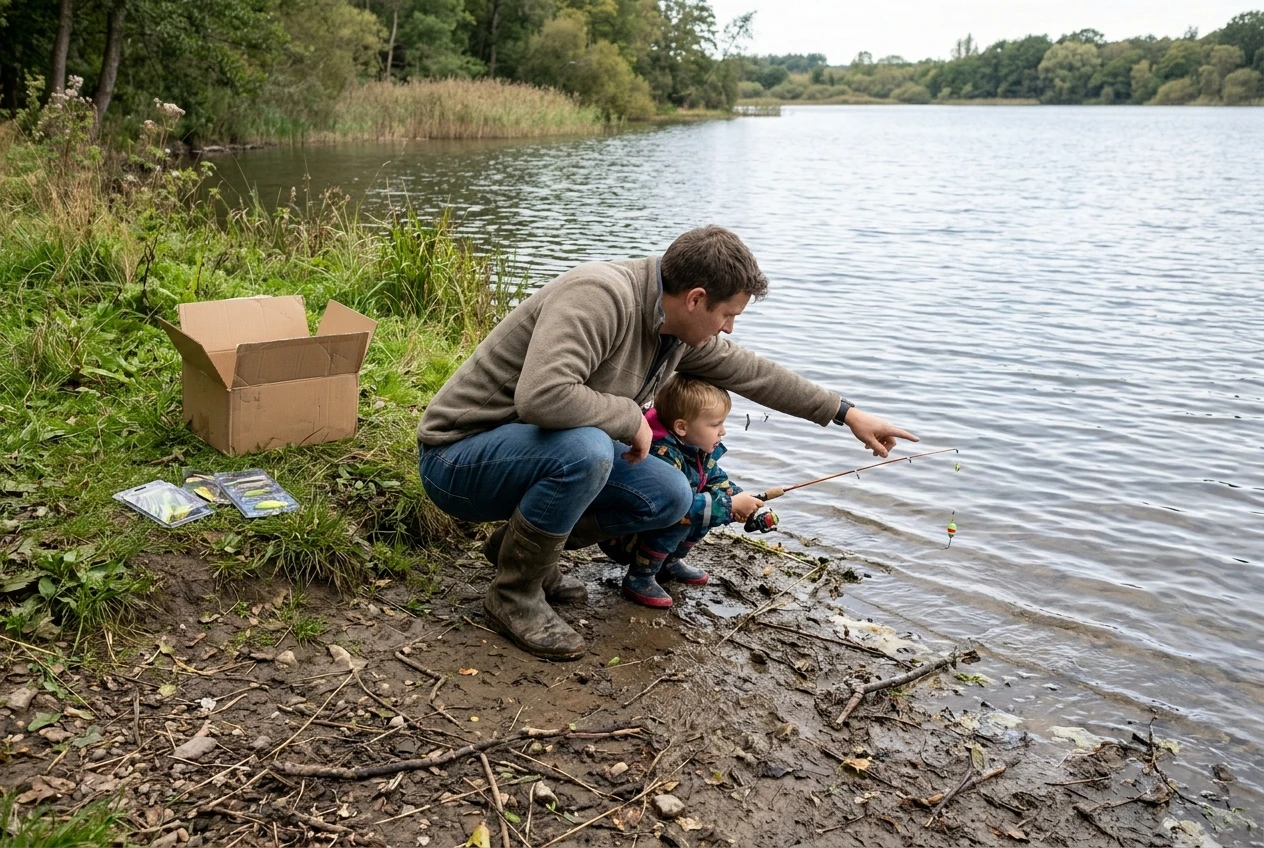
3. What does it cost if the kids lose interest after a few trips? Check how to pause or cancel, whether there is a minimum commitment, and whether the next box ships automatically. A box you can skip or cancel easily is a far smaller risk than one that is difficult to stop.
If the answers are unclear, that is information too. A company that does not tell you what is in the box or how to cancel is asking you to take a risk for them.
When a box makes sense (and the cheap way to try one)
A box can be the right choice in some situations:
- Your family already fishes regularly and wants to try new lures and rigs.
- A child enjoys the surprise of opening a package and that keeps them excited.
- You fish several different waters and want variety rather than a lake-specific kit.
- The box contents, as listed, clearly match the fish you target from the bank.
If you want to try one, test it cheaply. Buy a single box rather than a long plan, if the company offers that, or choose the shortest commitment available. When the box arrives, sort it into three piles: items you can use at your lake, items you may use later, and items that do not suit your fishing. If most of the box lands in the third pile, you have your answer without paying for months of it.

You can also use a box to learn. Items you do not recognize can be looked up, and a lure that works for a friend’s family may be worth keeping.
A simple way to start your own kit this weekend
If you decide to build a kit, start small and start with one lake.
- Choose the first lake. Pick one with bank access that is easy to reach, and decide which fish you want the kids to try for.
- Make a short shopping list from what your lake guide recommends: hooks, bobbers, split shot and bait, plus catfish or crappie gear if those are your targets.
- Buy only what the list says. Resist adding lures that look exciting. Extras can wait until after the first trip.
- Practice the knots at home before you go, so the first cast is not spent untangling line.
- Pack for the trip, using our two-hour family bank-fishing packing list so the kit is not the only thing you remember.
- Check Kentucky’s current license and regulation rules with the state’s fish and wildlife agency before you go, since requirements depend on age and residency.
After two or three trips you will know which items you used and which sat in the box. Refill the ones you used, and add something new only when the family asks for it. That keeps the budget small if interest fades, and the kit grows to fit the fishing you do.
If you decide to build your own kit, grab the Kentucky lake guide for the lake you’ll fish first, so you buy only the tackle that lake calls for.