
Picking rods for a family bank-fishing outing is easier when you treat the kid’s rod and the parent’s rod as one decision. The two rods share a shoreline, a car trunk, a tackle box, and one adult who will be tying knots for both. This guide covers what each rod needs to do, which reel to start a child on, which lengths fit tight Kentucky banks, and what to check before a rod leaves the store or the box.
What a Kid’s Rod and a Parent’s Rod Each Have to Do From a Kentucky Bank
Bank fishing asks different things of a rod than boat fishing does. You stand in one place, often with trees or brush behind you, rocks or mud underfoot, and other people a few steps away. The rod has to cast to the water in front of you without needing a wide backswing.
The kid’s rod has a short list of jobs:

- Cast with a small, simple motion
- Be light enough for a child to hold up for a few minutes while watching a bobber
- Flex enough that a small bluegill or crappie is felt as a tug
- Survive being dropped on gravel, leaned against a car, and stepped on at least once
The parent’s rod has a different list. It needs to reach a little farther, because the adult usually fishes the spot the child can’t cast to. It should handle a larger fish than the kid’s rod can, and it should be comfortable enough to set down and pick up all afternoon. The parent will spend much of the trip untangling and baiting for someone else, so the adult rod often spends time resting on the bank. A rod that is too delicate for that treatment is the wrong rod.
Spincast or Spinning: Which Reel to Start Your Child On
The reel matters more than most beginners expect, because the reel is where most of the frustration happens.
A spincast reel has a closed cover over the line and a push button on the back. The child presses the button, swings the rod, and lets go at the right moment. Because the line is enclosed, it tangles less in wind and in clumsy hands. Spincast reels are simple, which is why they are the usual first reel for young children. The tradeoff is that they generally cast shorter distances than spinning reels, and the line can twist over time.
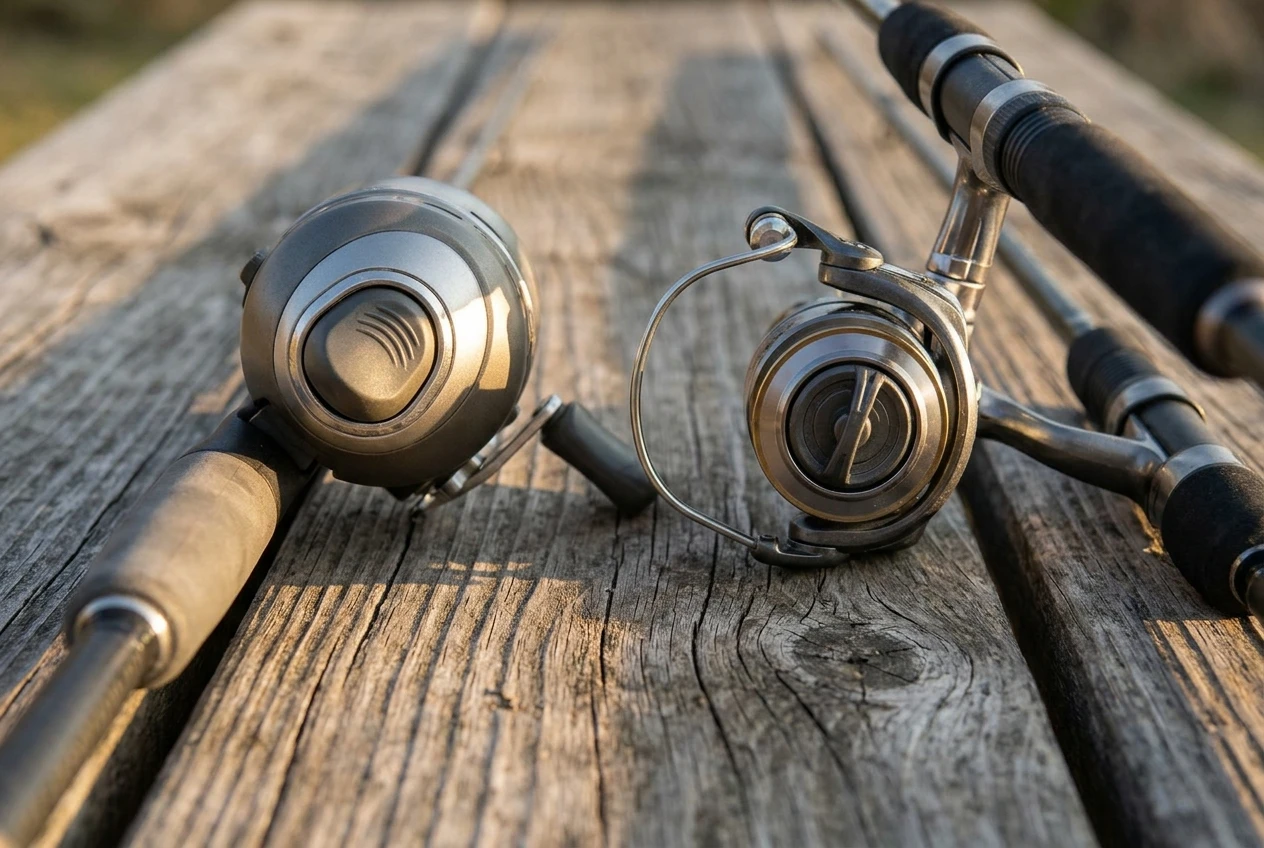
A spinning reel hangs below the rod with the line spool exposed. To cast, you flip the bail open, hold the line against the rod with a finger, swing, and release. Spinning reels give you more control, more casting distance, and more choices in line and lures. They also take more practice. Forgetting to flip the bail or letting go too early produces tangles that a beginner can’t always fix alone.
A reasonable rule of thumb:
- Younger children: start with spincast. The push button is easier to learn than the finger-and-bail motion.
- Older kids and teens: a spinning reel is a good choice if they are patient and want to cast farther.
- The parent: spinning is the more flexible reel for an adult, though a spincast works if you want the same system as your child.
Children vary, so use age as a guide only. If your child can already coordinate a two-step motion, spinning may suit them sooner than you think.
Rod Length and Power That Work for Short Arms and Tight Shorelines
Rod length is a fit question. A rod that is too long for a child is hard to control, and the tip ends up in the water or in a tree. For young kids, rods in the range of about four and a half to five and a half feet tend to be easier to handle. As kids grow, you can move up.
For the adult, a rod around six to seven feet is a common range for bank fishing. Longer rods cast farther, but on a Kentucky bank with branches behind you and a neighbor’s line beside you, a very long rod is a nuisance. Many shorelines are tight, so a rod in the middle of that range is usually a better choice than the longest one available.
Power describes how stiff the rod is. For panfish such as bluegill and crappie, and for the smaller bass many families catch, light or medium-light power is a sensible place to start. A heavy rod barely bends under a small fish, so the child feels nothing and loses interest. A rod that is too light struggles with a larger fish or with snagged line.
Line size follows the same logic. Check what line the reel and rod are rated for, which is usually printed on the rod blank or the reel. Staying within those ratings keeps the setup balanced.
Why Buying the Rods as a Matched Pair Can Beat Buying Them Separately
Buying two rods that work together simplifies a lot of small decisions.
- Shared tackle. If both rods use similar line and similar rigs, hooks, bobbers, and weights work on either one. You carry one set of tackle and can swap an unhooked rig from one rod to the other.
- Shared knowledge. Once you learn how to thread and spool one type of reel, you know the same routine for the second.
- One shopping trip. Combos often include a rod and reel already assembled, sometimes with line already on the reel, and some retailers sell two-rod family sets. Comparing the total for two combos against the total for separate rods and reels is worth doing before you decide, because the cheaper route depends on what is actually included.
- A backup. If one rod fails, the adult can lend theirs and the day continues.
Be cautious with large bundles that include dozens of lures and accessories. Many of those extras are filler, and the rod and reel are what you will actually use. Look at the rod and reel first, and treat the extras as a bonus.
Durability Checks to Make Before You Leave the Store or Open the Box
Children are hard on gear. These checks take a few minutes and catch most problems early, whether you are in a store aisle or at your kitchen table.
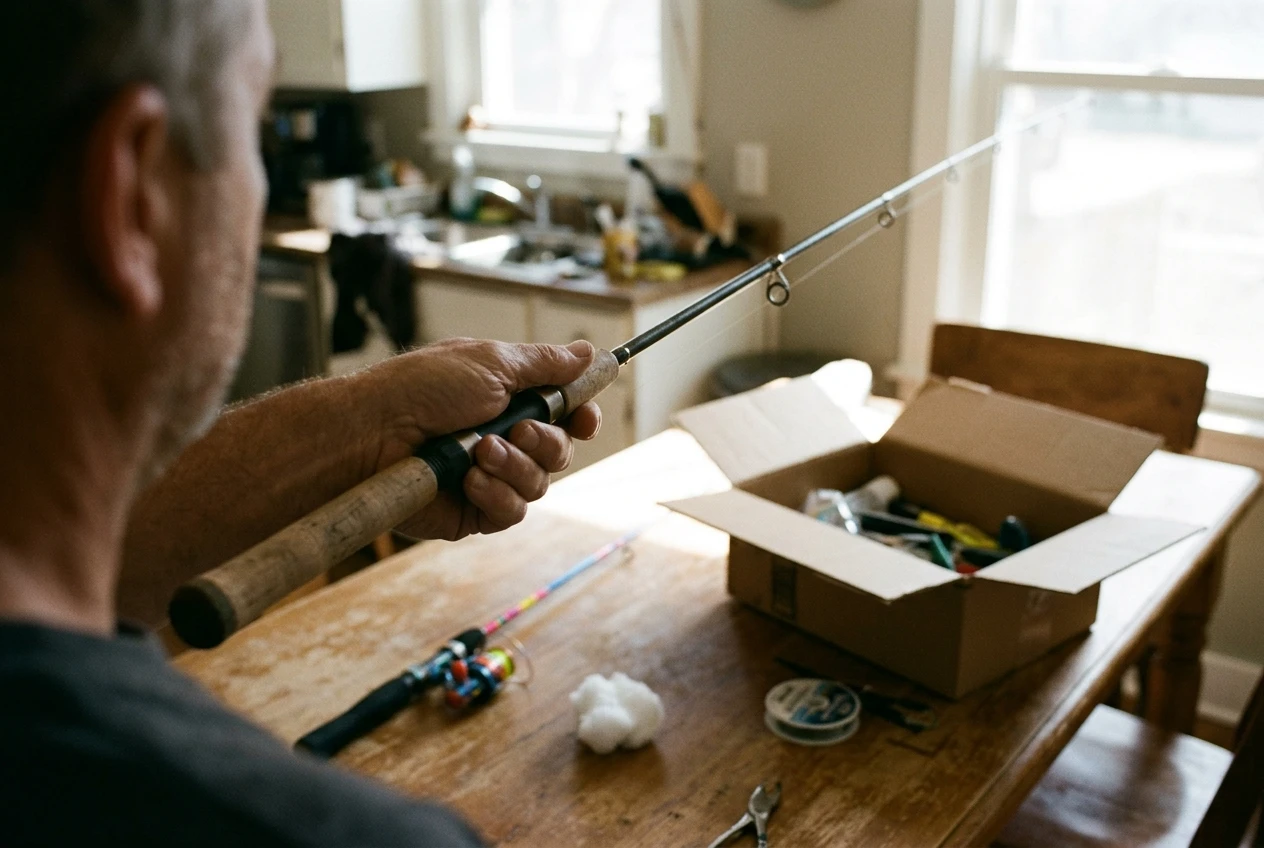
On the rod:
- Sight down the rod from the handle end. The guides, the small rings the line passes through, should line up in a straight row.
- Run a fingertip or a cotton ball around each guide. A snag means a rough or cracked insert that will fray the line.
- If the rod has two pieces, join them and check that they fit snugly with no wobble.
- Press the rod tip gently against the floor to see it bend. It should flex evenly, with no flat spots or kinks.
- Check that the handle is attached firmly and the reel seat holds the reel without play.
On the reel:
- Turn the handle. It should spin smoothly, without grinding or catching.
- On a spinning reel, flip the bail open and closed several times and confirm it snaps firmly.
- On a spincast, press and release the button and confirm the cover fits tightly.
- Test the drag, the control that lets line pull out under pressure, if the reel has one.
Check the return policy too. If a rod arrives with a crack or a loose guide, you want the option of exchanging it before the trip. Once you are home, keep the rods in a sleeve, tube, or at least tied together so tips do not get slammed in car doors.
Three Kinds of Combos Worth Shopping For, From Lowest Cost to a Small Step Up
Prices change often, so use these as categories to compare, not as promises about what any particular listing costs.
1. A kid’s spincast combo plus a basic spinning combo for the adult. This is generally the least expensive route. The child gets a short rod with a push-button reel. The parent gets a simple, general-purpose rod and reel. Look for combos where the reel is already attached and spooled with line, and check the line for twists and age before the first trip.
2. A two-rod family set. Some retailers sell a pair of rods and reels together, sometimes with a small tackle kit. These are convenient because the setup is matched from the start. Read the listing to see what lengths the rods are, because a set with two identical rods may fit the adult or the child, but not always both.
3. Two matched spinning combos in different lengths. This is a small step up. You buy a shorter combo for the child and a longer one for the adult, ideally from the same line of products, so the reels are similar and the controls feel the same. The child learns on equipment that grows with them, and the parent gets a rod that is a little smoother to use. Spinning is a good fit here for kids who are ready for it.
In every category, apply the durability checks above. A low-cost combo that passes them is a better buy than a more expensive one that does not.
Matching the Rods to Your Lake
The right rod depends partly on the bank you plan to fish. A wide, open shoreline gives more room to cast and may suit a slightly longer adult rod. A tree-lined or brushy bank favors shorter rods and short, controlled casts. A rocky or steep bank is harder on rod tips and on a child’s footing, so a sturdier rod and a closer-in cast make sense.
If you have not chosen a bank yet, the guide to five Kentucky lakes where your family can fish from the bank is a good place to start. Pick the lake first, look at what the shoreline is like, and then decide whether your rods need to be shorter, sturdier, or built for longer casts.
Whatever lake you pick, check the current license and fishing rules for that water before you go. They can change, and the rules apply to the whole family.
Setting Up the Night Before: Spooling, First Knot, and a Test Cast in the Yard
Doing the setup at home takes pressure off the first trip. Children lose patience quickly at the water’s edge, and tangles in the parking lot are no fun for anyone.
Spool the reel. If the reel came pre-spooled, check that the line looks fresh and has no twists. If you are adding line, follow the instructions that came with the reel. For a spinning reel, feed the line through the guides, tie it to the spool, and wind it on under light tension, stopping a little below the rim of the spool. A spincast reel is spooled through the front cover, and the line goes out through the small hole in the nose cone.
Tie the first knot. You will need to attach a hook, a bobber, or a small weight. The guide to the four knots a Kentucky bank angler actually needs walks through each one. Practice at home so you can tie it quickly at the lake.
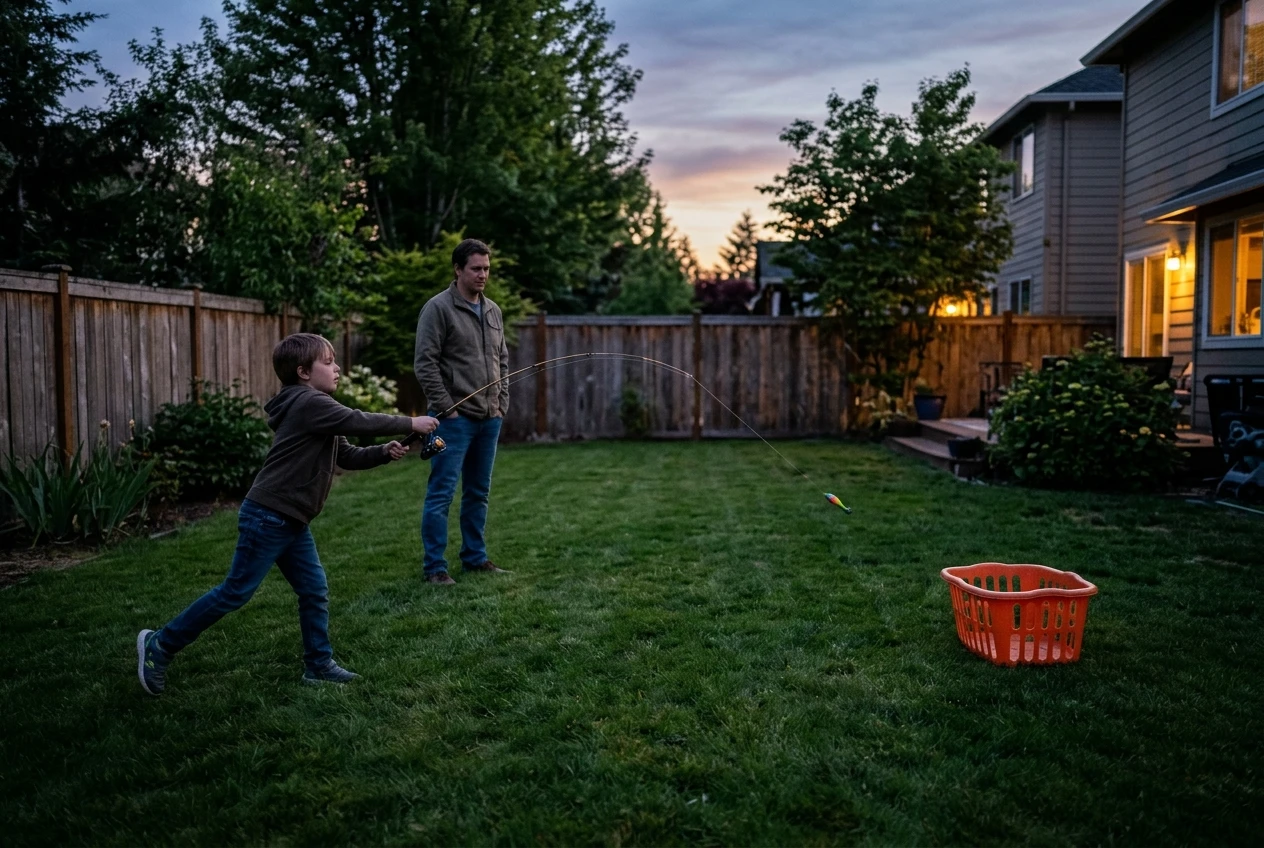
Do a test cast in the yard. Use a small weight and no hook. Set a bucket or laundry basket as a target and let your child practice the motion. With a spincast reel, show them when to press and release the button. With a spinning reel, practice flipping the bail, holding the line with a finger, and letting go. Watch the rod tip, the reel, and the drag as you go, since problems show up faster in the yard than on the bank. Keep other people well back, and never practice with a hook attached.
Finally, pack the rest of the family bag. The guide to family bank-fishing gear that actually matters at Kentucky lakes covers what to bring and what you can leave at home.
Next Step: Match Your New Rods to a Specific Bank
Once your rods are chosen and tested, the next step is deciding where to use them. Browse the Kentucky lake guides and ebooks on this site to find a bank that suits your family and your setup, with details about each shoreline so you arrive knowing what to expect.
Affiliate disclosure: some gear links on this site are affiliate links, which means the site may earn a commission if you buy through them. Any gear link will be marked so you know before you click.