
Most families picture night fishing as a long, dark stretch with strangers’ lights bobbing along the shore. A first trip can be much smaller than that. Plan one short session that starts in the last hour of daylight and ends not long after dark, close to the car, on a bank you have already walked once.
That plan is the whole idea behind night fishing from the bank in Kentucky for beginners. The fishing is simple, and the preparation is where the calm comes from. Most of it happens before the sun goes down.
Why a first night trip works best as a dusk-to-dark session
Starting in daylight lets everyone settle in while they can see. You unpack, find the flat spots, set up the chairs, and cast a few times with full visibility. Kids get used to the rod, the bobber, and the water’s edge before anything gets dim.
Then the light fades gradually. Your eyes adjust, the headlamps come on one at a time, and the dark arrives as something you watched happen rather than something you walked into. For a child who is nervous about the dark, that matters a lot.
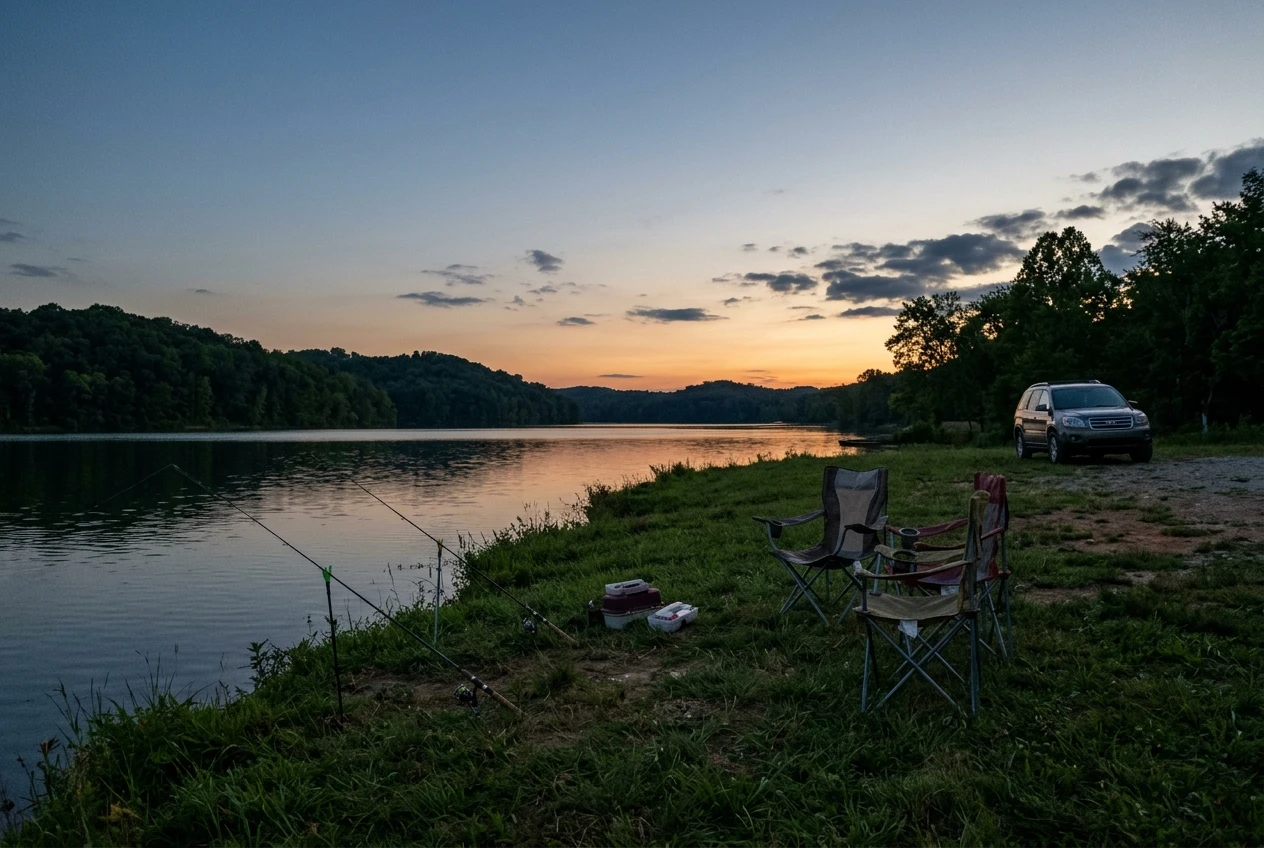
A dusk session also has a natural end. Plan for about two hours total, with the last stretch after dark. Everyone is still fresh, nobody has hit the wall at 10 p.m., and you leave while the trip still feels fun. Fall sunsets come earlier than summer ones, so you do not have to stay out late to get real darkness.
Check the rules before you go: license, park hours and lake access
Rules checks are quick, and doing them together can be part of the trip. Sit down with the kids a few days ahead and look things up as a team.
Start with these three questions:
- Who needs a license? Kentucky requires one for most adults, and age cutoffs and exemptions exist. Check the Kentucky Department of Fish and Wildlife Resources website for the current requirements for each person in your group. Carry the license, on paper or on your phone, when you fish.
- Is the area open after dark? Some lakes, parks, and access points close at set hours, and some gates are locked at night. Look for posted hours on the park or lake’s official page, and call the office if the page is unclear. A locked gate with your car on the wrong side ruins an evening.
- Is bank access allowed where you plan to stand? Some shorelines are open to the public, and others sit next to private land, marinas, or restricted areas. Stick to marked public fishing access.
Also look for any posted rules on lights, fires, or alcohol, and for current notices about water conditions or closures. Rules change, so confirm them close to your trip date.
Scout your bank in daylight so the dark holds no surprises
Visit the spot at least once while it is light, even for twenty minutes. This is the most useful preparation you can do, and it is easy to skip. If you are still choosing a lake, the five Kentucky lakes where families can fish from the bank are a good place to start.
When you scout, walk the route from the car to the water and look for specific things:
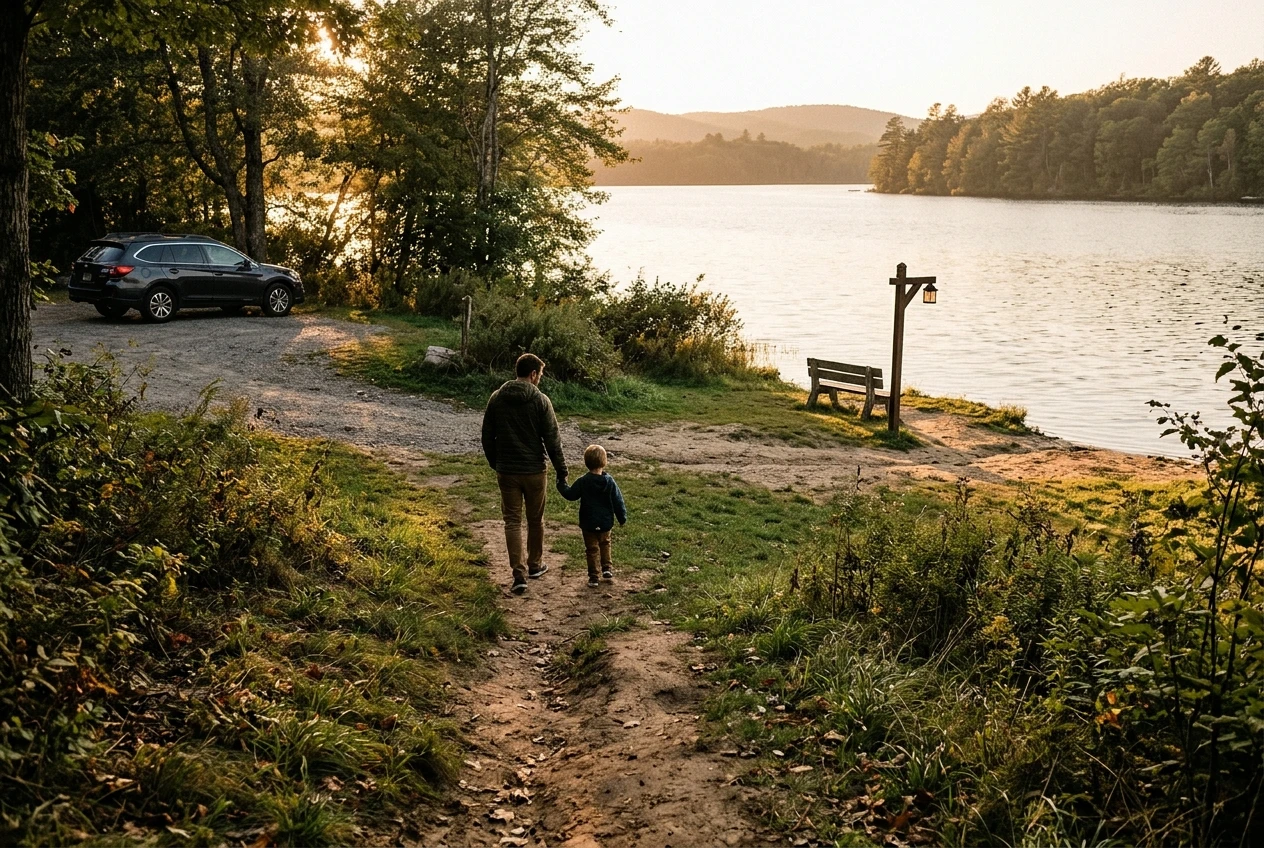
- Distance. Keep your fishing spot within sight of the car, and close enough that a parent can walk a child back in under a minute or two. Gear, jackets, and a tired kid are all easier to deal with near the trunk.
- Footing. Look for loose rocks, steep drops, slick mud, roots, and any slope that gets steeper near the water. Pick a level patch with a gentle approach.
- Overhead and behind you. Low branches and bushes snag casts, and you will not see them in the dark. Choose a spot with open room behind you, or plan to use short, gentle casts.
- The water’s edge. Notice how quickly it gets deep. A shoreline that drops off steeply is a poor choice for young children at night.
- Landmarks. Pick something easy to spot after dark, like a bench, a sign, or a lamp post, so you can find your spot again.
- Phone signal. Check that your phone has coverage in case you need it.
Take a photo of the bank from the parking area and another looking back from the water. Looking at them the evening before gives everyone a picture of where you are headed.
Lights that help you see without spooking the kids (or the fish)
You need less light than you think, and the right kind makes the dark feel friendly. A headlamp for each person old enough to wear one is the best starting point, because it leaves both hands free for rods, bait, and holding a child’s hand.
Look for a headlamp with a red-light setting. Red light is easier on your eyes after you have adjusted to the dark, so you can look at your tackle and then look back at the water without being briefly blinded. White light still has its place: use it when you walk, check footing, or deal with a hook.
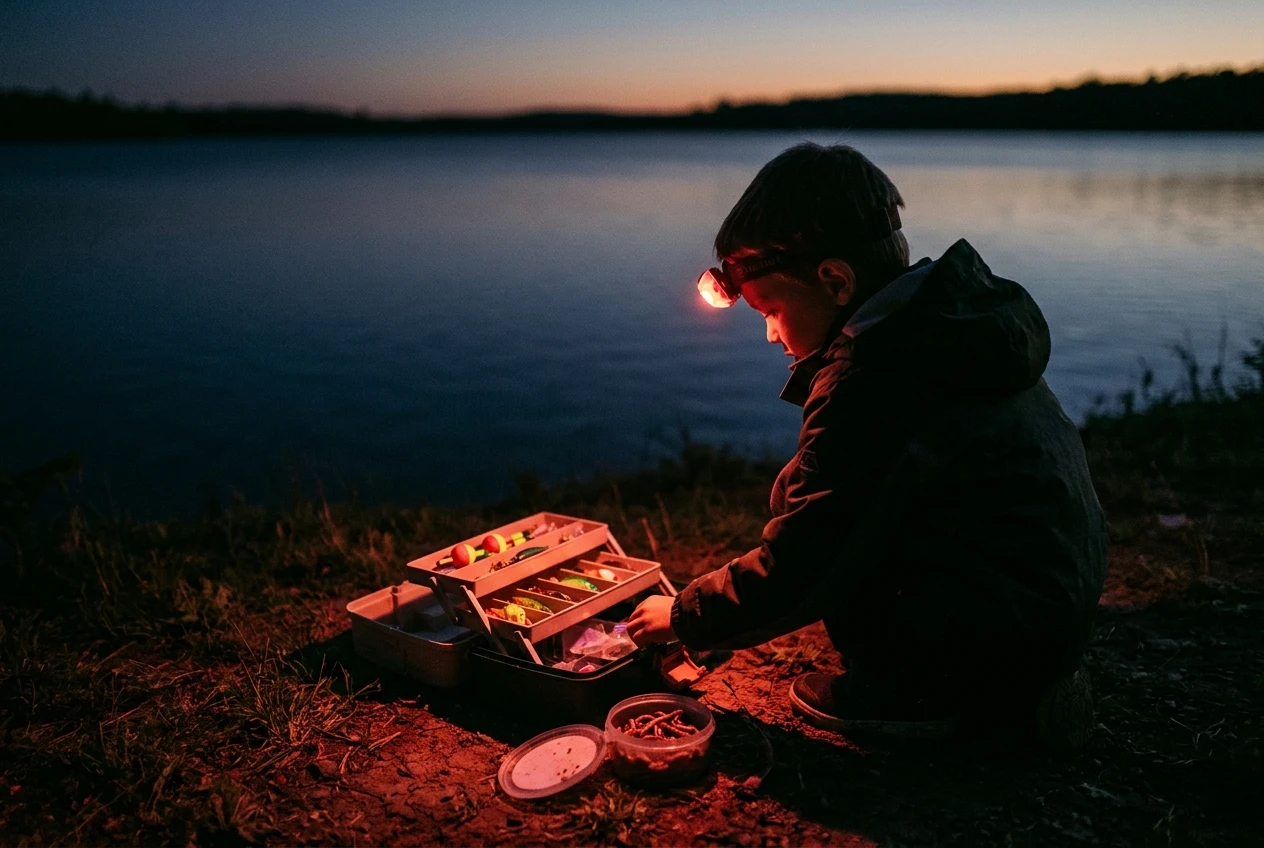
A few habits keep things calm:
- Do not shine a bright light across the water. It is hard on the eyes of everyone nearby, and many anglers believe it puts fish off.
- Point your light at the ground or your hands, and teach the kids to do the same. Make it a game: “light down” when you talk to someone.
- Set one small lantern on the ground behind your chairs for a shared base, not at the water’s edge.
- Bring spare batteries or a charged backup light, and keep them in a pocket you can find by feel.
Before dark, let each child test their headlamp and find the on, off, and red buttons. Practicing in daylight means no fumbling when it counts.
Keep the rig simple: bobber and bait setups that are easy to manage by headlamp
A first night is not the time to try new tackle. The easiest setup to handle in low light is a bobber rig with live bait such as worms. It is simple to tie, simple to cast, and you can watch the bobber instead of feeling for subtle bites.
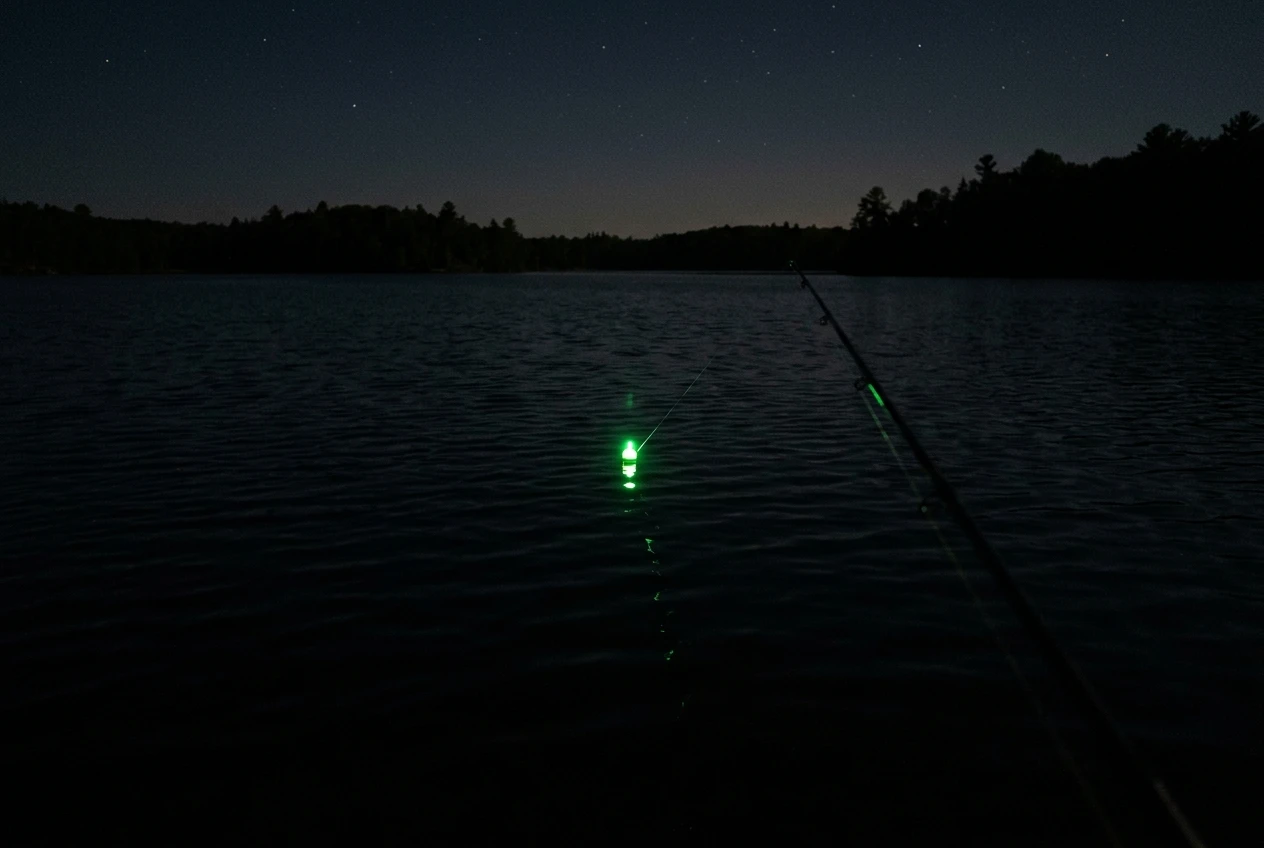
To make the bobber visible after dark, use a clip-on light made for bobbers, or a small glow stick attached as the manufacturer directs. Check the packaging for a compatible size. Then you can follow the small light on the water instead of squinting at a dark shape.
Tie everything at home or in the parking lot while there is still daylight. If you want a refresher on the basics, the four knots a Kentucky bank angler actually needs covers tying each one correctly. Rig a spare rod or two ahead of time too, so a tangle at dusk means swapping rods, not retying in the dark.
Depth is the one thing worth setting before the light goes. Pick a starting depth in daylight, and if you need to adjust, this guide to testing bobber bait depth before you move explains how. Keep the casts short and easy. Fish near the bank often feed close to shore, so there is no need to throw far.
A pair of small pliers or a hook remover on a lanyard helps with the one task that is hardest in the dark. Fish gently and keep hooks pointed away from people. Younger kids can watch the bobber and hold the rod while an adult handles baiting and unhooking.
Night safety for kids: footing, water’s edge rules and staying together
Agree on a few simple rules before you leave the car, and say them out loud. Kids follow rules better when they know the reasons.
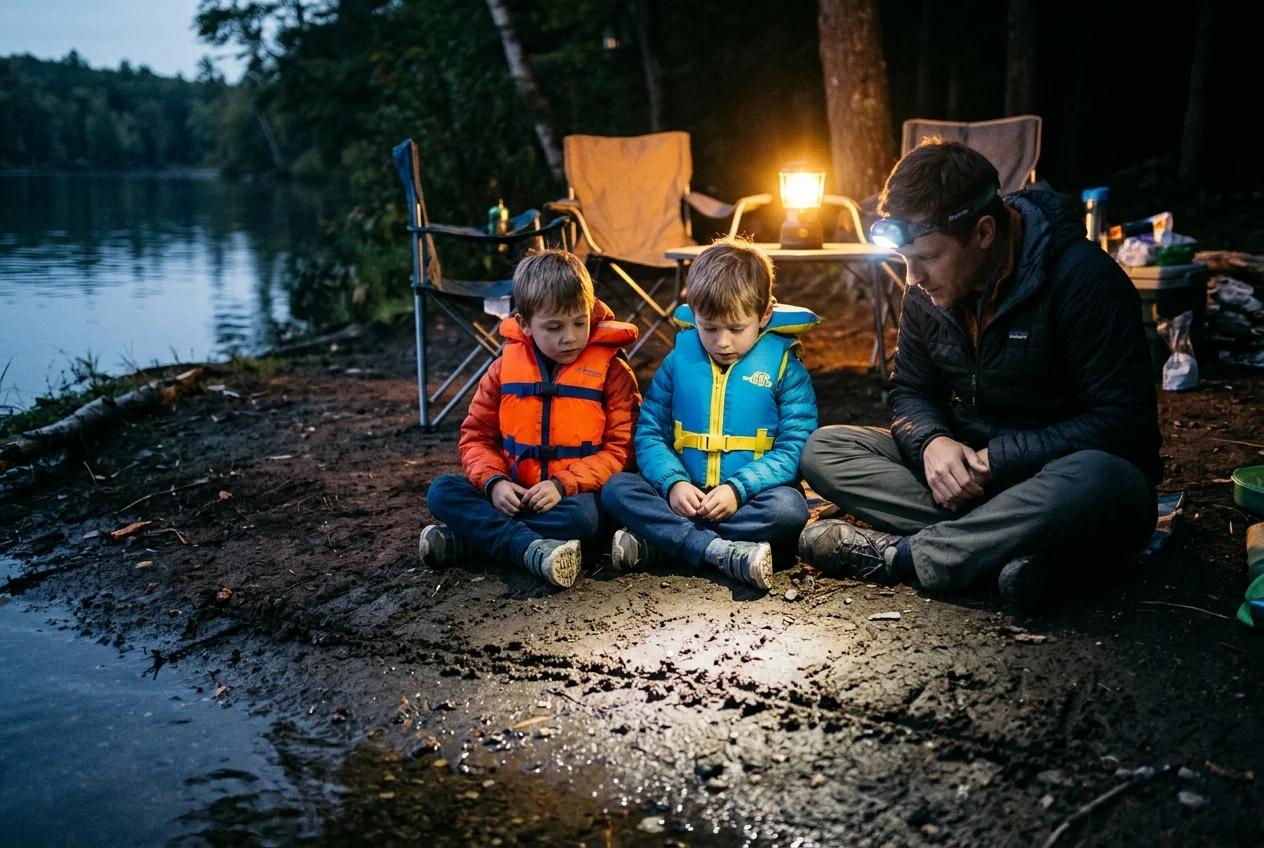
Water’s edge. Children stay behind a line you pick, such as a log, a rock, or a mark you scratch in the dirt, unless an adult is right beside them. Make the line a comfortable distance from the water. Children who cannot swim well, and any child near deeper water, should wear a properly fitted life jacket. Many families choose to have all young children wear one on a night trip, which is a reasonable call.
Footing. Walk, never run. Use your headlamp to look at the ground before you step. Wear closed shoes with good grip, not sandals. Shine your light on the path before stepping into grass or brush, since wildlife can be near the bank at night.
Staying together. Keep the group in one small area. Each child has a buddy or an adult within arm’s reach near the water. If someone needs to use the restroom or go back to the car, an adult goes along. Count heads when you arrive, when it gets dark, and before you pack up.
Hooks and casting. Check behind you before every cast, and call “casting” so people know to stay clear. Younger kids can hold the rod while an adult casts for them. Hooks stay baited and in the water, or secured on the rod guide when you walk.
Let someone know. Tell a friend or relative where you are going and when you plan to be back. Keep a charged phone on you, and a small first-aid kit in the car.
What to bring and what a good first night looks like
Keep the gear short, because a short list is easier to keep track of in the dark. For a fuller list, what to pack for a two-hour family bank-fishing trip goes through each item. If you want a closer look at which gear is worth buying, the family bank-fishing gear that actually matters is a good companion.
For a night session, add these to your usual kit:
- A headlamp for each person, with a red mode, plus a spare light and extra batteries
- Clip-on bobber lights or glow sticks
- Life jackets for the kids
- Warm layers, since temperatures drop quickly after sunset in fall
- A trash bag, so you leave the bank cleaner than you found it
- Water and snacks, with something warm to drink if the evening is cool
- Bug spray, a first-aid kit, and your license
- A towel or wipes for hands, because worms and fish slime get everywhere
A good first night is quiet and a little ordinary. You arrive while it is light, set up, and cast a few lines. The sky turns orange and then dark, the lights come on, and someone watches a small glowing bobber on the water. You might catch a fish or several, or none. Kids who remember snacks in the dark and the glow of a bobber tend to ask to go back.
When to call it a night and how to plan your next trip
Set the end time before you start, and stick to it. Two hours is plenty for a first trip. If a child is cold, tired, or upset, end the session. Leaving on a high note is better than pushing through a miserable last half hour.
Pack up in order, with headlamps on, and do a final sweep of the area with your light for hooks, line, and trash. Walk everyone back to the car together, and count heads again.
Afterward, ask the kids what they liked and what felt strange. Their answers tell you how to adjust next time: a different spot, a bit more light, a little longer, or a closer position to the car. Write down what worked while it is fresh, such as the depth you fished, where you stood, and what time the bites came.
If one area was too crowded or the access was awkward, here is how to choose another bank when your first choice is crowded. Each trip gets easier, because you already know the ground.
Pick one bank from our five-lakes list, scout it this weekend while it’s light, and look at our lake guides for spot-by-spot help planning your first night trip.