
Most first family trips go wrong in small ways. A reel birds-nests on the third cast, a hook ends up in a sleeve, a child’s shoe fills with mud, and everyone is ready to go home before the bobber has had a chance. The right family fishing gear for beginners at Kentucky lakes is mostly gear that prevents those moments.
The list is short: a simple rod and reel, a few terminal pieces that don’t tangle, basic safety items, and a little protection from sun and bugs. Everything else can wait until your kids tell you they want to keep fishing. This guide covers the buying decisions and the safety reasoning. If you want the full list of what to bring in the car, our two-hour packing list for family bank trips covers that.
The few things that make a first trip go well (and the pile you don’t need)
Think of the trip from a child’s point of view. A seven-year-old wants to cast, see the bobber, and reel something in. Anything that delays the first cast or interrupts the fishing works against you.
Five categories earn their place:
- A short, simple rod and reel the child can operate alone
- A bobber rig with small hooks and bait that suits Kentucky panfish
- Safety items for the bank: life jackets for little ones, grippy footwear, hook-removal tools
- Sun, bug and snack supplies
- A plan for the specific lake you’re visiting
The pile you don’t need usually includes a big tackle box, a dozen kinds of lures, rod holders, fish-finder gadgets and heavy-duty gear sized for adult anglers chasing big fish. Stores sell these because experienced anglers use them. A child casting from the bank at bluegill and crappie does not.
A rod and reel a seven-year-old can actually work
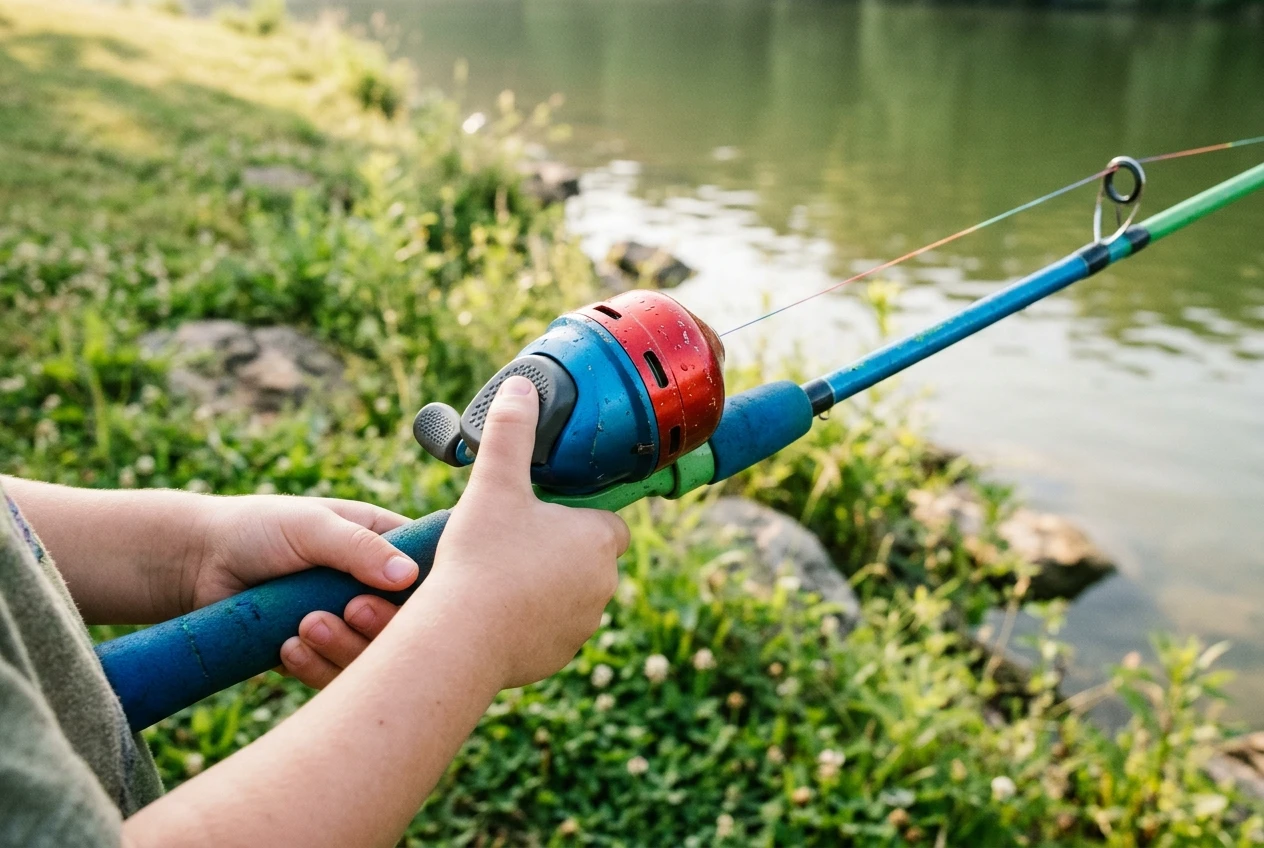
The reel decides whether a young child fishes or watches an adult fish. For beginners, a spincast reel is the easiest option. It has a closed face and a push-button release: press, cast, release the button, and reel. Spinning reels work well too, but they ask more of a child’s hands, because the child has to hold the line with a finger, open a bail, and keep line tension while reeling. Those steps are teachable, but they cost you the first twenty minutes of a short trip.
Length and weight
Choose a rod short enough for a child to control. For most kids in the early elementary years, a rod somewhere in the five-foot range is easier to aim and less likely to whip into a sibling. A long adult rod is hard to hold level and easy to swing into someone’s face while turning around.
Lightness matters as much as length. Have your child hold the rod out in front of them in the store, with the reel attached, for a slow count of thirty. If the tip droops or their arm shakes, pick a different one.
Why a pre-spooled combo is worth it
Buying a rod and reel already matched and loaded with line saves you from the most frustrating part of a beginner’s setup: spooling a reel correctly. Line that goes on twisted or loose causes tangles all day. A combo sold for kids or beginners usually arrives ready to fish, and you can still tie on your own rig.
Light monofilament in the range of six pounds or so is a sensible choice for panfish from the bank. It handles well and is forgiving for small hands. Check the label on the combo you’re considering rather than assuming, and ask the store staff if you aren’t sure what line is on the reel.
What to skip
Skip expensive reels with many bearings and a long list of features. Skip heavy rods rated for catfish or bass if your family will be fishing for bluegill. And skip buying a separate rod for every child on trip one; a single borrowed or inexpensive rod will tell you quickly whether the interest is real.
Hooks, bobbers and bait that keep kids fishing instead of untangling
The most common reason children quit is not a lack of fish. It is a rig that keeps knotting, snagging or falling apart. Simple terminal tackle solves most of it.
A bobber you can read from the bank
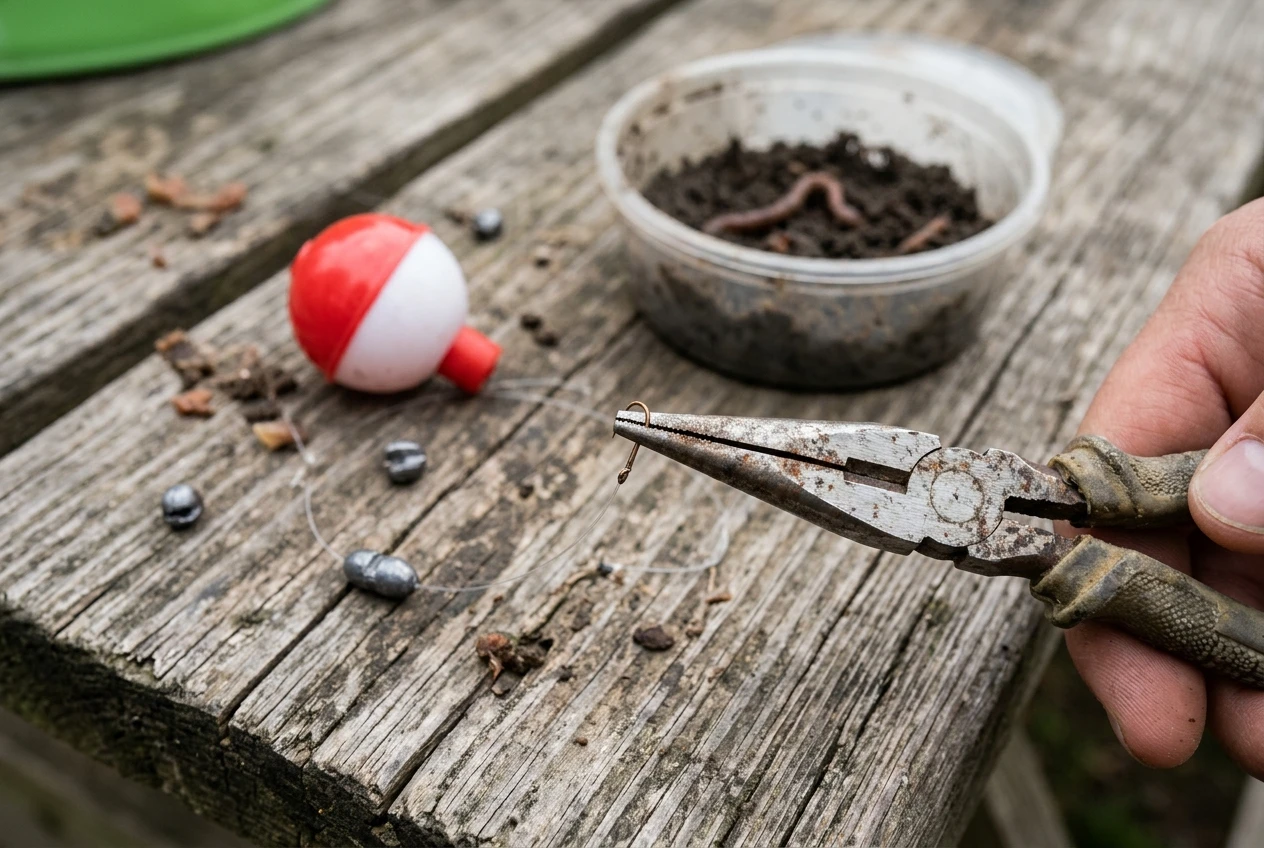
A slip bobber is a good tool, but a fixed bobber is easier for a beginner. Pick a bobber that is bright and large enough that a child can spot it from a distance, since a tiny bobber is hard to track in chop or glare. Clip-on bobbers that attach and release without tying are easy for children to adjust, which matters because depth changes often. If you want help setting depth, our piece on how deep to fish your bobber bait explains how to test and adjust before you move.
Small hooks, and pinched barbs
For panfish, small hooks work. Hook sizes run backwards, so a bigger number means a smaller hook; something in the size 6 to 10 range suits bluegill and similar fish. Ask the store to point you to a panfish hook if the packaging is confusing.
Consider pinching the barb flat with pliers before the trip. A barbless hook comes out of a fish, a shirt or a finger far more easily, and a fish that is hooked well stays on if you keep line tight. For a family with young children standing close together, this is one of the cheapest safety upgrades available.
Bait that stays on
Live worms are a common and inexpensive beginner bait and work for many panfish. They are also messy, so bring a small container and a rag. Other beginner options include soft, scented baits made for panfish, which stay on the hook longer. Check what the shop near your lake recommends, because local bait suppliers know what the fish are taking that week.
Keep the rig simple
A hook, a small split-shot weight if needed, and a bobber is enough. Extra swivels, multiple hooks and fancy knots are where tangles begin. If your line does start twisting and knotting, our guide on checking a tangling bobber rig lists the usual causes in order.
Safety gear for muddy banks, shallow edges and young anglers
Bank fishing with children is lower risk than boating, but kids standing near water, hooks and mud still need some thought. The items below are the ones that matter most.
Life jackets for young or weak swimmers
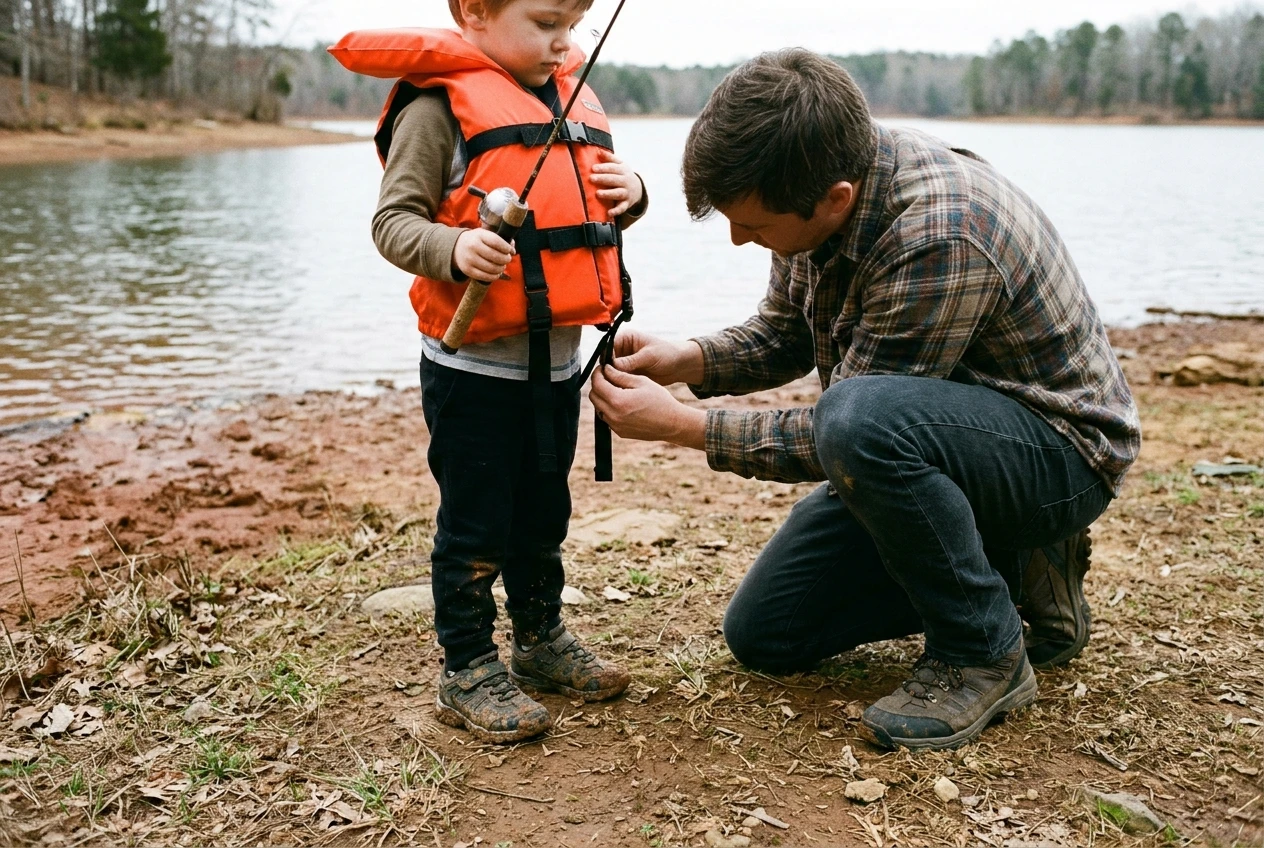
A properly fitting life jacket is the single most important safety purchase for small children near any lake. Bank edges can drop off unexpectedly, mud can give way, and a child who slips in is in trouble even in shallow water. Choose a Coast Guard-approved jacket in the right size for your child’s weight, and have them try it on in the store. A jacket that rides up around the ears or slides off the shoulders will not work.
Even strong swimmers can be caught off guard by cold water, slick footing or panic. Decide before the trip who needs a jacket and make it a rule that applies to everyone in that group.
Footwear and footing
Kentucky lake banks can be muddy, rocky or covered in slick clay, especially after rain or when water levels change. Closed-toe shoes with a grippy sole are better than flip-flops or bare feet. Old sneakers or water shoes are fine. Rubber boots help on very muddy ground but can be hard for small children to walk in, so test them first.
When you reach the bank, look at the ground before you set up. Pick a spot where children can stand on firm, level ground a few steps back from the water’s edge.
Hook-removal tools and eye protection
Bring needle-nose pliers or a small hook remover, and keep them in a pocket rather than at the bottom of a bag. Clippers that can cut a hook in half are also worth having, because pushing a hook through is sometimes safer than pulling it back.
Sunglasses or clear safety glasses protect eyes from errant hooks during casting. Children’s sunglasses are cheap and double as sun protection, so this is an easy item to add.
A basic first-aid kit
A small kit with bandages, antiseptic wipes and tweezers handles scrapes and splinters. Include any medications your family needs. If a hook ever goes deeper than the barb, or lands near an eye, don’t try to remove it yourself. Get medical help.
Casting space
Set a simple rule: only one person casts at a time, and everyone else stands behind the caster. A few feet of clear space on each side is worth more than any piece of gear on this list.
Small comforts that keep kids out there longer: sun, bugs and snacks
A child who is hot, itchy or hungry will leave the bank long before the fish stop biting. A few inexpensive items extend your time on the water.

- Sun: Hats with brims, sunscreen your child can tolerate, and lightweight long sleeves for cooler days. Bank fishing often means open ground with little shade.
- Bugs: Insect repellent suitable for children, applied before leaving the car. Ticks are common along Kentucky grass and brush, so do a check on everyone when you get home.
- Water and snacks: Bring more water than you think you need, plus snacks that don’t melt or crumble easily. A snack at the right moment can reset a restless child’s mood.
- A place to sit: One or two folding stools or a small blanket give younger children a break between casts.
- Wet wipes or a towel: Worms, fish slime and mud are part of the day, and a way to clean up makes everyone more willing to handle bait.
What to leave in the store, and what to upgrade once the kids are hooked
Buying less on trip one is not a compromise. It lets you see what your family actually enjoys before you spend more.
Leave in the store
- Large multi-tray tackle boxes loaded with lures and tools you won’t use yet
- Premium rods and reels sold for adults chasing larger species
- Specialty clothing and waders
- Electronics, rod holders and elaborate bait buckets
- Duplicate gear for every possible scenario
Upgrade later
Once your children ask to go again, a few upgrades make sense:
- A second rod so two kids can fish at once
- A better reel or slightly longer rod as their skill and strength grow
- A small, organized tackle box with panfish hooks, bobbers and weights
- A stringer or cooler, if your family plans to keep fish under Kentucky regulations
- A landing net for larger fish
Before keeping any fish, check current Kentucky Department of Fish and Wildlife Resources rules on licenses, size limits and creel limits for your lake, since they can change.
Matching your gear to your lake before you head out
Gear that works at a small community pond may need adjustment at a larger Kentucky reservoir. Before you head out, check three things:
- Bank access and footing. Is the bank steep, rocky or muddy? Are there fishing piers or flat areas better suited to young children?
- Species and size. What are people catching from the bank at this lake? Panfish are common beginner targets, but some lakes stock trout or hold larger fish that can overpower light gear.
- Water conditions. Wind, water level and season change where fish are and how easy a spot is to reach. If you’re deciding where to set up, our article on choosing a family bank-fishing spot helps you pick a spot that isn’t crowded.
A call to the local bait shop or the lake’s managing agency is also worthwhile. Staff can tell you what’s biting, what bait to use and whether the bank has been affected by recent rain or low water.
Pair your gear with a lake-specific bank-fishing guide so you know where to stand and what to expect at your Kentucky lake.