
Most family fishing trips go wrong before anyone leaves the driveway. Someone can’t find the bobbers, the hooks are in a different box than the weights, and the line on the reel needs replacing. By the time you’ve dug through the garage, the kids are bored and the best part of the morning is gone.
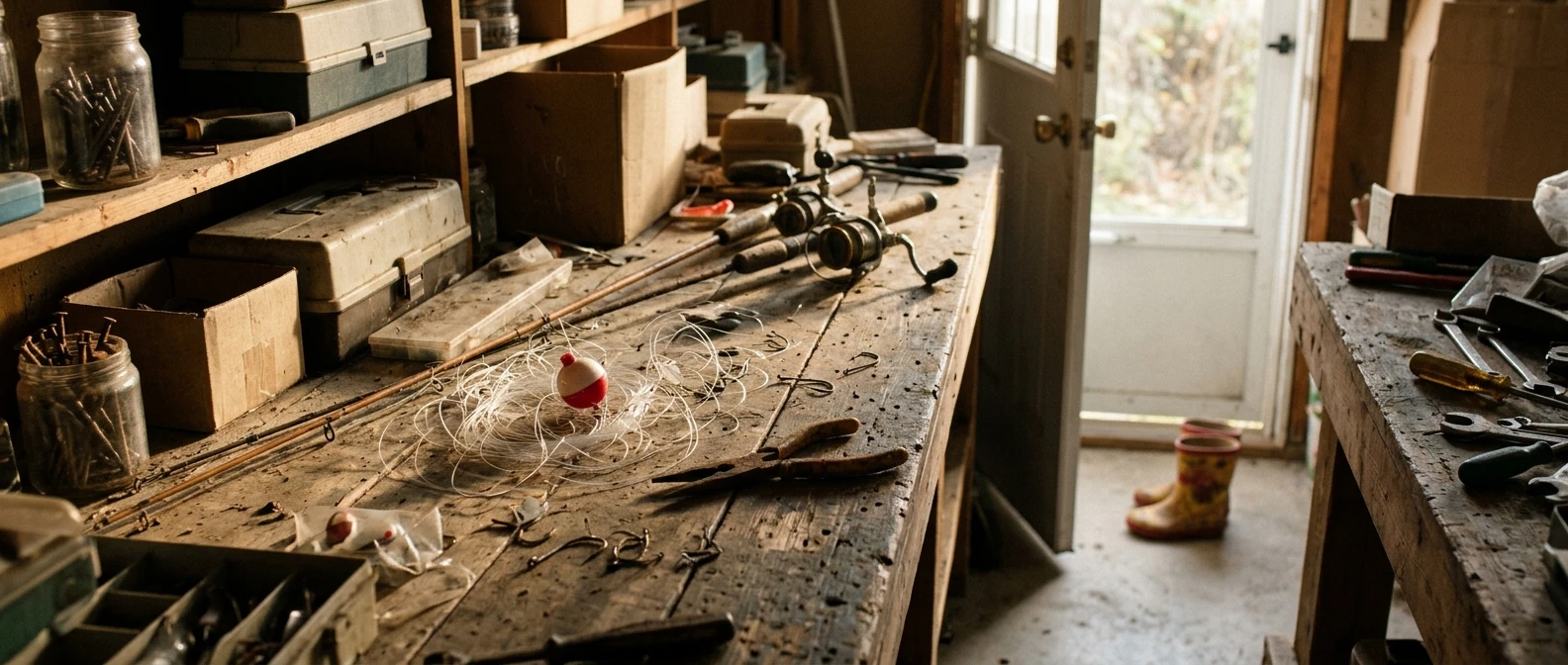
A portable tackle kit fixes this. You pack one small box once, keep it stocked, and on a fishing morning the only things left to load are the rods, the bait, and the kids.
Why the 20 minutes before you leave is where most family trips get lost
Young kids have a short window of enthusiasm. If the first twenty minutes of the outing are spent hunting for a pair of pliers, that enthusiasm is already running down when you reach the water.
The search itself isn’t the main problem. It’s that a search under time pressure leads to compromises: you leave the spare hooks behind, you skip the extra line, you grab whatever bobber turns up. Then a snag on the bank ends the day, because nothing in your bag can fix it.
A kit that is already packed removes those decisions from the morning. You make them once, at the kitchen table, when nobody is waiting by the door.
What a portable tackle kit is, and what it is not
A portable tackle kit is one small case that holds everything you tie on, clip on, or cut with. That means hooks, weights, bobbers, line, and a few basic tools. It is sized to be carried in one hand along a muddy bank while the other hand holds a child’s.
Everything else belongs elsewhere. Sunscreen, water, snacks, towels, and the rods themselves live on your trip checklist, and our two-hour family bank-fishing packing list covers those. If you want the wider picture of which gear matters and which you can skip, the family bank-fishing gear overview goes through it. This article stays inside the tackle box.
Keeping the kit this narrow is what makes it work. A box that tries to hold everything gets heavy, and a heavy box gets left at home.
The five jobs your kit has to do: hooks, weights, bobbers, line, and tools
Every item in the kit should do one of five jobs. If something doesn’t fit any of them, it stays out.
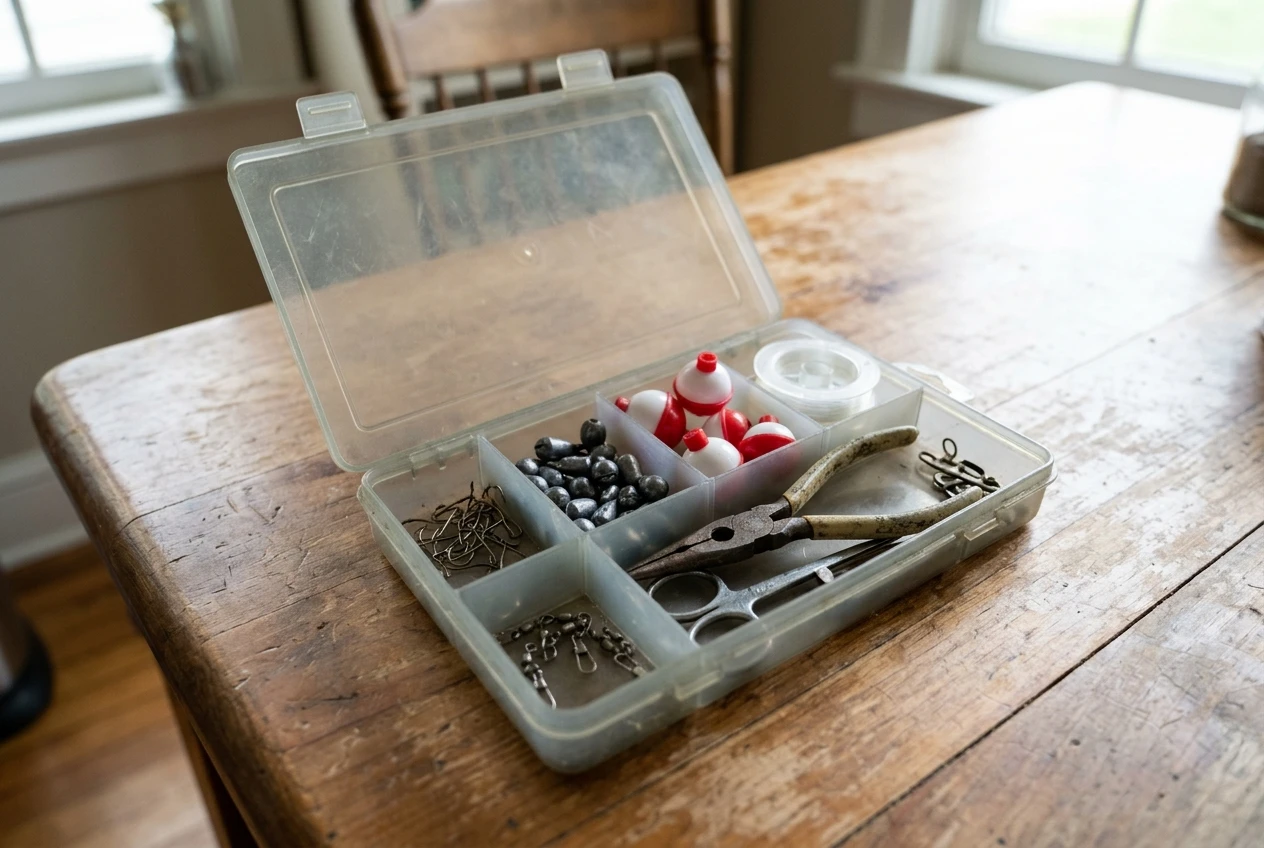
Hooks
Bank fishing with kids usually means live bait under a bobber, and that calls for small to medium hooks. Pack a small size for sunfish and other panfish, and a few larger ones in case a bigger fish shows up. Two or three sizes is plenty.
Hooks get lost, bent, and swallowed, so pack more of the common size than you think you need. Keep them in a small compartment with a secure lid.
Weights
Split shot is the staple: small, soft lead or lead-free pieces you pinch onto the line to hold bait at depth. Pack an assortment of sizes in one divided compartment. If you plan to fish on the bottom, add a few egg-shaped or similar sliding weights.
Weights are heavy for their size, so keep them in a sealed compartment where they can’t spill across the rest of the box.
Bobbers
A bobber shows you a bite and keeps the bait at the depth you chose. Pack a few in a couple of sizes, and make sure at least some are easy for small fingers to attach. If your bobber setups tend to cause trouble, our guide to what to check when a bobber rig keeps tangling is worth reading before the next trip.
Line
Pack one spare spool of the same line that is on your reels. When a snag breaks off a rig or a knot fails, fresh line lets you retie in minutes. Add a short length of leader material if you like, but the spool matters more.
Retying is the one skill the kit can’t do for you. The four knots a bank angler actually needs is a good thing to practice at home beforehand.
Tools
Three tools cover almost every problem on the bank:
- Needle-nose pliers, for removing hooks and crimping split shot
- Small scissors or line clippers, for clean cuts
- A hook remover or a second pair of pliers, for fish that swallow the hook
Add a small first-aid item or two if there’s room, though those may already be on your trip checklist.
Packing the kit for kids: what to put in their hands and what to keep with you
Kids get the parts that are fun and safe. Adults hold the parts that are sharp.
Let children hold the rod, watch the bobber, and handle the bait container. Older children can pick out a bobber from the box and help clip it on, which gives them a job and keeps them involved.
Keep the hooks, the pliers, and the scissors with you. A good habit is to keep the whole kit in the adult’s hands or at the adult’s feet, and hand over one piece at a time. If your kids are still deciding what kind of rod suits them, our piece on picking rods for kids and parents as a pair can help you set that up.
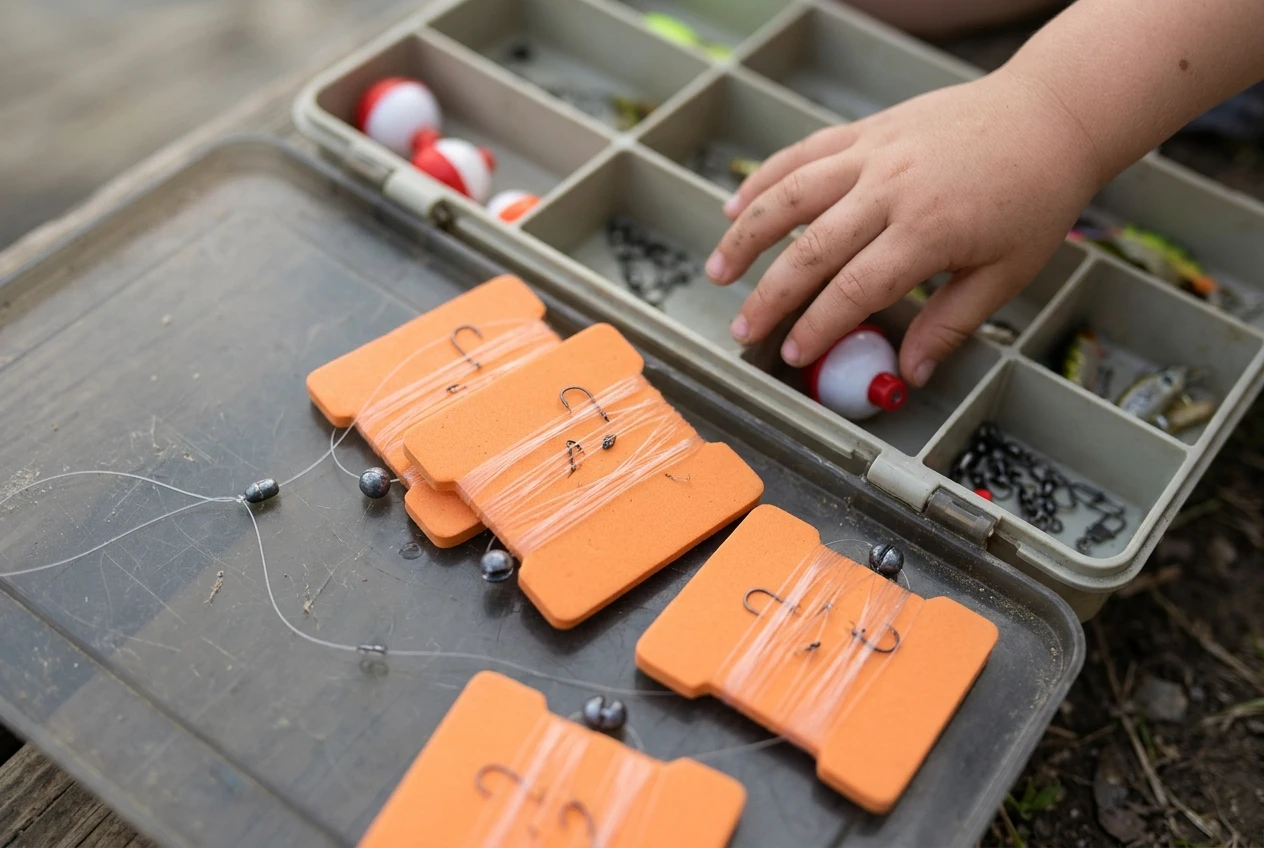
One practical tip: put a few already-tied rigs in the kit, each with a hook and a split shot or two on a short length of line wound around a small piece of foam or card. A child who loses a hook can be fishing again in a minute, without waiting for you to tie a knot.
The small extras that save a trip: spares, a bait plan, and a way to untangle fast
Three small additions earn their place beyond the five core jobs.
Spares. A second set of everything you tie on most often: hooks of your main size, a spare bobber or two, and extra split shot. These are the items that disappear in the water or get stepped on in the grass.
A bait plan. Bait doesn’t go in the tackle box, since it needs its own container, but the plan does. Decide before you leave what you’re bringing and what hooks it needs. If you’re buying worms or other bait on the way, put “stop for bait” on your departure routine so it’s never a surprise. If the bait disappears without the bobber moving, this troubleshooting guide explains what may be happening.
A fast untangle. Tangles happen with children and cast lines. Keep a small pair of scissors in the kit so you can cut out a knot that won’t loosen, and carry enough pre-tied rigs or spare line that cutting is a normal fix and not a last resort. Fishing with kids goes better when a snarl costs you two minutes and not the whole outing.
How to keep it ready: restock after each trip so it never needs repacking
The kit only saves time if it is ready the next time. Right after each trip, while you’re still unloading the car, open the case and check it.
A short routine is enough:
- Replace the hooks, weights, and bobbers you used or lost.
- Check the spare line and swap in fresh line if it looks worn.
- Wipe the pliers and scissors dry, since water and mud rust metal quickly.
- Close the case and put it back where it lives.
Doing this takes a few minutes, and it means the next trip needs no repacking. Where the kit lives matters too, and our guide to how to store fishing gear between Kentucky trips covers keeping it dry and easy to grab.
Choosing a case that fits your car, your kids, and a muddy bank
The right case is a practical choice, and three questions narrow it down.
Does it fit your car? Measure the space you’ll actually use, whether that’s a footwell, a trunk corner, or a spot behind a seat. A case that slides in without rearranging everything else is a case you’ll bring.
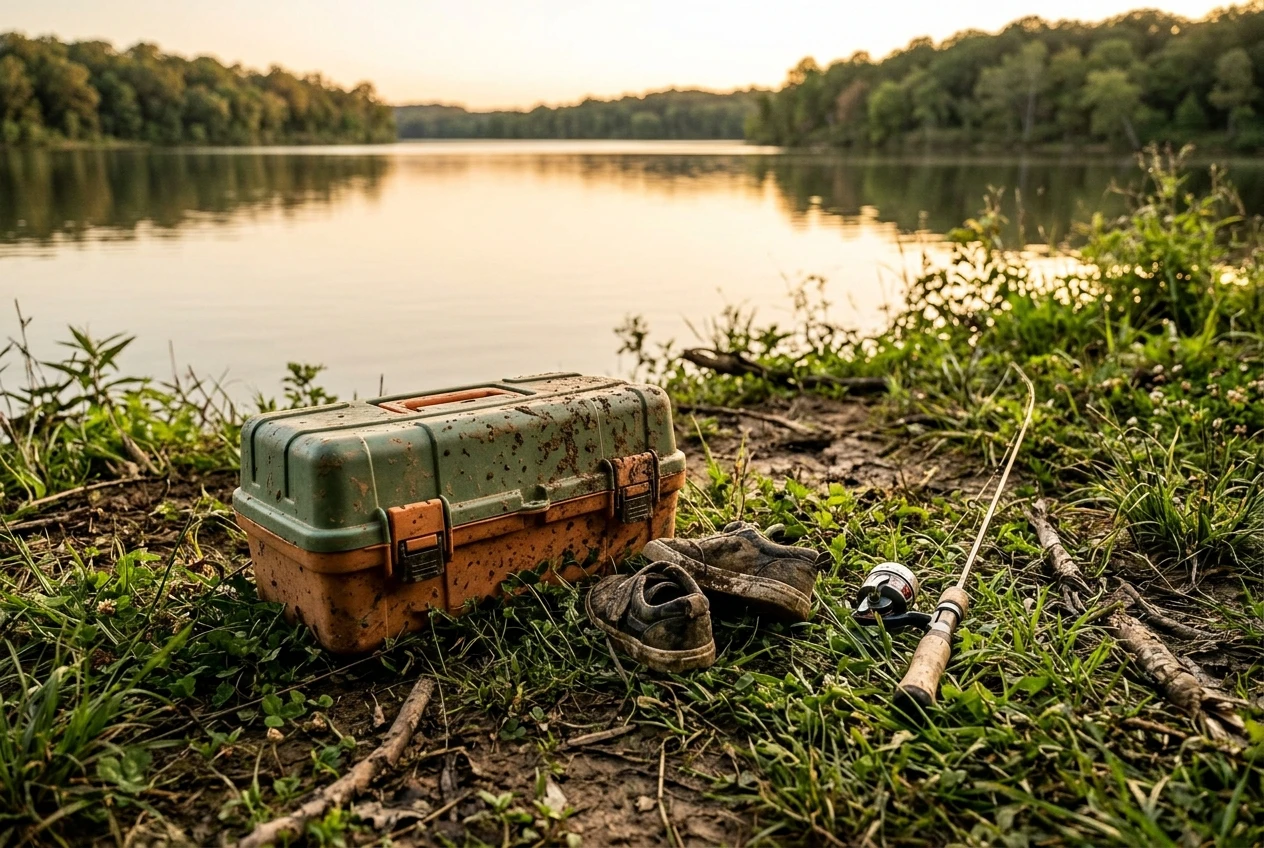
Can your kids live with it? Look for secure latches that little hands can’t pop open and spill across the bank. A comfortable handle matters because the kit will be carried a lot, and often with a rod in the other hand.
Can it handle mud? Hard plastic wipes clean with a rinse and a cloth. Fabric pouches are lighter, but they hold dirt and moisture, so they suit a very small kit better than a larger one. Compartments that you can adjust or remove help you fit the five jobs without wasted space.
Pick the smallest case that holds the five jobs and a few spares. Anything bigger invites you to add things you don’t need.
Your next step
Build the kit this week, so the next fishing morning starts with loading the car instead of searching for gear. Then pair your new kit with a Kentucky lake guide or the family bank-fishing ebook, so you know where to set up and what to try first, and browse the gear picks that fit a small kit.