Most first-time families ask whether they should rent a boat before they ask anything else about fishing. It seems like the serious way to do it: a boat means you are really fishing, and the bank is for people who could not get one. That idea is worth checking, because for a first outing the bank is usually the easier choice for a family with young kids. A rental boat is the right call in some situations, and this article covers both.
The comparison below is about how you fish, not where. If you want lake names, the lake list on this site handles that. Here the question is shore versus boat for a family’s first trips.
The question behind the question: what your family actually wants from the day
Before comparing anything, decide what a good day looks like for your family. For most beginners with kids, it comes down to a few things: the kids stay interested, everyone stays safe, somebody gets a bite, and nobody goes home frazzled.
A boat can help with the bite part, since it lets you reach water you cannot cast to from shore. It works against the other three, because a boat puts more tasks on the adults and fewer exits in front of the kids.
If your goal is a first fish and a good memory, the question becomes how much you have to manage while you try to get there. The bank wins on that measure for most families. The sections below show why.
What renting a boat adds to your plate before the first cast
Before anyone holds a rod, a rental boat brings a list of things to handle. None of them is hard on its own, but together they take attention that you would rather spend on the kids.

- Life jackets for everyone. Kentucky has rules on life jackets, including for children, and the rental operator should explain what applies to your boat. Check the current requirements with the Kentucky Department of Fish and Wildlife Resources. Kids need jackets that fit their size, and a jacket that rides up over a small child’s chin is a problem you need to solve before you leave the dock.
- Getting in and out. Stepping from a dock into a boat is a balance exercise. Doing it while holding a toddler, a tackle box and a cooler is harder. Boarding takes a few minutes, and so does getting everyone off again at the end.
- Launching and returning. Depending on the marina, the operator may handle part of this, but you still need to follow instructions, return on time and bring the boat back in good shape.
- Boating rules. Operating a boat comes with its own requirements, such as who can drive, what equipment must be aboard and how to behave around other boats. Ask the rental desk what applies to your rental, and do not guess.
- Weather and wind. Wind on open water is a bigger deal than wind on a bank. A breeze that just ruffles a bobber from shore can make a small boat harder to hold in place.
- Cost and timing. Rental terms vary by marina, so ask about rates, rental windows, what is included and what the cancellation policy is before you book. A fixed rental window also means you are on someone else’s clock.
Each item is manageable for a family with some water experience. For a first outing, the sum of them means the adults are busy with logistics while the kids watch.
What the bank gives you for free: space, solid footing and an easy exit
The bank has few moving parts. Many of the things you pay for or manage on a boat come with the shoreline at no charge.
Solid footing. You are standing on ground. Kids can walk, sit, stand up and wander a few steps without anyone watching the balance of a hull. Choose a spot with a stable, gentle approach to the water and the footing takes care of itself.
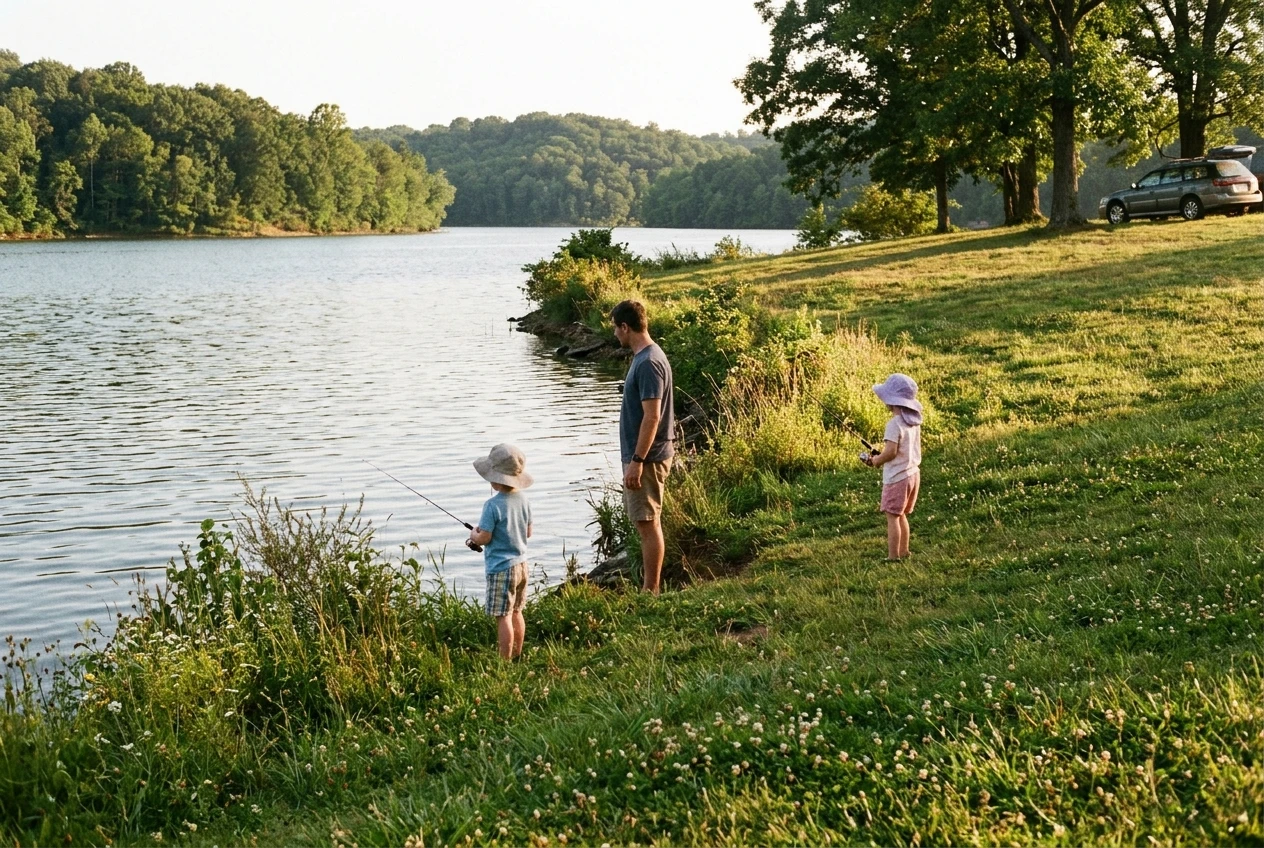
Room. A rental boat is small, and everyone in it is within arm’s reach of everyone else’s hooks. On a bank you can spread out. Each child gets a casting space and the adults can stand between kids and the water, or between kids and each other’s rods.
An easy exit. If a child melts down, gets cold, gets bored or needs the bathroom, you can walk to the car. A boat has no such option. Once you are out, everyone stays until you paddle or motor back, and that can be a long stretch with a tired five-year-old.
Flexibility. If the first spot is slow, you can pick up and move a hundred yards along the bank. You can stop for a snack on the grass and come back to fishing ten minutes later.
No time limit set by anyone else. You stay as long as the kids are into it and leave when they are not. For a first trip, a two-hour session that ends happily beats a four-hour one that ends in tears. If you want a packing plan for a short outing, the two-hour family packing list covers what to bring.
Keeping young kids safe and content on shore versus on the water
Safety and attention span are the two things that decide whether a family trip goes well, and the bank and the boat handle them differently.
Safety
On the bank, the main risks are the water’s edge and hooks. You manage them by choosing a spot with gentle slopes, keeping little kids a set distance from the waterline and having them wear life jackets if they are near deep water or unsteady on their feet. A lot of the useful gear is simple, and the piece on bank-fishing safety gear families forget goes through it.
On a boat, the risks include falling overboard, a hull tipping when kids move suddenly, sun and wind exposure with no shade, and hooks in a very small space. Everyone must wear a properly fitted jacket the whole time. An adult has to keep watch on every child, and also handle the boat and fish. With more than one child, that is a lot for two adults.
Keeping kids content
Young kids do not fish in long stretches. They fish, then they dig in the dirt, then they want a snack, then they cast again. The bank allows all of that. A boat limits it to sitting and watching a bobber.
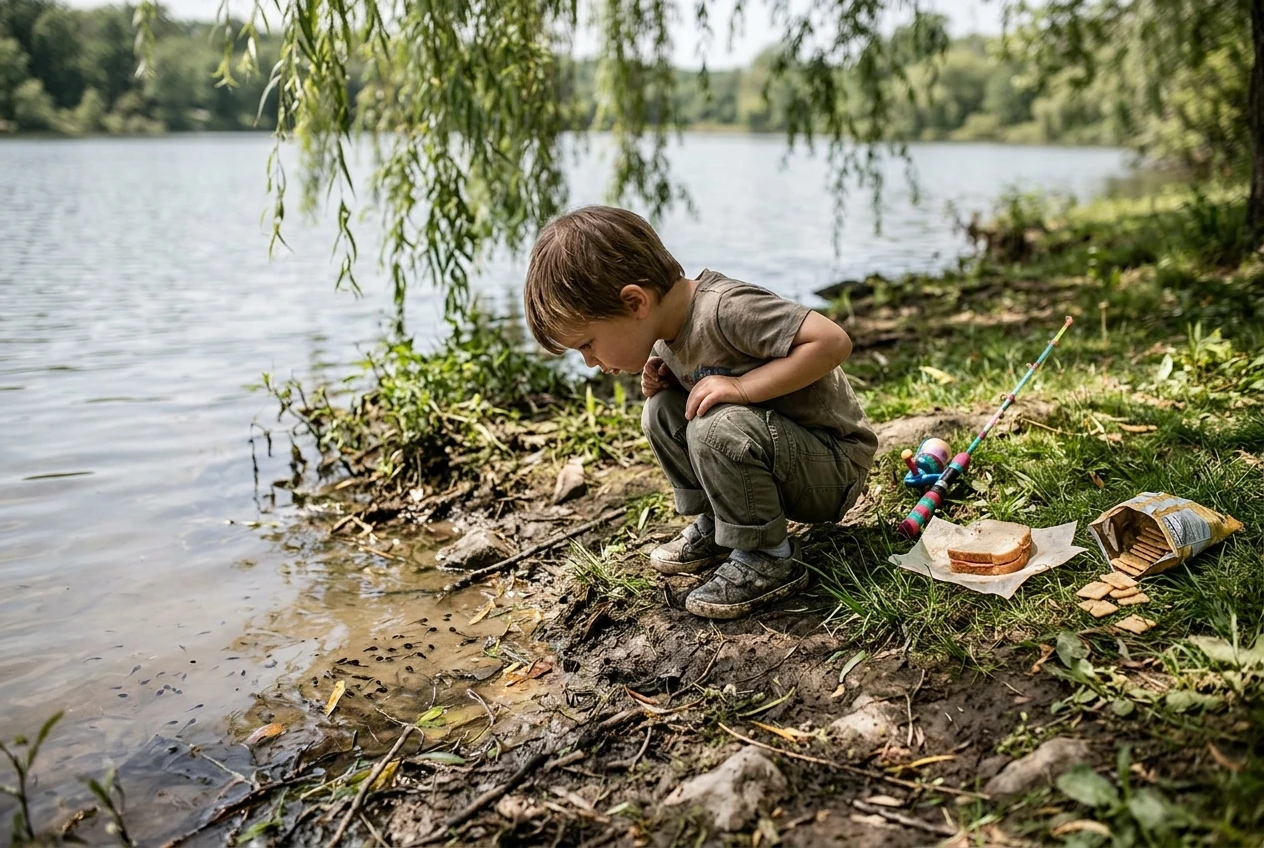
Kids also want things to look at. On the bank they can see tadpoles, rocks, bugs and birds along the edge, and a child who has stopped caring about the rod may still care about the shoreline. A boat offers water, sky and the occasional passing boat, which holds attention for a shorter time.
Snacks, restroom access and shade are all easier on shore. If a child is unhappy, the parent can fix the problem in two minutes instead of reorganizing a boat.
Where a boat rental does make sense (and how to tell if you’re there yet)
A rental boat is a good tool in the right situation. Be honest with yourself about whether yours is one.
A rental is worth considering when:
- The bank access is poor. Some lakes have limited public shoreline, steep or brushy banks, or little room for a family. If the only usable water is out from the shore, a boat opens it up.
- Your kids are older and steady. Children who are comfortable in life jackets, can sit still when asked and follow instructions are better boat passengers than toddlers.
- Someone in the group has boating experience. An adult who has handled small boats and knows the basic rules makes the whole trip safer.
- You have fished from the bank a few times already. Once the kids can cast, handle a fish and tolerate a couple of hours outdoors, a boat day becomes an upgrade rather than a gamble.
- You want to reach a specific type of water. If a lake’s best fishing is around structure or in coves that are hard to reach on foot, a boat makes sense, and so might a guided trip. The article on planning a first guided fishing trip explains how that works when you want someone else to run the boat.
Signs you are not there yet: your youngest is under about three or four and gets fussy easily, nobody in the family has been on a small boat, your kids have never held a fishing rod, or you would be the only adult for several children. In those cases, the bank is the better first choice, and a boat can wait for next season.
How to get the boat feeling from the bank: picking spots and casting smart
The main thing a boat offers is reach, the ability to put your bait where fish are. You can get part of that from shore by choosing spots well and thinking about where you cast.
Picking the spot matters most. A bank with some depth near the edge, shade, and room for the whole family beats a crowded stretch near the parking lot. If the nearest bank is full of people, the guide on choosing a family bank-fishing spot in Kentucky walks through how to decide where to set up.
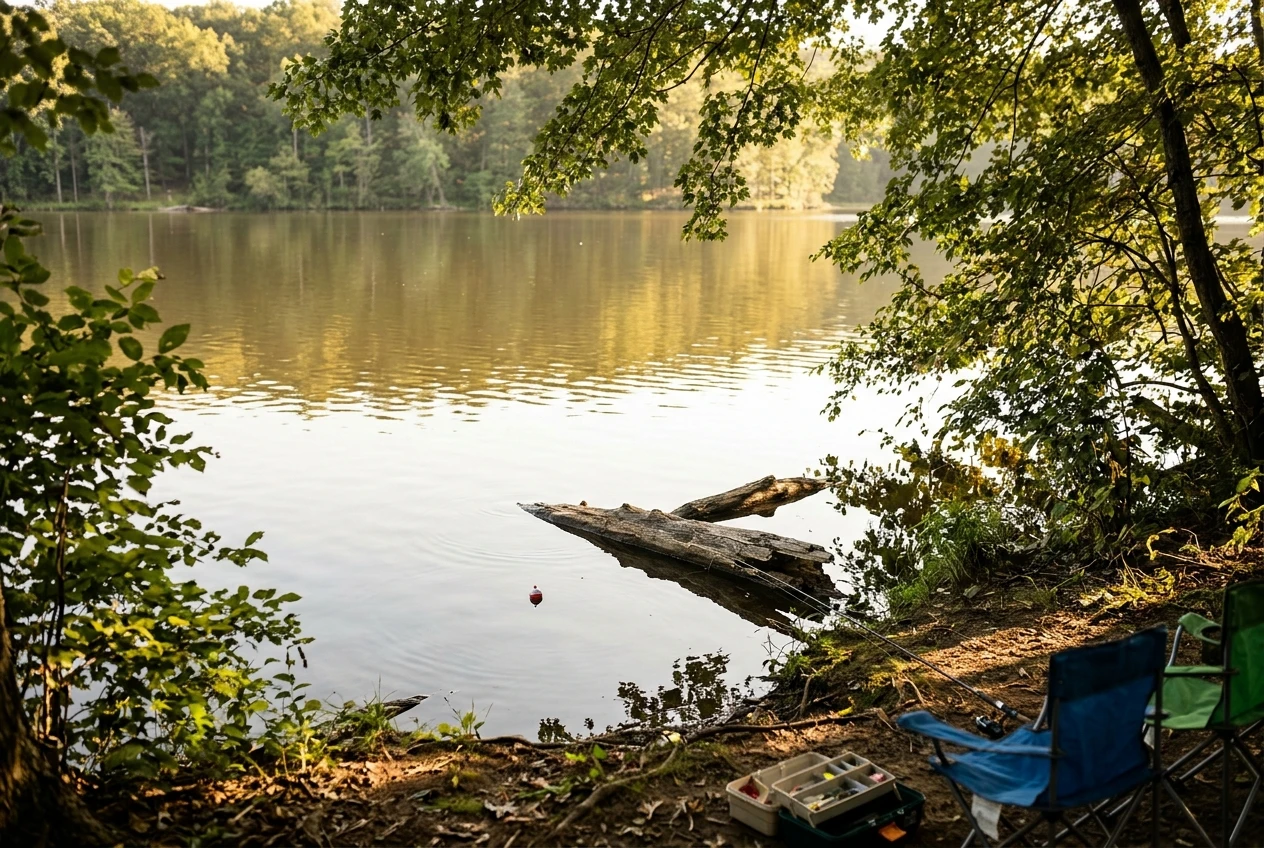
Then comes the cast. Kids often want to throw as far as they can toward the middle, and it feels like that is where the fish must be. Often it is not. The piece on where to cast first from the bank explains how to start close and work outward, which keeps kids busy and puts bait in the water where fish often feed.
Together these two choices cover most of what a boat would have given you, without the rental, the jackets or the launch.
A simple way to decide: three questions to ask before you book anything
If you are still unsure, ask these three questions.
- Can every adult in the group handle a boat and the kids at once? If one adult would be steering while the other watches several children, wait. If you have extra adults, or someone experienced, the answer changes.
- Can the youngest child stay seated, in a jacket, for the whole trip? If the answer is maybe not, the bank gives you room to move around and an exit.
- Is there a good reason the bank will not work at this lake? If public access is poor or the water you want is out of reach, a rental has a purpose. If the answer is only that a boat sounds more serious, start on shore.
If you answer no, no, and no, the bank is your first outing. If you answer yes, yes, and yes, a rental is reasonable, and you should check the current Kentucky rules and ask the marina about its policies before you book.
For most beginner families, the first trips go best from the bank. Pick your family’s first bank spot with confidence: see the Kentucky lake guides and bank-fishing ebooks for lake-by-lake advice.