
If you are working out how to budget for fishing gear with multiple kids, the first thing to know is that the cost is not the rod. It is buying the same rod, life jacket and tackle assortment two or three times because the first set was outgrown, lost or broken. A plan that sorts gear by how long it lasts and who uses it keeps most of that money in your pocket.
This article covers spending order and replacement cycles across several years. For a single trip’s packing list, use our Kentucky bank fishing gear checklist.
Set a number first
Pick a total for the year before you look at any gear. Without a limit, every item looks reasonable on its own, and the total drifts upward one small purchase at a time.
Base the number on trips you will actually take, not trips you hope to take. Two kids on four or five bank trips a year need a different budget than three kids fishing every other weekend all summer. Include license costs for the adults who need them, and check the current Kentucky rules before you finalize the figure so you are not surprised at the counter.
Then split the number into three parts:
- Shared kit: the tools and supplies the whole family uses.
- Per-kid gear: the few things each child needs to have of their own.
- Replacement reserve: a set-aside for what gets lost, snapped or left on the bank.
The reserve is what keeps the plan honest. Kids lose bobbers, snag hooks on branches and drop lures in the water. If you budget as though none of that will happen, you will spend the reserve anyway, just from the wrong bucket.
Hold back part of the total until after your first few trips. You will know more about what your kids use then, and unspent money is easier to redirect than a drawer full of gear.
Share it or own it

Gear falls into two groups: things that only one person can use at a time, and things that sit in the middle of the group.
Each child should own the following:
- A rod and reel. Kids fish at the same moment, and one child waiting for a turn is a child who wants to go home. A rod in every kid’s hands also lets you stop being the bottleneck for untangling.
- A life jacket that fits that child. A jacket is sized to a body, so it cannot be shared among kids of different sizes. Our piece on bank-fishing safety gear families forget covers what else belongs near the water.
- A hat and sun protection. These are personal and cheap, and a child who is comfortable stays at the water longer.
- Shoes that can get wet and muddy. A pair of old sneakers is enough if they have grip.
The whole family can share:
- Needle-nose pliers and line snips
- A hook remover
- A net, if you use one
- A bucket or cooler
- A first aid kit, bug spray and towels
- The tackle box and its contents of hooks, sinkers and spare bobbers
Parents can often skip a personal rod for the first season. With two or three kids on the bank, an adult spends most of the trip baiting hooks and tying knots. If you decide to add a parent’s rod later, pick it as a pair with the kids’ rods so the setups match.
Spend where it lasts
A few items stay useful for years across every child, and those deserve the larger share of the money.
Tools. A decent pair of pliers and a sharp set of snips are used on every trip, and cheap ones bend, rust or go dull. Buy one good set for the shared kit and keep it with the tackle box.
Line. A spool of fishing line is a small cost per trip, and fresh line matters more than most beginners expect. Old line gets weak, coiled or frayed, and a fish lost to bad line is a hard moment for a young angler. Buy a spool rather than pre-spooled replacements when you can, so you can restring every kid’s reel from the same supply.
Hooks. A small assortment in a couple of sizes covers most bank fishing for beginners. Buy decent ones, and keep them dry so they do not rust. Consider pinching the barbs down on the hooks the kids use, since a barbless hook is easier to remove from a fish, a sleeve or a finger.
A tackle box. One sturdy box with dividers outlasts several cheaper ones. Our guide to organizing a tackle box so your kid can find everything shows how to set it up so it works for every child who inherits it.
Reels with a working drag. If you are going to pay more for one part of a combo, a reel that releases line smoothly when a fish pulls is a reasonable choice. A rough drag is one of the common reasons fish break off.
Save where kids outgrow or lose things
Some gear has a short life no matter what you pay. Spending more on it does not make it last.
Bobbers. They get lost, stepped on and tangled in trees. Buy a bag of inexpensive ones and keep spares in the box so a lost bobber does not end the trip.
Lures and tackle assortments. Young beginners often do well with live bait such as worms, which cost little and need no skill to present. Lures are often chosen by color and bought on impulse. Buy a few simple ones and add more after you see what your kids reach for.
Kids’ rods and combos. Rods get dragged, dropped, sat on and shut in car doors. A modest combo is usually enough for a child who is still learning, and it is the item you are most likely to hand to the next child. If you want help choosing one, we wrote about how to pick a kids fishing combo that survives a Kentucky lake bank.
Sunglasses and accessories. Children lose these quickly. Buy cheap and buy a spare.
A family rule helps with the stuff that ends up in the lake: each child carries their own small container of bobbers and hooks, and anything lost comes out of their own container. They will keep better track of it, and you will see how fast things disappear.
Plan for the second and third kid
The cheapest gear you will ever buy is gear you already own. If you have more than one child, plan the purchase of the first child’s rod and jacket with the next child in mind.
Hand-me-down rods. A rod in good condition can pass to the next child. Before handing it down, check three things: the rod tip for cracks, the guides (the rings the line runs through) for chips, and the reel for a drag that still works. Put fresh line on the reel before it goes to the next child.
Matching models. If you buy the same combo for your kids, parts and spare reels can swap between rods. It also removes the question of whose rod is better.
Size chains. A younger child may start on a shorter rod, and an older child may move up to a longer one. When that happens, the shorter rod goes down to the next child, and you only buy the new size once.
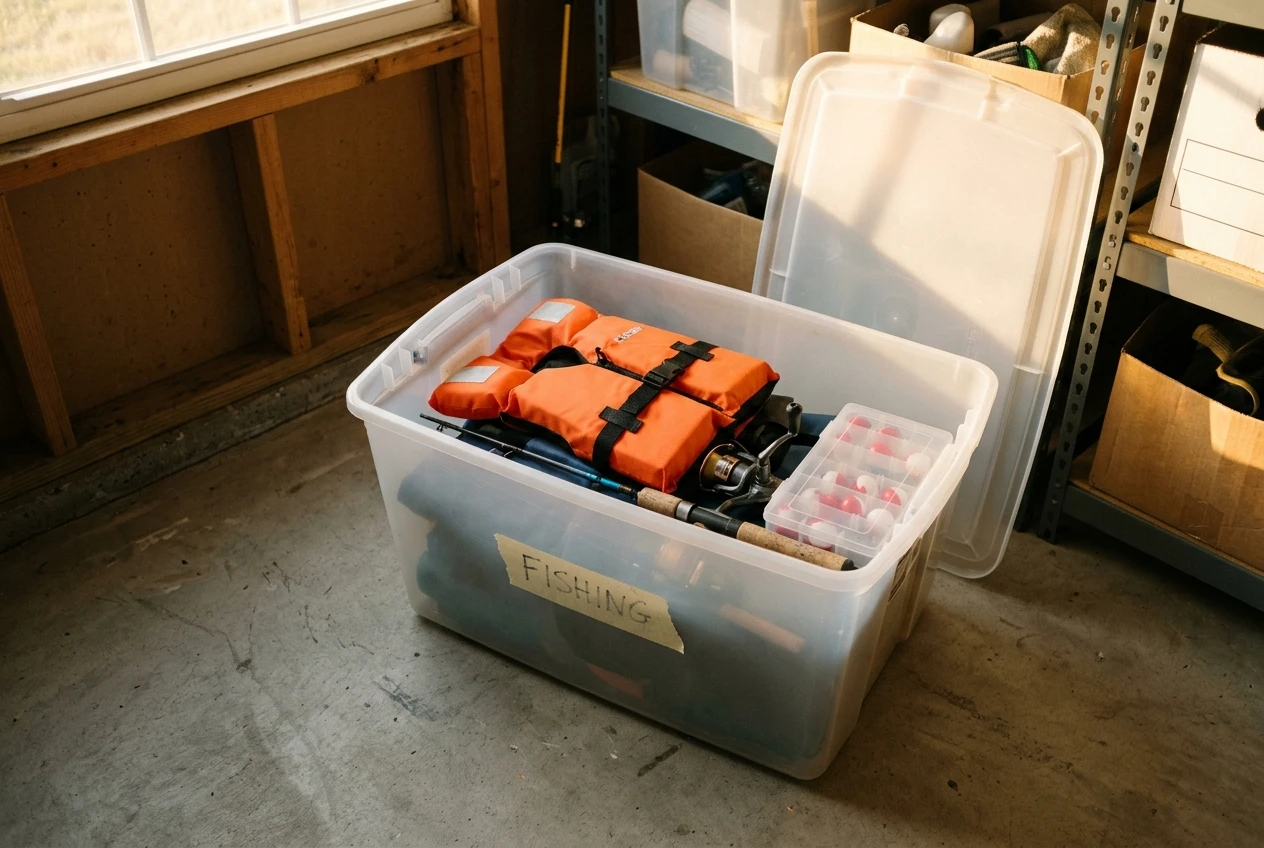
Life jackets. These are sized by weight and fit, not by age. A jacket can be passed down only if it is undamaged and the next child is in its listed size range. Never pass down one with torn fabric, broken buckles or foam that is crumbling.
Keep a labeled bin for the next child. Rods that are outgrown, spare reels, extra bobbers and a clean, dry jacket all go in it. Our piece on storing fishing gear between Kentucky trips explains how to keep the bin from turning into a box of rusty, tangled leftovers.
Do not keep old line, rusty hooks, cracked jackets or a rod with a broken tip. They cost storage space and give the next child a poor first experience.
Buy in stages: a three-trip order
Stage the purchases so each one is decided by what happened on the bank, not by guessing.
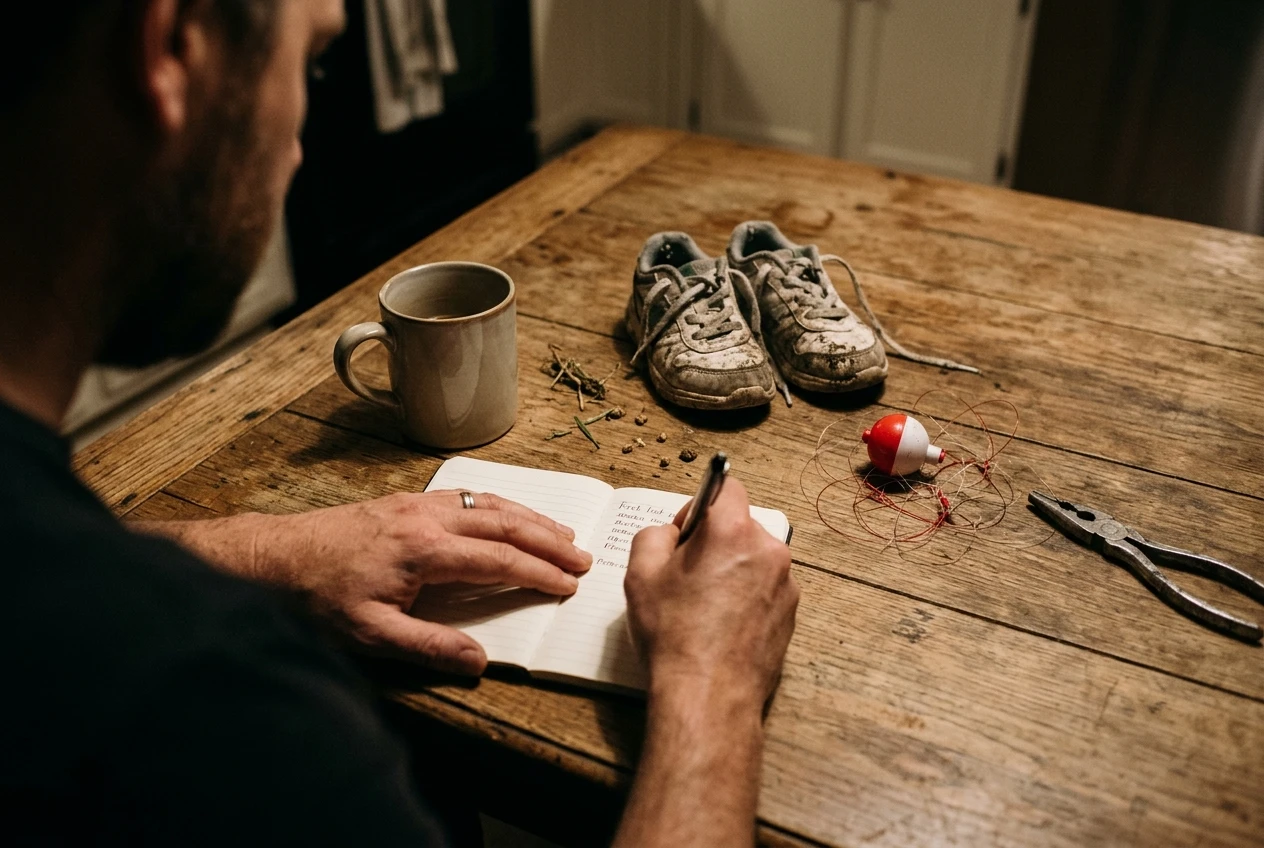
Trip one: the minimum. Bring a rod and reel for each child, hooks, bobbers, bait, a pair of pliers, fitted life jackets and sun protection. Borrow what you can. Watch which kids stay interested, which rod gets tangled and what you wish you had brought. Write those things down that evening.
Trip two: fill the gaps you wrote down. Add the items that came up on trip one. That might be a net, a better bucket, a sturdier tackle box or a spare set of line. This is also the right time to buy the shared tools if you borrowed them the first time.
Trip three: upgrade one thing. By now you know what gets used every time. Pick one durable item to replace or improve, such as better pliers, a stronger reel or a parent’s rod. Spend there, not on a dozen small purchases.
After three trips, you will know whether the kids want to keep fishing and which gear they use. If you want a view of what matters most before you buy anything, read the family bank-fishing gear that actually matters at Kentucky lakes and what you can skip.
Where to find value in Kentucky
Used gear is the best way to stretch a family fishing budget, and many items hold up well secondhand.

- Relatives and neighbors. Ask first. Many households have a rod or tackle box in a garage that nobody uses.
- Garage sales, thrift stores and online listings. These are good sources for rods, reels, tackle boxes, coolers and buckets. Inspect each item before you buy: check rod guides for chips, run the reel handle to see that it turns smoothly, and look for rust on metal parts.
- End-of-season sales. Stores often mark down gear when the season winds down, so fall and winter can be a good time to buy for next year.
Some items are worth buying new:
- Life jackets, because fit and condition matter and you cannot easily judge foam and stitching on a used one.
- Line, because the age of old line is hard to see.
- Hooks, because rust shortens their life.
- A reel whose drag you cannot test before you buy.
A new item is worth the price when it will be used on every trip, passed down to another child and is hard to judge secondhand. A used item makes sense when it is simple, easy to inspect and likely to be replaced anyway.
If you want the next step planned for you, see our roundup of Kentucky bank fishing ebooks and pick the one that fits your family’s biggest hurdle.