
A tackle box that only a parent can navigate turns every request into an interruption. “Where are the hooks?” “Can you find a bobber?” “Which one do I use?” By the third question, a child at the bank has stopped fishing and started waiting.
A box laid out so a child can read it fixes that. The kid gets a job and some independence, and the parent gets to fish or at least stand in one place. This guide covers how to organize a tackle box for kids by sorting gear by what it does, then adding a few small habits that keep the box in working order.
Why a messy tackle box ends the trip before the first cast
Most tackle boxes get messy the same way. Everything goes into whatever compartment has room, hooks end up loose at the bottom, and a line spool unwinds across a pile of lures. By the time you reach the water, the first ten minutes go to untangling instead of casting.
Children have less patience for this than adults do. A child who watches a parent pick at a knot of hooks and line is not going to stay excited. A box where each piece has an obvious home also keeps hooks from catching fingers and clothes while someone digs around for a bobber.
Organizing the box ahead of time moves all of that work to the kitchen table, where it is easy and nobody is waiting.
Sort by job, not by gear type: the three-tray system
The usual advice is to sort by gear type: hooks together, sinkers together, lures together. That works for an experienced angler who knows what each item does. A child does not know that yet, and “the hook section” does not tell them which hook to grab for the rig they are building.
Sorting by job answers the question a child is actually asking: “What do I need right now?” Use three trays or three zones, named for what the items do.
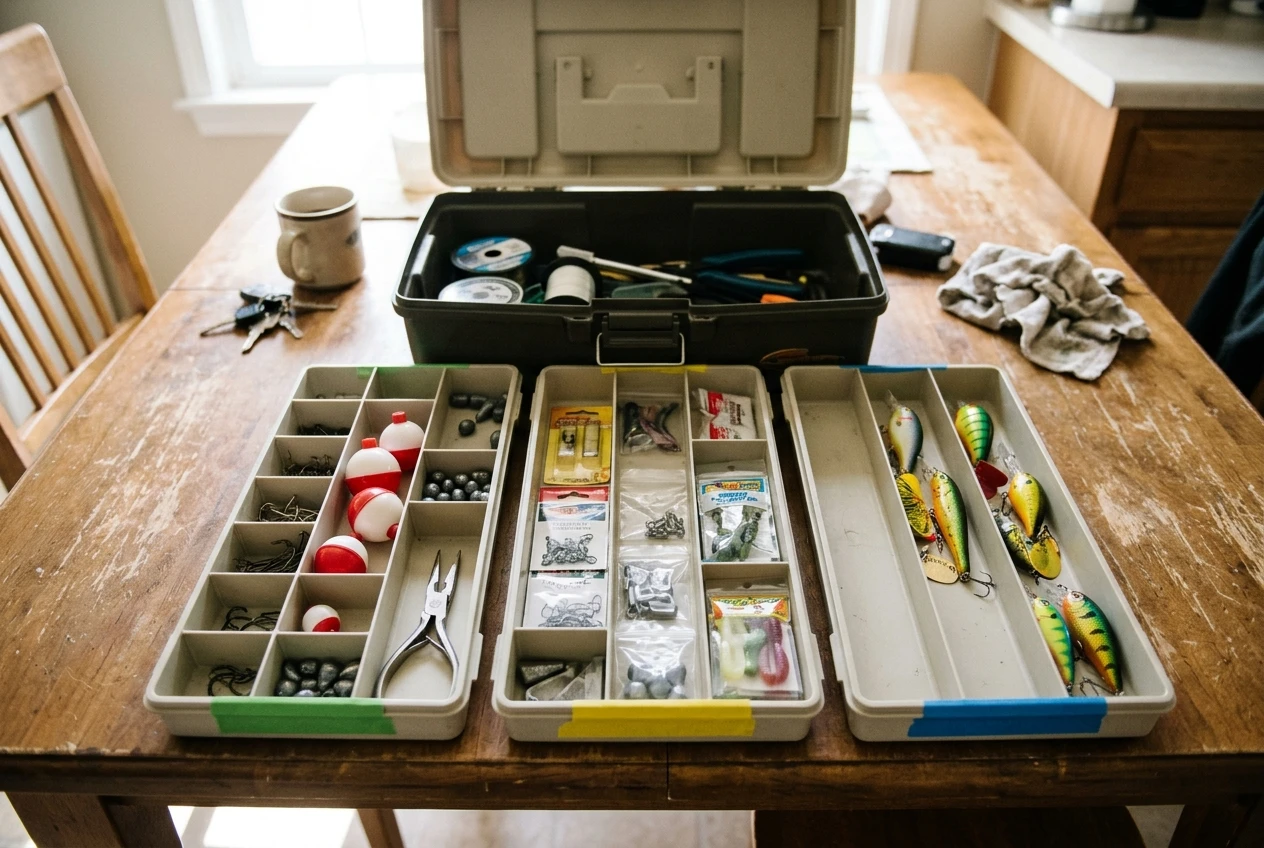
Tray one: Rig
This is everything you use to set up the line and start fishing. It holds the items the child reaches for most often:
- Hooks in the size your rig uses
- Bobbers
- Split shot or small sinkers
- A small pair of line cutters or nippers
If a child is rigging a simple bobber setup, every part should be in this one tray. Nobody should have to open a second compartment to finish the rig. If you have not settled on a setup, our post on your bobber rig tangling covers the common causes, and it helps to know them before you decide what goes in this tray.
Tray two: Replace
This tray holds spares for what gets lost or broken. Snags happen constantly from the bank, and a child will lose a hook or a bobber long before anyone expects it. Keep a backup of each Rig item here: extra hooks, extra bobbers, extra split shot, and a spare length of line or leader if your setup uses one.
The Replace tray gives a child a clear rule. When something is gone, they check Replace, take one, and put the empty package in the trash pocket. They do not need to come find you.
Tray three: Rest
Rest holds everything you are not using on this trip. That includes the bigger lures, the specialty items, and the things you bought because they looked promising. They stay in the box, but they stay out of the way.
This tray matters more than it seems. Most of the clutter in a beginner’s box is stuff that is not needed today. Moving it to Rest takes it out of the child’s sight line, so the two trays they use are short and easy to scan.
Give kids their own small tray and a few things they are in charge of
A child who owns part of the box takes better care of it. Give each child a small tray or container of their own, separate from the main box. A compartment box or even a small lidded container works.

Put only a few items in it: a handful of bobbers, a small pack of split shot, and possibly a spare hook still sealed in its packaging. Keep the loose, sharp items with the adult until the child is ready to handle them. How ready that is depends on the child, so you are the best judge.
Then name what they are responsible for. For example:
- They keep track of their own bobbers and split shot.
- They tell you when their Replace items are running low.
- They close the lid and latch it when they are done.
Three jobs is enough. The point is that a child who is in charge of a few things starts to notice the box instead of treating it as something that belongs to a parent. If your child is still choosing a first rod, see our guide to picking a kids fishing combo so the box and the rod suit each other.
Keep hooks, line and soft baits from tangling each other
Tangles come from three things mixing: hooks, line, and soft baits. Each one needs its own space.
Hooks. Keep hooks in a closed compartment with a lid, or leave them in their original packs until needed. Loose hooks in an open tray catch on line, on other gear, and on skin. A small tackle box with individual latched compartments is good for this. If you use a hook-holding foam strip, keep it in the Rig tray where adults can see it.
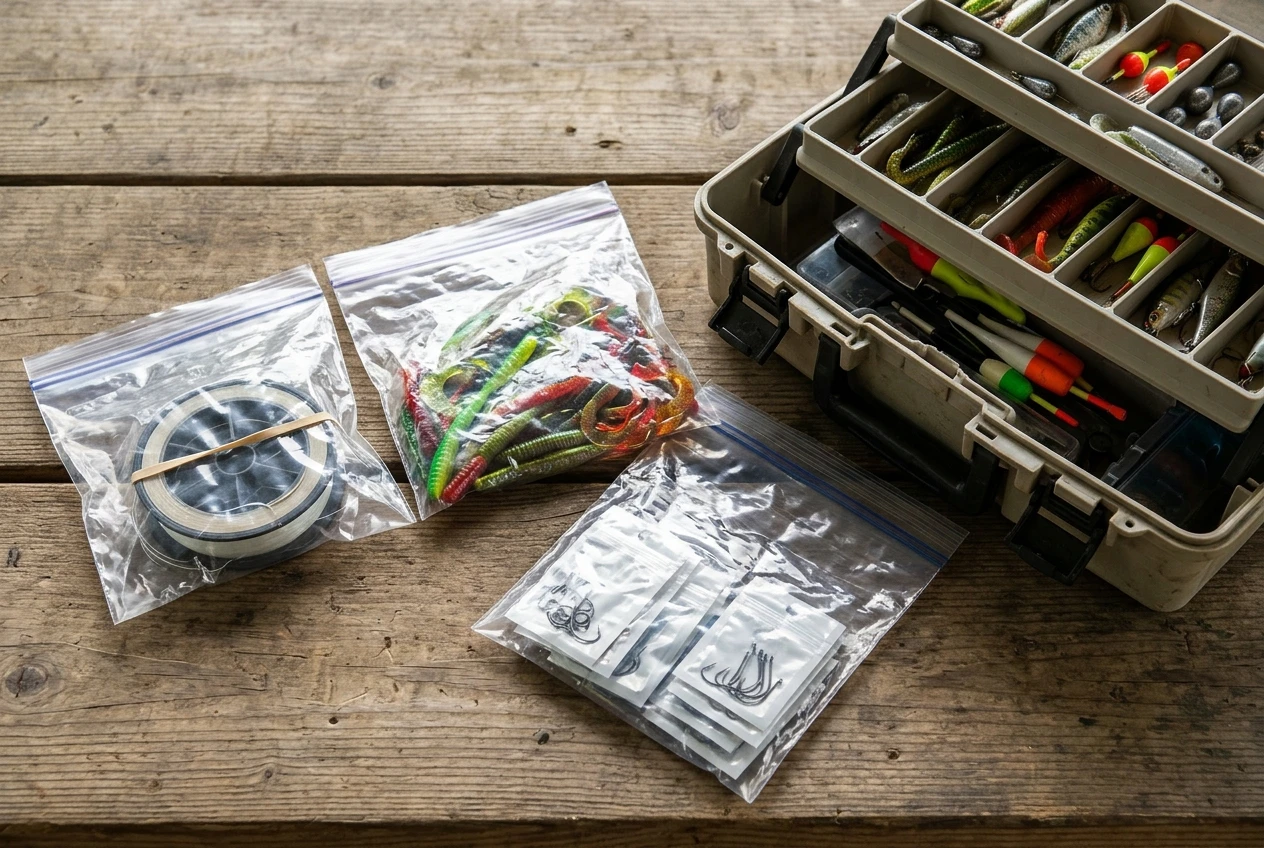
Line. Loose line is the main source of tangles. Keep spools in their own compartment or in a zip bag, with the loose end tucked under a rubber band or the tag end secured on the spool. Do not store a spare spool in the same space as hooks. A hook can snag a spool, and then pulling the spool out drags the hooks along with it.
Soft baits. Soft plastic baits can stick together and can damage other plastics they touch, so give them their own sealed bag or a compartment of their own. Keep that bag away from the hooks and bobbers. Soft baits are usually in the Rest tray anyway, so a closed bag there keeps them contained.
A small zip bag for each category works well and costs very little. Clear bags also let a child see what is inside without opening anything.
Label it so a child can read it at a glance
Labels are what make the system work without you. Write them for a child, in large letters, with short words.
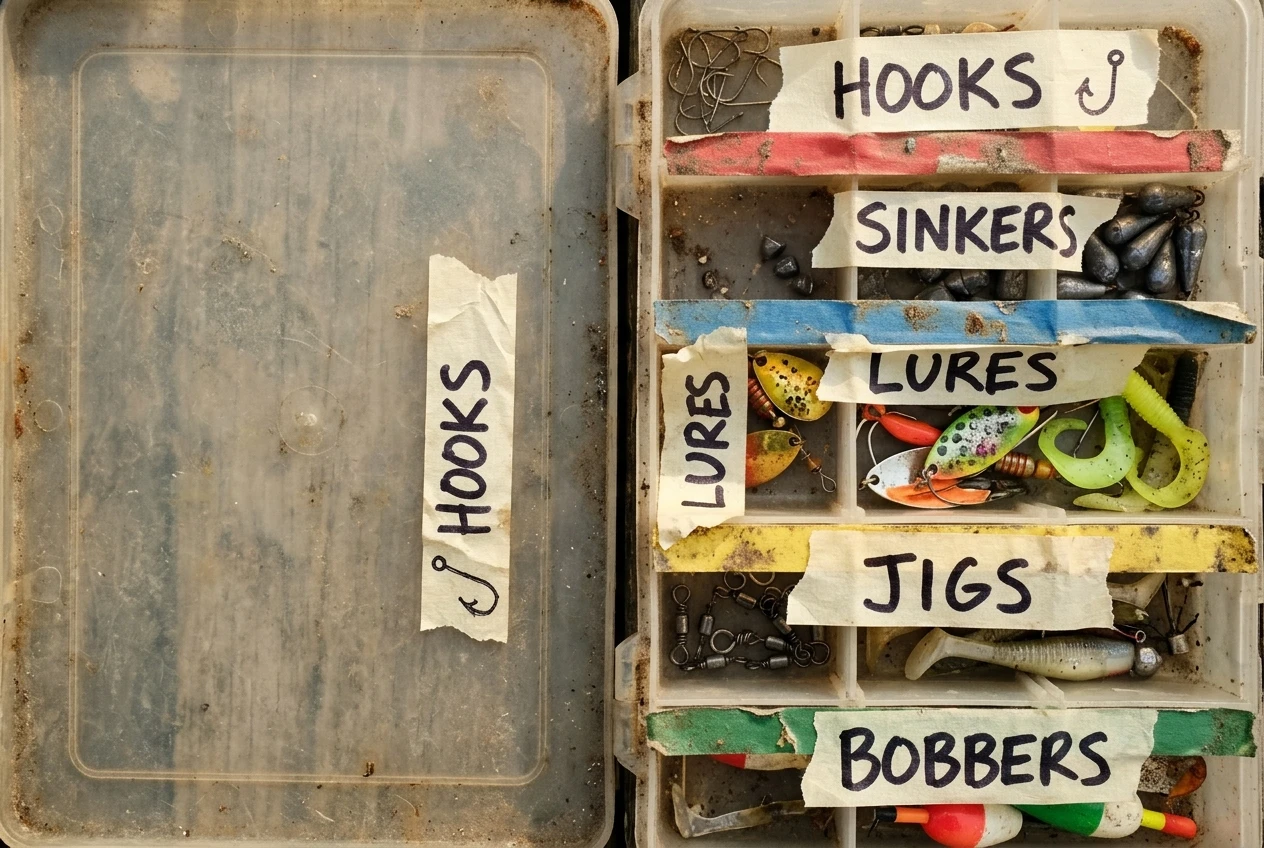
- Use the three tray names: RIG, REPLACE, REST.
- Use a permanent marker on masking tape or a label strip, and write in capital letters.
- Add a color to each tray, such as a strip of colored tape, so a child who is not yet a confident reader can match by color.
- Label the small compartments inside Rig too: HOOKS, BOBBERS, SPLIT SHOT.
- For a child who is still learning to read, draw a simple picture next to the word.
Place the label where the child’s eyes land when they open the lid, not on the outside edge of the box where it is hidden by the handle. After you finish, ask the child to find three things without help. If they hesitate on one, fix that label.
The two-minute reset at the end of every trip that keeps the box ready
A good layout falls apart if the box is not reset after each trip. Doing it at the bank or in the car, while everyone is still there, takes about two minutes and prevents the mess from building up.
- Empty the trash pocket. Put empty packaging and snipped line in the trash before leaving. Loose line in a box becomes a tangle later.
- Return each item to its tray. Rig items go back to Rig, spares to Replace, anything you took out and did not use to Rest. Let the child do this, since they know where things go.
- Check Replace. If a child used the last spare of anything, note it. Write it on your phone or tell a parent so it gets restocked before the next trip.
- Close and latch every compartment. Hooks especially.
- Wipe or dry anything wet. Damp gear left sealed in a box can rust hooks and leave the box smelling bad. If the box is wet, leave it open to dry once you are home.
Home storage is a separate question, and our guide on storing your fishing gear between trips covers where the box should live so it is ready for the next outing.
Once the habit is set, the box stays in shape on its own, and the kids can open it and get fishing within a minute.
Next step
If you want lake-specific help on what to put in that box, see our roundup of Kentucky bank fishing ebooks and pick the one that matches your family’s biggest hurdle.