
You’ve picked a day, packed the snacks, and then the forecast shows rain. Most families cancel at that point, but light rain is rarely what ruins a trip. A slick bank, a flooded parking area, or standing on open ground when thunder starts is what does it. If you can judge those things ahead of time, a wet day can still be a good one.
This guide gives you a simple test you can use on any spot. It covers how to choose Kentucky lakes for bank fishing in the rain, what to check before you leave, what to look at when you arrive, and when to pack up and go home.
Should You Go at All? A Quick Rain Check Before You Load the Car
Start with the type of weather, because rain covers a lot of ground. A steady drizzle and a thunderstorm line are different problems. Open the hourly forecast and the radar for the hours you plan to be on the water, and look for three things.
- Thunder. If thunderstorms are forecast anywhere in your window, move the trip. Fishing rods are long and you will be standing on open ground at the edge of a lake. That is not a place to be during lightning.
- Recent rainfall. Rain that fell yesterday matters as much as rain falling now. After a heavy downpour, banks stay soft and creeks feeding the lake keep delivering muddy water for a day or more.
- Wind. Wind turns light rain into rain that blows sideways into faces, and it makes casting harder for beginners.
Then make one phone call. Park offices, marinas and bait shops can tell you whether the access area is open, whether the lot is flooded, and how the bank looks today. A two-minute call is better than a 45-minute drive to a gate that is closed.
Last, think about your kids. A seven-year-old who is warm and dry will fish for two hours, and one who is cold and soaked will be done in twenty minutes. If you aren’t sure the group can handle wet conditions, plan a shorter outing of an hour or two and treat anything beyond that as a bonus.
The Five-Minute Test for a Rain-Ready Bank
Do this when you arrive, before you unload rods and tackle. Walk the bank, stand where you would fish, and ask five questions.
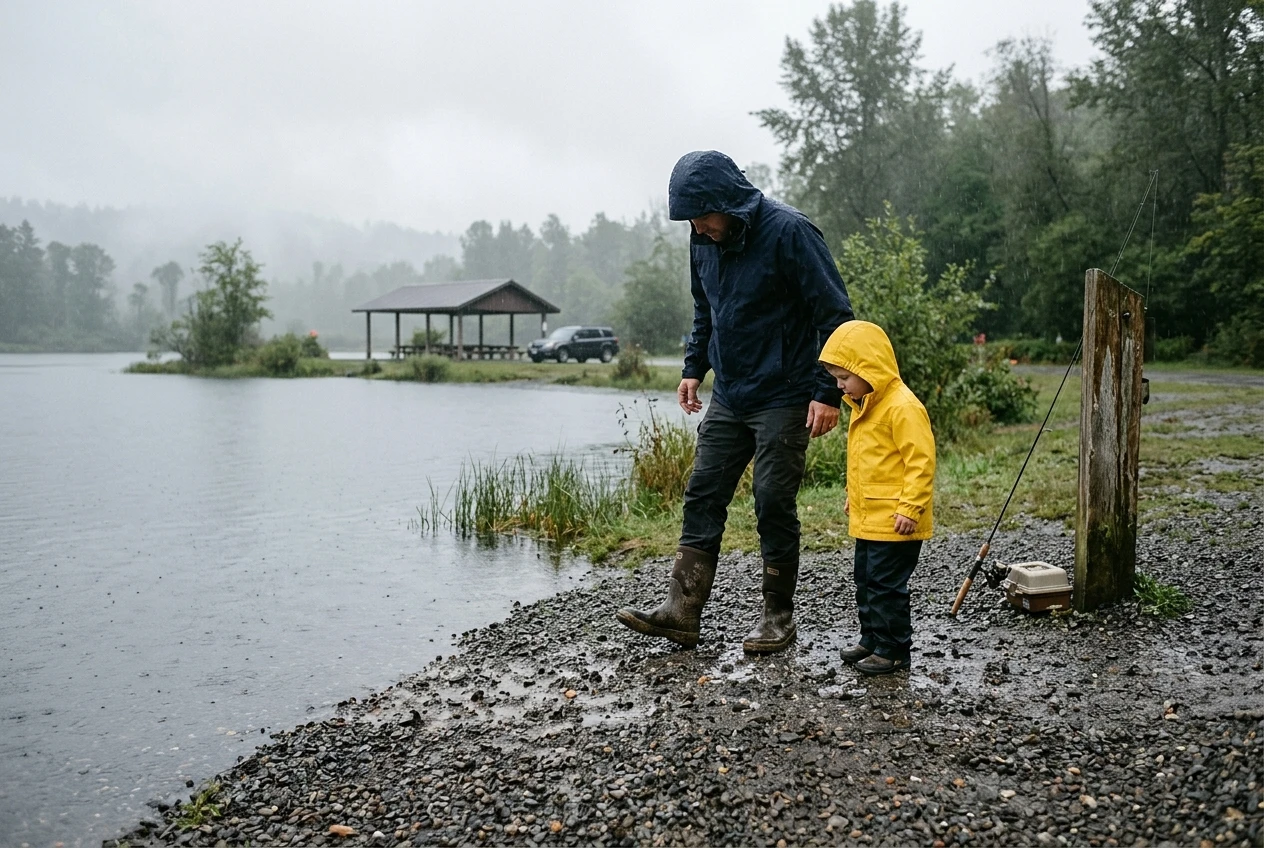
- Footing. Is the ground you’ll stand on gravel, concrete, a wooden pier, or packed earth? Or is it bare mud, wet grass on a slope, or loose rock? Press down with your shoe. If your foot slides or sinks, children will slide more.
- Parking. Is the lot gravel or paved, with drainage? Or is it grass or dirt with puddles and ruts? Also look at the distance from the car to the water. A short walk is easy in the rain, and a long one with rods, a cooler and a child is not.
- Shelter. Is there a pavilion, a covered pier, or a restroom building within a quick walk? Even a bit of cover gives you somewhere to retie a line, eat a snack, or wait out a shower. Your car counts too, as long as it is close.
- Runoff. Look at how water reaches the lake near your spot. Are there channels of brown water running down the bank, a creek mouth carrying silt, or a ditch pouring in? Spots with obvious runoff tend to be muddy underfoot and cloudy in the water.
- Exit. Could you get everyone back to the car quickly if things changed? A clear, short, stable path is a good sign. A narrow muddy trail through brush is not.
If a spot fails one of these, see whether a few steps in another direction fixes it. If it fails two or more, move to another spot or call it a day. You haven’t wasted the drive. You’ve avoided a bad afternoon.
Why Footing and Parking Matter More Than the Fish When Everything’s Wet
Fish are the least predictable part of any trip, and the ground under your feet is the most predictable. In wet weather that makes it the more useful thing to judge.
Slick footing is a bigger risk with fishing gear than it is on an ordinary walk. Children carry rods with hooks attached, and a fall with a baited hook in hand can turn into a trip to urgent care. Wet clay, algae on rocks, mossy boards and grass on a slope are all slippery, and none of them look dangerous until someone is on them. Stable ground lets you keep your attention on the kids and the lines.
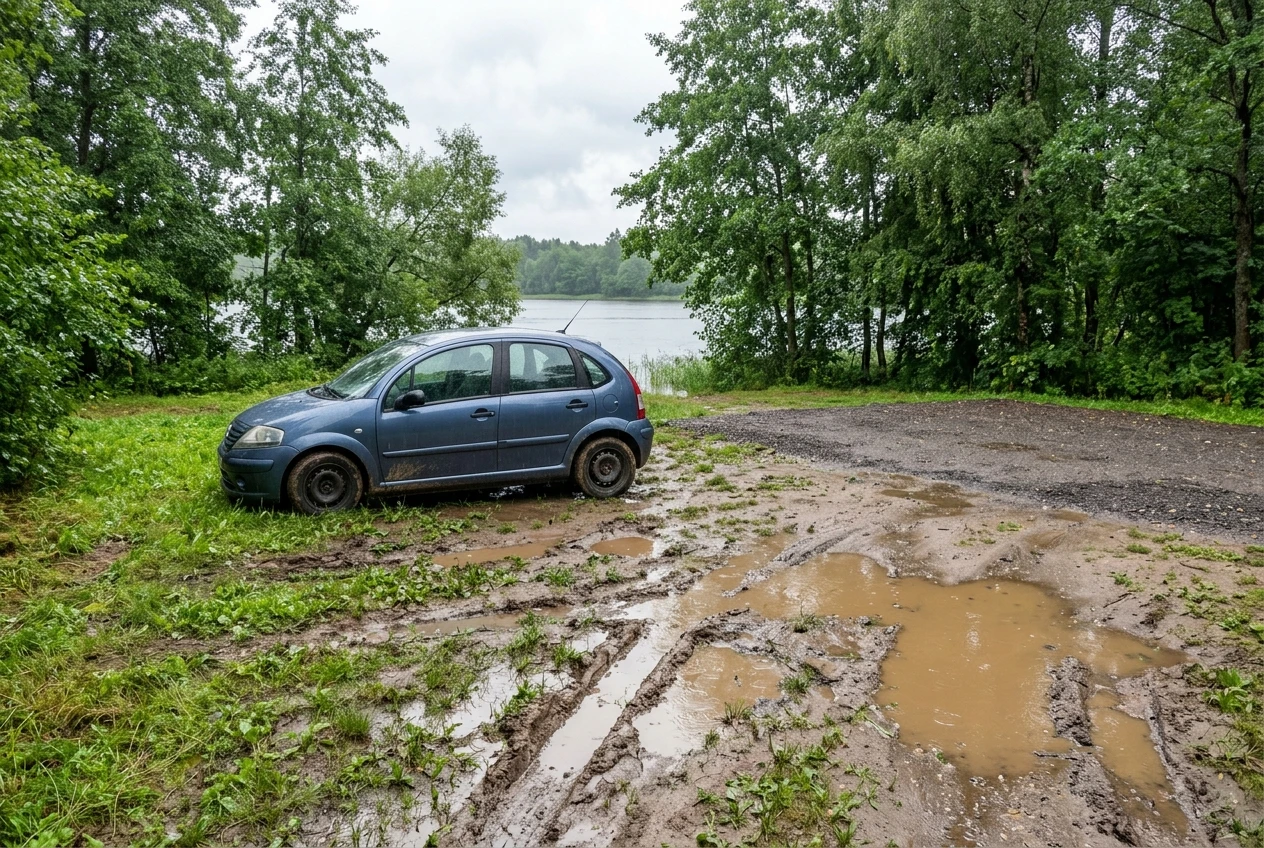
Parking is easy to overlook until you need it. A grass or dirt lot that looked fine when you arrived can turn soft after an hour of steady rain, and getting a stuck car out with children waiting is a miserable end to the day. Gravel and paved lots drain better. If you have to park on grass, park on the firmest, flattest part and don’t block anyone else in.
A car parked close to the water also works as a base. You can stash dry towels, spare socks and snacks in it, send a cold child there to warm up, and put the wet gear in the trunk when you leave. For a family with small kids, a spot where the car is within sight of the bank is often the better choice even if the water looks slightly less promising.
A few habits help on any wet bank:
- Keep hooks covered or tucked into a rod guide whenever anyone is walking.
- Cast with space around you. Umbrellas and hoods make it harder to see who is nearby.
- Set the tackle box on something stable, not on a slope where it can slide.
Which Kinds of Kentucky Lakes Tend to Hold Up in the Rain (and Which Get Muddy Fast)
You can predict a lot about a lake’s rainy-day behavior from its type, even without knowing the lake well.

Lakes that tend to hold up:
- Small park and community lakes with a developed fishing area, such as a pier, a platform, or a gravel or paved path along the water.
- Lakes with a short walk from a surfaced parking lot to the water.
- Spots with a pavilion, picnic shelter or covered dock nearby.
- Banks lined with mowed, well-established grass on flat ground rather than steep slopes.
Lakes and spots that tend to get muddy fast:
- Banks of bare soil, especially clay, which gets slick quickly and stays that way.
- Steep banks where rain runs straight down into the water, carrying dirt with it.
- Creek arms and inlets, where fast runoff after rain brings mud and debris.
- Tall-grass or brushy banks with trails that turn into ruts.
- Large reservoirs after heavy rain, where water levels and shoreline conditions can change from one trip to the next.
Muddy water also affects the fishing itself. Cloudy water makes conditions less predictable, and fish may not find or notice your bait as easily. If the water in front of you has gone brown, it helps to adjust what you offer. Our piece on reading the sun and the water as the day changes walks through how to think about that choice.
A single lake can have both kinds of bank. A park lake might have a good pier on one side and a muddy slope on the other, so judge the exact spot you’re standing on and not just the lake’s name.
Rainy-Day Lake Picks, With the Access Details to Confirm Before You Go
This article doesn’t name specific lakes as rain-proof, because bank access depends on things that change: water level, recent rainfall, maintenance and closures. A lake that works one week can have a flooded path the next. The better approach is to pick candidates from a reliable list, then confirm the details for the day you’re going.
For candidates, start with our roundup of five Kentucky lakes where your family can fish from the bank or the region-by-region guide to bank fishing with kids. Then choose the ones closest to you that have the features described in the previous section.
Before you commit to any of them, confirm these details with the park office, marina or managing agency:
- Is the fishing area open today? Some areas close when water is high or conditions are poor.
- What is the access like? Ask whether it’s a pier, a gravel or paved bank, or bare shoreline.
- What is the parking surface? Paved, gravel, or grass.
- Is there shelter nearby? Ask about pavilions, covered areas and whether restrooms are open.
- What does the water look like? Staff often know whether the lake is running muddy after recent rain.
- Are there posted rules or advisories? Check for anything related to weather, water levels or closures.
It also helps to have a second option. If your first lake fails the five-minute test when you arrive, a backup within a short drive keeps the day alive. A good map makes that easier, and our comparison of Kentucky fishing maps for bank anglers explains which ones show where you can actually stand.
Dress and Pack for Drizzle So the Kids Stay Happy
Kids tolerate rain far better than they tolerate being cold and wet. The goal is to keep them dry and warm enough that the rain becomes part of the fun.
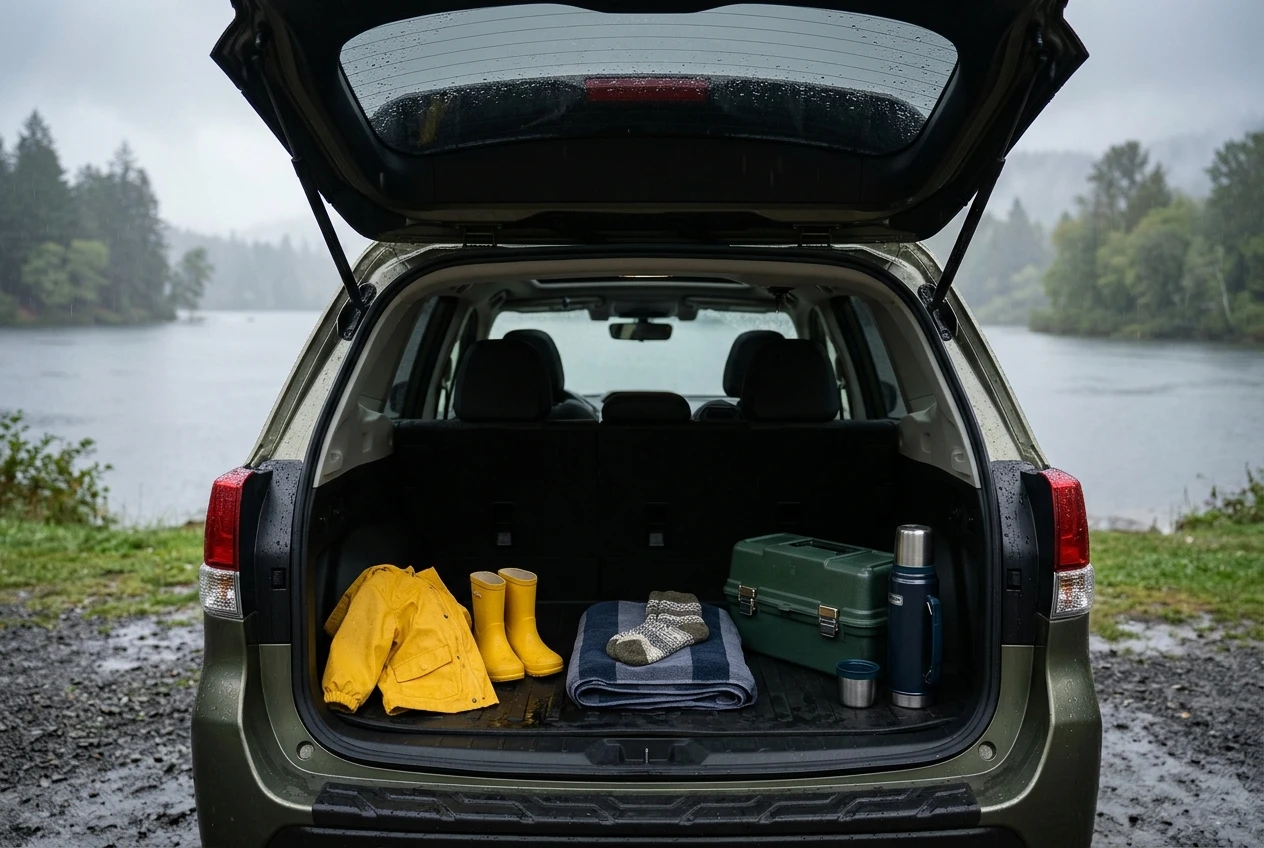
What to wear:
- A waterproof jacket with a hood for every person. Ponchos work for small children, but they can catch the wind and tangle with rods.
- Layers underneath, such as a long-sleeve shirt and a fleece, so you can add or remove warmth.
- Waterproof shoes or boots with real tread. Sandals and smooth soles are poor choices on a wet bank.
- A hat with a brim under the hood to keep rain out of faces while casting.
What to pack:
- A spare set of clothes for each child, left in the car.
- Towels, plus extra socks. Dry socks do more for morale than almost anything else.
- A dry bag or zip bag for phones, keys and snacks.
- A closed tackle box or kit so lures and hooks stay dry and organized. If you don’t have one set up, the grab-and-go tackle kit article shows how to build one.
- A thermos of something warm and a few easy snacks.
If you want a full list to work from, the bank fishing gear checklist is built for ticking off at the car. Pair it with the bank-fishing safety gear piece, since wet days are when a first-aid kit and life jackets matter most.
Finally, give the kids something to do besides watch a bobber. Letting them check the bait, be in charge of the net, or call out when the rain gets heavier gives a restless child a role, and it makes sitting in drizzle more interesting.
When to Pack Up: Lightning, Rising Water and Slick Banks
Decide on your stopping rules before you leave home, so you aren’t negotiating with disappointed kids at the water’s edge.
Lightning and thunder. If you see lightning or hear thunder, stop fishing, put the rods down, and get everyone into the car. Don’t wait for it to get closer. The National Weather Service advises waiting 30 minutes after the last thunder before heading back out. Rods are tall objects on open ground, so this is the one rule with no exceptions.
Rising water. Watch the water’s edge. If the waterline is creeping up the bank, if you see leaves and sticks floating past, or if the color changes quickly to brown, the lake is taking on runoff. Move back from the edge, and leave if the access area starts to flood. Low spots and shoreline paths can go under quickly.
Slick banks. If anyone slips, or if the ground you chose has turned from firm to greasy, move to better footing or leave. One fall is a signal that the next may be worse.
Cold or unhappy kids. Shivering, blue lips or a child who has stopped talking mean the trip is over, however good the fishing is. A warm car and a hot drink first, then you can decide whether to try again.
Leaving early on a rainy day takes nothing from the trip. A family that goes home dry, safe and still talking about the one fish they caught is a family that will want to come back.
If you’d like lake-by-lake bank access details planned out for you, take a look at our Kentucky bank fishing ebooks and lake guides, and find the one that fits your family’s trip.