
Kentucky bank fishing for beginners
Start With the Lake, Not the Lure
Kentucky offers everything from neighborhood FINs lakes to deep reservoirs, rivers, tailwaters, and trout streams. This guide helps you choose the right water, read the bank, follow current rules, and turn a short trip into a clear fishing plan.
for current Kentucky fishing resources and regulations.
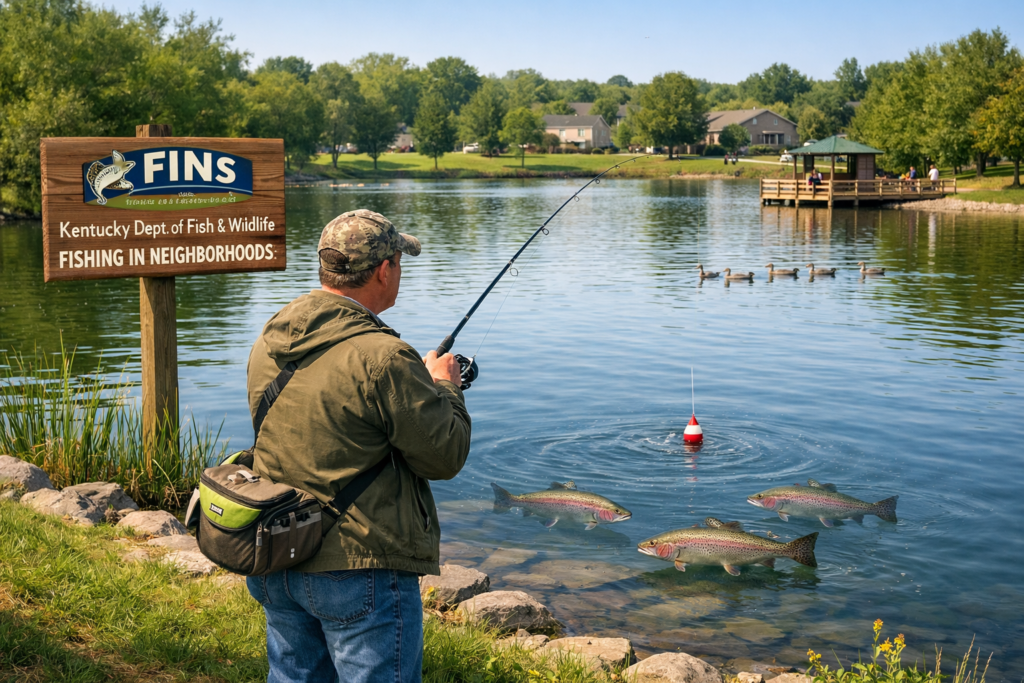
Quick answer: The best way to fish Kentucky is to choose the water before choosing the lure. Decide whether you need easy bank access, stocked fish, moving water, deep reservoir structure, or a family-friendly community lake. Then use wind, shade, cover, depth changes, water clarity, and current regulations to narrow the shoreline to a few high-percentage casts.
Where Should a Beginner Start Fishing in Kentucky?
Kentucky has enough fishing variety to make a beginner feel spoiled and overwhelmed at the same time. Large reservoirs can hold exceptional fish, but they can also present miles of unproductive shoreline. Rivers and tailwaters can be productive, but changing current and access require extra judgment. Small public lakes are easier to study, yet fishing pressure can make the obvious spots less dependable.
The easiest starting point is not a statewide list of “best lures.” It is a simple decision: What kind of fishing trip are you trying to have today? A parent fishing with a child needs safe casting room and a reasonable chance of action. A bank angler with two evening hours needs a compact lake with several reachable forms of cover. An angler targeting smallmouth may accept more walking and moving water.
Every Lake Guide uses that trip-first approach throughout this page. It helps you eliminate water that does not fit your time, access, experience, or target species before you ever open the tackle box.
Easy Family Trip
Look for a FINs lake, park pond, fishing pier, restroom access, open casting room, and bluegill, trout, or catfish opportunities.
Short Evening Trip
Choose a smaller lake with shade, a wind-facing bank, cover near deeper water, and two or three spots you can reach quickly.
Species-Focused Trip
Match the water to the fish first: cool moving water for trout, rocky current for smallmouth, or brush and docks for crappie.
Learning Trip
Pick a compact shoreline where you can compare a point, cove, flat, shade line, inflow, and first drop-off during one visit.
Start here: Use Where to Fish in Kentucky to narrow your options, then open the Kentucky Fishing Guide for Busy Bank Anglers when you need a practical trip plan.
Four-Question Knowledge Check
Open each question after choosing your answer. These four decisions form the foundation of a smarter Kentucky bank-fishing trip.
1. What should you choose first: the lure or the water?
The water. Access, depth, wind, structure, clarity, season, and target species should guide the lure choice—not the other way around.
2. Which is usually more useful from the bank: fishing every foot of shoreline or identifying a few high-percentage zones?
A few high-percentage zones. Points, inflows, shade, cover, wind-blown banks, and reachable depth changes give fish a stronger reason to stop and feed.
3. Can a statewide rule be different on one Kentucky lake?
Yes. Waterbody-specific rules can change size limits, daily limits, bait restrictions, access, or fishing methods. Always check the exact water before fishing.
4. What should you record after a short fishing trip?
Wind, water color, shade, activity, the structure you fished, and where bites happened. A short note turns one trip into useful information for the next visit.
How to Choose the Right Kentucky Water
Kentucky fishing improves when the water matches the trip. The biggest lake is not automatically the best lake, and the most heavily stocked water is not automatically the easiest. Access, bank angle, cover, pressure, water movement, and available time all matter.
| Water type | Best for | Main advantage | Main challenge | First bank clue |
|---|---|---|---|---|
| FINs or community lake | Beginners, families, short trips | Stocked fish and convenient public access | Fishing pressure near obvious areas | Shade, aeration, drains, steeper banks, and less crowded corners |
| Small public lake | Learning lake structure from shore | Compact water that is easier to compare | Seasonal weeds, limited deep access, and pressured fish | Points, first drop-offs, laydowns, grass edges, and wind |
| Large reservoir | More species and long-term exploration | Extensive habitat and fish diversity | Large amounts of empty or unreachable water | Creek arms, riprap, bridges, causeways, points, and public piers |
| River or creek | Smallmouth, channel-oriented fish, moving-water patterns | Current creates visible feeding lanes | Changing flow, slippery banks, and limited safe access | Current seams, eddies, bends, rock transitions, and deeper pockets |
| Tailwater or trout water | Trout and cool-water opportunities | Cold water and concentrated fish | Special permits, changing generation, and location-specific rules | Current breaks, seams, deeper runs, and safe wading or bank access |
Before driving across the state, check official access information, current waterbody rules, weather, and whether the bank you expect to fish is actually public. The Kentucky Fishing Forecast can help identify species opportunities, while local conditions decide where you should cast once you arrive.
Use the L.A.K.E. Method Before Your First Cast
The Every Lake Guide L.A.K.E. Method turns a broad shoreline into a manageable plan. It is especially useful for beginners because it replaces random lure changes with four observable decisions.
Look Before You Cast
Watch wind, water color, shade, surface activity, birds, baitfish, bank traffic, and safe casting room.
Analyze the Lake
Compare points, coves, flats, drop-offs, drains, vegetation, rock, wood, docks, and nearby deeper water.
Key In on Productive Water
Choose two or three zones that combine food, comfort, cover, oxygen, shade, or a travel route.
Execute a Simple Plan
Fish each zone with a time limit, change one variable at a time, and let the lake—not impatience—guide the next move.
Use the 80/20 idea carefully: You do not need to claim that exactly 80 percent of the fish occupy exactly 20 percent of the lake. Treat it as a practical reminder that fish tend to concentrate around the best available combinations of food, comfort, cover, oxygen, and access to depth.
For a deeper structure lesson, continue with Kentucky Shore Fishing: How to Fish Coves, Flats, and Drop-Offs.
Beginner-Friendly Fish to Target in Kentucky
Kentucky supports a broad mix of freshwater species, but beginners improve faster when they match the target to the water, season, and available bank access. Bluegill, sunfish, stocked trout, channel catfish, largemouth bass, and crappie are practical starting points in many public waters.
Best for Fast Feedback
Bluegill and other sunfish can teach bite detection, hook setting, depth control, and fish handling with simple light tackle.
Best for a Relaxed Evening
Channel catfish are a strong warm-weather option near deeper banks, flats beside channels, inflows, and low-light feeding routes.
Best for Learning Structure
Bass and crappie reward anglers who recognize shade, brush, docks, vegetation edges, points, and shallow-to-deep transitions.
| Target | Where to look from shore | Simple starting presentation | What to learn |
|---|---|---|---|
| Bluegill and sunfish | Shade, docks, grass openings, shallow cover, and protected pockets | Small hook, worm, light line, and a small float | Depth control and subtle bites |
| Channel catfish | Deeper banks, creek arms, inflows, flats near channels, and evening routes | Worms, prepared bait, or another legal bait fished near bottom | Bottom contact and patient spot selection |
| Largemouth bass | Laydowns, weed edges, shaded pockets, points, drains, and first drop-offs | Small soft plastic, spinnerbait, or shallow moving bait suited to clarity | Angles, cover, and lure speed |
| Crappie | Brush, docks, standing timber, bridge areas, and spring spawning banks | Small jig or legal minnow presentation | Depth and vertical positioning |
| Stocked trout | FINs lakes, designated stocked waters, tailwaters, and cool runs | Small spinner, trout bait where legal, or a compact natural presentation | Current, temperature, and stocking pressure |
What Is Biting in Kentucky Right Now?
No responsible guide can promise one species or lure will be “hot” statewide. Kentucky is too varied, and the bite changes with water temperature, clarity, flow, lake level, sunlight, oxygen, forage, stocking, fishing pressure, and recent weather.
A better question is: Where are fish most likely to find food and comfortable water on this lake today?
| Season | Useful shoreline clues | Common opportunities | Smart adjustment |
|---|---|---|---|
| Spring | Warming pockets, protected coves, shallow cover, darker bottom, and inflows | Bass, crappie, bluegill, and stocked trout | Begin shallow, but keep the first drop-off nearby |
| Summer | Shade, wind, deeper reachable water, vegetation edges, and low-light activity | Catfish, bluegill, and bass during better windows | Fish earlier or later and slow down around comfort zones |
| Fall | Baitfish activity, wind-hit points, pockets, creek arms, and moving schools | Bass, crappie, and temperate bass where present | Cover water until you find life, then repeat the pattern |
| Winter | Stable water, deeper edges, current breaks, sun-warmed banks, and stocked trout water | Trout, slower crappie, and occasional bass | Downsize, slow the presentation, and make fewer high-quality moves |
Use the official Kentucky Fishing Forecast and stocking information as planning clues, not guarantees. Once you reach the water, let visible conditions make the final decision.
Kentucky Fishing Regulations Beginners Should Check
Fishing rules can differ by species, waterbody, season, fishing method, and access area. The official Kentucky Fishing and Boating Guide is the controlling planning resource for a trip, and posted signs at the water can add site-specific restrictions.
- Anglers age 16 and older generally need a Kentucky fishing license unless an exemption applies.
- Check the exact water for special size limits, daily limits, slot limits, catch-and-release sections, or method restrictions.
- Unless exempt, an angler who intends to keep trout needs a trout permit.
- Licensed anglers fishing the Cumberland River from Wolf Creek Dam to the Tennessee line, its tributaries to the first riffle, and Hatchery Creek need a trout permit even when they do not plan to keep trout.
- Respect private property, posted areas, park hours, dam restrictions, marina rules, and safe bank access.
- Recheck the rules whenever you change lakes; statewide limits do not override a waterbody-specific regulation.
Free Fishing Weekend: Kentucky generally holds Free Fishing Weekend during the first full weekend in June. In 2026 it was June 6–7. A license and trout permit were not required during that weekend, but size limits, harvest limits, bait rules, and all other fishing regulations still applied.
What special rules apply at Kentucky FINs lakes?
As of the 2026 Kentucky Fish and Wildlife FINs guidance, the standard daily limits are five rainbow trout, four catfish, one largemouth bass with a 15-inch minimum size, and 15 bluegill or other sunfish. Live shad may not be possessed or used for bait at FINs lakes. Always verify the current FINs page and posted lake signs before fishing because program information can change.
Regulation note: This page explains fishing strategy and summarizes selected rules; it is not a legal document. Confirm current requirements with Kentucky Fish and Wildlife and the signs posted at the exact waterbody.
Can You Use Crappie as Bait in Kentucky?
No. Kentucky’s current fishing guide says it is illegal to use sport fish for bait, with a narrow exception for redear sunfish under six inches. Crappie are sport fish, so they should not be used as live or cut bait.
The same guide specifically allows certain native bait species, including bluegills, but special waterbody rules, collection methods, harvest limits, and transport restrictions still matter. Live wild-caught invasive carp, herring, shad, mooneye, and goldeye may only be used in the waters where they were collected and may not be transported by roadway. FINs lakes separately prohibit possession or use of live shad.
| Bait question | Practical answer | What to verify |
|---|---|---|
| Can crappie be used as bait? | No. Crappie are sport fish. | Current statewide bait rules and any special waterbody regulation |
| Can bluegill be used as bait? | The current guide says bluegills may be used for live bait. | How the fish was taken, applicable limits, and rules for the exact water |
| Can live shad be used? | Only where allowed; live shad are prohibited at all FINs lakes. | Waterbody restrictions and collection or transport rules |
| Can wild bait be moved to another lake? | Do not assume it can. | Species-specific transport rules, invasive-species restrictions, and current guidance |
A Two-Hour Kentucky Bank-Fishing Plan
A short trip becomes productive when each block of time has a purpose. This plan works best on a small or medium waterbody where you can safely reach at least three distinct shoreline features.
| Time | What to do | Decision you are trying to make |
|---|---|---|
| Minutes 0–10 | Walk, watch, and compare wind, shade, water color, cover, surface activity, other anglers, and safe casting room. | Which two or three zones deserve your limited time? |
| Minutes 10–35 | Fish the strongest visible feature first with a simple presentation that fits the clarity and target species. | Are fish shallow, active, and willing to chase? |
| Minutes 35–65 | Move to a contrasting feature: shade versus sun, wind versus calm, shallow cover versus the first drop. | Which condition is holding more life? |
| Minutes 65–100 | Return to the best zone or repeat the strongest pattern elsewhere. Change only one variable: depth, speed, size, or angle. | Can you turn one clue into a repeatable pattern? |
| Minutes 100–120 | Fish the highest-confidence area, then record wind, water color, cover, bites, misses, and fish location. | What should you do first on the next trip? |
Do not confuse movement with progress. If a high-quality spot contains baitfish, shade, cover, and nearby depth, try a different angle or slower presentation before abandoning it. If the spot offers none of those advantages, move sooner.
Fish-Friendly Release and Responsible Bank Fishing
Kentucky’s public fishing waters stay enjoyable when anglers protect fish, access, and the shoreline. Responsible fishing is not complicated, but it does require preparation.
- Wet your hands before handling a fish you intend to release.
- Use pliers, forceps, or hemostats so hook removal is quick and controlled.
- Consider barbless hooks or crimped barbs when practicing catch-and-release.
- Keep the fish in the water when possible, especially during hot weather.
- Do not place fish on hot pavement, gravel, dry grass, or abrasive surfaces.
- Cut the line rather than causing excessive damage when a hook cannot be removed safely.
- Pack out line, hooks, bait containers, food wrappers, and every piece of trash.
- Give families and other bank anglers safe casting room and respect posted boundaries.
Build a Repeatable Lake-Reading System
This guide gives you the Kentucky foundation. The next step is learning how edges, wind, cover, depth, food, comfort, and fish movement work together on the water in front of you.
Continue Your Kentucky Fishing Plan
Find a Practical Place to Fish
Compare Kentucky water types, access, and trip styles before choosing a destination.
Explore where to fish in KentuckyUnderstand FINs Lakes
Learn why neighborhood fisheries can be useful for beginners, families, and short trips.
Read the FINs lakes guideRead Shoreline Structure
Turn points, coves, flats, and drop-offs into better bank-fishing decisions.
Learn Kentucky shoreline structureKentucky Fishing Questions
What is the easiest fish for a beginner to catch in Kentucky?
Bluegill and other sunfish are often the easiest place to start because they can be caught from shore with light tackle, a small hook, and a worm. Stocked trout and channel catfish can also be beginner-friendly when the water and season fit.
Is Kentucky good for bank fishing?
Yes. Kentucky has community lakes, FINs waters, public piers, reservoir access, riverbanks, and trout waters. The quality of the trip depends on choosing legal public access and matching the shoreline to the species and season.
Do children need a Kentucky fishing license?
Resident and nonresident anglers age 15 and younger may fish without a license. Other exemptions exist, so adults should review the current official requirements before the trip.
Do I need a trout permit in Kentucky?
Unless exempt, you need a trout permit when you intend to keep trout. Licensed anglers also need the permit while fishing the Cumberland River from Wolf Creek Dam to the Tennessee line, its tributaries to the first riffle, and Hatchery Creek.
Can I use crappie as bait in Kentucky?
No. The current Kentucky fishing guide prohibits using sport fish as bait, apart from a narrow redear sunfish exception. Crappie are sport fish.
What should I check before fishing a new Kentucky lake?
Check the current license and permit requirements, special waterbody rules, public access, park hours, weather, water conditions, target species, bank safety, and whether the shoreline offers cover, shade, wind, inflow, or reachable depth.
Official Kentucky Fishing Resources
- Kentucky Fishing and Boating Guide
- Kentucky Fishing Forecast
- Fishing in Neighborhoods Program
- Kentucky Free Fishing Weekend
- License Requirements and Exemptions
Conditions, stocking, access, weather, water levels, and regulations can change. Recheck official information and posted signs before every trip.
Final Takeaway: Better Kentucky Fishing Starts Before the First Cast
The fastest way to improve is not carrying more lures. It is making better decisions sooner. Choose water that fits the trip. Look before you cast. Compare structure, shade, wind, clarity, depth, and access. Check the current rules. Then fish a simple plan long enough to learn something.
That is the Every Lake Guide approach: start with the lake, not the lure. When the water guides the decision, every cast has a clearer reason behind it.