
Five community lakes became a statewide network of close-to-home fishing waters.
Kentucky’s FINs program pairs convenient public lakes with fisheries management, scheduled stocking and consistent regulations—giving beginners, families and busy bank anglers a practical place to fish.
Fact-checked and updated
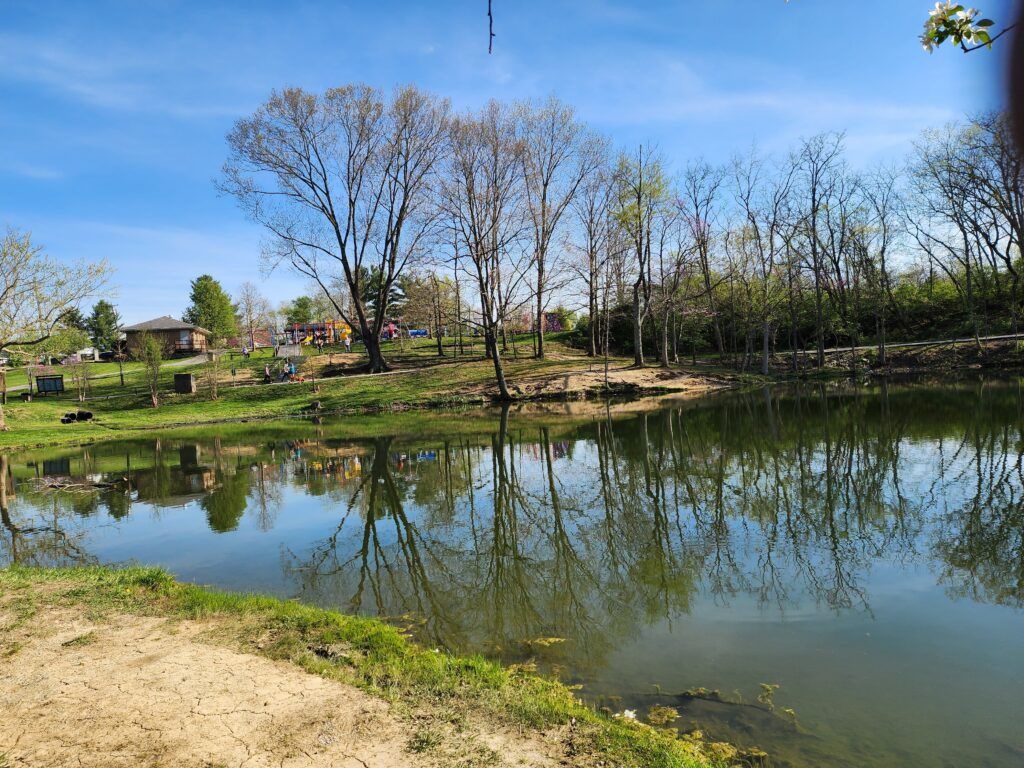
For many Kentucky anglers, a first memorable fish does not come from a famous reservoir or a boat far from the ramp. It comes from a small public lake close to home—a place where a child can watch a bobber, a retiree can fish from a chair or a busy parent can fit in an hour before dinner.
That everyday access is the real story behind Kentucky’s FINs lakes. The program was built to create quality fishing opportunities near communities of different sizes. It also fills an important place within the state’s larger fishing picture, which you can explore in our Kentucky Fishing Guide.
FINs lakes are sometimes misunderstood as a collection of ponds dug to one state blueprint. In reality, the program is a cooperative management system. Many participating waters existed before entering FINs and continue to be owned or operated by local governments.
The Beginning: Five Lakes and a Close-to-Home Idea
The Kentucky Department of Fish and Wildlife Resources created the Fishing in Neighborhoods program in 2006. A departmental research summary reports that FINs began with five lakes in Louisville, Frankfort and Northern Kentucky.
The goals were practical: increase fishing access, recruit new anglers, retain existing anglers and provide better fishing opportunities close to where people lived.
FINs begins with five lakes serving Louisville, Frankfort and Northern Kentucky.
The program grows through cooperative agreements with city and county lake owners across the Commonwealth.
Kentucky Fish and Wildlife lists 45 FINs lakes operating under a common set of program regulations.
The idea answered a real fisheries problem. Small park lakes can receive heavy fishing pressure, and their naturally reproducing fish populations may not support that demand on their own. Stocking catchable fish helps maintain opportunity, while tighter harvest limits spread those fish among more anglers.
The program also created a workable partnership. Kentucky Fish and Wildlife supplies fisheries expertise, biological sampling, stocking coordination, regulations and outreach. City and county partners supply the public water and local park setting.
How Does a Lake Become a FINs Lake?
The word formed can create the wrong picture. A FINs designation does not mean every lake was newly excavated, lined or built with the same shoreline design. The physical lake may predate the program by many years.
What FINs creates is a management partnership. The details can vary by location, but the program rests on four practical elements.
1A community water
A city or county has a lake or pond that can provide public fishing opportunities near local residents.
2A cooperative agreement
Kentucky Fish and Wildlife and the local municipality work together to support fishing access and fisheries management.
3A fisheries plan
Channel catfish and rainbow trout are stocked on seasonal schedules. Bass and sunfish populations are sampled and may receive supplemental stocking when needed.
4Standard FINs regulations
Participating lakes use a common set of harvest and bait rules designed for heavily used community waters.
How FINs Stocking and Fish Management Work
Stocking is the program’s most visible feature, but FINs lakes are not managed by releasing the same fish on a fixed weekly cycle. Kentucky uses different approaches for stocked species and naturally reproducing populations.
| Fish | General management approach | What anglers should know |
|---|---|---|
| Channel catfish | Catchable fish are stocked according to the posted seasonal schedule. | The official schedule lists each lake, planned numbers and the latest completed stocking date. |
| Rainbow trout | Trout are stocked during cooler parts of the year when water temperatures are more suitable. | Unless exempt, an angler who intends to keep trout needs a trout permit in addition to the required fishing license. |
| Largemouth bass | Populations are sampled to determine whether natural reproduction is meeting anglers’ needs. | Supplemental stocking can occur when biological sampling shows it is needed. |
| Bluegill and other sunfish | Populations are monitored rather than automatically stocked on every visit. | Supplemental stocking may be used when population data indicates a need. |
Before a trip, check the official FINs catfish stocking schedule and FINs trout stocking schedule. Posted dates and quantities can change because of weather, water conditions, hatchery logistics or other management needs.
A recent stocking can improve the potential for action, but it does not guarantee fast fishing. Stocked fish move, experience fishing pressure and respond to changing conditions. Treat the stocking date as one clue—not a replacement for reading the lake.
Current FINs Lake Regulations
FINs limits are more restrictive than many statewide limits. Kentucky Fish and Wildlife explains that these rules help distribute the available harvest over a longer period so more anglers have a chance to catch fish.
| Species | Daily limit | Minimum size | Important note |
|---|---|---|---|
| Rainbow trout | 5 | None | No culling of trout |
| Catfish | 4 | None | Limit applies per angler |
| Largemouth bass | 1 | 15 inches | Shorter fish must be released |
| Bluegill and other sunfish | 15 | None | Combined sunfish limit |
FINs lakes also prohibit the possession or use of live shad as bait. Cast nets may not be used to take live bait, and any grass carp caught must be released immediately. Review the official FINs regulations and the signs posted at the lake before fishing.
Fishing licenses and trout permits
Residents and nonresidents age 15 or younger do not need a Kentucky fishing license or trout permit. Anglers age 16 and older generally need a valid statewide fishing license unless an exemption applies.
Unless license-exempt, an angler who intends to keep trout must also have a trout permit. Kentucky’s Free Fishing Days take place on the first Saturday and Sunday in June, but all other fishing regulations—including size and harvest limits—remain in effect.
License rules and exemptions can change. Confirm the current requirements in the Kentucky Fishing and Boating Guide before your trip.
Why FINs Lakes Still Matter
A small lake close to home removes one of fishing’s biggest barriers: getting started. A family does not need a boat, a full day or a complicated tackle system. A beginner can visit for an hour, practice casting and leave before the experience becomes tiring or frustrating.
FINs lakes also fit busy schedules. They make short after-work trips possible, give grandparents and children manageable places to fish together and help newer anglers build confidence before tackling a large reservoir or river.
For a broader look at community lakes and other public options, see Where to Fish in Kentucky.
Close-to-home does not always mean easy. FINs lakes can receive substantial pressure. Fish may gather in one section, suspend away from the bank or become less responsive after repeated exposure to the same bait. Success still depends on observation, patience and movement.
That is why the Every Lake Guide principle matters here: Start With the Lake, Not the Lure. Before tying on something new, look at wind, shade, depth changes, runoff, visible cover and where other anglers are—or are not—getting bites.
Use the Every Lake Guide L.A.K.E. Method
The stocking schedule can tell you when fish entered the lake. The L.A.K.E. Method helps you decide where to fish after you arrive.
The Every Lake Guide L.A.K.E. Method: Look before you cast. Analyze the lake. Key in on productive water. Execute a simple plan.
A Simple Two-Hour FINs Lake Plan
First 10 minutes
Walk a short section before fishing. Look for wind pushing into a bank, shaded water, an inflow, visible fish, deeper edges or anglers receiving bites.
Next 40 minutes
Fish two or three high-percentage targets with a simple bait or lure. Do not spend the whole session in the first open spot beside the parking lot.
Next 50 minutes
Move to a different bank, depth or type of cover if the first area remains quiet. Let observations—not habit—guide the adjustment.
Final 20 minutes
Return to the most promising water or simplify the presentation. Record what you learned so the next trip begins with better information.
Frequently Asked Questions About Kentucky FINs Lakes
How many FINs lakes are in Kentucky?
Kentucky Fish and Wildlife currently lists 45 FINs lakes statewide. Check the official FINs page for the latest count and interactive map.
When did Kentucky’s FINs program begin?
The program began in 2006 with five lakes in Louisville, Frankfort and Northern Kentucky.
Are FINs lakes built from scratch?
Not as a general rule. FINs is a cooperative fisheries-management program, not a single construction design. A participating water may already exist as a municipal pond, park lake or small reservoir before joining the program.
What fish are stocked in FINs lakes?
Channel catfish and rainbow trout are stocked on seasonal schedules. Bass and sunfish populations are sampled, with supplemental stocking used when needed.
Do I need a fishing license at a FINs lake?
Anglers age 16 and older generally need a Kentucky fishing license unless exempt. Youth age 15 and younger are exempt. Unless otherwise exempt, anglers who intend to keep trout also need a trout permit.
Can I keep fish from a FINs lake?
Yes, within current FINs daily limits and minimum-size requirements. Always check official regulations and posted signs before keeping fish.
Are FINs stocking dates guaranteed?
No. Published schedules are planning tools and can change. Check the official stocking page close to the day of your trip.
The Lasting Value of Fishing Close to Home
Kentucky’s FINs program grew from five lakes in 2006 into a network of 45 neighborhood fishing waters. Its strength does not come from making every lake identical. It comes from combining local public waters with state fisheries management, scheduled stockings, population monitoring and rules designed for heavily used community lakes.
For anglers, the result is simple but valuable: a realistic place to fish without turning every outing into a major expedition. A FINs lake can be where someone catches a first trout, learns to handle a bluegill, notices how wind changes a shoreline or discovers that two focused hours can outperform an unfocused day.
That close-to-home purpose also reflects the larger story behind Every Lake Guide. Read Gateway to Fishing Success to see why the site begins with the water, the available time and a simple plan.
Start with the lake—not the lure.
Use wind, structure, shade and access to narrow down the best bank before your first cast.
Build Your Two-Hour Fishing Plan