Fishing for Beginners Lake Guide: Start With the Water, Not the Lure
If you are new to fishing, the hardest part is not always choosing bait. It is knowing where to stand, where to cast, and why fish use one part of a lake more than another. This fishing for beginners lake guide gives you a simple way to read the water before you ever tie on a lure.
EveryLakeGuide is built around one simple idea: start with the lake, not the lure. Once you understand wind, shade, structure, depth, and easy feeding zones, fishing starts to feel less random and much more manageable.
Quick Answer: What Should a Beginner Do First When Fishing a Lake?
A beginner should first look for fish-friendly water instead of immediately changing lures. Start by finding visible structure, shade, wind-blown banks, shallow edges near deeper water, and easy access points where fish can feed without using too much energy. Then choose a simple bait or lure that matches that spot.
That one shift changes everything. Many new anglers arrive at a lake, open a tackle box, and wonder which lure is “the best.” But fish do not care how full your tackle box is. They respond to food, cover, safety, temperature, oxygen, and comfort.
When you learn to read those clues, you stop guessing. You begin making simple decisions that help every cast make more sense.
Why Lake Fishing Feels Confusing for Beginners
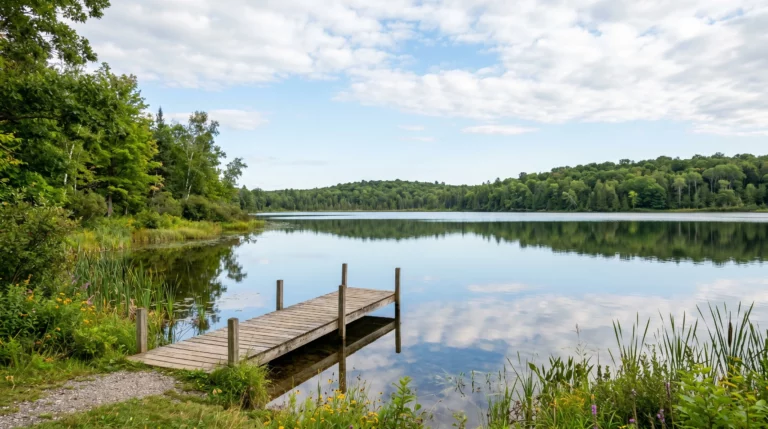
A lake can look calm and empty from the bank. The surface may show only ripples, reflections, and open water. But below that surface, the lake has zones. Some zones hold fish. Others may be nearly lifeless during certain parts of the day.
This is where many beginners get stuck. They see a large body of water and treat every cast like it has the same chance. In reality, fish often group around useful areas. A shaded corner, a wind-blown bank, a weed edge, a small drop-off, a dock, a culvert, or a point can be much better than a random open shoreline.
The goal is not to become an expert overnight. The goal is to make your first few choices better. Better choices lead to better casts. Better casts lead to more bites.
EveryLakeGuide rule: Before you ask, “What lure should I use?” ask, “Why would a fish be here?” That question turns a beginner into a lake reader.
The 5 Lake Clues Beginners Should Look For First
You do not need expensive electronics to make smarter decisions from the bank. You can learn a lot by standing still for two minutes and studying the water. These five clues are simple, practical, and useful on small community lakes, neighborhood ponds, park lakes, and larger reservoirs.
1. Wind
Wind pushes surface food, small organisms, and baitfish activity toward certain banks. A light wind blowing into a shoreline can make that bank more active.
2. Shade
Shade gives fish cover and can soften bright conditions. Trees, docks, bridges, and steep banks can all create useful shade lines.
3. Structure
Fish often relate to objects and changes. Look for rocks, laydowns, weeds, docks, points, drains, and bank transitions.
4. Depth Changes
Fish like options. A shallow flat near deeper water can be better than a long, featureless shallow bank.
5. Signs of Life
Watch for minnows, insects, birds, surface dimples, bluegill beds, or small splashes. Life attracts more life.
Bonus: Access Pressure
The easiest fishing spot may also be the most pressured. Sometimes walking another 50 yards gives you quieter water.
A Simple Beginner Lake Fishing Plan
Beginner lake fishing becomes easier when you follow a repeatable plan. You do not need to cover the whole lake. You need to make a few smart stops and give each one a fair chance.
Step 1: Start With the Most Obvious Fish-Holding Area
Look for a place where multiple clues overlap. A shaded bank with a small point is better than shade alone. A wind-blown corner with visible minnows is better than wind alone. A dock near deeper water is better than a dock on a flat, featureless bank.
Step 2: Make Quiet Casts First
Many beginners walk right to the edge and cast as far as possible. But fish may be close to shore, especially early, late, during low light, after stocking, or when food is pushed tight to the bank. Stop a few feet back and make your first casts quietly.
Step 3: Fish the Near Water Before the Far Water
Cast along the bank, near shade lines, beside cover, and across visible edges. Long casts have their place, but they are not always the best first move.
Step 4: Change Location Before Changing Everything
If a spot has no signs of life and no bites after a reasonable effort, move. Beginners often change lures too many times while standing in unproductive water. A simple bait in the right place usually beats a perfect lure in the wrong place.
Step 5: Keep Notes
Write down the wind direction, time of day, water clarity, lure or bait used, and where bites happened. After a few trips, patterns start to appear.
Where Should Beginners Cast From the Bank?
Bank anglers have less mobility than boat anglers, but that does not mean they are stuck guessing. In many small lakes, fish spend plenty of time within casting distance of shore. The key is choosing the right shoreline.
| Bank Feature | Why It Matters | Beginner Move |
|---|---|---|
| Wind-blown bank | Can collect food and increase feeding activity. | Cast at a slight angle along the bank instead of straight out. |
| Shade line | Gives fish cover during bright conditions. | Cast along the edge where sunlight meets shade. |
| Point | Fish can move shallow or deep without traveling far. | Fan cast both sides before moving on. |
| Dock or pier | Creates shade, cover, and ambush edges. | Cast beside the dock, not directly on top of it. |
| Rocks or riprap | Can hold insects, crawfish, minnows, and warmth. | Use slow retrieves and pause near the rocks. |
| Weed edge | Gives smaller fish cover and larger fish a feeding lane. | Cast parallel to the outside edge when possible. |
For more lake-reading help, connect this post with the EveryLakeGuide article on how to fish a lake. It builds on the same idea: understand the water first, then simplify your tackle choices.
The Best Beginner Baits and Lures for Lake Fishing
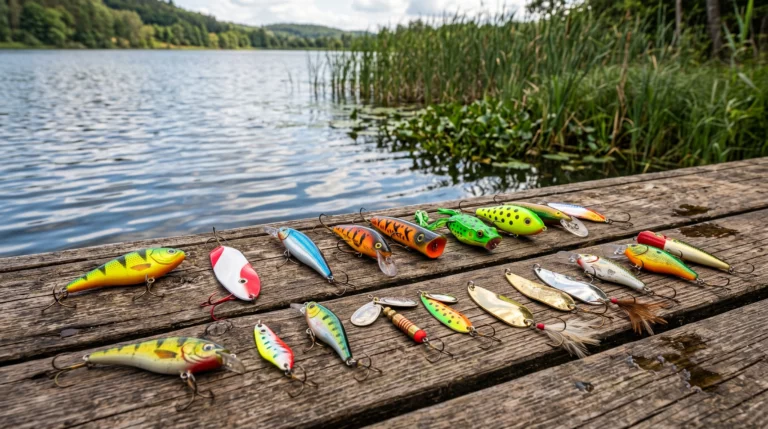
A beginner does not need a complicated tackle box. In fact, too many choices can slow you down. A small, simple setup lets you focus on location, casting, patience, and bite detection.
| Goal | Simple Option | Why It Helps Beginners |
|---|---|---|
| Catch bluegill or sunfish | Small hook, bobber, and worm | Easy to cast, easy to watch, and great for learning bites. |
| Catch stocked trout | Small bait, trout dough bait, small spinner, or tiny jig | Works well in stocked lakes when matched with current rules. |
| Catch bass | Soft plastic worm, small swimbait, or inline spinner | Covers common beginner situations without needing advanced technique. |
| Catch catfish | Simple bottom rig with legal bait | Lets the bait sit in likely travel areas while you watch the line. |
| Search for active fish | Inline spinner or small crankbait | Helps cover water when fish are chasing or roaming. |
If you want a deeper lure-focused guide, read Best Lures for Bank Fishing. Use that article after you have chosen a promising spot, not before.
How Wind Helps Beginners Find Fish
Wind can feel annoying when you are learning to cast, but it often helps lake anglers. A light to moderate wind can push surface activity, stir the water, reduce visibility, and make fish more comfortable feeding shallow.
That does not mean every windy bank is perfect. Strong wind can make casting difficult and unsafe, especially for kids or brand-new anglers. But when conditions are manageable, the wind-blown side of a lake deserves attention.
Beginner shortcut: If one side of the lake is flat calm and the other has light ripples blowing into it, start near the rippled side if it is safe and accessible. Then look for a second clue, such as shade, rocks, weeds, or a point.
To build on this skill, use the EveryLakeGuide wind article: How Wind Direction Predicts Where Fish Will Be on Any Lake.
Beginner Mistakes That Make Lake Fishing Harder
Most beginner fishing problems are not caused by one bad lure. They come from small decisions that stack up. The good news is that these mistakes are easy to fix once you notice them.
- Fishing one dead spot too long: If nothing is happening and the area has few fish-holding clues, move.
- Using gear that is too heavy: Heavy line, large hooks, and oversized bait can reduce bites from smaller fish.
- Casting over fish near the bank: Always check the close water before launching long casts.
- Ignoring shade and wind: These two clues often explain why one bank is better than another.
- Changing lures too fast: Give a good spot a fair chance before switching. Then change one thing at a time.
- Forgetting local rules: License, size, creel, bait, and trout permit rules can vary by water and program.
For more detail, pair this post with 7 Beginner Fishing Mistakes That Kill Your Chances of Catching Fish.
A Special Note for Kentucky Beginners and FINS Lakes
Many EveryLakeGuide readers fish small Kentucky park lakes and community lakes. Kentucky’s Fishing in Neighborhoods program, often called FINs, was created by Kentucky Fish & Wildlife to provide fishing opportunities close to home. The program includes lakes around the state, and Kentucky Fish & Wildlife describes FINs as one of its most active stocking programs, stocking trout and catfish into small ponds primarily in urban areas.
That makes FINs lakes especially useful for beginners, families, and bank anglers. However, these lakes can also have specific regulations. Kentucky Fish & Wildlife lists FINs regulations for rainbow trout, catfish, largemouth bass, and sunfish, and also notes that possession or use of live shad for bait is prohibited at FINs lakes.
Regulation-safe reminder: Always check the current Kentucky Fishing and Boating Guide, posted signs, and the official Kentucky Fish & Wildlife pages before keeping fish. Rules can change, and local lake signs matter.
Useful official resources include the Kentucky Fish & Wildlife FINs program page, the Kentucky fish stocking page, the FINs trout stocking schedule, and the FINs catfish stocking schedule.
The 2-Hour Beginner Lake Fishing Plan
If you only have a short window, do not waste the first hour guessing. Use a simple plan that helps you cover water without rushing.
| Time | What To Do | Why It Works |
|---|---|---|
| First 10 minutes | Walk, watch, and choose two or three promising spots. | You avoid wasting casts in the least useful water. |
| Minutes 10–35 | Fish the best-looking spot quietly and carefully. | Fresh water gives you your best chance at nearby fish. |
| Minutes 35–60 | Move to a second spot with a different clue. | You learn whether fish prefer wind, shade, depth, or cover. |
| Minutes 60–90 | Adjust bait or lure only after testing location. | You make smarter changes instead of random changes. |
| Last 30 minutes | Return to the most active area or try the best remaining bank. | You finish with your highest-confidence water. |
For a tighter short-trip strategy, read How to Catch Fish When You Only Have 2 Hours.
What Should Beginners Bring for Lake Fishing?
You can keep your first lake fishing setup simple. The goal is to bring enough to fish confidently without carrying a confusing pile of gear.
- A medium-light or medium spinning rod and reel combo
- Light line that matches the fish you are targeting
- Small hooks, bobbers, split shot, and a few sinkers
- One or two beginner-friendly lures, such as inline spinners or soft plastics
- Needle-nose pliers or hemostats for hook removal
- A small towel, water bottle, sunscreen, and polarized sunglasses
- A current license or proof of exemption when required
- A plan for checking current rules before keeping fish
Do not let gear become the barrier. A simple setup in a smart location is enough to learn. As you gain confidence, you can add more specialized lures and techniques.
How to Know When You Are Improving
Beginner success is not only measured by fish in hand. You are improving when your choices become more intentional.
You are getting better when you can explain why you picked a bank, why you moved, why you changed bait, or why you stayed in one area longer. You are also improving when you notice patterns from trip to trip.
Progress looks like this: “The wind was pushing into the shaded bank near the rocks, so I started there.” That is a much stronger plan than, “I just cast wherever there was room.”
This is exactly why EveryLakeGuide focuses on lake-specific thinking. Once the lake starts making sense, the lure choices become easier.
Want a Simpler Way to Fish Your Next Lake?
EveryLakeGuide helps beginners and bank anglers start with the water, not the lure. Use our lake guides, beginner articles, and field-ready planning tools to make your next short fishing trip feel more focused from the first cast.
Beginner Lake Fishing FAQs
What is the easiest way to start fishing a lake as a beginner?
The easiest way to start fishing a lake as a beginner is to look for fish-friendly areas before choosing a lure. Start with shade, wind-blown banks, docks, points, weeds, rocks, and shallow areas near deeper water. Then use a simple setup like a bobber and worm, small spinner, or soft plastic bait.
What is the easiest fish to catch in a lake for beginners?
Bluegill and other sunfish are often among the easiest fish for beginners because they are common in many lakes, usually stay near cover, and respond well to simple bait like worms under a bobber. Stocked trout can also be beginner-friendly when the lake is recently stocked and the rules are followed.
Is morning or evening better for beginner lake fishing?
Morning and evening are often good because lower light can make fish more comfortable feeding near the bank. However, beginners can still catch fish during the day by focusing on shade, wind, deeper edges, docks, and cover.
Should beginners use bait or lures?
Both can work. Bait is often easier for learning bite detection, especially with a bobber. Lures can help beginners cover water and find active fish. The best choice depends on the species, local rules, and the spot you are fishing.
How long should I stay in one spot?
If the spot has strong fish-holding clues, give it a fair try. If there are no bites, no visible activity, and no useful structure, move after 15 to 25 minutes. Location changes often help more than constant lure changes.
What is the biggest beginner lake fishing mistake?
The biggest mistake is fishing random water. Beginners improve faster when they look for wind, shade, structure, depth changes, and signs of life before they cast.
Do these FAQs use schema markup?
No. This is a normal reader-facing FAQ section for helpfulness, readability, and answer-focused clarity. It does not include FAQ schema, JSON-LD, or structured-data markup.
Get EveryLakeGuide Updates
Want lake guide updates, beginner fishing help, and new field-ready resources as they are released? Use the form below to stay connected.
Ready to Pick Your Next Lake?
If you want help choosing a guide or finding the right beginner-friendly lake, start here. EveryLakeGuide is designed to make short trips clearer, calmer, and more productive.
Before keeping fish, always confirm current regulations, license requirements, trout permit rules, posted lake signs, and official Kentucky Fish & Wildlife updates. EveryLakeGuide is designed to help you plan smarter trips, not replace official regulations.
[1]: https://fw.ky.gov/Fish/Pages/Fishing-In-Neighborhoods.aspx?utm_source=chatgpt.com “Fishing In Neighborhoods – Kentucky Department of Fish”