Every Lake Guide · Kentucky fall bank fishing
The bobber never touched a leaf. The hook came back wearing one.
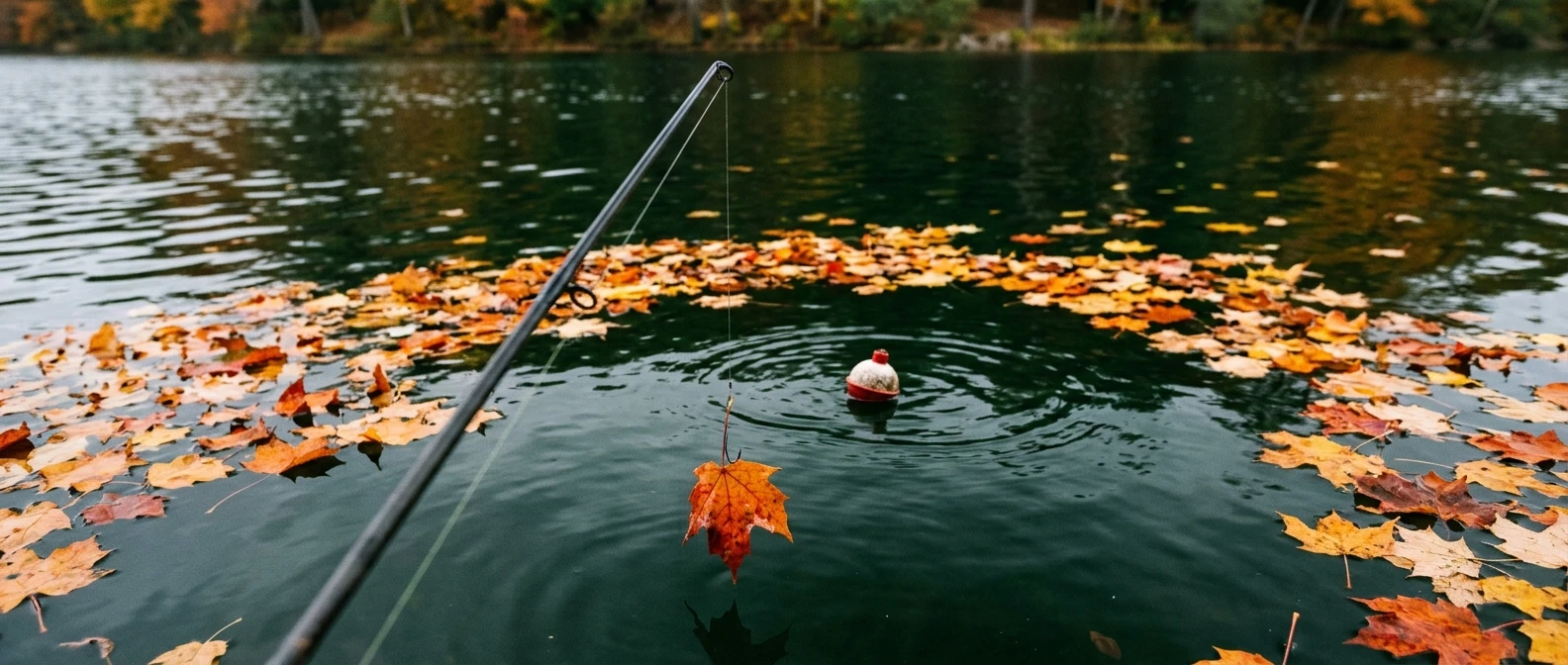
That clear patch out by the bobber looked like the right place to cast. But the loose line may have drifted into the leaves, or the hook may have picked one up in the last few feet of the retrieve. Before you change bait, watch where the rig has to come back.
Where should you cast first?
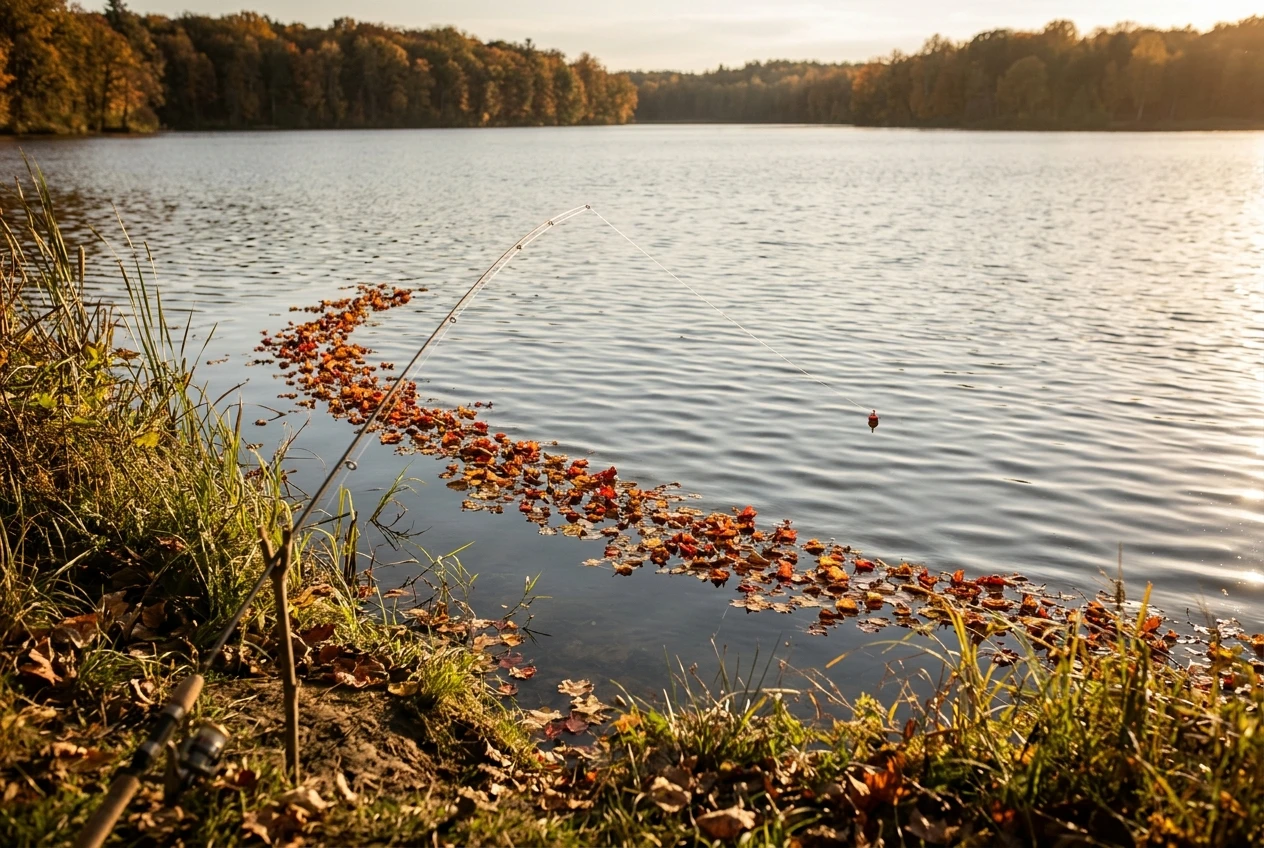
When you’re bank fishing around floating leaves, start short on the open side of the drift. Pick a spot where the bobber can land, the loose line has room to drift, and you can reel the hook all the way back through open water. If a strip of leaves blocks that route, change your angle from firm ground or try the next safe, legal opening.
Find the way back before you cast
Stand on firm ground and watch two loose leaves for about 30 seconds. Are they sliding along the bank, piling up at your feet, or closing the gap you wanted to fish? Then pick the opening where you’ll lift the hook out. Trace an open path from that opening to your target, with room for the loose line to curve in the wind.
Read each drawing from the bank at left to the float on the right. The striped area is floating leaves.
The float lands in open water, and the hook has a clear route back.
The float lands in a clear pocket. The rig still has to cross the leaves on the way in.
Match your first move to the shoreline
| What you see | What to try first |
|---|---|
| An open lane beside a ribbon of leaves | Cast along the open side with room for the float and loose line to drift. |
| A clear pocket beyond a solid strip | Find a different casting angle with a clear retrieve. If you can’t reach one from firm ground, check another opening. |
| Scattered leaves with shifting gaps | Cast short into the widest gap and reel in while the route is open. |
| Leaves pressed against the whole reachable bank | Start at your backup access point if you can reach it safely. |
If two routes look clear, start with the one that puts your bait within reach of a weed edge, a shade line, or visible activity.
Try three casts before you switch bait
Start with a clean hook, a simple bobber rig, and bait permitted at that lake. Keep the bait and the distance from bobber to hook the same for the test. That lets you compare the casting routes. For a basic setup, see Kentucky Fish and Wildlife’s Learn to Fish guide.
- Cast short into open water. Let the float settle. Watch the line as it drifts, then reel in while the route is still clear. Look at the hook before recasting.
- Cast along the open side of the leaves. Change your angle from firm ground. Watch for the curve of loose line reaching the leaves ahead of the float. If you can’t see a clean return from there, use the nearest safe opening.
- Repeat the better route. If both came back clean, repeat the one that drew a bite or passed closer to cover. If both picked up leaves, try a shorter route for your third cast. If that fouls too, test the backup bank with the same rig.
Use what comes back to pick your next move
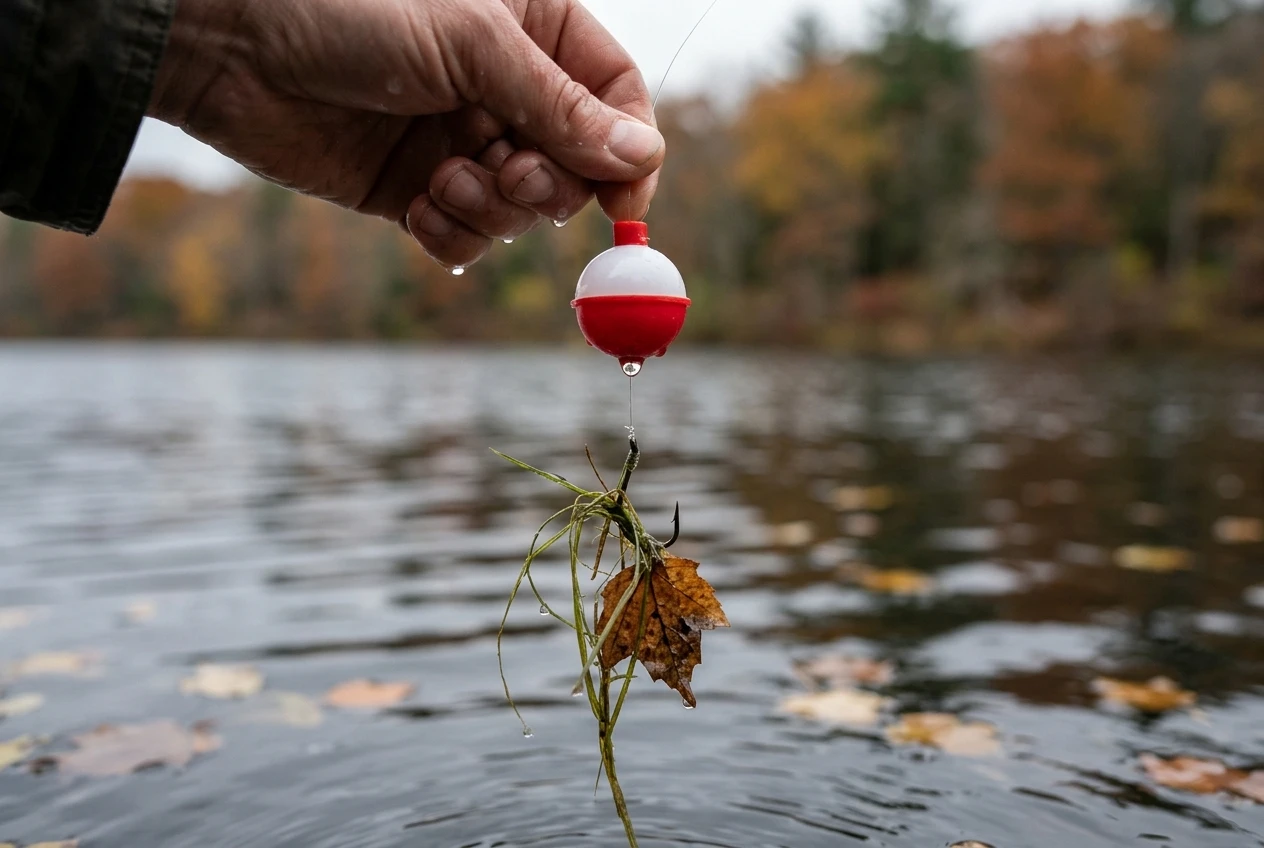
If the float splashes down in leaves, aim shorter or farther into open water on the next cast. If it lands clear, watch where the hook leaves the water. A few leaves right at your feet can foul a retrieve that looked clear most of the way in.
Shorten the next cast or turn the angle so the line has room to drift on the open side.
Watch the last few feet. If you see the hook cross debris there, reel it through a break along the bank on the next cast.
Move the bobber a few inches closer to the hook and retest that lane. The bait may be brushing submerged grass.
Give a lane near cover a short depth test. If the spot offers little else to try, compare your backup bank with the same rig.
Let the kids call the drift
From a safe spot back from the edge, ask your young angler to pick a leaf and guess where it will go. After the cast, have them call out when it gets close to the bobber. You watch the line and handle the hook.
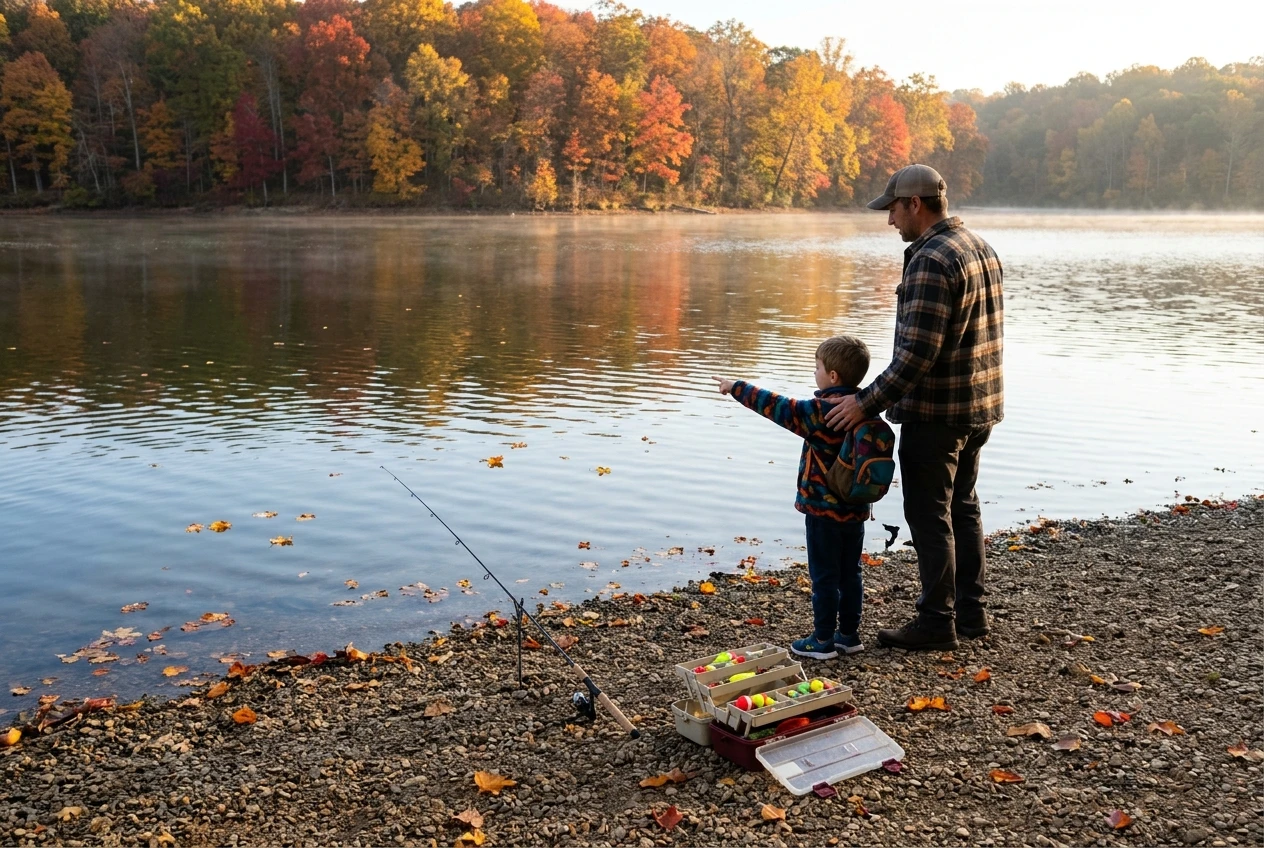
Choose firm footing with room behind and beside the caster. Supervise children closely, have them wear properly fitted life jackets near the water, and stay on firm ground if the rig snags. See the National Weather Service’s cold-water safety guidance.
Use the first ten minutes to decide where to fish
Pick a starting bank and a backup before you go. Check park hours and local water rules in advance. Start with the Kentucky Fishing and Boating Guide.
At the lake, watch the drift, make your three casts, and decide whether you have a route you want to fish. Then save one note for next time. My cleanest cast was ___ because the leaves moved toward ___. I’ll start at ___ next time.
Fit that check into the opening minutes of your outing with the free two-hour bank-fishing framework.
What would you do on the next cast?
Choose your next move, then open the answer.
1. The far pocket is clear, but your retrieve would cross a strip of leaves. Where do you start?
- Past the strip so the float has more room.
- In a closer opening with a clear path back.
- At a thin spot in the strip so the bait can sink through it.
Reveal answer 1
B. A closer opening gives the float room to settle and the hook a clear way back.
2. The float is clear, but a curve of loose line is drifting into the leaves. What do you do?
- Wait until the float reaches the leaf line.
- Put on a larger float before you move.
- Reel in while you can and shorten the next cast.
Reveal answer 2
C. The loose line can reach the leaves first. A shorter cast gives the wind less line to push.
3. The surface stays clear, but the hook keeps bringing back grass. What do you test?
- Set the bait a little shallower in the same lane.
- Try a heavier sinker at the same depth.
- Change the depth and the bait together.
Reveal answer 3
A. Try fishing just above the depth that brought back grass. Keeping the lane and bait the same makes the two retrieves easier to compare.
4. Your child finds a gap below a steep slope covered in wet leaves. What’s your move?
- Stop halfway down the slope to cast.
- Use a legal backup bank with firm footing.
- Walk down to the waterline and cast from there.
Reveal answer 4
B. Choose an opening you can reach and fish from firm ground. If the backup is slick too, make it a scouting stop.
Bank fishing around floating leaves FAQs
How close should I cast to a leaf edge?
Start far enough away that both the float and the loose line stay clear through the drift and retrieve. If a gust starts closing that gap, reel in and leave more room on the next cast.
Will a heavier sinker get my bait under the leaves?
Extra weight can sink your bait faster. The line still crosses the surface, and the hook still has to come back up. Find a clear route before testing a weight change.
Should I change bait after I reel in a leaf?
Clear the hook and replace any bait that came off. Make the next cast through a clean route with the same kind of bait so you can see whether the route fixed the problem.
Do floating leaves mean the lake is turning over?
Wind or surface flow can collect leaves on one bank. If the water looks or smells different across a wider area, compare the exposed and sheltered banks and check the fall lake turnover guide.
Where did the leaves get you?
At splashdown, on the drift, or in the last few feet? Tell me which Kentucky lake you fished, when the leaves caught the rig, and which adjustment helped.