
- not catching fish from the bank,
- bank fishing for beginners,
- Kentucky bank fishing, fishing trip notes, what to do when fish aren’t biting,
Every Lake Guide · The five-minute trip reset
The tackle box clicks shut. The last worm goes back in the cup. Someone asks, “Ready to go?” You look across the lake and wonder how all that water produced absolutely nothing.
On the drive home, it is tempting to settle on an explanation: wrong bait, bad timing, no fish. But a fishless bank-fishing trip rarely comes with a clear answer.
Maybe your bait spent more time in weeds than you realized. Maybe every longer cast still held the worm at the same depth. Or maybe you fished one comfortable patch of bank and never reached the feature beside it.
Before you buy another lure or write off the lake, give that trip five minutes. These five checks will help you choose something specific to try next time—without turning a relaxing hobby into homework.
1. Where did your bait actually spend its time?
Think about where your bait actually traveled. “I fished the cove” sounds thorough. “I cast from the picnic-table bank toward the same open patch” describes a much smaller test.
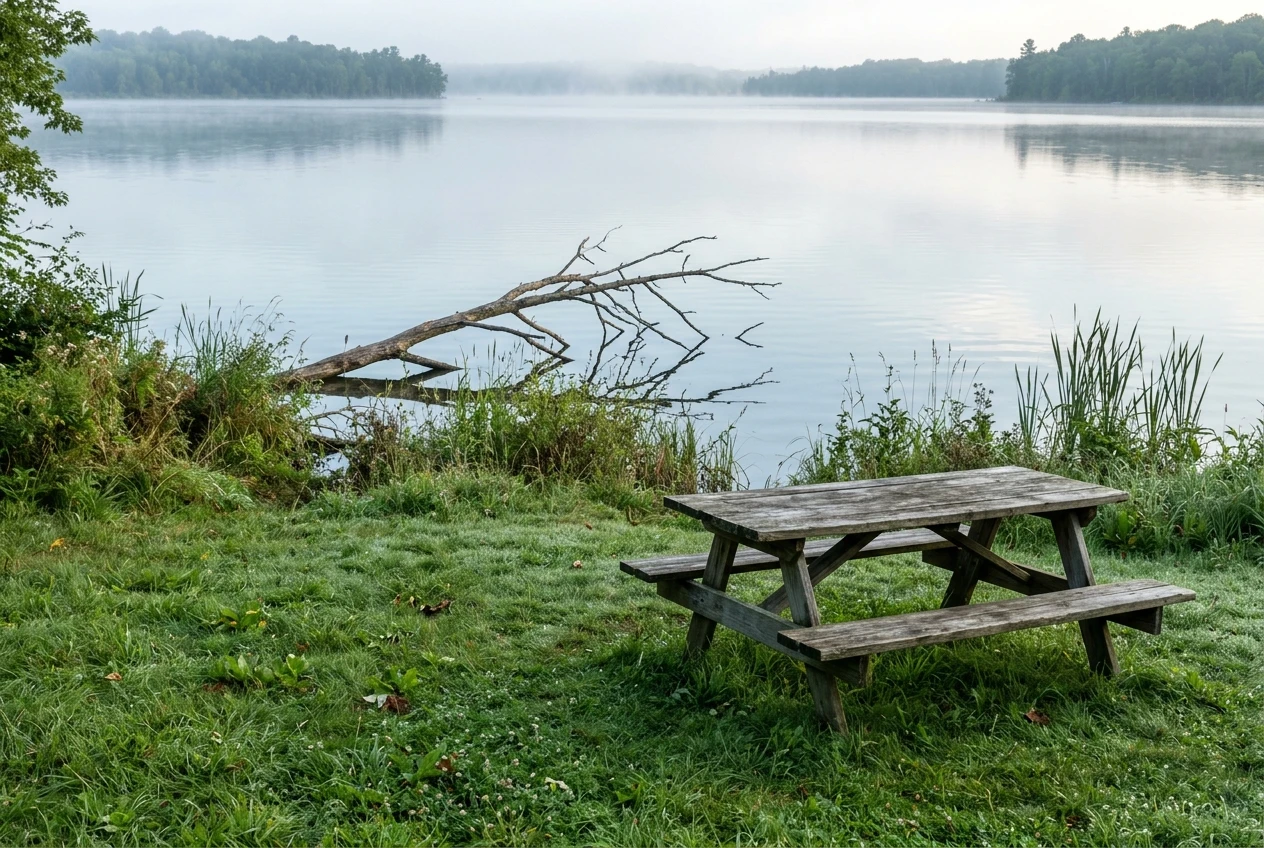
That does not make the spot wrong. A level bank, room for a child to cast, and a manageable walk can be excellent reasons to choose it. But convenience and fish-holding features are different things.
Try finishing this sentence: “My bait was beside ___.” A weed edge? The outside of a fallen branch? A rock transition? If the answer is “nothing I could identify,” that is useful information.
Next-trip test: Pick one safe, legal casting position that reaches a defined feature. Compare it with your original open-water lane using the same presentation. Do not climb a slippery slope or enter restricted water to complete the comparison.
2. Did your longer cast reach a different depth?
A farther cast does not automatically put a suspended worm deeper. With a fixed bobber, the distance between the float and hook limits how far below the surface the bait can hang. Wind, line angle, and bottom contact can change what actually happens underwater.
If you spent an hour making longer casts with the bobber clipped in the same place, you may have tested several distances but essentially one suspended-bait setting.
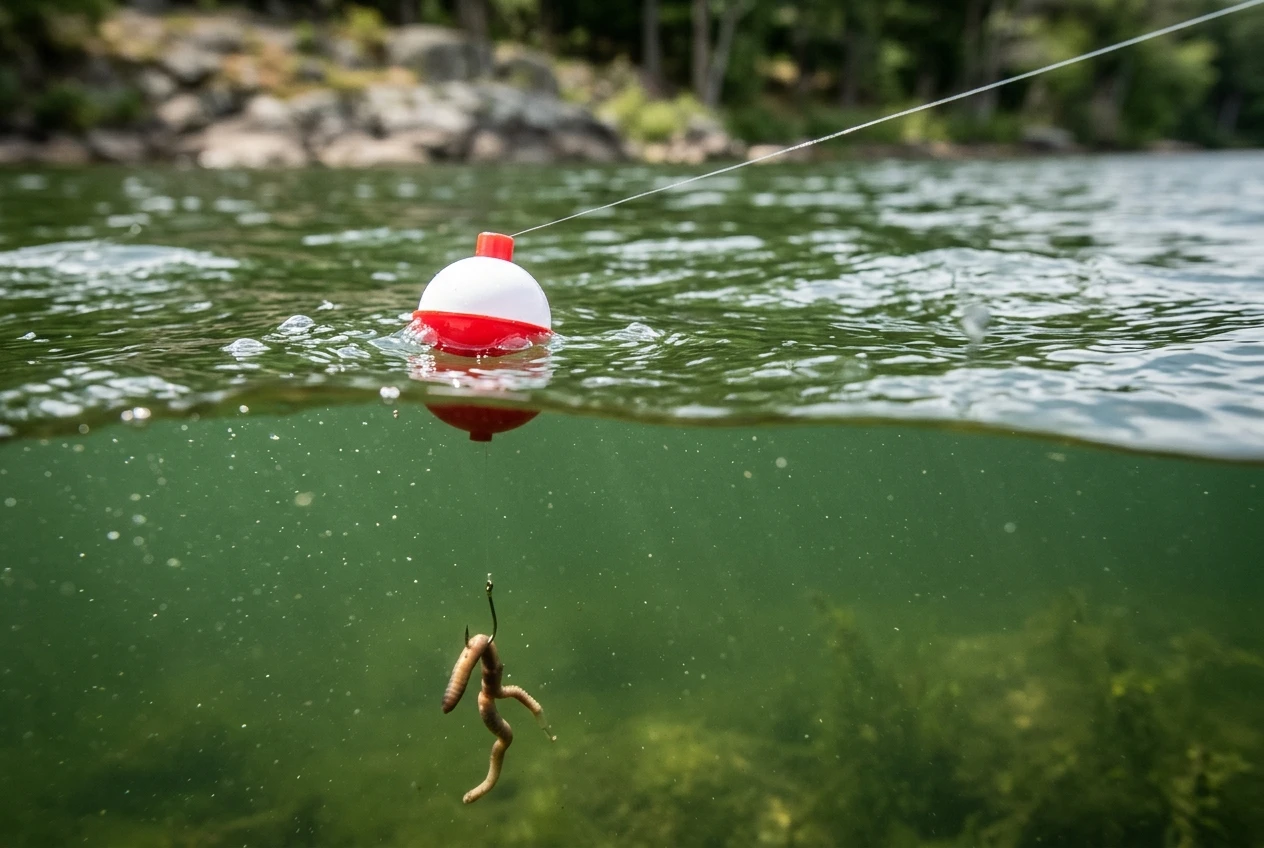
Before the next outing, note the setting you used. Then compare another manageable depth in the same lane, making sure the hook can fish clear of weeds or bottom. There is no single depth that works at every Kentucky lake.
Kentucky Fish and Wildlife’s fall fishing guidance specifically recommends trying different depths and considering both shallow and deeper cover. That supports testing alternatives; it does not mean every November fish has moved deep.
How far from shore did you place the rig?
Where could the bait actually hang or travel?
What feature did the bait pass?
3. What came back on the hook?
A line in the lake is not proof that the presentation worked. A tangled hook, missing bait, or weed-covered lure can turn patient waiting into a test you never meant to run.
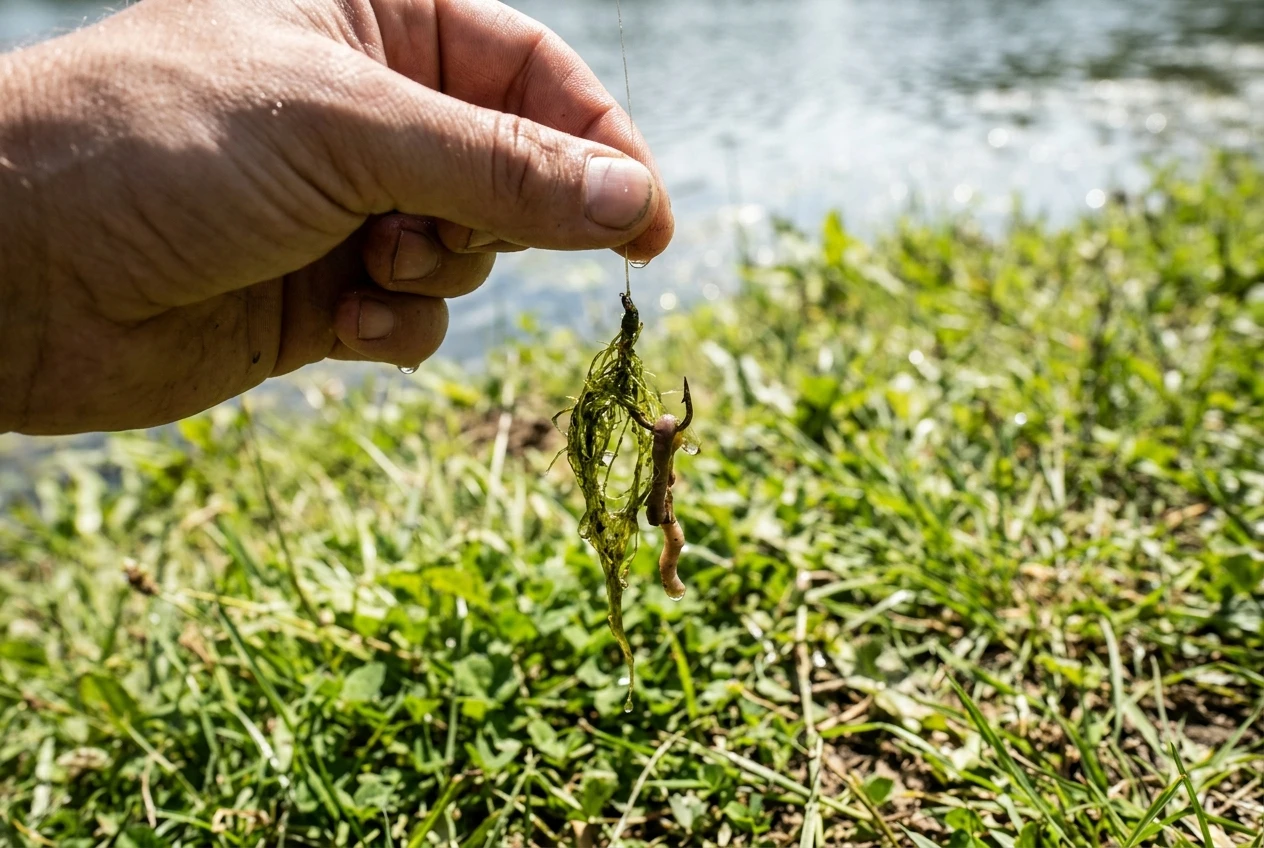
Remember what came back on the retrieve. Was the worm still attached? Was the hook fouled? Did the float behave normally? Were you repeatedly removing grass? Do not blame yourself if you did not look. Make inspection part of the next trip.
For beginners targeting bluegill, Kentucky Fish and Wildlife’s Learn to Fish page lists small hooks, bobbers, small sinkers, and worms among suitable options. The useful lesson is to match the rig to your target, rather than assume a large all-purpose setup suits every fish.
Next-trip test: Check the bait and hook after a suspicious signal, a snag, or a retrieve that feels wrong. If the hook repeatedly carries vegetation, compare a cleaner lane or a shallower setting. Fix the obvious problem before changing bait color.
4. Can you name the one change you tested?
There are two easy traps: changing nothing for the entire trip, or changing everything after each quiet cast.
Suppose you moved banks, replaced the worm with a spinner, and began retrieving faster. A bite would be welcome—but it would not tell you which change helped. No bite would be equally hard to interpret.
On your next visit, choose a baseline you can repeat. With a worm-and-bobber rig, that might mean the same bait, casting lane, and float setting. Then change one useful variable, such as depth. Conditions can still shift, so this is a practical comparison, not a controlled scientific experiment.
If the original setup was tangled or unsafe, repair it immediately. You do not need to preserve a bad setup for the sake of a tidy notebook.
Trade the frustration for a question you can answer
| What you told yourself | What you know | What to compare next |
|---|---|---|
| “The lake is empty.” | You caught nothing from the area you reached. | A different reachable feature. |
| “They hate worms.” | Your worm presentation produced no landed fish. | Bait condition and depth before a new bait. |
| “Farther out must be better.” | Your nearer casts did not produce a catch. | A defined near edge and a defined farther target. |
| “Nothing happened.” | You may have missed or forgotten smaller clues. | Record bait loss, follows, contact, and float changes separately. |
5. What happened before you decided “nothing happened”?
A brief nibble, a follow, or bait disappearing is different from a session with no observable response. None identifies the species or proves a feeding pattern. Each gives you a more specific question than “Why is this lake bad?”
Write observations before explanations. “The float dipped twice beside the weeds” is an observation. “Big bluegill were stealing my bait” is an explanation you have not confirmed.
If a response happened repeatedly in one place, make that place easy to find again using a public landmark. Avoid publishing private access details. If the float moved with the wind everywhere, review the free bobber-drift lesson before counting each movement as a bite.
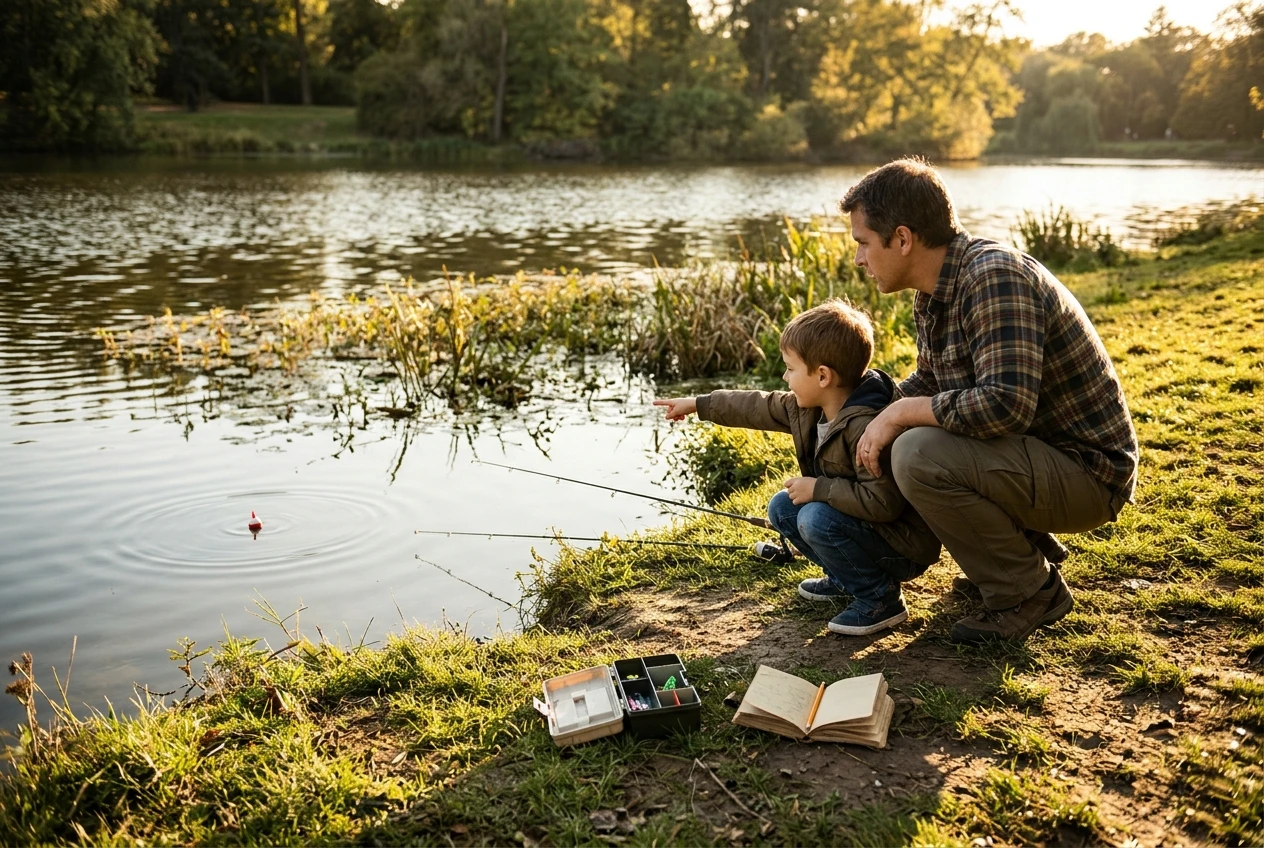
Before you leave the parking lot, save this note
Use these prompts in your phone or notebook. “Unknown” is a useful answer; an invented depth or guessed water temperature is not.
- Where and when: lake, date, time, and legal access point.
- What I tested: target fish, bank feature, bait or lure, and depth setting.
- What I observed: wind, visible water conditions, bait condition, and actual responses.
- What I changed: one adjustment and what happened afterward.
- Next visit: one comparison, plus a safe backup location.
Temporary scratchpad: this page does not submit or save your note. Copy it before closing or refreshing.
When is it time to choose a different lake?
You do not owe a lake endless return trips. Another water may suit you better if the legal bank access cannot reach useful features, the walk is unsuitable for your family, or your available hours conflict with park access.
Several comparable outings can give you more information than one hurried visit. But even repeated blanks do not establish that a lake has no fish. Check current fishery information and access before making a special journey.
Before returning, consult the official Kentucky Fishing and Boating Guide for license requirements and exact-water regulations, and check local notices and park hours. Keep your next test within safe footing, weather, and your family’s comfort.
With children, let the note include something they enjoyed: spotting a turtle, improving a cast, or finding a place to return. Do not stretch a cold, tiring trip simply to erase a zero.
Would you make a different call next time?
Four quick situations. Pick your answer, then tap to reveal the explanation.
1. You cast farther but leave the fixed bobber in the same place. Have you necessarily fished deeper?
No. The float-to-hook distance still limits the suspended bait’s depth. Longer casts test distance; changing the depth setting tests another part of the water.
2. The hook comes back covered in weeds three times. New bait color—or check where the bait is fishing?
Check the presentation first. Compare a clean lane or shorten the float-to-hook distance. A fouled hook gives you a problem to fix before you judge the bait.
3. Which note helps more: “Bad lake” or “No catch beside the open bank at one depth setting”?
The specific note. It records what you tested and shows what remains unknown. One quiet bank cannot tell you what happened throughout the lake.
4. A promising branch is reachable only from a slippery, restricted bank. Is it worth one quick cast?
No. Choose another safe, authorized position or another lake. The best return plan is one your family can enjoy safely.
Frequently asked questions
Is a fishless trip normal for a beginner?
It can happen to beginners and experienced anglers. One outing is a poor measure of your ability. Review what you can improve without treating every quiet trip as a personal failure.
How long should I wait before moving?
There is no universal timer. Check that the rig works and that you have tested the intended feature. Then decide whether a depth or angle adjustment—or a different safe location—would answer a clearer question.
Should I buy different tackle after catching nothing?
Only when you can name the problem it will solve. Repairing damaged gear or choosing a rig appropriate for your target makes sense. Buying another lure without reviewing location and presentation may leave the same questions unanswered.
Does this review work in late fall?
Yes. Record the conditions you observed instead of assuming the calendar explains the result. Keep trips manageable in cold weather, and compare reachable depths and cover without assuming fish must occupy one zone.
Finish this sentence: “Next time, I’m going to…”
In the comments, share one thing you tested, one thing you noticed, and one thing you will compare next time. Lake name is optional; private spots can stay private.
You cannot make the next fish bite. You can give your next cast a clearer purpose.
Start with the lake, not the lure.