
EVERY LAKE GUIDE · KENTUCKY BANK FISHING FOR BEGINNERS
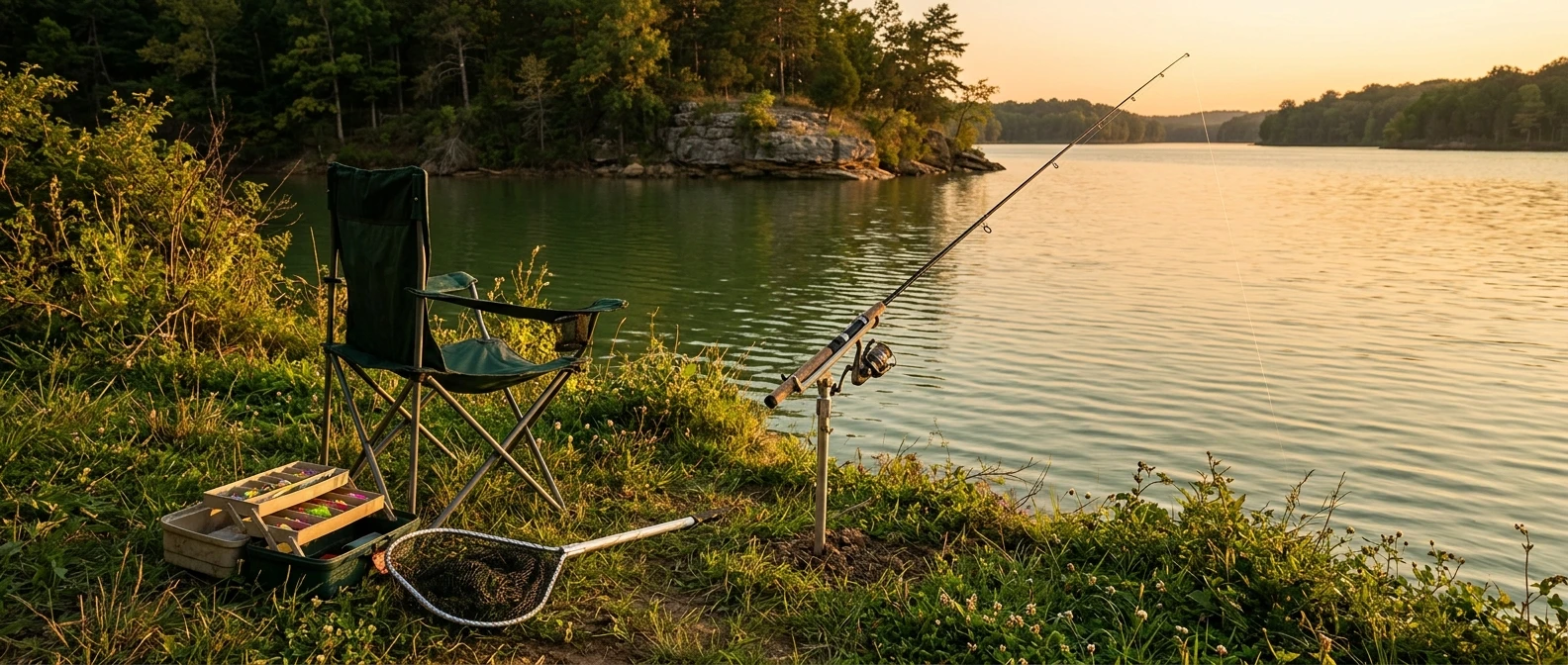
You can spend an hour watching a motionless rod tip and still have no idea what to change. More bait? A longer cast? A different lake?
Your first useful decision happens before you unfold the chair: choose a stretch of water you have a reason to fish.
Picture two places to sit. One is a comfortable patch of grass beside the parking lot. The other lets you reach the edge of a rocky point and land a fish safely. Both look peaceful. Only one gives you a clear first idea to test.
Catching your first Kentucky catfish from the bank starts with a few manageable decisions: choose a lake you can fish comfortably, compare two promising stretches of shoreline, and use a rig you understand well enough to adjust.
This guide focuses on channel catfish in community lakes, ponds with permission, and accessible reservoir coves. Big-river blue catfish and trophy flatheads deserve a different plan.
Quick answer: how do you catch catfish from a Kentucky lake bank?
Choose water known to hold channel catfish, check its access and rules, and fish a legal bait near the bottom beside a reachable feature such as a rocky point or cove entrance. A slip-sinker rig is a straightforward starting option. Watch your line, keep the hook clear of oversized bait, and compare a second location when the first produces no useful clues.
Your first-trip goal: one safe lake, two bank options, one understandable rig.
Choose your bank · Build your rig · Solve a quiet rod tip · Plan two hours
Start with the lake before you buy more tackle
A promising catfish lake is only useful if you can reach a suitable fishing spot and land a fish there. Before choosing a destination, answer these questions:
- Does reliable lake information list channel catfish?
- Is public bank access available, or do you have permission?
- Can you stand comfortably, cast without crossing a path, and use a net at the water?
- What time must you leave, and is there another usable bank if your first choice is occupied?
Kentucky’s Fishing in Neighborhoods program is a useful starting point. Its lakes receive catfish stockings and are intended to provide fishing close to communities. Check the linked stocking schedule and lake map; a stocking entry is a planning clue, not a reservation for a bite.
Check the rules for your actual lake
As checked November 4, 2026, Kentucky’s FINs page lists a four-catfish daily limit with no minimum size. It also prohibits live shad possession or use for bait and cast nets for taking live bait at FINs lakes. These are FINs rules, not universal rules for every Kentucky water.
Check current license requirements, exemptions, lake-specific regulations, and posted park hours before leaving. Start with the official Kentucky Fishing and Boating Guide . A lake with good evening fishing may still close before dark.
For help narrowing your destination, use Where to Fish in Kentucky .
Before you unfold the chair, pick two places to cast
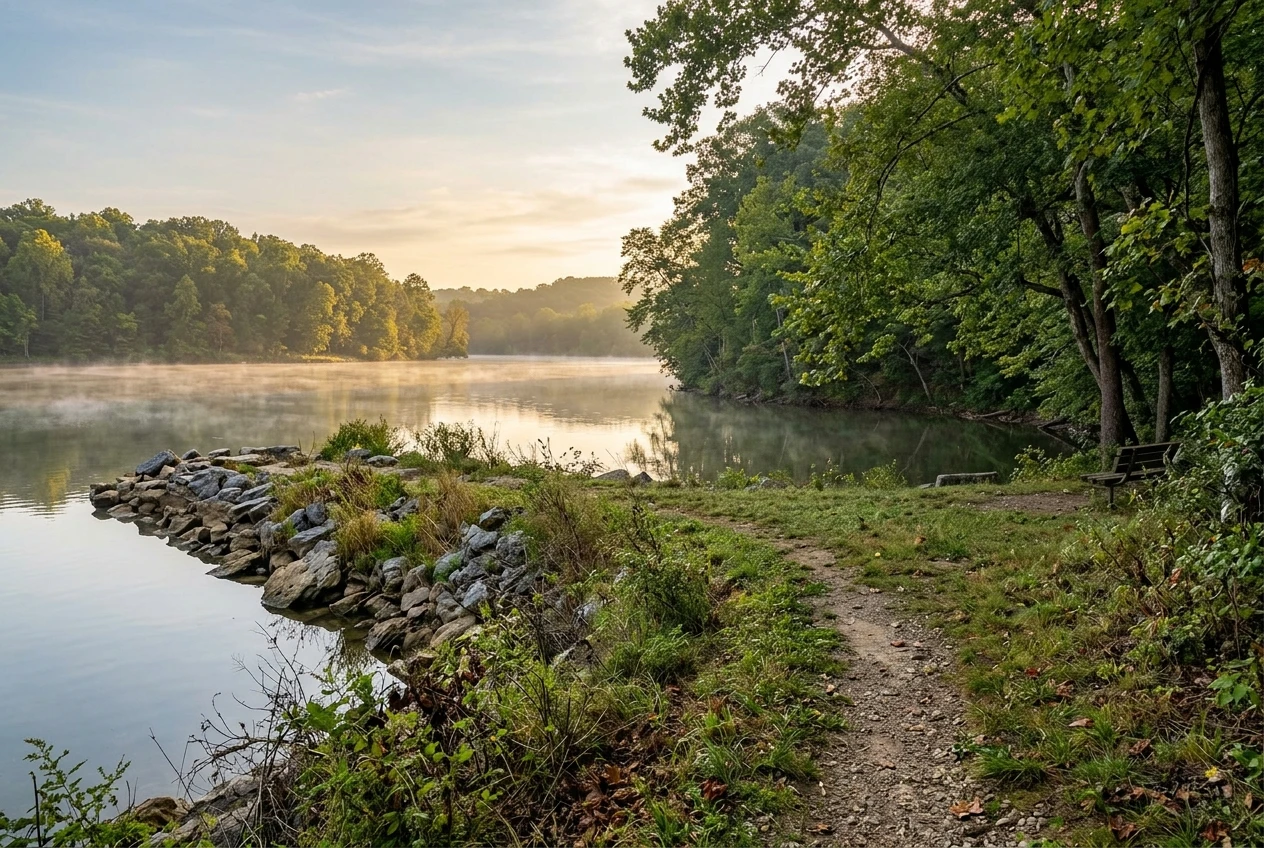
Walk a short section of safe bank first. Look for a feature you can describe: “the outside of that point” gives you something to test. “Somewhere out there” does not.
Visible shorelines offer clues, not underwater certainty. A point may continue beneath the surface, but its exact depth and bottom composition still need checking. Lake maps can help when available.
| Bank feature | First cast to try | What to watch |
|---|---|---|
| Rocky point or riprap edge | Place bait beside the feature, within a distance you can control. | Repeated snags mean you need a cleaner angle or different spot. |
| Cove entrance | Test the transition between the protected cove and open lake. | Compare that edge with the back of the cove instead of assuming both fish alike. |
| Gentle inflow | Try adjacent calmer water from stable, permitted ground. | Avoid storm runoff, slippery culverts, steep banks, and fast water. |
Kentucky Fish and Wildlife identifies creek inflows as places channel catfish may gather in smaller lakes in its summer fishing guidance . Treat that as a seasonal clue; an inlet is not automatically the best spot every day.
A first-cast example: the point versus the pocket
Imagine a small cove with a rocky point at its mouth. From a safe bank, make your first controlled cast beside the point. If you retrieve weeds or snag repeatedly, try a cleaner angle. If the bait returns intact without activity, compare the more sheltered water inside the cove.
Keep the rig and bait the same during that comparison. Now you are testing location, and you can remember what happened at each place.
This is an illustrative decision exercise, not a report from a particular lake.
Do not begin with your longest possible cast. Make a controlled cast you can repeat. Distance is useful only when it reaches water you have a reason to test.
Your L.A.K.E. Method for a first catfish trip
Read the signs, check footing, and locate a clear landing area.
Compare two reachable features: a point, cove edge, or gentle inflow.
Choose the feature with the clearest reason to test it.
Fish one rig, inspect the result, and change one thing at a time.
One simple rig you can learn in an afternoon
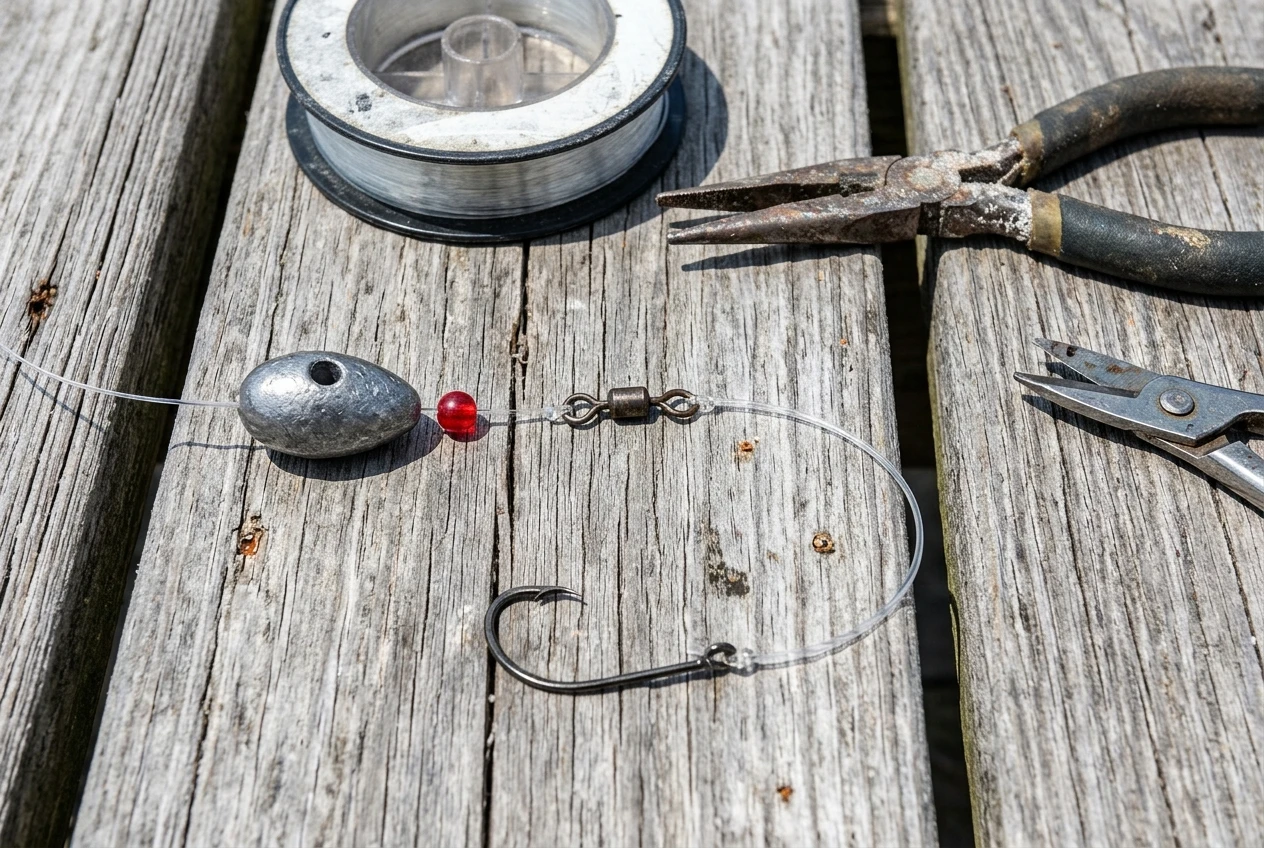
A slip-sinker rig lets the main line move through a weight while the bait trails behind a swivel. It gives beginners a manageable way to present bait near the bottom.
For a starting reference, Kentucky Fish and Wildlife describes a medium-to-heavy spinning outfit with 20-pound line, a ½- to ¾-ounce egg sinker, a bead, barrel swivel, approximately 18 inches of leader, and a 4/0 circle hook in its catfish introduction .
Match the total sinker-and-bait weight to your rod’s printed casting rating. Hook sizes vary between brands; choose a hook that fits your bait with an open gap. These sizes are a starting reference, not a requirement for every fish or lake.
The rig, in tying order
- Slide the egg sinker onto your main line.
- Add a bead to cushion the knot.
- Tie the main line to one eye of the barrel swivel.
- Tie your leader to the swivel’s other eye.
- Tie a single circle hook to the end of the leader.
Wet and tighten your knots, trim the tag ends, and pull-test the connections before baiting. Use a barbless hook or carefully flatten the barb for easier removal, then maintain steady pressure while fighting a fish.
Pack pliers, line cutters, spare terminal tackle, a secure rod holder, and a landing net you can reach from your chosen bank. Wear shoes with grip. Children and anyone fishing close to deep water should wear a properly fitted life jacket.
Start with bait that survives the cast
Your first bait does not need a secret recipe. Nightcrawlers and shrimp are practical options; legal cut bait is another established channel-catfish choice. Keep bait cool and contained.
| Bait | Why start here? | Tradeoff |
|---|---|---|
| Nightcrawler | Easy to portion onto a single hook. | Small fish may repeatedly steal it. |
| Small piece of raw shrimp | Simple to carry in a chilled container. | Soft pieces may tear during hard casts. |
| Legal cut fish bait | A useful alternative to compare with worms. | Check bait-species and water-specific rules before obtaining or using it. |
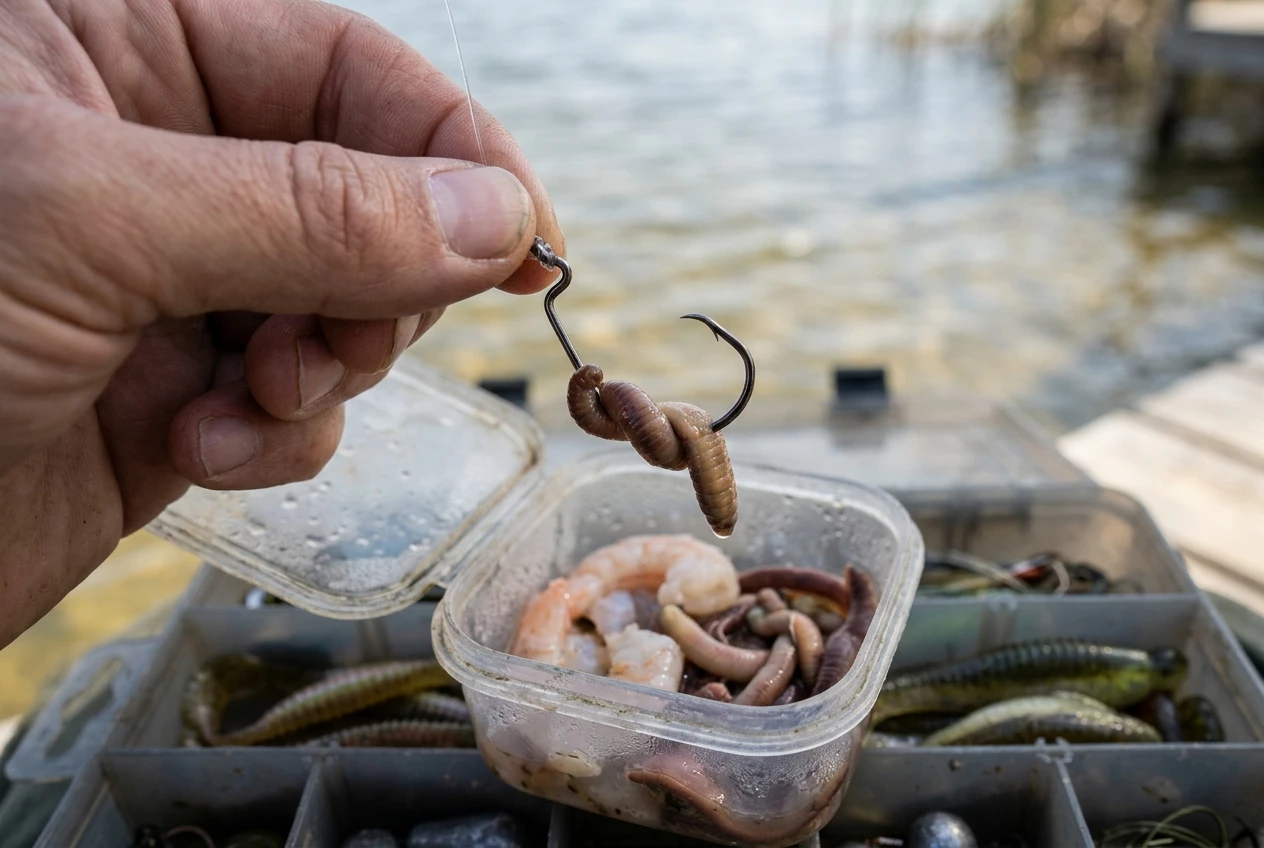
With a circle hook, leave the point and gap exposed. A large wad of bait wrapped around the entire hook can prevent it from catching properly.
Bring one starting bait and, if convenient, one alternative. Changing between six tubs makes it harder to learn whether bait or location made the difference.
What to do when the rod tip moves
After the sinker settles, gently retrieve loose line until you can monitor the rig without dragging it back toward shore. Set the drag so a strong pull can take line. Keep the rod secure and within immediate reach.
A light tap may be a small fish or a fish investigating the bait. With a circle hook, wait for a sustained pull, then reel steadily until the line tightens and the rod loads. Avoid a hard, sweeping hook-set. Kentucky’s circle-hook guidance emphasizes tightening gradually.
Watch the taps. Respond to a sustained pull. Reel smoothly as the rod bends.
Once connected, maintain pressure and guide the fish toward your prepared landing area. Do not lift a substantial fish out of the water by the rod or line.
The rod tip is quiet. What should you change?
Give a sensible location time, but make the waiting useful. For a short trip, use roughly 15–20 minutes as a reminder to inspect your presentation if nothing happens. This is a planning checkpoint, not a biological rule about how quickly catfish should bite.
- Bait gone? Replace it with a smaller, securely attached portion or try your alternative.
- Hook covered in weeds? Change the landing point. Fresh bait will not fix a buried presentation.
- Rig snagging repeatedly? Try a cleaner casting angle rather than repeatedly losing tackle.
- Bait intact, no response? Compare your backup bank or a different reachable distance.
- One fish caught? Repeat the same cast before changing anything.
Try this before opening another bait tub: retrieve the rig and look at the hook. Is the bait still there? Is the point clear? Is the rig bringing back vegetation? Those three checks can reveal a problem that waiting longer will not fix.
Write down what changed. “Shrimp worked” is less useful than “one bite on shrimp beside the point after the cove produced none.” Even that is a clue to test again, not proof of a permanent pattern.
Give each part of your two-hour trip a job
First 10 minutes: confirm posted rules, compare two accessible banks, and choose a landing area.
Minutes 10–45: fish your first feature. Inspect bait when needed and note taps, snags, weeds, and sustained pulls.
Minutes 45–80: make one useful comparison: another angle, another distance, or your backup bank.
Minutes 80–110: repeat whichever presentation gave the clearest response. If neither did, test one remaining idea.
Final 10 minutes: collect line scraps and bait packaging, leave time to exit before closing, and record one lesson.
Use these times flexibly. A child who needs a break, deteriorating weather, or a closing gate matters more than completing the schedule. For a reusable trip framework, see The Two-Hour Kentucky Bank-Fishing Plan .
Your six-line catfish trip card
Copy these prompts into your phone before leaving. Fill in the final line while the trip is still fresh.
- My lake and rule-check source: __________
- My departure time and park closing time: __________
- First bank and the feature I will test: __________
- Backup bank: __________
- Starting bait and one possible adjustment: __________
- What happened, and what I will repeat: __________
Land your first catfish with a plan, too
Bring the fish into the net while it is still supported by the water. Keep hands clear of the rigid dorsal and pectoral fin spines; the whiskers are not the sharp part.
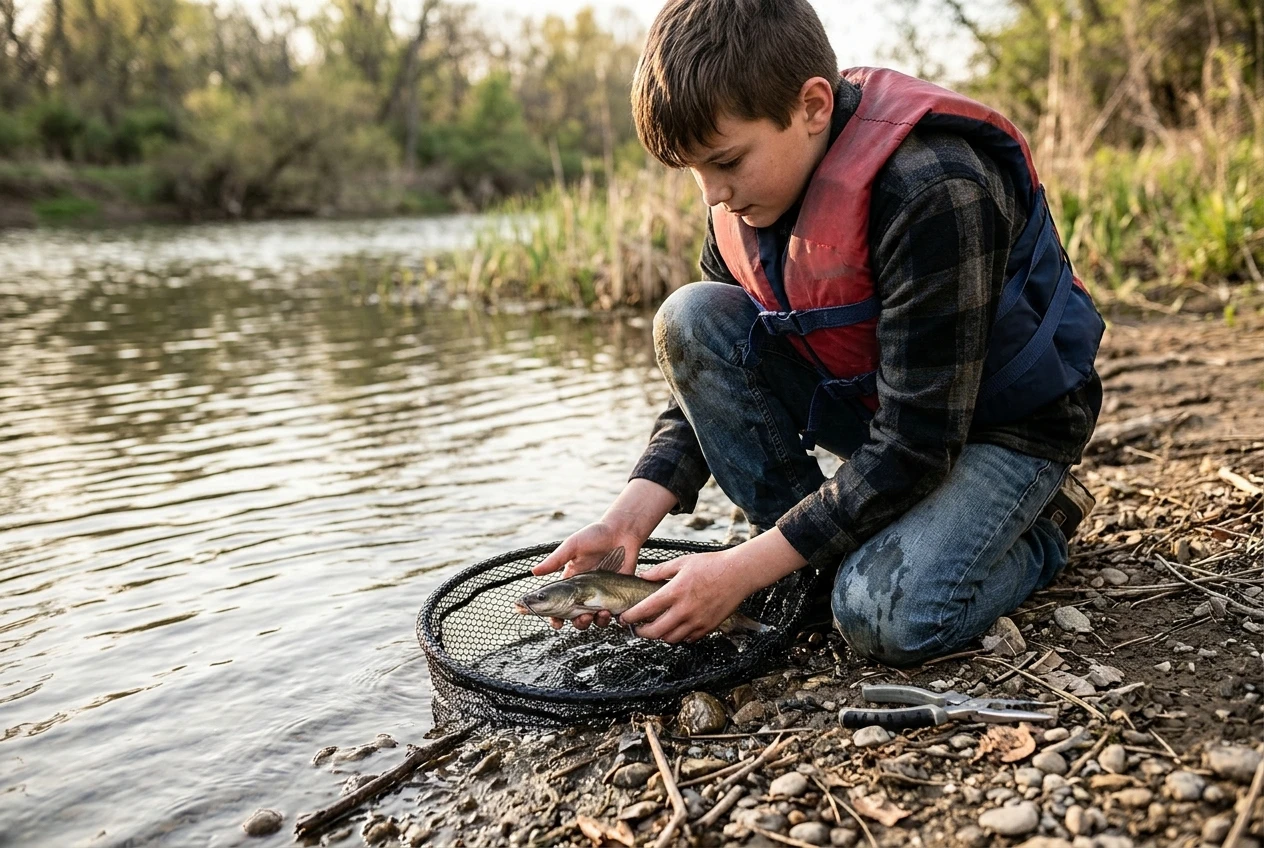
Have pliers ready before handling the fish. With wet hands, support its body without squeezing it, keep fingers away from the gills, and keep air exposure brief. If you are unsure how to control it safely, keep it supported in the net while an experienced adult helps. Children can watch the unhooking before trying it themselves.
Do not dig for a deeply embedded hook. Cut the line close when safe to do so and release the fish promptly. Circle hooks can reduce deep hooking, but they do not eliminate it.
If you intend to keep fish, confirm identification, current harvest limits, and applicable fish-consumption advisories beforehand. Bring a suitable cooler rather than deciding how to store the catch afterward.
Do you have to fish after dark?
No. A daylight outing makes learning your rig, watching your surroundings, and landing a fish easier. Low-light periods can be productive, but access and safe footing come first.
This is a foundational guide, not a promise that every season fishes alike. For warm-weather location and timing, continue with How to Catch Summer Catfish From the Bank at Kentucky Lakes . Keep seasonal advice separate from your year-round habit of checking conditions.
Four-question bank-side knowledge check
Choose an answer before opening each explanation.
1. What should decide your first bank: the nearest parking space or a safe, reachable feature?
A safe, reachable feature. Parking convenience helps, but you still need a reason to place bait there and a place to land a fish.
2. A circle hook gets a steady pull. Strike hard or reel until the rod loads?
Reel until the rod loads. Smooth pressure helps the hook work. A violent hook-set can pull it away.
3. Your hook comes back covered in weeds. Change bait first or change where it lands?
Change where it lands. Check the presentation before drawing conclusions about the bait.
4. Does a FINs catfish limit automatically apply to every Kentucky lake?
No. Check the current rules for the specific water, along with license requirements and access hours.
Frequently asked questions
What is the best catfish bait for a beginner?
Nightcrawlers are an uncomplicated starting option. Shrimp offers an easy comparison. Choose a bait you can attach securely with the hook gap exposed; there is no single best bait for every lake and day.
Can I use the fishing rod I already own?
Possibly. Check its line and casting-weight ratings against your rig, including the bait. An ultralight bluegill outfit may be unsuitable for the sinker sizes described here. Inspect your line and make sure the drag works smoothly.
Should I cast into the deepest water?
Not automatically. First identify a reachable feature and a practical presentation. The longest cast and the deepest water are not interchangeable, and neither guarantees feeding fish.
How long should I wait before moving?
Use your short-trip plan as a reminder to evaluate, not as a compulsory countdown. Check bait and bottom conditions first. Stay when there is a response worth exploring; compare another bank when your first idea gives you nothing useful.
Make your next cast answer a question
Before you settle into the chair, finish this sentence: “I am putting my bait here because…”
You do not need to solve the whole lake. Pick a safe bank, put a manageable bait beside a feature, and pay attention to what comes back. A fish is the reward you came for. A repeatable plan gives you a way to begin again.
Tell us your lake and your biggest sticking point in the comments. Is it choosing where to sit, tying the rig, keeping bait on the hook, or knowing when to move? If you have already caught your first channel catfish, what helped the most?
Start With the Lake, Not the Lure.
Source note: Kentucky rules and species guidance were checked against the Kentucky Department of Fish and Wildlife Resources pages linked above on November 4, 2026. The comparison routine and trip planner are editorial suggestions, not catch guarantees. Recheck official rules and local access information before each trip.