
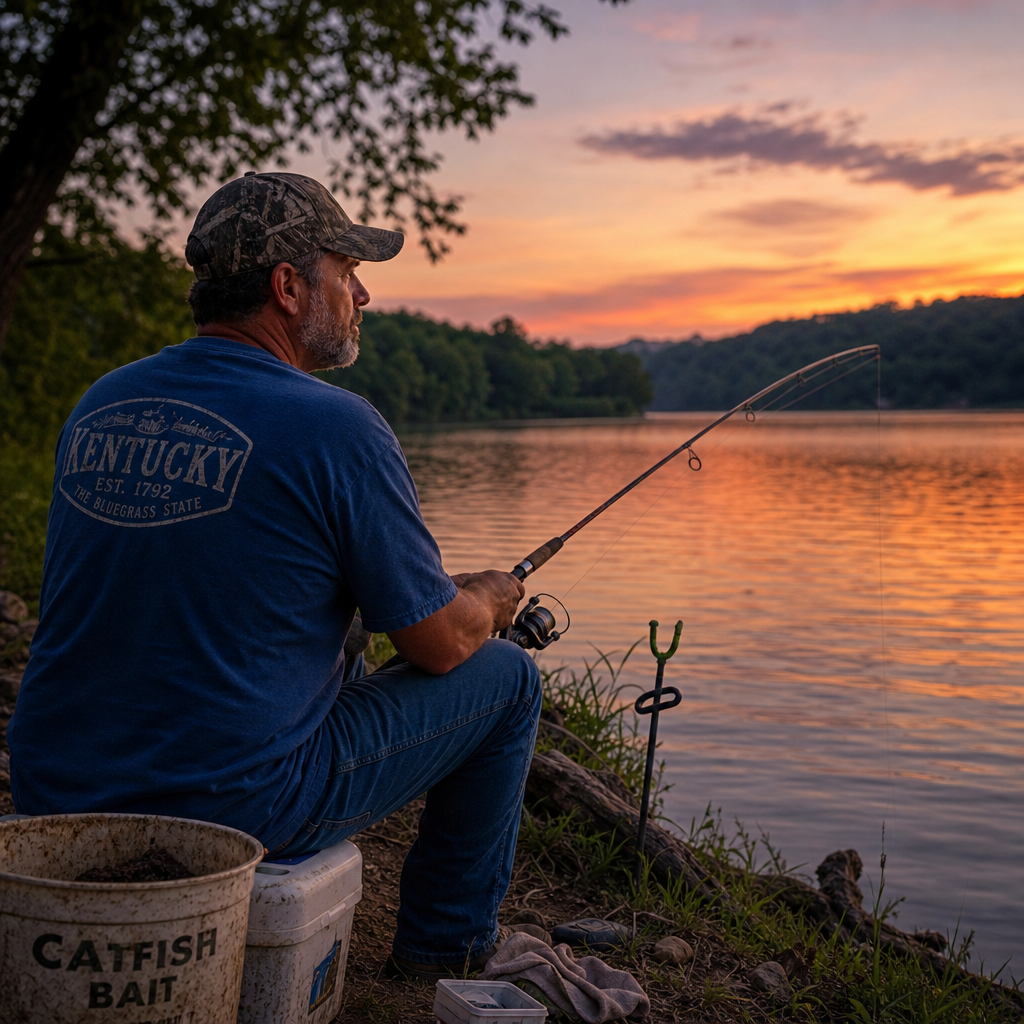
Every Lake Guide · Kentucky Summer Bank Fishing
Your Best Summer Bite May Be Waiting Along the Bottom
Channel catfish give beginners, families, and busy bank anglers a practical warm-weather target. The key is not casting bait toward the middle and waiting blindly. Compare low light, nearby depth, gentle wind, inflows, flats beside channels, and safe shoreline access before choosing where to settle in.
Start With the Lake, Not the Lure.
Quick answer
Where should you cast for summer catfish from the bank?
Begin where shallow feeding water meets a travel route. Strong starting areas include a flat beside deeper water, a point dropping toward a channel, a safe inflow, a wind-touched bank, riprap, or a cove mouth that catfish can follow during lower light.
Fish a legal natural or prepared bait near the bottom, keep the line under control, and give each carefully selected spot enough time to produce. Move when the location offers no clear combination of food, depth, movement, and safe access.
A timely Kentucky opportunity
Why channel catfish fit a summer bank-fishing trip
Kentucky’s Fishing in Neighborhoods program stocks channel catfish in many community lakes during spring and early summer. By July, beginners may have close-to-home opportunities at compact public waters where several promising banks can be compared during one focused trip.
Stocking is a planning clue—not a promise. Water temperature, oxygen, recent weather, fishing pressure, food, depth, and shoreline access still decide what you find when you arrive.
Patience becomes useful only after you choose water with a reason.
For a closer look at stocked neighborhood waters, read The History and Formation of FINs Lakes in Kentucky. To compare destinations before leaving home, use Where to Fish in Kentucky.
Quick comparison
Which summer catfish spot should you try first?
Choose the reachable water that gives catfish the clearest route between food, depth, and comfortable conditions.
| Reachable water | Why it can help | Best first test | Main caution |
|---|---|---|---|
| Flat beside a channel | Catfish can move between depth and a feeding area. | Place bait near the transition instead of casting beyond every visible feature. | A featureless flat with no nearby depth may be slow. |
| Cove mouth | It can funnel movement between the main lake and protected water. | Compare both sides and the first reachable depth change. | Do not block boat lanes, ramps, or posted areas. |
| Safe inflow | Gentle current can carry food and create a scent path. | Fish the current edge or nearby calm seam—not violent muddy flow. | Runoff, debris, lightning, and slick footing can make it unsafe. |
| Riprap or rocky bank | Rock provides a defined edge and may hold food. | Cast at an angle along the rock-to-bottom transition. | Snags and unstable rocks require controlled rigs and careful footing. |
| Park-lake pier | It may provide depth, casting room, and easier access. | Test one bait closer, one along an edge, and one toward deeper water. | Share the space, follow posted rules, and keep walkways clear. |
Keep the tackle decision simple
A beginner-friendly summer catfish presentation
Nightcrawlers and prepared catfish bait are straightforward starting choices. Kentucky Fish & Wildlife also lists shrimp, legal cut bait, chicken liver, and stink bait among common channel-catfish options.
Bottom presentation
Use a simple legal rig that keeps the bait close to the bottom without using more weight than conditions require. Place it near a travel edge, keep reasonable tension on the line, and avoid moving it every few minutes without a reason.
Slip-float presentation
A slip float can help suspend bait just above soft mud, weeds, or a shallow-to-deep edge. Adjust depth deliberately so the presentation tests a specific part of the water column.
Circle-hook reminder: With a properly matched circle hook, maintain controlled tension and let the hook rotate into the corner of the mouth rather than making a hard, sweeping hookset. Confirm that every part of the rig is lawful for the water you are fishing.
Use the Every Lake Guide framework
Apply the L.A.K.E. Method before setting the rod down
This free lesson helps you choose summer catfish water. The full ebook system goes deeper into scoring multiple clues, resolving conflicting evidence, and building a repeatable plan on unfamiliar lakes.
Look Before You Cast
Check wind, water color, visible activity, bank safety, other anglers, park hours, inflows, and the closest reachable depth.
Analyze the Lake
Identify points, flats, cove mouths, channels, riprap, drains, and low-light routes that connect shallow and deeper water.
Key In on Productive Water
Choose two small areas where food, depth, movement, and safe access overlap. Do not treat the entire shoreline equally.
Execute a Simple Plan
Fish patiently, keep the bait near the intended zone, adjust distance or depth deliberately, and move when the evidence weakens.
Build the complete system with How to Read Any Lake: A Beginner’s Fishing System. To understand flats, coves, cover, and reachable drop-offs more deeply, explore Kentucky Shore Fishing: How to Fish Coves, Flats, and Drop-Offs.
A focused evening trip
The Every Lake Guide two-hour summer catfish plan
Begin early enough to inspect the bank in daylight and leave before darkness, weather, or park closing makes the return route unsafe.
Compare before rigging
Find two legal, safe areas with different strengths—perhaps a flat near depth and a wind-touched cove mouth. Check park hours, storm risk, bank footing, and casting room.
Test the strongest route
Place one simple bait near the bottom where shallow feeding water meets depth. Keep the line controlled and avoid recasting without a clear purpose.
Make one useful adjustment
Change distance, depth, or angle—not all three. The adjustment should test whether fish are closer, deeper, or following the edge differently.
Compare the second spot
Move to water built around another clue. If the first area was calm and deep, test mild wind, rock, an inflow seam, or a cove route.
Return to the best evidence
Finish where you saw a bite, line movement, baitfish, better current, or the clearest shallow-to-deep route.
Leave before safety declines
Pack out bait, hooks, and line. Check the bank with a light and leave before park closing or darkness makes the route harder to navigate.
Use Dawn, Dusk, or Dark? to choose a safer low-light window. For a broader short-trip framework, visit the Kentucky Fishing Guide for Busy Bank Anglers.
Safety and regulations
Check the exact lake before fishing
- Confirm license requirements, daily limits, bait rules, park hours, and waterbody-specific regulations.
- At Kentucky FINs lakes, the current catfish daily limit is four fish, and possession or use of live shad as bait is prohibited.
- Leave the shoreline immediately for a substantial building or enclosed hard-topped vehicle when thunder is heard.
- Do not step onto slick clay, unstable riprap, steep banks, or flooded ground simply to gain casting distance.
- Keep hooks, bait, rods, and line out of paths, piers, and shared family areas.
Fish-friendly handling
Handle catfish carefully
- Have pliers ready before lifting the fish from the water.
- Control the fish without squeezing its body.
- Be mindful of the stiff dorsal and pectoral spines.
- Wet your hands and keep the fish off dry pavement, gravel, and dusty ground.
- Remove the hook efficiently and keep air exposure brief.
- If a deeply swallowed hook cannot be removed without causing more damage, cut the line close to the mouth.
Recent rain can change inflows, water color, current, and footing quickly. Review Fishing After Summer Rain From Shore before targeting moving water after a storm.
Interactive knowledge check
Can you build a better summer catfish plan?
Select one answer for each question, then check your score.
Continue learning
Related Every Lake Guide resources
Kentucky Fishing Guide
Compare beginner-friendly species, public-water choices, seasonal conditions, current-rule reminders, and practical shoreline clues.
Open the GuideWhere to Fish in Kentucky
Choose a destination by trip type, access, target species, and the amount of time you actually have.
Choose Your WaterHow to Read Any Lake
Learn the observation-first approach behind the L.A.K.E. Method before committing to a bank or presentation.
Read the Free GuideFINs Lakes in Kentucky
Understand how neighborhood fisheries, seasonal stocking, public access, fishing pressure, and special rules shape the trip.
Explore FINs LakesFrequently asked questions
Summer catfish questions for Kentucky bank anglers
What is a simple bait for a beginner catfish angler?
Nightcrawlers and prepared catfish bait are straightforward starting choices. Shrimp, chicken liver, stink bait, and legal cut bait are also commonly used. Match the bait to current local rules and store it responsibly.
Do I need to cast far for catfish?
No. A shorter cast to a depth transition, cove route, rocky edge, inflow seam, or flat beside a channel can be more useful than a long cast into featureless water.
How long should I wait before moving?
Give a well-selected spot enough time to work—often 20 to 30 minutes—while watching for line movement and nearby activity. Make one deliberate adjustment before abandoning water that still has a strong explanation.
Are FINs lakes good for summer catfish?
They can be practical because many receive channel-catfish stockings in spring and early summer and provide public bank access close to communities. Stocking never guarantees a catch, so read the lake and verify current rules.
Is dusk always the best time?
No. Dusk is a useful low-light window, but wind, weather, access, depth, recent stocking, fishing pressure, and safe park hours still shape the decision.
Can I use live shad at a Kentucky FINs lake?
No. Current FINs regulations prohibit possession or use of live shad as bait. Always review the current official rules and posted signs before fishing.
Final takeaway
Patience works best after you choose the right water
Summer catfishing is not simply casting bait and waiting. Compare the bank, identify a route between depth and food, fish a legal presentation with control, and let each adjustment answer a question.
Start With the Lake, Not the Lure.
Explore the Complete Lake-Reading System