
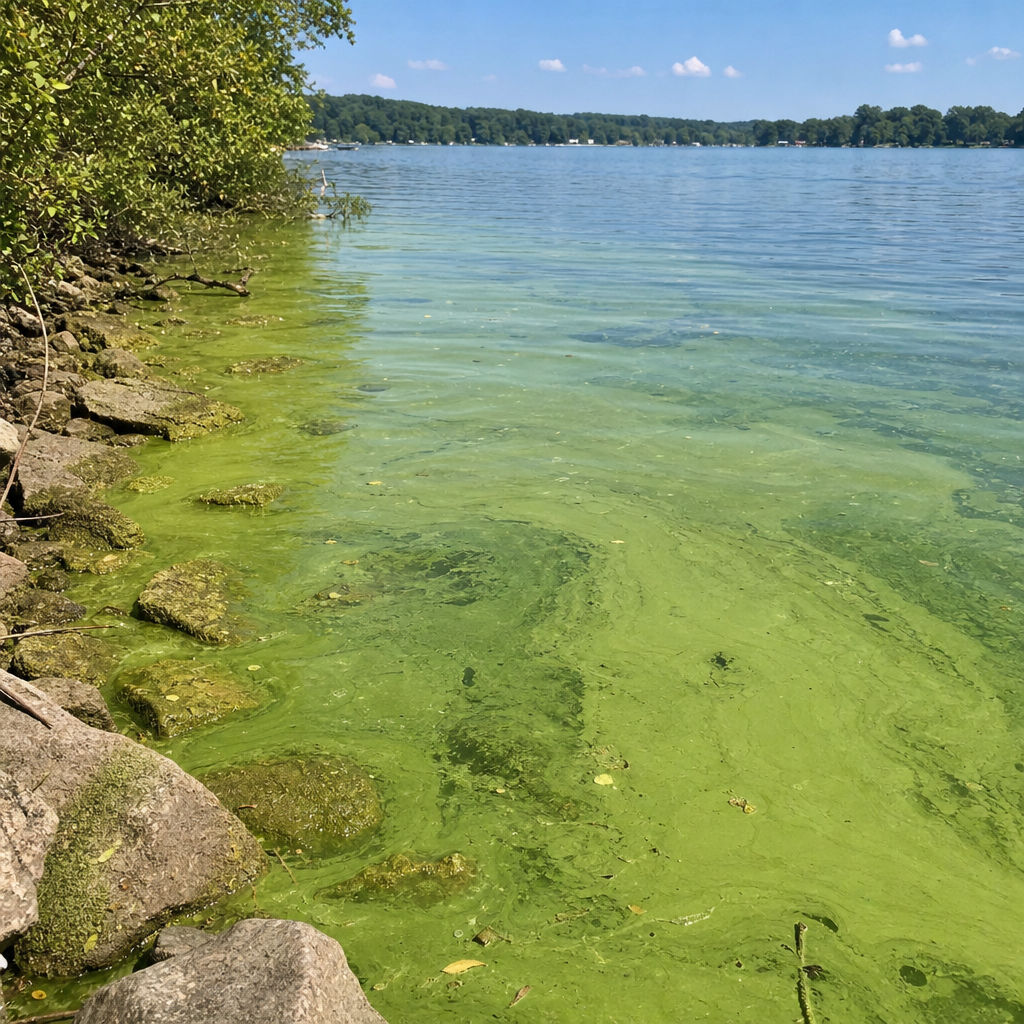
Every Lake Guide · Summer Bank-Fishing Lesson
How to Turn Messy Summer Weeds Into a Clear Bank-Fishing Plan
Grass lines and weed edges can frustrate beginners because they snag hooks, hide depth changes, and make the bank look crowded before anyone else arrives. But the right edge, opening, shade pocket, or outside wall of vegetation can also point you toward food, cover, oxygen, and fish movement.
Start With the Lake, Not the Lure.
Quick answer
How should a bank angler fish grass lines and weed edges?
Fish the clean edge first. Look for an outside grass line, a small opening, a shaded pocket, a point where weeds meet deeper water, or a wind-touched edge where baitfish and insects may collect. Cast beside the vegetation instead of straight into the thickest mat, then adjust angle, depth, and speed before changing lures.
The goal is not to fish every weed you see. The goal is to find the best reachable edge where cover, food, comfort, and safe casting room overlap.
Summer grass is a clue, not a guarantee
Weed edges can concentrate life in reachable water
Aquatic vegetation can hold insects, small fish, shade, ambush cover, and slightly different water conditions than the open bank beside it. That does not mean every weed patch is good. Thick, decaying, shallow, or unreachable grass can waste time. Healthy edges with openings and nearby depth are usually easier to fish from shore.
For beginners, the most important shift is simple: stop treating weeds as one giant snag. Break them into edges. Look for the clean line, the hole, the point, the shaded pocket, and the first deeper water beside the green growth.
The clean wall where weeds stop and open water begins is often easier to cast and retrieve.
A hole in the grass can act like a small feeding window when fish move through cover.
Vegetation beside overhanging trees, docks, or a shaded bank gives fish comfort and cover.
A safe breeze can move food and surface activity toward one side of the grass.
Grass that ends near a drop, channel, steeper bank, or cove mouth gives fish an easy route.
If you cannot bring a lure back cleanly, change angle before blaming the whole spot.
Do not cast into the mess first. Cast beside the best edge.
Quick comparison
Which weed edge should you fish first?
| Bank clue | Best first cast | Why it helps | Watch out for |
|---|---|---|---|
| Clean outside grass line | Cast parallel to the edge. | You keep the lure in the strike zone longer without burying it in weeds. | Retrieving too fast through only open water. |
| Small hole or pocket | Drop or swim a compact presentation through the opening. | Fish can use the pocket as a feeding window inside cover. | Heavy hooks or exposed treble hooks that snag immediately. |
| Grass beside shade | Start close to the shade edge, then work outward. | Shade and vegetation can combine comfort, cover, and food. | Standing where branches block safe casting. |
| Wind touching one side | Fish the windward edge if footing and casting are safe. | Food and baitfish may collect where the breeze pushes surface activity. | Unsafe waves, slick clay, or casting into people behind you. |
| Grass ending near deeper water | Count the lure down along the outside edge. | Fish can move from cover to depth without crossing a large flat. | Assuming shallow weeds are best all day in summer heat. |
If the lake is hot and still, pair this lesson with Where Do Fish Go When the Lake Gets Hot?. If wind is the main clue, the Kentucky Wind and Structure Cheat Sheet gives you a more focused field reference.
Use the Every Lake Guide framework
Apply the L.A.K.E. Method to summer weed edges
Look Before You Cast
Walk slowly enough to see where the weeds start, stop, thin out, create openings, touch shade, or meet wind and deeper water.
Analyze the Lake
Compare the grass to the bank shape. A weed edge on a point, cove mouth, drain, steeper bank, or first drop deserves more attention than isolated shallow weeds.
Key In on Productive Water
Choose the edge with the strongest overlap: healthy grass, safe casting room, food activity, shade, wind, and a clean retrieve lane.
Execute a Simple Plan
Fish one edge deliberately. Change angle first, depth second, and lure third. Move when the grass no longer gives you a clear reason to stay.
For the complete decision system, explore How to Read Any Lake: A Beginner’s Fishing System. For a deeper shoreline-structure lesson, continue with Kentucky Shore Fishing: How to Fish Coves, Flats, and Drop-Offs.
A practical short-trip plan
A two-hour grass-line plan from the bank
Survey before rigging up
Find three reachable weed edges. Note shade, wind, casting room, bank angle, openings, and whether the vegetation looks alive or matted and messy.
Start with the cleanest edge
Cast parallel to the outside line or beside a pocket. Keep the retrieve slow enough to stay near the edge, but clean enough to avoid constant snagging.
Change angle before changing spots
Try a closer parallel cast, a diagonal cast across the edge, and one cast that starts shallow and exits toward deeper water.
Compare a different kind of grass
If you started on shade, try wind. If you started on a flat, try a point or cove mouth. Make the second spot answer a different question.
Return to the best evidence
Go back to the edge with a bite, baitfish, bluegill activity, cleaner water, or better access to depth. Work it carefully instead of rushing to a fourth spot.
Record the lesson
Write down which grass edge mattered: shade, wind, depth, pocket, outside wall, or clean retrieve lane. That note makes the next summer trip easier.
For choosing the right time window around summer heat, read Best Time to Bank Fish Kentucky Lakes in Summer. For short-trip planning beyond grass lines, use the Guide for Busy Anglers.
Safety and access
Do not let weeds pull you into unsafe water
- Avoid stepping into soft mud, steep banks, slick clay, or hidden holes just to reach a grass edge.
- Keep casting room behind you, especially around trails, picnic areas, docks, and other anglers.
- Use pliers and keep hooks controlled when pulling vegetation from a lure.
- Leave immediately for a substantial building or enclosed hard-topped vehicle if you hear thunder.
- Check current license, access, site rules, and waterbody-specific regulations before fishing.
Fish-friendly handling
Land fish cleanly around vegetation
- Guide the fish away from the thickest grass when possible.
- Wet your hands before handling the fish.
- Keep the fish off dry grass, gravel, and pavement.
- Remove the hook efficiently and keep air exposure brief.
- Pack out loose line, clipped vegetation, bait containers, and trash.
Interactive knowledge check
Can you read the grass line?
Continue learning
Related articles and field guides
How to Read Any Lake
Learn how edges, wind, cover, depth, food, comfort, and movement work together before your first cast.
Read the Free GuideHow to Read Any Lake Ebook
Go deeper with the complete L.A.K.E. Method system, practice examples, lake scorecard, and printable field tools.
Explore the EbookKentucky Shore Fishing
Study coves, flats, cover, and first drop-offs so weed edges become part of a bigger shoreline decision.
Explore the EbookFishing After Summer Rain
Learn how runoff, color seams, inflows, and nearby stable water change the shoreline plan after storms.
Read the Rain GuideFrequently asked questions
Grass-line bank-fishing FAQs
Are weeds always good for fishing?
No. Healthy vegetation can support food and cover, but thick, decaying, shallow, or unreachable weeds can waste time. Look for useful edges, openings, shade, wind, and nearby depth.
Should I cast into weeds or beside them?
Start beside them. A clean outside edge or pocket gives you better lure control and fewer snags.
What fish use weed edges in Kentucky lakes?
Bluegill, sunfish, largemouth bass, crappie, and baitfish may all use vegetation when conditions fit. Catfish may also work nearby routes, especially in low light or around deeper edges.
What if weeds keep fouling my lure?
Change your casting angle first. Try a cleaner retrieve lane, cast parallel instead of across the thickest growth, or choose a smaller opening before changing the whole presentation.
Are grass lines better in the morning or evening?
Morning and evening often give summer bank anglers more comfortable light and heat conditions. During brighter, hotter periods, focus more on shade, nearby depth, wind, and cleaner edges.
Should beginners avoid weed edges?
No. Beginners should avoid the thickest mess at first, but weed edges are excellent learning tools because they teach casting angles, depth control, cover, and fish movement.
Final takeaway
Summer weeds are not the plan. The edge is the plan.
Look for the clean line, opening, shade pocket, wind-touched side, or grass near depth. Fish it with purpose, adjust one variable at a time, and let the lake show you whether that edge is worth more casts.
Start With the Lake, Not the Lure.
Build the Complete Lake-Reading SystemBefore fishing, confirm the current license requirements, access rules, site hours, species limits, and waterbody-specific regulations through the Kentucky Department of Fish & Wildlife Resources. Conditions and regulations can change, so verify them before each trip. https://fw.ky.gov/Pages/default.aspx