
Every Lake Guide • Summer Bank Fishing
The best summer fishing time is not decided by the clock alone. It is the window when light, temperature, fish movement, safe access, and the trip you can actually take begin working together.
The Quick Answer
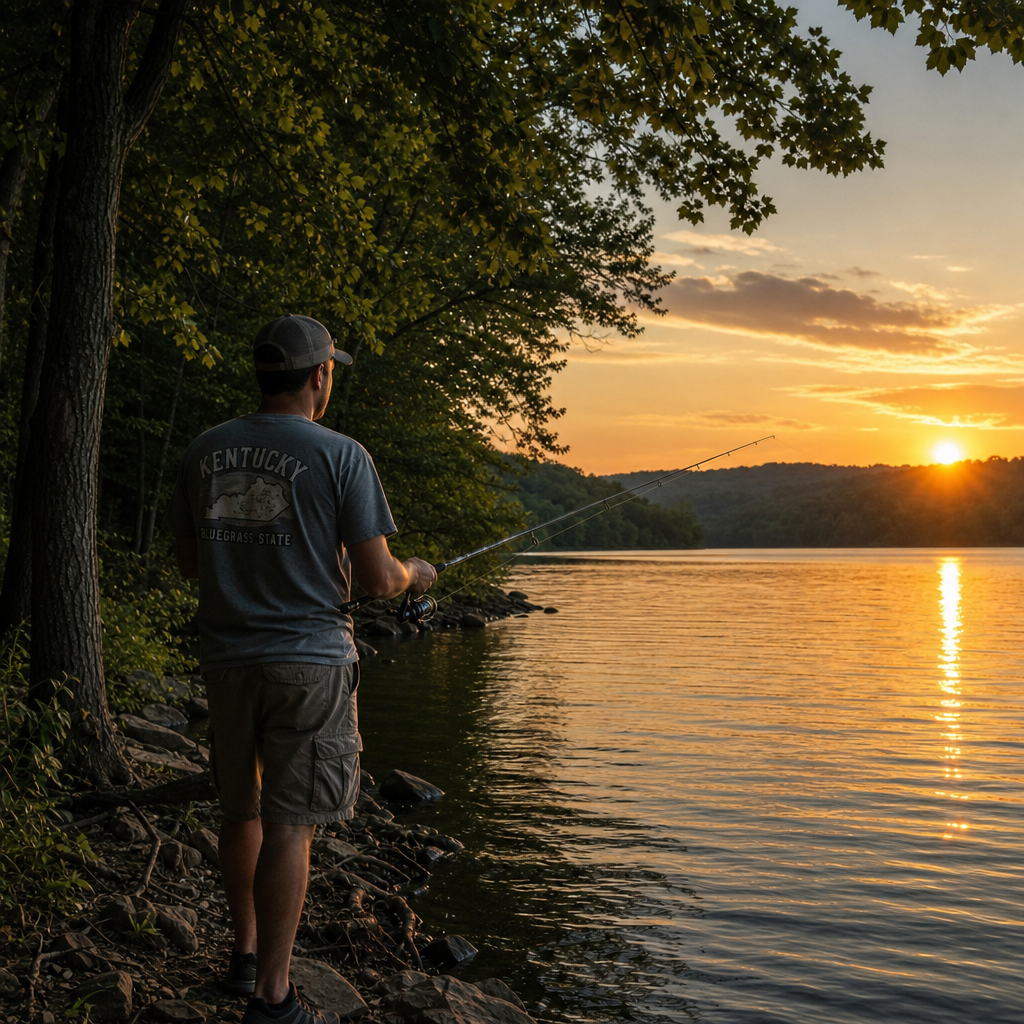
For many Kentucky bank anglers, the most useful summer windows are the first 60 to 90 minutes after sunrise and the final 60 to 90 minutes before sunset. The air is usually more comfortable, low light can make shallow edges more usable, and the lake may show more visible activity.
That does not make dawn or dusk automatically productive. A bright, shallow bank with no cover can still be poor water at sunset. A shaded point with nearby depth may be better. A lightly wind-touched cove may be more interesting than a glass-calm bank. The time tells you when to look. The lake tells you where to cast.
Kentucky Fish & Wildlife recommends looking for summer bass shallow early and late, then fishing deeper structure as the day progresses. That seasonal pattern is useful, but a bank angler still has to compare the water that can actually be reached safely from shore.
Before You Choose a Time: Test Your Lake-Reading Instincts
Open each answer after deciding what you would do. These are practical choices, not fishing trivia.
1. Is sunrise always better than sunset?
No. Sunrise may offer cooler conditions and less fishing pressure, while sunset may bring expanding shade and a more convenient two-hour window. The better choice depends on the lake, safe access, weather, and the water you can reach.
2. Should you fish the brightest bank at dusk because it stays warm longer?
Not automatically. Begin by comparing shade lines, nearby depth, cover, wind, bait activity, and safe access. A cooling or shaded edge may give fish a better combination of comfort and feeding opportunity.
3. Is midday fishing a waste of time in July?
No. Midday fishing becomes more selective. Look for docks, overhanging trees, steep banks, deeper water close to shore, moving water, vegetation edges, or other places where fish can avoid the brightest, warmest shallows.
4. Is night fishing the smartest way to escape summer heat?
Only when the location remains legally open and the shoreline is familiar, stable, and safely navigable. Darkness can turn roots, rocks, drop-offs, steep banks, wildlife, and changing weather into larger hazards.
Dawn, Dusk, Dark, or Midday: Which Window Fits Your Trip?
| Fishing Window | Why It Can Help | Where to Begin | Main Limitation |
|---|---|---|---|
| Dawn | Cooler air, low light, quieter access, and the possibility of shallow activity before direct sun reaches the bank. | Shaded points, weed edges, cove mouths, riprap, shallow cover beside depth, and any bank showing bait or surface movement. | You must arrive early enough to observe rather than spending the best light unloading and tying knots. |
| Dusk | Shade expands, direct heat eases, and a short trip can fit more naturally into a busy day. | The first shaded bank with cover and nearby depth, wind-touched edges, points, dock shade, and feeding routes between shallow and deeper water. | The safest pack-up time may arrive before the bite window feels finished. |
| After Dark | Lower air temperatures and less visual disturbance may make some shorelines more comfortable for fish and anglers. | Familiar, level, legally open access with a simple casting lane, nearby depth, and no hidden walking hazards. | Reduced visibility, changing park hours, difficult hook removal, wildlife, weather, and unstable footing. |
| Midday | You can still target concentrated shade, depth, current, or overhead cover instead of fishing open bright water. | Bridge shade, docks where permitted, overhanging trees, steep banks, inflows, dam faces, first drop-offs, and vegetation edges. | Heat exposure can become unsafe, and much of the easy shallow bank may offer fish little comfort. |
Why Dawn Can Be the Best Summer Starting Point
Dawn gives a bank angler something midday cannot: time before the shoreline has absorbed a full day of heat. Parking lots, riprap, exposed paths, metal railings, and open banks may all be more manageable early.
The fishing advantage is not simply “fish bite in the morning.” Low light can make shallow edges, points, grass lines, laydowns, and cove mouths worth checking before direct sun pushes the most comfortable water toward shade or depth.
Arrive early enough to use the first few minutes well. Stop short of the edge. Listen for splashes. Watch for bait flickers, dimples, insects, birds, surface movement, or a breeze touching one side of the lake. Then compare at least two reachable areas before deciding where the first cast belongs.
Dawn Works Best When You Prepare the Night Before
- Rig one or two rods before leaving home.
- Confirm parking and opening hours.
- Pack water, pliers, a small first-aid kit, sun protection, and a charged phone.
- Use a headlamp for setup, but avoid shining it across the water more than necessary.
- Know which bank you want to inspect first, while remaining willing to change when the lake shows a stronger clue.
Why Dusk Is Often the Most Realistic Choice
Dawn may look perfect on paper, but the best plan is the one you will actually follow. For busy anglers, dusk often wins because it fits after work, dinner, errands, or family responsibilities.
Evening also creates a visible change you can use. A sunny bank can become shaded. A dock can cast a longer edge. A point may connect shallow feeding water with a quick route to depth. Insects and baitfish may become easier to notice. The wind may weaken, strengthen, or change how it touches the shoreline.
Do not arrive and automatically fish the first shady spot. Shade is one clue. The stronger area usually combines shade with something else: cover, an edge, nearby depth, food activity, wind, or a safe travel route.
After Dark: Productive Opportunity or Unnecessary Risk?
Night fishing can be effective, especially for anglers using simple presentations around familiar water. It can also make an ordinary shoreline much harder to manage.
A root you stepped over in daylight can disappear. A sloping bank can feel steeper. A snagged lure becomes harder to retrieve safely. Hook removal takes longer. A distant storm is more difficult to judge. Some parks, FINs lakes, ramps, and public areas may close at or near dusk even when fishing itself is otherwise allowed.
Choose darkness only when you have confirmed the location’s current hours and rules, know the bank, and can fish without wandering through unfamiliar terrain.
A Better Night-Fishing Location
A level pier, maintained access, open casting lane, familiar point, or gently sloping bank with no hidden drop-off.
A Poor Night-Fishing Location
A steep riprap face, muddy shoreline, overgrown trail, isolated bank, flood-damaged access, or any place you have not inspected in daylight.
Midday Is Harder—Not Hopeless
Summer midday fishing is often treated as wasted time. That is too simple. The open, shallow water may become less attractive, but fish still need food, cover, oxygen, security, and routes between depths.
Your job becomes more precise. Instead of fishing an entire bank, identify the small sections offering relief or access to better water.
- Overhead shade: Trees, docks, bridges, and steep banks can create darker holding water.
- Nearby depth: Points, dam banks, ledges, creek-channel swings, and first drop-offs let fish move without traveling far.
- Vegetation edges: The outside edge may offer a useful line between cover and open water.
- Moving water: A safe inflow, culvert, current seam, or wind-driven edge may organize food and create a more defined target.
- Hard transitions: Rock meeting clay, weeds meeting open water, or shallow flats meeting a break can concentrate your casts.
Kentucky Fish & Wildlife’s summer guidance notes that bass often move deeper as the day progresses. For a bank angler, that does not always mean casting as far as possible. It means finding a reachable place where deeper water approaches the shore.
Use the L.A.K.E. Method to Choose Your Summer Window
The Every Lake Guide L.A.K.E. Method keeps “What time should I fish?” from becoming a one-word answer. Time is only one layer of the decision.
Look Before You Cast
Check weather, heat, wind, shade, water color, surface activity, access hours, bank condition, and signs of fishing pressure.
Analyze the Lake
Compare points, coves, docks, vegetation, inflows, steep banks, open flats, and the first reachable depth change.
Key In on Productive Water
Narrow the shoreline to the small area where low light, food, cover, comfort, and movement overlap.
Execute a Simple Plan
Test one explanation, adjust one variable at a time, compare another area, and finish where the strongest evidence points.
A Simple Two-Hour Summer Evening Plan
This plan begins roughly two hours before the safest time to leave. Adjust it for local sunset, park hours, weather, walking distance, and whether you are equipped to remain after dark.
- Minutes 0–10: Read the changing lake. Check which bank is gaining shade, where wind touches the surface, whether bait or insects are visible, and which safe area offers nearby depth.
- Minutes 10–40: Test the best combination. Fish the strongest reachable edge with a simple presentation. Change casting angle or depth before changing everything at once.
- Minutes 40–75: Compare different water. Move to a second type of area—a point instead of a cove, rock instead of weeds, deeper shade instead of a shallow flat.
- Minutes 75–105: Follow the evening clue. Return to the water showing the best evidence: a bite, bait movement, surface activity, useful shade, or a more convincing edge.
- Minutes 105–120: Finish safely and take notes. Stop early enough to pack without rushing. Record the wind, water clarity, time, bank, presentation, and what changed as daylight faded.
For a deeper short-trip framework, use How to Build a Simple Two-Hour Fishing Plan for Any Small Kentucky Lake.
Match the Presentation to the Water, Not Just the Time
A clock does not choose the lure. The water does.
When Fish Are Showing Near the Surface
Try a small moving bait, shallow presentation, or topwater where conditions and target species make sense. Do not force a surface approach when the lake shows no surface life.
When the Bank Has Shade and Cover
Use a compact soft plastic, jig, small spinner, worm, or another simple option you can place accurately beside the edge.
When Bluegill or Sunfish Are the Goal
A small hook, light line, legal bait, and a bobber can quickly reveal whether shaded cover, grass, or a dock edge is active.
When Catfish Are the Goal
Use a simple bottom presentation with legal bait near a point, flat, inflow, deeper corner, or other route connecting feeding water with depth.
The goal is not to carry four plans at once. Choose one target, one or two presentations, and a small number of banks you can explain.
Summer Safety Comes Before the Bite
Low light does not eliminate heat, humidity, storms, slippery banks, or dehydration. Check the forecast and any heat or air-quality alerts before leaving.
- Carry more drinking water than you expect to need.
- Wear light, loose clothing and use sun protection.
- Take breaks in shade and avoid strenuous walking during excessive heat.
- Leave immediately for a substantial building or enclosed hard-topped vehicle when thunder is heard.
- Do not shelter beneath a tree during a thunderstorm.
- Tell someone where you are fishing and when you expect to return.
- At night, carry a primary light, backup light, charged phone, and simple first-aid supplies.
- Confirm public access, closing time, fishing rules, and posted restrictions before the trip.
The National Weather Service advises staying hydrated, taking shade breaks, limiting strenuous activity during excessive heat, and moving indoors or into a hard-topped vehicle when lightning threatens.
Fish-Friendly Release and Hook Removal Basics
Warm weather can make efficient handling even more important. Prepare before the fish reaches the bank.
- Wet your hands before touching a fish you intend to release.
- Keep the fish in the water when practical.
- Use pliers, forceps, or hemostats to remove hooks promptly.
- Consider barbless hooks or crimping the barb when catch-and-release fishing.
- Back the hook out along the path it entered instead of twisting or pulling sideways.
- When a fish is deeply hooked, cutting the line close to the hook may cause less damage than forceful removal.
- Do not drag fish across gravel, dry grass, or hot pavement.
- Support the fish gently and allow it to regain balance before release.
How to Choose Your Best Window in Less Than a Minute
Ask these five questions before putting a trip on the calendar:
- When is the location legally open and safely accessible?
- Which window avoids the worst heat or storm risk?
- When will the bank I can reach gain shade or offer nearby depth?
- What species and presentation fit that water?
- Can I arrive early enough to observe rather than rush?
If dawn offers cool air but the gate is closed, it is not your best window. If dusk creates shade but a storm is approaching, it is not your best window. If midday is your only opportunity and a safe shaded bank meets deep water, the trip can still have a clear purpose.
Frequently Asked Questions
What is the best time to bank fish a Kentucky lake in summer?
Early morning and late evening are often the most comfortable and versatile starting windows. Kentucky Fish & Wildlife recommends checking shallow water early and late for summer bass and shifting toward deeper structure as the day progresses. The best actual time still depends on weather, safe access, target species, shade, wind, and reachable depth.
How early should I arrive for dawn fishing?
Arrive about 20 to 30 minutes before you expect to begin fishing. That gives you time to park, walk safely, inspect the shoreline, and make the first cast with a reason instead of losing the low-light window to setup.
Is evening fishing better than morning fishing?
Not universally. Morning is often cooler and quieter. Evening may be easier to schedule and can create expanding shade. Compare the specific banks you can reach during each window rather than choosing only by the clock.
Can I catch fish from shore in the middle of a hot day?
Yes, but concentrate on shade, docks where fishing is allowed, vegetation edges, moving water, steep banks, dam areas, and places where deeper water comes close to shore. Avoid wasting time across featureless, sun-baked shallows.
Is night fishing allowed at every Kentucky lake?
No. Access hours and site-specific rules vary. Some public areas close at dusk or restrict where visitors may remain. Check current official information and posted signs for the exact location before planning a night trip.
Does cloudy weather make midday fishing better?
Cloud cover can reduce direct light and may make more of the shoreline worth checking, but clouds are not a guarantee. Wind, water clarity, cover, depth, food activity, and storm risk still matter. Never let a possible bite override lightning safety.
The Best Time Is When the Lake Gives You a Reason
Dawn, dusk, darkness, and midday each change the lake. None of them replaces observation.
Choose a safe window. Arrive before the moment you hope to fish. Compare at least two reachable areas. Look for the overlap between light, shade, wind, cover, food, depth, and movement. Then make the first cast with a reason.
That is the difference between hoping the clock creates a bite and learning how the lake changes through the day.
Start with the lake, not the lure.
Turn the Fishing Window Into a Complete Lake Plan
This article helps you choose when to go. How to Read Any Lake: A Beginner’s Fishing System goes deeper into comparing edges, wind, cover, depth, food, comfort, and movement—then turning those clues into a repeatable decision.
What Has Worked on Your Lake?
Has dawn, dusk, or a shaded midday bank produced your best summer trip? Share the time, the kind of water you fished, and the clue that made the spot worth trying. Your observation may help another bank angler look at a familiar lake differently.
Official Resources and Related Every Lake Guide Lessons
- Kentucky Fish & Wildlife: Summer Fishing Tips
- Kentucky Fish & Wildlife: Current Fishing and Boating Guide
- Kentucky Fish & Wildlife: Recreational Fishing Resources
- National Weather Service: Summer Recreation Safety
- National Weather Service: Outdoor Lightning Safety
- The First 10 Minutes at Any Lake
- Fishing After Summer Rain
- Kentucky Fishing Guide
Reminder: Fishing conditions, weather, water levels, access hours, stocking schedules, and regulations can change. Confirm current official information and posted rules before every trip.