
Every Lake Guide · Summer Bank-Fishing Strategy
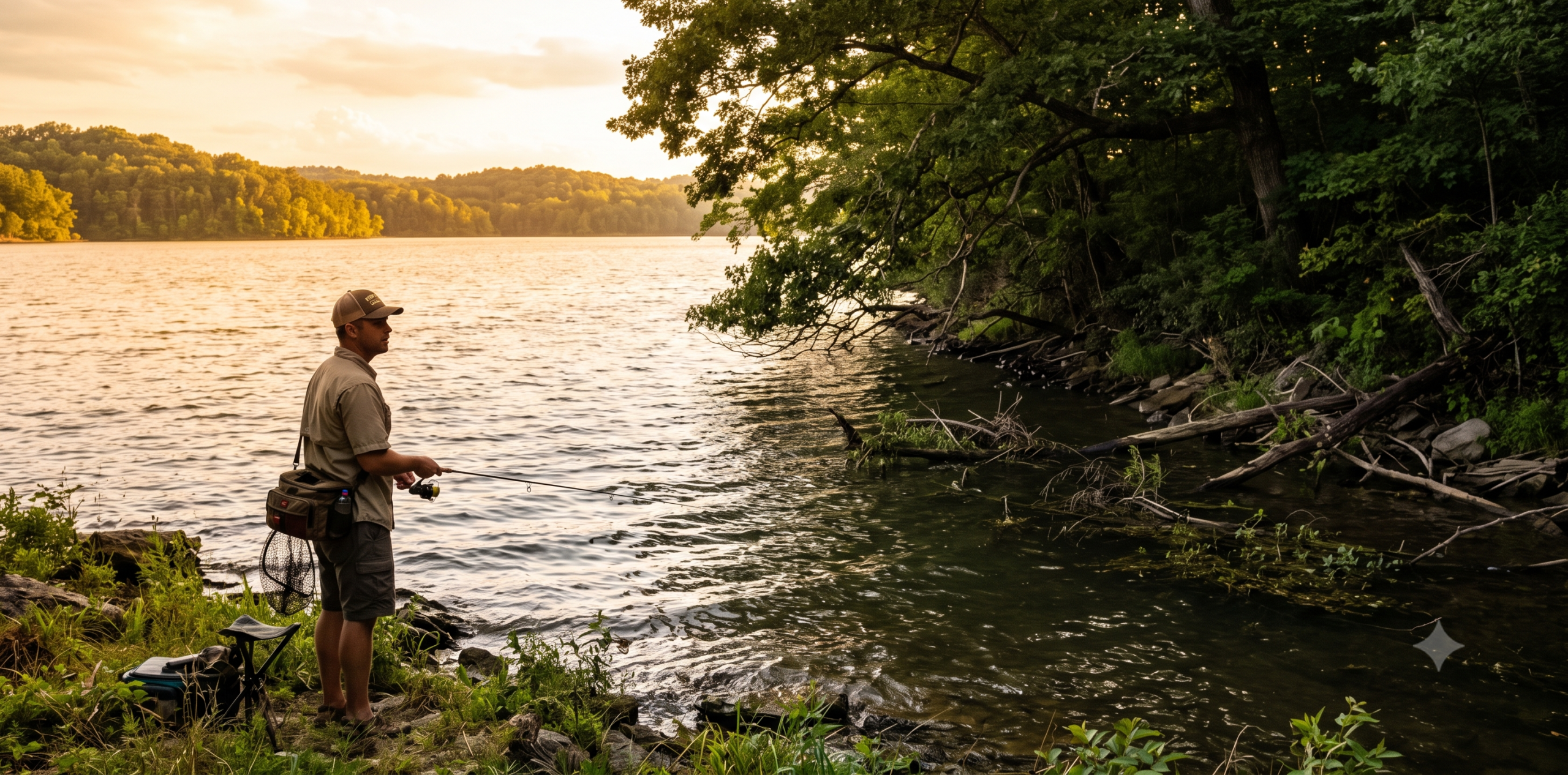
When a lake feels warm, bright, and quiet, do not assume the fish have disappeared. Use shade, wind, nearby depth, vegetation, inflows, and low-light movement to identify the small part of the shoreline offering fish a better reason to be there.
Start With the Lake, Not the Lure.
Quick answer
How can a bank angler find cooler, more productive summer water?
Look for reachable water where two or more summer advantages overlap. Strong starting choices include deep shade beside cover, a breezy bank with baitfish activity, vegetation near a depth change, a safe inflow, or a point or cove mouth that gives fish quick access between shallow and deeper water.
Cooler-looking water is only a clue. Spend the first 10 minutes comparing conditions, test two different shoreline explanations, and return to the better one as evening light fades.
Read the condition, not just the temperature
“Cooler water” is usually a combination of advantages
From the bank, you rarely know the exact water temperature everywhere you can cast. You do not need to. Your job is to find shoreline zones that may offer fish a better mix of comfort, oxygen, food, cover, and movement than the surrounding water.
The best summer spot is rarely “shade” or “deep water” alone. Slow down where shade, cover, depth, wind, food, or movement overlap.
Do not assume the deepest water is automatically the coolest or most productive. Summer lakes can develop layers, and deep water can sometimes have poor oxygen. Bank anglers are usually better served by comparing visible shoreline clues and fish activity than by trying to guess the deepest point.
Quick comparison
Which summer bank should you try first?
Use this table to choose a starting area with a reason. The strongest option is the one that combines multiple clues and remains safe and legally accessible.
| Water type | Why it may help | What confirms it | Best first test |
|---|---|---|---|
| Deep shade beside cover | Reduces light and gives fish a defined holding or ambush edge. | Shade meets wood, weeds, rock, a dock, or nearby depth. | Cast parallel to the shade line before throwing far into open water. |
| Breeze into a bank | May concentrate surface food and activity within casting range. | Ripples plus minnows, insects, feeding birds, cover, or a shoreline change. | Work the wind-touched edge from several angles without crowding the bank. |
| Point, cove mouth, or first drop | Connects shallow and deeper water and creates a natural travel route. | A contour change, steeper bank, rock transition, or quick access to depth. | Fan-cast shallow, across the break, and along the edge. |
| Healthy weed edge | Combines shade, cover, food, and a visible boundary. | Holes, points, clean outer edges, baitfish, or surface movement. | Fish the outside line and irregular features instead of burying every cast in weeds. |
| Shallow flat near sunset | Can become a feeding area as brightness and surface temperature begin to ease. | Small fish flicking, insects, dimples, birds, or movement beside cover. | Approach quietly and fish the closest edge before stepping to the water. |
For a closer look at how shoreline shape affects fish movement, read Kentucky Shore Fishing: How to Fish Coves, Flats, and Drop-Offs.
A repeatable decision process
Use the L.A.K.E. Method to narrow the shoreline
This field version helps you make a summer decision without giving away the ebook’s full ranking system, practice exercises, scorecard, and printable tools.
Look Before You Cast
Check heat, thunder risk, wind, shade, clarity, visible cover, baitfish, insects, birds, safe access, and fishing pressure. The first few minutes should make the rest of the trip less random.
Analyze the Lake
Compare at least two reachable areas. Look for an edge within an edge: shade beside weeds, wind touching a point, or cover close to the first depth change.
Key In on Productive Water
Choose the water with the strongest explanation. “It looks fishy” is weaker than “the breeze is pushing activity toward shaded cover beside deeper water.”
Execute a Simple Plan
Fish one or two confidence presentations, adjust angle or depth before changing everything, and move when your evidence no longer supports the starting spot.
How to Read Any Lake: A Beginner’s Fishing System goes deeper into edges, wind, cover, depth, food, comfort, fish movement, conflicting clues, and building a repeatable plan on unfamiliar water.
A practical evening schedule
A two-hour plan for fishing after a hot day
Begin early enough to leave before darkness makes the trail, bank, or parking area difficult to navigate. Confirm legal access, closing time, and current regulations before the trip.
Check safety and read the lake
Stop short of the shoreline. Check the forecast, visible storms, heat stress, safe footing, and your route back to shelter. Then compare wind, shade, nearby depth, vegetation, inflows, water clarity, signs of life, and fishing pressure. Use The First 10 Minutes at Any Lake as your observation checklist.
Test the strongest comfort-and-cover edge
Start where shade, cover, and nearby depth overlap. Fish the closest water first. Try a second casting angle and a slightly different depth before changing lures.
Compare a different explanation
Move to a second area built around another clue—perhaps a breeze touching a point, a weed edge near depth, or a cove mouth that connects shallow and deeper water. You are not wandering; you are comparing.
Fish the better pattern with focus
Return to the area that showed more life, better conditions, a strike, a follow, or a clearer reason for fish to be present. Slow down around the best edge and keep lure changes limited.
Use the low-light window
Quietly check the near bank, shallow cover, a point, or the first break beside your best area. Fish may become more reachable as brightness fades, but do not let the possibility of one more bite override safety.
Leave a clean, safe bank
Pack line, bait containers, hooks, and trash. Note which clues mattered, what time activity changed, and which area deserves the first test on your next similar evening.
For a broader short-trip framework, see How to Catch Fish When You Only Have Two Hours. Once you have chosen productive water, use Best Lures for Bank Fishing to keep the tackle plan simple.
The trip is never worth the risk
Summer heat and lightning safety for bank anglers
Heat safety
- Fish during the cooler part of the day when practical, but remember that evening humidity can still create dangerous conditions.
- Bring water, drink regularly, wear breathable clothing, use sun protection, and reduce unnecessary walking in exposed areas.
- Watch for headache, dizziness, nausea, weakness, unusual thirst, heavy sweating, confusion, or loss of coordination.
- If you feel faint or weak, stop fishing and move to a cooler place. Confusion, collapse, seizure, or severe coordination problems can signal a medical emergency.
Lightning safety
- If you hear thunder, stop fishing and seek safe shelter immediately. Do not wait for rain to begin.
- Use a substantial enclosed building or an enclosed hard-topped metal vehicle with the windows up.
- A picnic shelter, open pavilion, tent, isolated tree, or shoreline overhang is not safe lightning shelter.
- Remain in safe shelter for at least 30 minutes after the last thunder.
Watch for slick clay, soft or undercut banks, damaged trails, rising water, floating debris, and strong current near drains, culverts, inflows, or spillways. The companion guide Fishing After Summer Rain From Shore explains how to read changed water without ignoring access and storm hazards.
Fish-friendly handling
Release fish quickly and carefully in summer
Warm conditions can add stress, so prepare before lifting a fish from the water. Keep the process calm, brief, and gentle.
Before keeping fish, confirm the current license, waterbody rules, species limits, bait restrictions, and posted access rules. Kentucky’s current fishing guide is available from the Kentucky Department of Fish and Wildlife Resources.
Interactive knowledge check
Can you build the better summer plan?
Choose one answer for each question, then check your score.
Keep learning without getting overwhelmed
Choose the next guide that matches your trip
How to Read Any Lake
Move beyond individual tips with the complete beginner system for combining edges, wind, cover, depth, food, comfort, and fish movement.
Explore the EbookThe First 10 Minutes at Any Lake
Use a simple arrival routine to notice wind, shade, structure, depth, life, access, and fishing pressure before your first cast.
Read the Arrival GuideCoves, Flats, and Drop-Offs
Learn how common shoreline features connect feeding water, holding water, and fish movement from a bank angler’s point of view.
Study Shoreline StructureFishing After Summer Rain
See how runoff, inflows, clarity, current, safety, and storm timing can change the water after a summer weather event.
Read the Rain GuideFrequently asked questions
Summer bank-fishing questions
Do fish always move to deep water during summer?
No. Some fish use deeper water, but depth alone does not guarantee comfortable or well-oxygenated conditions. From the bank, compare accessible shade, cover, vegetation, inflows, wind, depth changes, and signs of feeding activity.
Is a shaded bank always cooler and better?
Shade is useful, but it becomes stronger when paired with cover, nearby depth, baitfish, vegetation, current, or a clear edge. A lifeless shaded bank may be weaker than a slightly brighter bank where wind and food activity overlap.
Should I fish the wind-blown bank on a hot evening?
Often it is worth checking when the wind is safe and steady, especially where it touches a point, weed edge, cove, or other structure. Treat wind as a clue, not a guarantee, and avoid exposed banks when conditions become dangerous.
What lure should I use when the bite slows in summer?
Choose the water first. Then use one presentation that can search an area and one slower option for high-confidence cover or edges. Adjust casting angle, retrieve depth, speed, and location before repeatedly changing lures.
What time should an evening fishing trip begin?
There is no universal start time. Work backward from sunset, park closing time, expected weather, and the amount of daylight needed to leave safely. A two-hour trip should include observation time and a safe exit—not two full hours of casting.
When should I stop fishing because of lightning?
Stop as soon as you hear thunder and move to a substantial building or enclosed hard-topped vehicle. Remain sheltered for at least 30 minutes after the last thunder.
Your next evening trip
Do not chase the whole lake
Find two reachable areas with different explanations. Test the strongest summer clue first. Compare it with one backup. Then let the lake—not frustration—tell you where to spend the final low-light window.
Start With the Lake, Not the Lure.
Build a Complete Lake-Reading System