
The Float Is Moving. That Does Not Automatically Mean the Cast Is Ruined.
You cast beside a weed edge, set the rod angle, and watch your bobber begin sliding away from the spot you picked.
The instinctive response is to reel it back and try again. Sometimes that is exactly right. Other times, the wind is carrying your bait across several feet of useful water that you would never cover with a stationary presentation.
The better question is not, “How do I stop my bobber from moving?” It is: Is this drift helping me test productive water, or pulling my bait away from it?
Start with the lake, not the lure—and read the drift before you fight it.
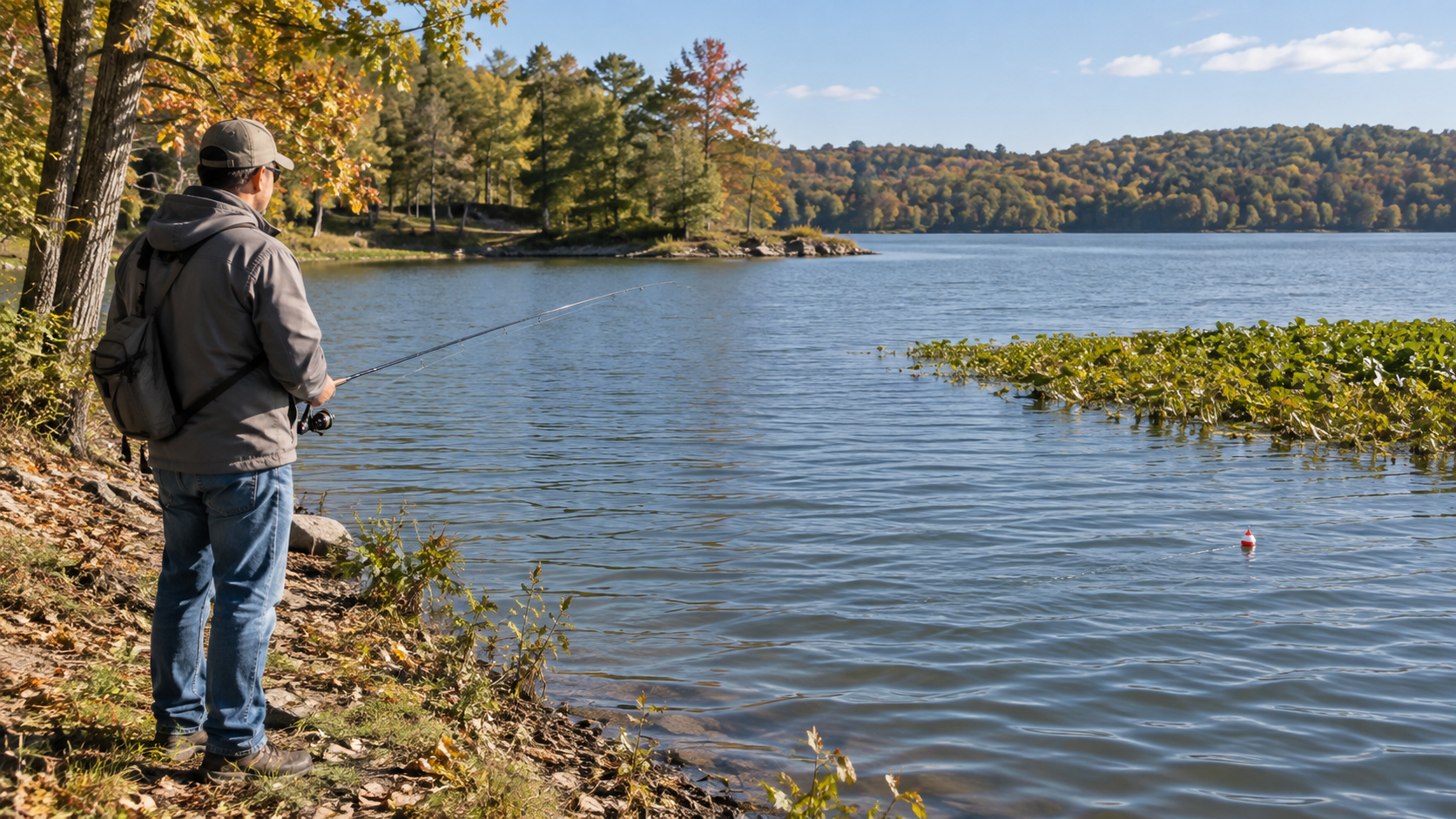
Should You Let a Bobber Drift in the Wind?
Let a bobber drift when the movement is slow enough to read, your bait stays at a useful depth, and the float travels along or across a feature you actually want to test.
Reset the cast when the bobber moves too fast to detect a bite, drags through weeds or bottom debris, creates a large bow of slack line, crosses another angler’s water, or leaves the productive edge completely.
A controlled drift can search water. An uncontrolled drift simply removes your ability to tell what happened.
First, Figure Out What the Bobber Is Actually Doing
A float is useful because it does two jobs at once: it suspends bait at a chosen depth and makes subtle movement easier to see.
Wind, surface movement, line angle, weight, and the shape of the shoreline can all change where that float travels.
That means movement itself is not necessarily the problem. Loss of control is the problem.
Before recasting, watch one complete drift. Note where the bobber lands, which direction it travels, how quickly it moves, where it slows, and whether it repeatedly passes vegetation, shade, rock, a point, a drop-off, or another visible feature.
This is the same observation-first habit behind Your Bobber Keeps Dipping—but You’re Not Hooking Fish. There, movement helps diagnose a missed bite. Here, movement helps diagnose the presentation itself.
Useful Drift or Bad Drift?
| What You See | What It May Mean | Best First Move |
|---|---|---|
| Slow drift beside weeds or shade | The wind may be moving your bait through a useful feeding lane. | Let it finish and repeat the starting point. |
| Bobber races across open water | Surface push or line drag is reducing control. | Shorten the cast or change your angle. |
| Float stops at the same place | The rig may be touching vegetation, bottom, wood, or a depth transition. | Inspect the bait and retest the same lane. |
| Large bow forms in the line | The wind is moving the line as much as the float. | Lower the rod tip and shorten the cast. |
| Float crosses another angler’s water | The drift is no longer safe or courteous. | Reel in and choose a new casting angle. |
If you can describe what your bait is traveling past, the drift may be useful. If the bobber is simply blowing somewhere you cannot control or interpret, reset it.
Five Adjustments to Try Before Changing the Whole Rig
1. Shorten the Cast
A long cast gives the wind more line to push. If the float becomes difficult to read, make a shorter cast toward the same type of water.
Bank anglers often gain control by sacrificing distance.
2. Change the Casting Angle
If a crosswind keeps pulling the rig away from your target, cast slightly upwind and let the bobber travel toward the feature.
The idea is not to beat the wind. It is to choose a starting point that makes the drift useful.
When wind is one of the strongest clues on the lake, use the Kentucky Wind & Structure Cheat Sheet to compare banks and shoreline features.
3. Remove Unnecessary Slack
Watch the line between the rod tip and bobber. A large wind-blown bow can make a subtle bite harder to detect and a hookset slower to reach the fish.
Retrieve excess slack gently without dragging the float away from the productive lane.
4. Check Whether the Bait Is Touching Weeds or Bottom
A bobber that repeatedly stops, tilts, or dips at one location may be telling you that the rig is contacting something beneath the surface.
If the hook comes back covered with vegetation, test the bait slightly shallower.
For more on using vegetation as a fishing clue, see How to Fish Grass Lines and Weed Edges From the Bank.
5. Move When the Wind Makes the Bank Hard to Fish
Wind is useful until it removes safe footing, casting control, visibility, or the ability to keep your line away from other people.
A calmer shoreline is not automatically worse water. Compare the structure you gain by moving: shade, reachable depth, vegetation, a point, a dock edge, or a cleaner casting lane.
Use the L.A.K.E. Method Before Blaming the Bobber
Watch wind direction, floating debris, shoreline shape, vegetation, shade, and nearby anglers before casting.
Connect the wind to a point, corner, weed edge, dock, cove mouth, first drop, or other reachable feature.
Choose the smallest section of water where the drift can remain controlled and useful.
Repeat the starting point, then change only depth, angle, cast length, or line control.
The complete approach is explained in How to Read Any Lake.
Three Situations Where a Drift Can Help
Bluegill Along a Weed Edge
Instead of dropping your bait directly into heavy vegetation, start just outside the grass and let a light breeze move the float along the cleaner edge.
If the bobber repeatedly dips near one section, you now have a precise area to test again.
Stocked Trout in Open Water
On recently stocked waters, a manageable drift can help bank anglers compare several feet of water without immediately changing lures or moving locations.
Pair that approach with The Trout Truck Just Left—Where Should Bank Anglers Cast First?.
A Protected Corner
If your float repeatedly ends up in the same sheltered corner, notice why.
Is the bank bending inward? Is floating material collecting there? Does the water become calmer beside cover?
That does not guarantee fish, but it gives you a clue worth comparing.
Your Two-Hour Bobber-Drift Plan
0–10 minutes: Watch wind direction, surface movement, safe casting lanes, and shoreline structure.
10–35 minutes: Establish a baseline with several identical casts.
35–60 minutes: Change one variable—cast length, angle, depth, or slack control.
60–90 minutes: Compare a second bank with a different wind or structure condition.
90–115 minutes: Return to the lane that produced the clearest bite, cleanest drift, or most useful evidence.
115–120 minutes: Record what you learned for the next trip.
Build Your Drift Test
For the full trip-planning framework, use The Two-Hour Kentucky Bank-Fishing Plan.
Safety and Fish-Friendly Release
A wind strong enough to move your float can also make wet rocks, leaves, mud, and steep banks more difficult to navigate.
Do not step onto unstable shoreline simply to follow a drifting bobber.
Keep casting lanes clear around other anglers, children, walkers, docks, and piers.
Before fishing, verify current licenses, limits, bait rules, special regulations, and public access using the Kentucky Fishing and Boating Guide.
For fish you plan to release, wet your hands, minimize handling, keep the fish off dry ground, and have pliers ready. More guidance is available from the National Park Service catch-and-release guide.
Four-Question Knowledge Check
Your result will appear here.
FAQs
Is it bad if my bobber moves in the wind?
No. Slow, controlled movement can carry your bait through productive water. The problem begins when the drift becomes too fast or difficult to interpret.
Should I add more weight to stop a bobber from drifting?
Not automatically. First try shortening the cast, adjusting your angle, reducing slack, or moving to a more manageable bank.
Should I cast into the wind?
Sometimes. A slight upwind starting point can allow your rig to drift naturally toward a target feature.
Why does my bobber keep stopping in the same place?
Your rig may be touching vegetation, bottom, wood, or another underwater feature. Inspect the bait and hook before assuming every stop is a bite.
Can this work for bluegill, crappie, and stocked trout?
Yes. Controlled drift is a presentation technique rather than a species-specific method. Adjust bait, depth, tackle, and legal technique for the fish you are targeting.
What Did the Wind Do to Your Bobber?
Did it slide neatly along a weed edge, race across open water, stop over the same hidden feature, or make a promising shoreline almost impossible to fish?
Tell me what happened in the comments. Include your target fish, approximate depth, wind direction, and the one adjustment you tried.
You do not need to reveal a private fishing location. The useful part is the clue another bank angler can recognize on their own lake.
Start with the lake, not the lure.