
Your bobber was standing normally a moment ago. Then it rose, tipped sideways, or went completely flat on the surface.
Did your bait settle onto the bottom? Did the hook catch a weed? Or did a fish pick the bait up and remove the weight that was holding the float upright?
Do not guess from one movement. A flat bobber becomes useful when you compare when it happened, what the line did next, and what comes back on the hook.
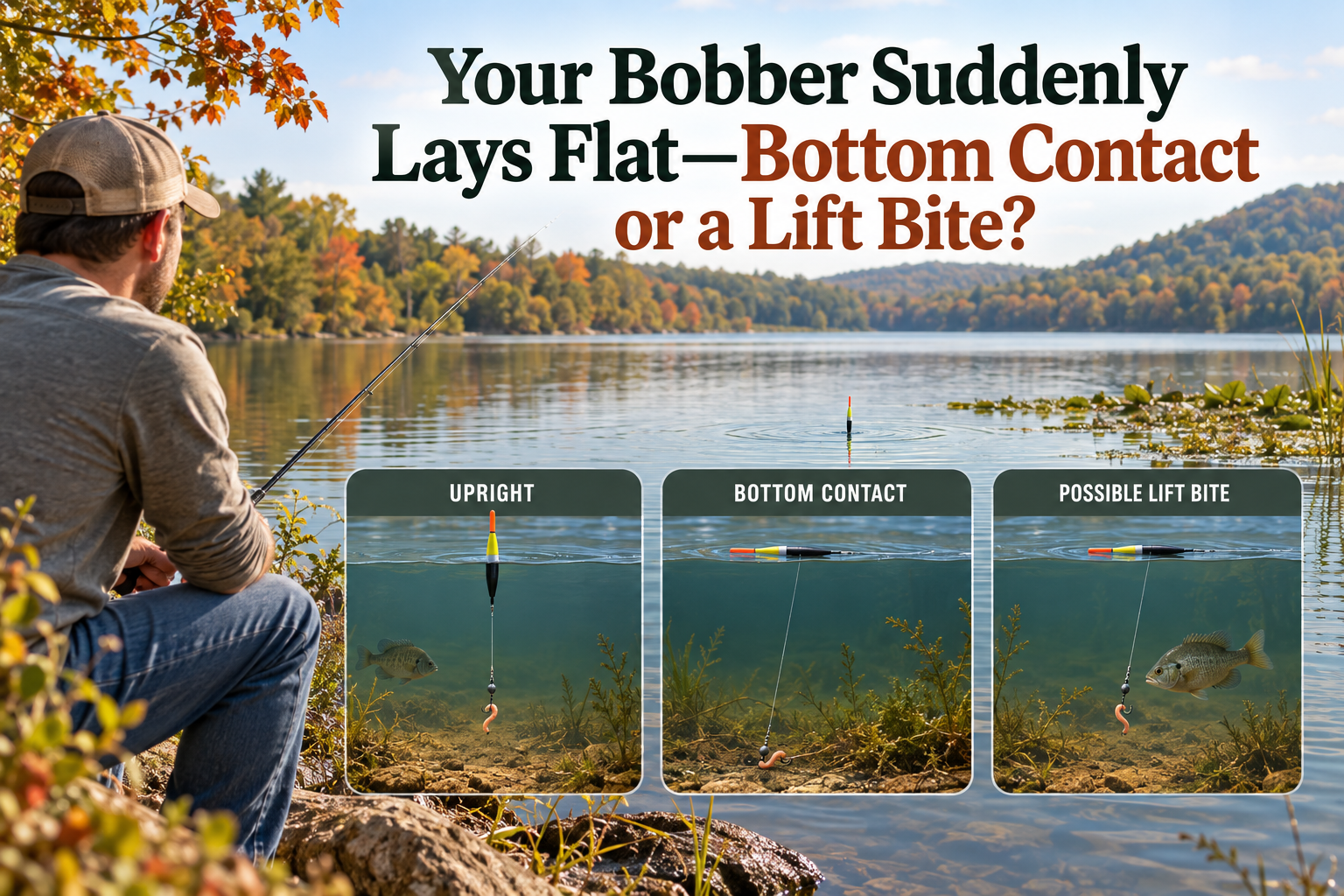
Quick Answer: Why Does a Bobber Suddenly Lay Flat?
A bobber can lie flat because the weight below it is resting on the bottom, vegetation is supporting the rig, the float is not balanced correctly, wind or slack line has changed its position, or a fish has lifted the bait and sinker upward.
The most useful clue is sequence. If the float never stands correctly after the cast, troubleshoot the rig and depth first. If it settles normally and then suddenly rises or falls flat—especially with deliberate sideways line movement—a fish becomes a stronger possibility.
A flat float is not proof of a bite. It is an invitation to investigate.
Check depth, weight, weeds, and bottom contact.
Watch for a possible lift bite or changing bottom contact.
A deliberate take becomes more likely. Remove slack and stay ready.
First: What Kind of Bobber Are You Watching?
Not every float communicates the same way. That matters before you interpret a sideways or flat position.
| Float Type | What a Flat Position Can Tell You | Best Beginner Clue |
|---|---|---|
| Round clip-on bobber | Orientation is less informative because the body is nearly round. | Watch for submergence, travel, unusual movement, and line tension. |
| Stick or pencil float | Tilting or lying flat can reveal a change in the weight pulling downward. | Compare its normal resting position with what happened just before it tipped. |
| Slip bobber | Depth setting, sinker position, and bottom contact can all change how it sits. | Confirm the rig fully settled at the stop before diagnosing the signal. |
Kentucky Fish & Wildlife includes bobbers, small sinkers, and small hooks among its beginner tackle recommendations for bluegill, crappie, and trout. It also recommends testing different depths for panfish rather than assuming one setting is correct all day.
If you are still learning what a normal bite looks like, read Your Bobber Keeps Dipping—but You’re Not Hooking Fish before changing the whole rig.
The Four Most Likely Reasons Your Float Went Flat
1. Your Bait or Sinker Is Resting on the Bottom
An elongated float stands upright because the bait and weight beneath it pull downward. If part of that weight reaches the bottom, the float may lose enough downward pull to tilt or lie sideways.
This often happens after you move slightly closer to shore, cast onto a shallow shelf, or increase the distance between the bobber and hook without realizing the water is shallower than the rig.
Test it: Move the float or bobber stop slightly shallower and repeat the exact casting lane. Small changes of roughly 6 to 12 inches are easier to compare than a large guess.
2. Weeds or Wood Are Supporting the Rig
A hook, split shot, or bait caught in submerged vegetation can remove tension from the float. The result may look surprisingly similar to a lift bite.
Reel in and inspect the hook before you make another identical cast. A strand of grass, leaf, algae, or tiny twig can explain more than another five minutes of guessing.
If the hook repeatedly comes back fouled, fish slightly shallower or move your cast along the clean outside edge of the cover.
3. Wind and Slack Line Changed the Float’s Position
Surface movement may push the bobber while wind pushes your line in a different direction. A large bow develops between rod tip and float, and what looks like a bite may simply be the rig losing its normal alignment.
Before changing tackle, shorten the cast, lower the rod tip, and gently retrieve excess slack without dragging the bait away from the area you are testing.
This follows directly from Your Bobber Keeps Drifting Away—Should You Fight the Wind or Let It Work?. Controlled movement can teach you something. Uncontrolled movement usually cannot.
4. A Fish Lifted the Bait or Sinker
This is the movement that makes a flat float exciting.
With a properly balanced stick or pencil float, a fish that takes the bait and rises can remove some of the downward pull from the shot. The float may rise higher, lean over, or fall flat. In float fishing, this is commonly called a lift bite.
But do not turn that into a rule that says “flat bobber equals fish.” The same signal can come from the bottom, weeds, poor balance, or changing line tension.
A stronger lift-bite sequence looks like this:
- The float settles in its normal position.
- It changes suddenly rather than gradually.
- The change happens where the rig had been fishing cleanly.
- The line begins to tighten, travel, or behave differently from the surrounding waves.
- The same kind of signal repeats in a similar depth or location.
With a conventional J-hook and natural bait, remove excess slack and respond to a clear, deliberate take with a controlled lift rather than a huge overhead hookset.
Flat Bobber Comparison: Bottom, Weeds, Wind, or Fish?
| What You See | Possible Cause | Best First Test |
|---|---|---|
| Float lies flat on nearly every cast | Rig too deep, insufficient weight, or float poorly balanced | Test the rig in clean water and reduce fishing depth slightly. |
| Float tips at one exact location | Bottom rise, weeds, wood, or another submerged feature | Inspect the hook and repeat the same lane slightly shallower. |
| Float leans as a large line bow forms | Wind or surface drag | Shorten the cast and reduce slack. |
| Float was normal, rises, then suddenly lies flat | Possible lift bite | Watch the line, remove slack, and respond to deliberate movement. |
| Float lies flat, then slides steadily away | Possible fish moving with the bait | Maintain control and use an appropriate hook-setting method for your rig. |
Use the L.A.K.E. Method to Diagnose the Signal
Watch the float before touching the reel. Note wind, waves, nearby weeds, line angle, and where the signal happened.
Ask whether the movement fits bottom contact, cover, wind, or an actual change in the bait’s weight.
Repeat the smallest useful section of water where the signal occurred.
Change only depth, cast angle, slack control, or bait position—then compare the result.
The complete observation-first system is explained in How to Read Any Lake.
A Simple Five-Cast Flat-Bobber Test
When the float starts confusing you, do not spend twenty minutes changing hooks, bait, bobber size, sinker weight, depth, and casting distance all at once.
Use five deliberate casts instead.
- Cast 1: Establish how the float normally settles.
- Cast 2: Repeat the same lane and see whether the flat signal happens in the same place.
- Cast 3: Fish 6 to 12 inches shallower.
- Cast 4: Shorten the cast enough to improve line control.
- Cast 5: Return to the setup that gave the clearest, most repeatable signal.
You are not trying to solve the whole lake. You are trying to answer one question: What changed the tension on my float?
How This Helps You Find Fish Instead of Just Fixing Tackle
The best part of this problem is that it can reveal something about the lake.
If your rig suddenly reaches bottom sooner than expected, you may have found a shelf. If it catches grass repeatedly, you may have located a weed top or edge. If the float tips only during one controlled drift, the bait may be crossing a depth change. If the float rises and travels after fishing cleanly, a fish may have shown you a precise feeding lane.
That turns a “weird bobber problem” into lake-reading information.
Kentucky Fish & Wildlife advises panfish anglers to work different depths and fish around weeds, wood, and rock. The important part for a bank angler is to make those depth changes deliberately instead of randomly.
Your Two-Hour Flat-Bobber Fishing Plan
For the full short-trip framework, use The Two-Hour Kentucky Bank-Fishing Plan.
Planner Integration: Record the Signal Before You Forget It
Safety, Current Kentucky Rules, and Fish-Friendly Release
Do not walk onto steep mud, wet leaves, unstable riprap, or submerged shoreline simply because the float moved somewhere inconvenient. A shorter, safer casting angle is always the better choice.
Before fishing, verify current license requirements, limits, special regulations, access rules, and bait restrictions through the Kentucky Department of Fish & Wildlife regulation guides.
If you plan to release your catch, keep the fish wet, use wet hands, minimize handling time, keep pliers ready, and avoid touching the gills. The National Park Service catch-and-release guidance provides a useful handling checklist.
Four-Question Knowledge Check
Frequently Asked Questions
Does a bobber lying flat always mean a fish has the bait?
No. Bottom contact, vegetation, wind, slack line, and incorrect float balance can all create a similar signal. A possible bite becomes more convincing when the float had been sitting normally and then changes suddenly with deliberate line movement.
Why does my bobber lie sideways as soon as it hits the water?
The rig may not have settled yet, there may not be enough weight to cock an elongated float, or the bait and sinker may already be resting on bottom. First learn what the float looks like when the rig is working correctly in clean, reachable water.
Should I add more weight if my bobber will not stand up?
Not automatically. First confirm that the bait is not on bottom and that the hook is not caught in weeds. Then check the float’s intended load. Too much weight can create a different problem by sinking the float or making it harder to read.
Can a bluegill create a lift bite?
Yes. A fish that takes a bait and moves upward can reduce the downward load on a properly balanced float. The exact appearance depends on the float, weight, depth, and direction the fish moves.
Is a slip bobber better for deeper fall panfish?
It can be. Slip bobbers let you fish deeper water while keeping the rig reasonably easy to cast. The best depth still needs to be found through observation and testing.
What if my round red-and-white bobber cannot really lie flat?
That is normal. A round clip-on bobber does not provide the same upright-versus-flat signal as a pencil or stick float. Focus more on whether it submerges, travels sideways, hesitates, or moves differently from the surrounding waves.
Sources and Further Reading
- Kentucky Fish & Wildlife — Learn to Fish
- Kentucky Fish & Wildlife — Current Regulation Guides
- Angling Times — Lift Method and Lift-Bite Mechanics
- National Park Service — Catch and Release Safely
What Did Your Bobber Do?
Did it lie flat as soon as the rig settled, tip over at the same spot on every cast, or suddenly rise and slide away after sitting normally?
Tell me what you saw in the comments. Include the type of bobber, approximate depth, target fish, and whether the hook came back clean or covered in weeds.
You do not need to share your fishing spot. The useful part is the clue another bank angler can recognize on their own lake.
A strange float movement is not a verdict. It is one more piece of evidence.