
Every Lake Guide · The last few feet
You can already see the fish. One more turn of the reel, one reach with the net, and this is the catch everyone will talk about on the way home.
Then the rod straightens.
The fish is gone. The net is empty. And someone says, “What did I do wrong?”
Before you blame yourself—or tell a child to reel faster—check what changed in those final few feet. A loose loop of line, a hurried lift, or a net that was not ready can matter. So can a hook that never held securely. You will not always know which one happened, but you can make the next landing less frantic.
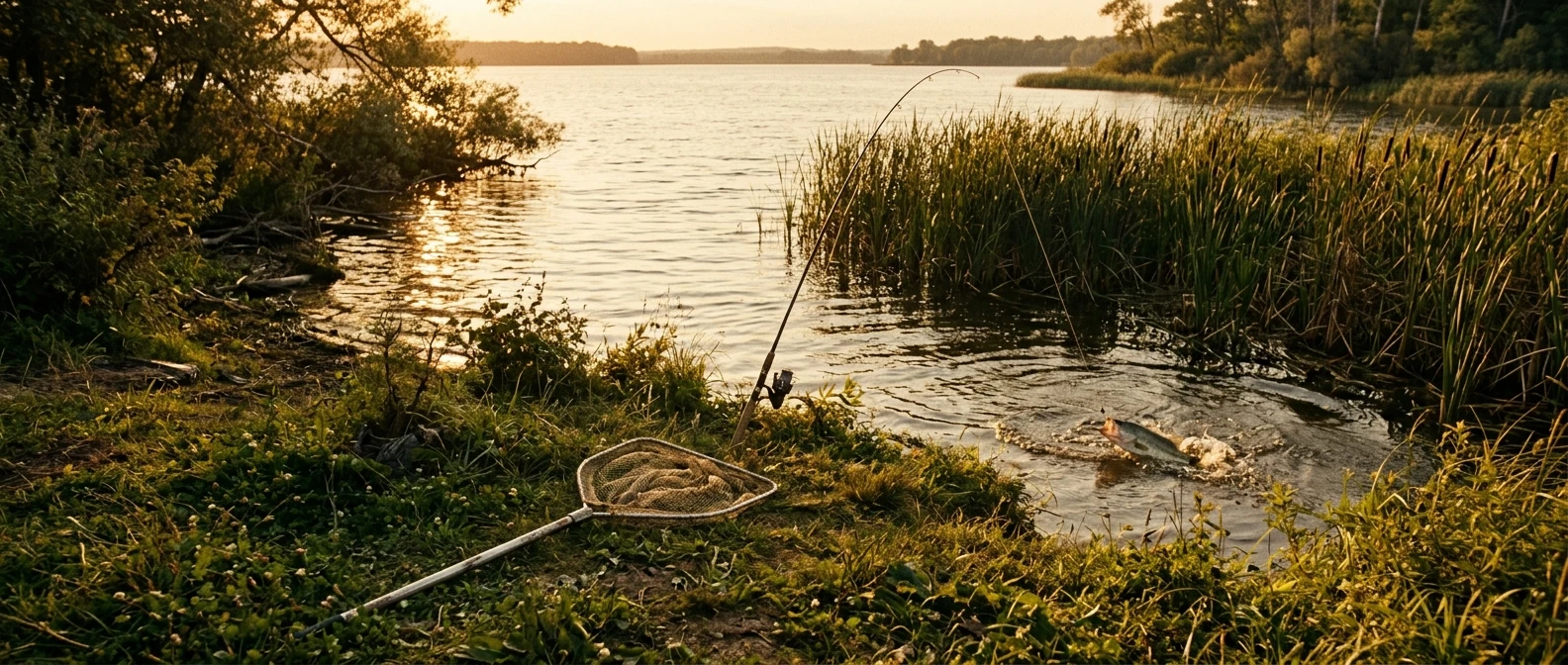
Quick answer: why do fish come off near the bank?
A hook can pull free when pressure suddenly changes, and damaged line or a weak knot can fail during a close-range surge. Rushing the net, lifting the fish by the rod, or having no reachable landing place can turn the final approach into a scramble.
Check whether the hook is still attached, inspect the line and knot, then plan a calmer landing: steady pressure, room for the drag to work, and a net ready before the fish arrives. Sometimes the hook simply never held well; one lost fish cannot prove the cause.
1. Check what came back before changing your tackle
Start with the evidence in your hand. An intact hook suggests a different problem from a missing hook and damaged line. Neither tells the whole story, but the distinction keeps you from fixing the wrong thing.
| What you find | What it may mean | What to check next |
|---|---|---|
| Hook and line appear intact | The hook pulled free; slack, a sudden pull, or a shallow hold may have contributed. | Hook point, bent metal, bait crowding the hook, and the moment pressure changed. |
| Hook is missing; line end is curled | A slipped knot is possible, but the curl alone is not proof. | Retie carefully with a suitable knot and test it before casting. |
| Line looks rough, nicked, or frayed | Contact with rock, wood, equipment, or other abrasion may have weakened it. | Remove damaged line; inspect nearby line and rod guides. |
| Hook is opened or bent | Excessive load, prior damage, or unsuitable tackle may be involved. | Replace the hook and review drag and tackle suitability. |
These are troubleshooting clues, not a forensic test. A clean-looking break does not identify its cause, and not every failure leaves an obvious mark.
Make the tackle sound before trying again. Never test a knot by pulling against an exposed hook with your bare hand, and do not wrap fishing line around your fingers.
2. Watch for the moment the pressure changes
The fish swims toward you, and a loose loop appears. You stop reeling to look for the net. Or the fish turns away, and you clamp down because it is “almost in.” Each moment changes the pressure between rod, line, and hook.
Keep a comfortable bend in the rod and recover slack as the fish approaches. When it pulls line against the drag, stop cranking and let the tackle cushion the run. Resume a controlled retrieve when you can gain line. Do not lock the drag simply because the fish is close.
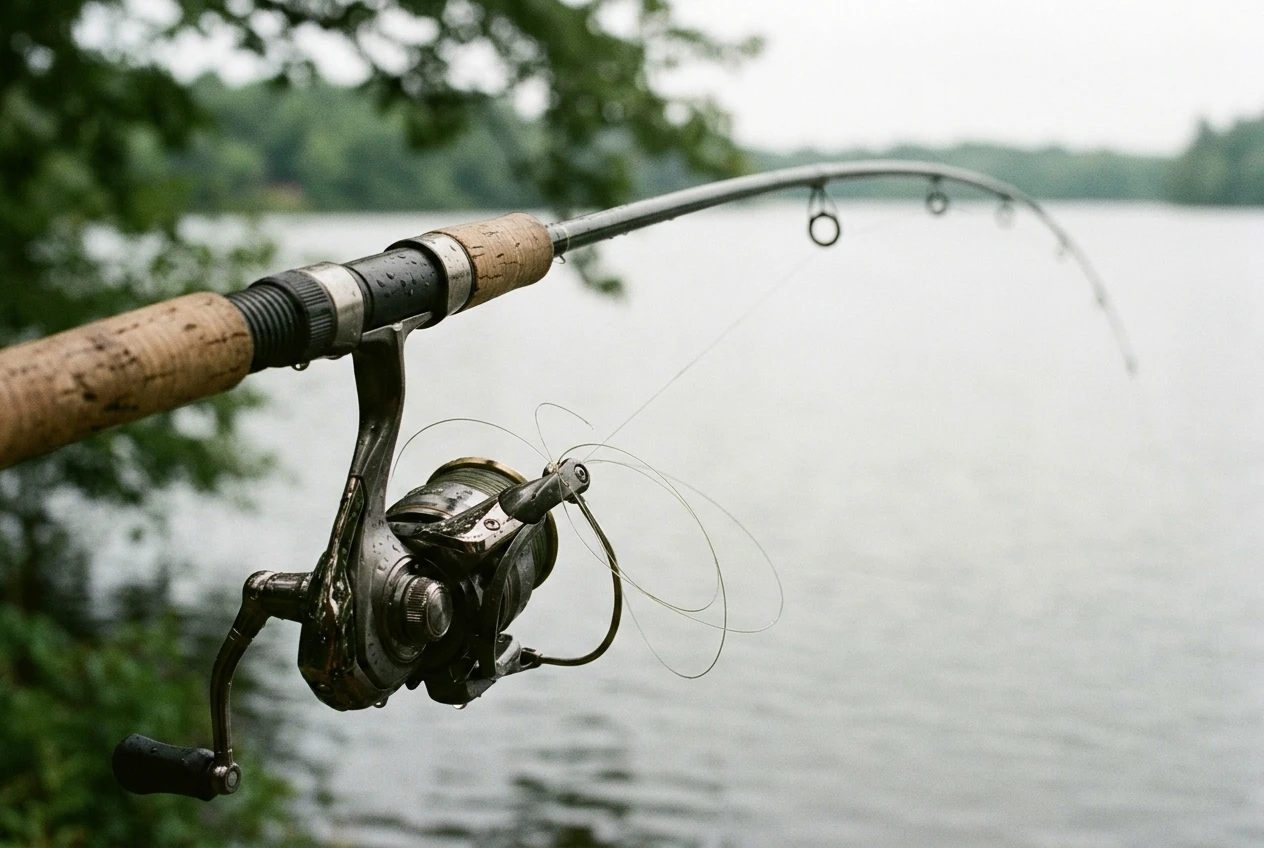
Keep the rod at a manageable forward angle. Avoid hauling it sharply back overhead or reeling the hook, swivel, or bobber into the tip. You need enough working line to guide the fish toward the landing spot.
Take Me Fishing’s reeling guidance explains letting the rod and drag handle a run. Practice finding your reel’s drag adjustment before the next bite, following its instructions.
3. Choose the landing spot before choosing the cast
You can cast over a wall of shoreline plants. That does not mean you can bring a fish back through it. A steep drop, slippery rock shelf, or high railing creates the same mismatch.

Before settling in, point to the place where a fish could actually be landed. Can you reach the water from stable, permitted footing? Is the net long enough? Can a helper stand nearby without crowding the angler or blocking a public path?
If the answer requires climbing down a wet slope, leaning over a railing, or sending a child to the edge, choose another position. Plan from where your feet can safely stay.
In late fall, leaves can hide uneven ground and slick surfaces. A bank that was convenient in summer may need a fresh look. Keep children closely supervised and in properly fitted life jackets near the water.
4. Make the net an open doorway—not a moving target
A net works best when it is ready, not when someone is digging it out from under a chair. For an ordinary bank catch that needs netting, place the net opening in the water and guide the fish toward it headfirst. Avoid chasing or stabbing at the fish with the rim.
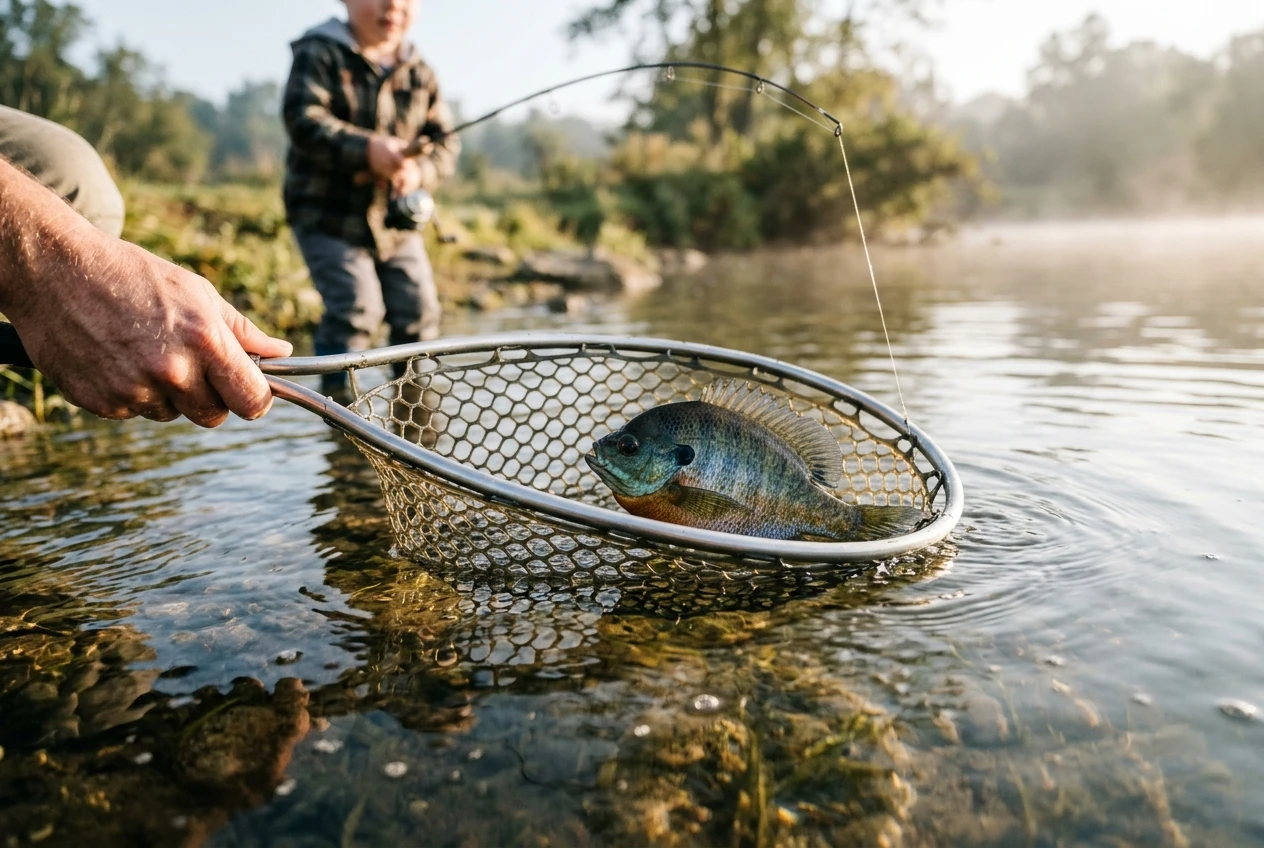
If the fish turns away, maintain control and reset. Do not lunge after it. Once it is fully over the net, secure the catch with the net supporting it. Do not swing it onto the grass with the rod.
A knotless rubber-mesh net is a useful choice when a net is needed for catch and release. Match the opening and handle to the fish and your actual reach. The Take Me Fishing landing guide describes the headfirst approach; Wisconsin DNR’s release guidelines (PDF) recommend soft, knotless netting and prompt landing.
For a family outing, assign the jobs early: one person manages the rod; an adult handles the net and hooks. A child needs one calm instruction at a time, not a chorus of “Reel! Lift! Stop!”
5. Finish with the fish’s condition in mind
Once the fish is secure, keep it in the water while unhooking when practical. Wet your hands before touching it, avoid the eyes and gills, and support its body. Do not place it on dry grass or gravel for a photograph.
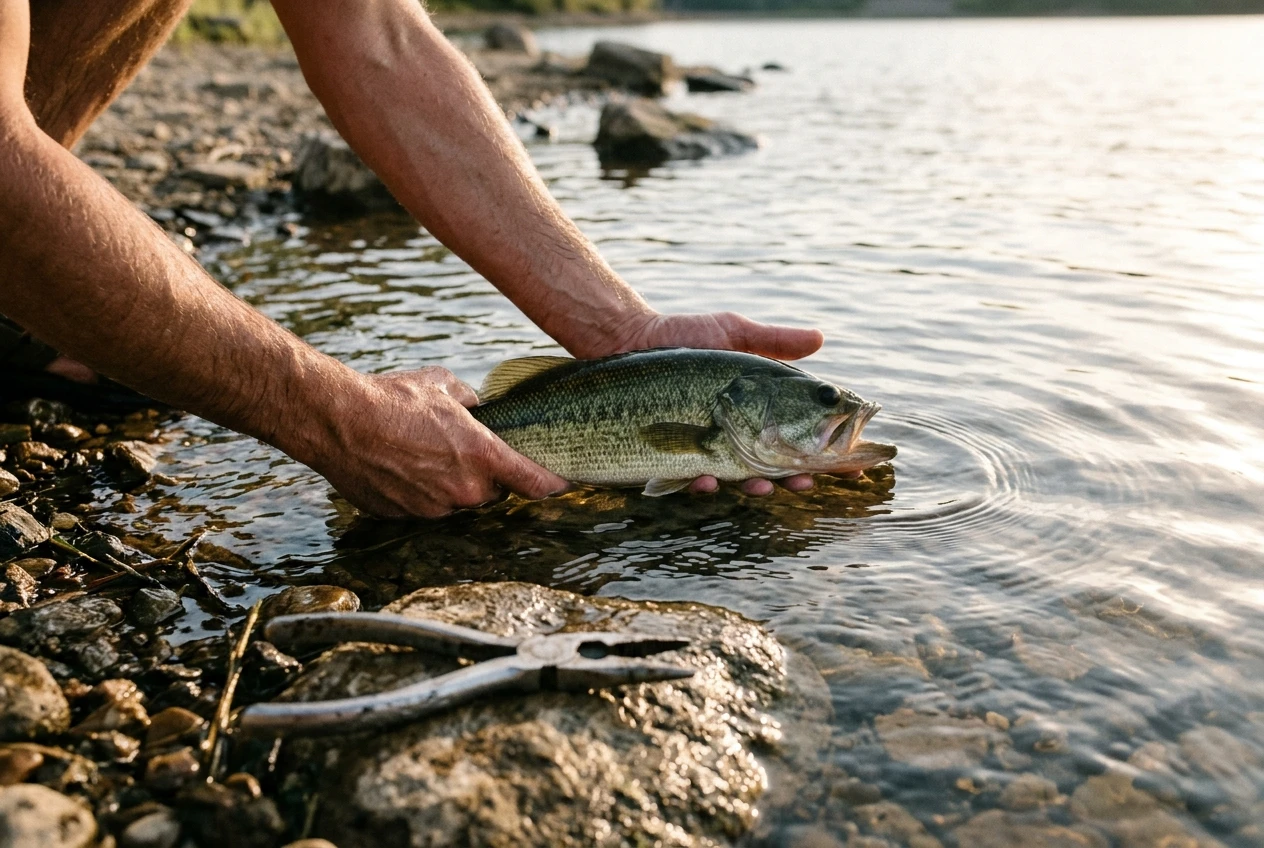
Handling differs by species: a bass-style lip grip is not a universal technique for trout, catfish, or fish with teeth. Have an adult handle unfamiliar fish and exposed hooks.
For a fish you intend to release, minimize handling and air exposure. If a hook is deeply swallowed, do not dig for it; cutting the line close to the hook may be the appropriate option. Consider suitable barbless hooks to simplify removal. See the Texas Parks and Wildlife release guidance and the Wisconsin guidance above.
The fish got away. Keep the clue it gave you.
Imagine a parent and child who hook a fish beside a weed edge. The parent reaches behind a chair for the net. The child stops winding, the fish comes closer, and the line goes loose. Then the hook comes back empty.
Illustrative example, not a documented fishing trip.
Slack may have contributed, but the hook could also have held poorly. Instead of arguing about who lost the fish, they can fix the part they noticed: put the net within reach and practice keeping contact during the approach.
They do not need to abandon the weed edge. The fish responded there. Use You Got One Bite—Now What? to preserve that useful clue. If the whole outing felt unproductive, try the broader five-check fishless-trip review.
Your one-minute landing plan
Give the next bite a better finish. Complete these three prompts before you settle into your chair.
Temporary scratchpad: nothing is submitted or permanently saved. Copy your entries into your phone’s notes before leaving or refreshing.
Four-question knowledge check: would you land it differently?
Choose your answer mentally, then tap each question to reveal the explanation.
1. The fish pulls line against the drag. Keep cranking—or pause the retrieve?
Pause the retrieve. Keep controlled pressure and let the drag work. Resume gaining line when the run eases; do not tighten everything in a panic.
2. Your hook comes back intact. Does that prove the line was too light?
No. The line did not break in this event. Inspect the hook and consider a weak hold or pressure change before replacing line simply with a heavier rating.
3. The fish turns away from the net. Chase it with the rim—or reset?
Reset. Maintain control and guide it toward the submerged opening again. Lunging risks lost balance and another sudden change in pressure.
4. A great casting spot has no safe landing access. Fish it anyway—or choose another position?
Choose another position. A useful fishing spot needs a safe return route for the catch as well as an open casting lane.
Frequently asked questions
Do I need a landing net for every small fish?
No. Some small fish can be controlled and unhooked safely at the water. A suitable net helps when reach, fish size, hooks, or your experience make hand landing difficult. Never lean dangerously to avoid using one.
Should I switch to heavier line after losing a fish?
Only if the line is unsuitable for the species or conditions. First check damage, knots, drag, and the landing method. Heavier line cannot fix a slipped knot or an unsafe bank.
Should I let the fish tire completely before netting?
No. Bring it under control and land it promptly without forcing the tackle. Deliberately exhausting a fish prolongs the fight and can harm it.
Will barbless hooks make me lose every fish?
No. They still require a sound hook hold and controlled pressure. Barbless hooks can make unhooking easier, but no hook guarantees a landed fish. Follow the rules for your water.
What happened in your last few feet?
Finish this sentence in the comments: “The fish was almost in, and then…”
Did the hook come back intact? Did the line break? Was the net still behind the chair? Tell us what you noticed and one thing you will do differently. Include the species if you know it; your favorite spot can stay private.
If a child lost the fish, let the story include what went right: they noticed the bite, hooked a fish, or stayed calm. That is something to build on.
You cannot guarantee the next fish will stay hooked. You can have your feet set, your tools ready, and one calm plan for bringing it in.
Start with the lake, not the lure—and plan how the fish comes back.