Learn the Lake, Catch More Fish: A Beginner’s Guide to Better Lake Fishing
EveryLakeGuide Beginner Strategy
Most beginners try to solve fishing by changing lures. Better anglers solve the lake first. When you understand wind, depth, cover, shade, access, and fish movement, every cast starts to make more sense.
That is the heart of EveryLakeGuide. You do not need a boat, a wall full of tackle, or years of experience to fish a lake more confidently. You need a simple way to read the water before you ever tie on a lure.
Quick reminder: Always check current Kentucky fishing rules, license requirements, posted park signs, and lake-specific limits before fishing.
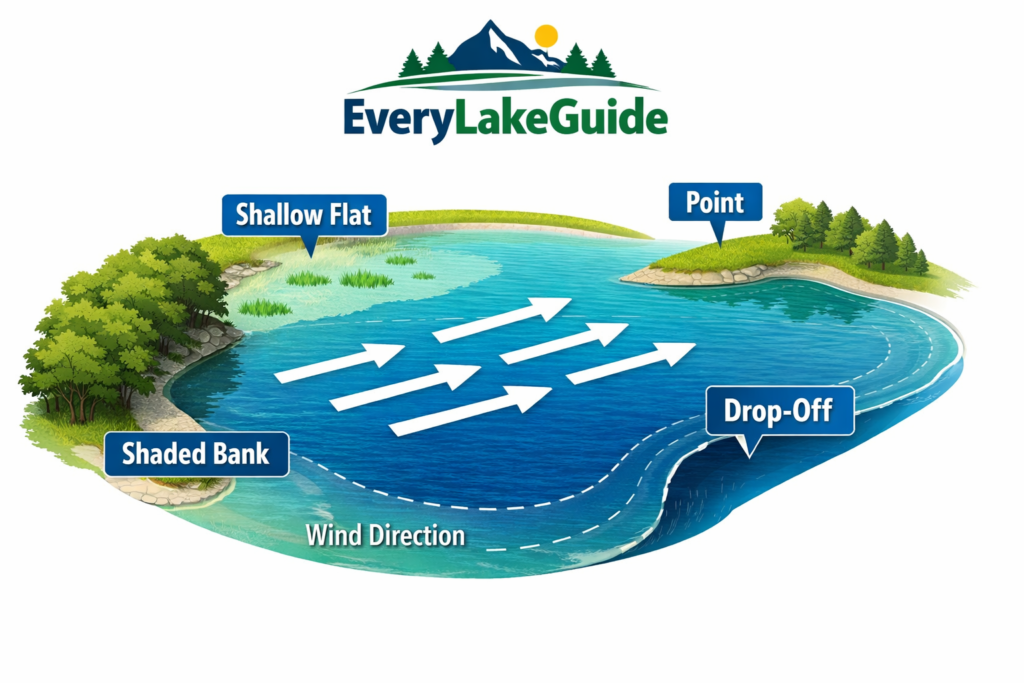
The Lake Usually Gives You Clues Before the Fish Do
A lake is not just a big bowl of water. It has edges, corners, shallow shelves, deeper lanes, wind-blown banks, shade lines, hard bottoms, soft bottoms, weed edges, drains, points, and places where food naturally collects. Fish do not use all of that water the same way. They move, pause, feed, and hide based on what the lake gives them.
That is why two people can fish the same lake on the same day and have completely different results. One person walks up, guesses, casts at open water, and hopes something bites. The other person looks at the wind, checks the bank shape, notices where bluegill are flicking near the surface, and starts with the most likely water first.
The second person is not lucky. They are reading the lake.
To catch more fish from a lake, start by identifying where fish are most likely to feed or rest. Look for wind-blown banks, shade, points, drop-offs, weeds, visible baitfish, and access to deeper water. Then choose a simple lure or bait that matches that zone.
If you are new to this style of fishing, start with the full beginner foundation in Fishing for Beginners Lake Guide: Start With the Water, Not the Lure. This post builds on that same idea and turns it into a practical habit you can use every time you visit a lake.
Lake-Reading Reality Check
Before you start fishing, test what you notice. These questions are not meant to make fishing complicated. They help you slow down long enough to see the clues most beginners walk past.
- Which bank is the wind pushing into right now?
- Where does shallow water appear to drop into deeper water?
- Can you see shade, weeds, rocks, wood, docks, drains, or points?
- Do you notice baitfish, insects, surface dimples, birds, or bluegill activity?
- If you only had 30 minutes, which stretch of bank gives you the most clues?
If you can answer even two of those questions, you are already fishing with more purpose than someone who simply casts at the middle of the lake.
Why “Learn the Lake” Beats “Try Another Lure”
Lures matter. Bait matters. Line, hooks, colors, and retrieve speed can all make a difference. But none of them matter much if you are fishing where fish are not feeding, resting, or traveling.
This is where beginners often get trapped. They cast for ten minutes, get no bites, and assume the lure is wrong. So they change colors. Then they change again. Then they switch from a spinner to a worm, then from a worm to a crankbait, then from a crankbait to live bait. After an hour, they have learned very little about the lake.
A lake-first angler thinks differently. Instead of asking, “What lure should I throw?” they ask, “Where are fish most likely to be right now?” That one question changes everything.
Beginner mistake
Starting with tackle
Changing lures over and over can feel productive, but it often hides the real problem: you may be casting into low-percentage water.
Better habit
Starting with water
Look for the bank, depth, cover, wind, shade, and food clues first. Then pick a lure or bait that fits the situation.
Result
More useful casts
You waste less time and make more casts near places fish are already likely to use.
The Five Lake Clues Beginners Should Learn First
You do not need to understand every detail of fish behavior to improve. Start with five clues. These clues work on small neighborhood lakes, park ponds, FINs-style lakes, and larger reservoirs.
Wind direction
Wind moves surface water, stirs up tiny food, pushes baitfish, and can make one bank more active than another. A light to moderate wind blowing into a bank can turn a quiet shoreline into a feeding lane.
Depth change
Fish often relate to places where shallow water meets deeper water. That might be a drop-off, point, channel edge, dam face, or bank that falls away faster than the rest.
Cover and shade
Weeds, wood, rocks, docks, overhanging trees, and shaded banks give fish places to hide and ambush food. On bright days, shade can become one of the easiest clues to read.
Food signs
Small splashes, dimples, minnows, insects, bluegill pecking near the bank, or birds working the shoreline can all point toward active water.
Pressure and access
The easiest bank is not always the best bank. If every angler starts at the same bench, dock, or parking-lot corner, nearby fish may become cautious. Sometimes a short walk changes everything.
For a deeper map-based version of this idea, read How To Read A Lake Map For Fishing More Productively. A simple map can help you spot points, coves, flats, and deeper zones before you arrive.
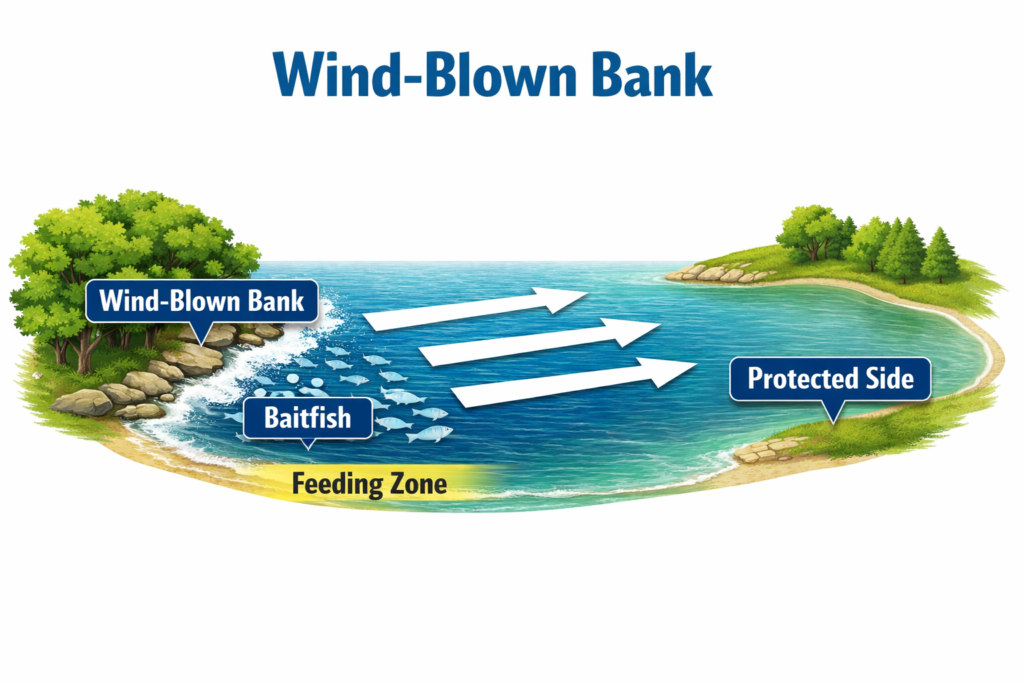
How Wind Helps You Pick a Better Bank
Wind can frustrate beginners because it makes casting harder. It can bow your line, move your bobber, ripple the surface, and make lightweight lures harder to control. But wind is also one of the most useful lake clues you have.
When wind pushes into a bank, it can move plankton, insects, and small baitfish toward that area. Bigger fish may follow because the food chain becomes more concentrated. The water also gets broken up, which can make fish feel safer in shallow water.
That does not mean the windiest bank is always best. Strong wind can make fishing uncomfortable or unsafe, especially around slick banks, steep riprap, or muddy edges. But when conditions are manageable, the wind-blown side deserves a serious look.
Simple bank rule: If the wind is gentle enough to fish safely, start by checking the bank the wind is blowing into. Then look for extra clues on that same bank, such as shade, weeds, points, rocks, or visible baitfish.
For more on this topic, visit How Wind Direction Predicts Where Fish Will Be on Any Lake.
How to Match the Lake to the Fish You Want to Catch
Different fish use the lake in different ways. Bass, bluegill, catfish, and stocked trout may share the same water, but they do not always hold in the same zones or respond to the same clues.
The goal is not to memorize every fish fact. The goal is to connect the fish you want to catch with the water that gives that fish what it needs.
| Target Fish | Beginner-Friendly Lake Clues | Simple Starting Approach |
|---|---|---|
| Bass | Shade, weeds, points, wood, rocks, drop-offs, and banks near bluegill activity. | Cast parallel to the bank, work edges slowly, and focus on ambush spots instead of open water. |
| Bluegill | Shallow banks, small insects, beds during the right season, docks, weeds, and sunny edges with cover nearby. | Use small hooks, light line, small bait, and short casts near visible activity. |
| Catfish | Windy corners, deeper pockets, dam areas, muddy edges, points, and areas where scent can travel. | Use bait that stays on the hook, cast to likely travel zones, and give the spot time before moving. |
| Stocked Trout | Recent stocking areas, cooler water, open bank access, shade, deeper water nearby, and gentle wind lanes. | Use simple trout bait, small spinners, or light presentations, and keep moving until you find active fish. |
Kentucky’s Fishing in Neighborhoods program is especially helpful for beginners because it focuses on accessible fishing opportunities close to home. If you fish FINs lakes, also check the official Kentucky Fish and Wildlife pages for current stocking information and regulations before planning a trip.
The 15-Minute Walk That Can Save Your Fishing Trip
One of the best beginner habits is walking before fishing. This feels strange at first because most people want to cast immediately. But a short walk can show you where the lake is alive.
Walk slowly. Watch the water. Look at the bank shape. Notice wind direction. Check for shade. Look for baitfish. Pay attention to where other anglers are fishing, but do not assume the crowd always picks the best spot. Sometimes people gather where access is easiest, not where fish are most active.
A simple 15-minute scouting lap can help you choose your first fishing zone with purpose. It can also stop you from spending your best energy on the least promising stretch of bank.
What to watch for
Wind hitting the bank, small fish near the surface, insects, birds, shade lines, weeds, rocks, points, drains, and bank changes.
What to avoid
Random casting, switching lures too fast, standing in one crowded spot too long, and ignoring obvious fish activity nearby.
If you usually have limited time, read How to Catch Fish When You Only Have 2 Hours. It pairs well with this lake-first approach because it shows you how to narrow your plan quickly.
What to Do When the Lake Looks Dead
Some days, the lake gives you very few clues. The surface looks flat. You see no baitfish. Nobody is catching. The bank feels quiet. That does not always mean the fish are gone. It usually means you need to slow down and fish the highest-percentage areas more carefully.
Start with structure. Fish the point, the shaded bank, the deepest accessible water, the dam face, the weed edge, the dock corner, or the place where the bottom seems to change. When fish are not visibly active, those physical features matter more.
Also, simplify your presentation. A slower retrieve, smaller bait, lighter line, or more natural approach can help when fish are cautious. The lake may not be loud that day, but it still has zones that are better than others.
Quiet lake tip: When you cannot see activity, fish places that give fish safety and easy movement: shade, depth change, cover, and corners where food may collect.
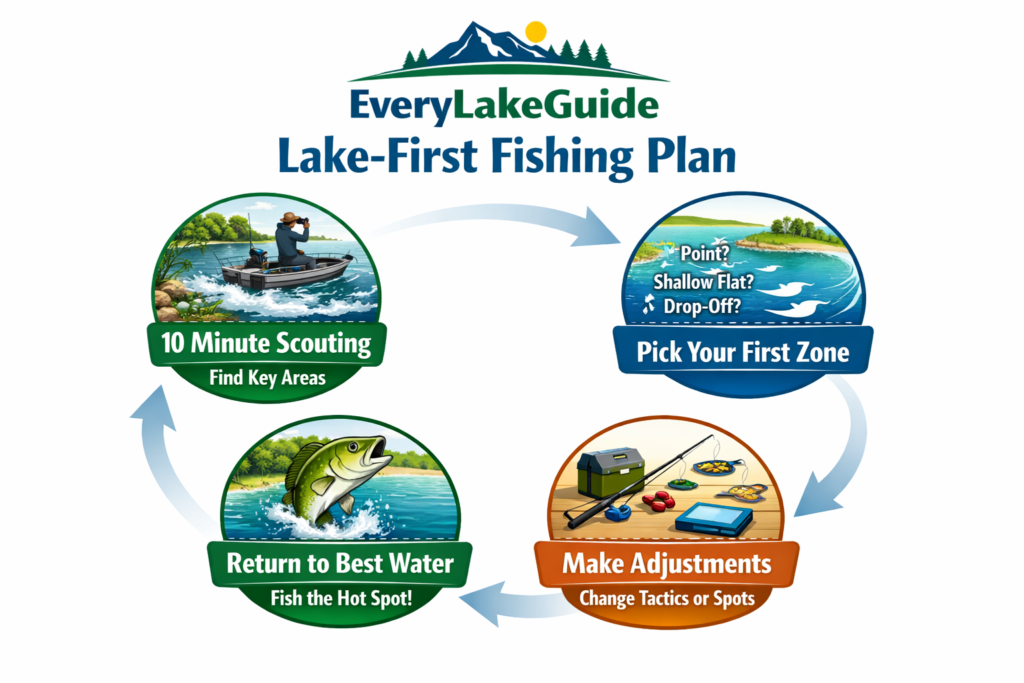
A Simple Lake-First Plan for Your Next Trip
You can use this plan on almost any small lake or park pond. It keeps the process simple enough for beginners but structured enough to improve your results.
| Time | What to Do | Why It Helps |
|---|---|---|
| First 10 minutes | Walk and observe before casting. | You identify wind, shade, cover, access, and visible fish activity. |
| Next 20 minutes | Fish the best-looking zone with a simple presentation. | You test the highest-percentage water first instead of guessing. |
| Next 20 minutes | Adjust depth, speed, or angle before changing everything. | You learn whether fish are present but picky. |
| Next 20 minutes | Move to a different type of bank. | You compare water types instead of repeating the same mistake. |
| Final 10 minutes | Return to the best clue you found. | You finish the trip with your strongest pattern, not a random cast. |
This approach turns every trip into useful practice. Even when you do not catch much, you learn what the lake looked like, where you saw activity, what the water felt promising, and what you would try differently next time.
Why EveryLakeGuide Starts With the Water
EveryLakeGuide is built around one practical idea: the lake should shape the fishing plan. That means the guide is not just a list of lures. It helps you understand where to begin, how to read wind, which banks deserve attention, where seasonal movement may matter, and how to build a simple plan before you start casting.
This is especially useful for bank anglers. When you do not have a boat, you cannot simply run to the other side of the lake in seconds. Your walking route, access points, casting angles, and time management matter. A lake-first plan helps you make smarter choices from the bank you can actually reach.
That does not guarantee fish. No honest fishing guide can do that. But it does give you a better way to think, move, observe, and adjust.
EveryLakeGuide promise: Start with the lake. Learn the clues. Make better casts. Give yourself a more realistic chance to catch fish without turning fishing into homework.
FAQs About Learning a Lake Before Fishing
What does “learn the lake” mean?
It means studying the lake’s wind, banks, depth changes, cover, shade, access points, and fish activity before choosing where and how to fish.
Should beginners focus on lures or location first?
Location should come first. A good lure in the wrong water often fails. A simple lure or bait in the right zone gives you a better chance.
How long should I scout before I start casting?
Even 10 to 15 minutes can help. Walk the bank, check the wind, look for fish activity, and choose your first spot based on clues instead of convenience.
Is the wind-blown bank always the best place to fish?
No. It is a strong clue, not a rule. If the wind is manageable and that bank also has cover, depth change, or baitfish activity, it deserves attention.
Do EveryLakeGuide lake guides replace official fishing regulations?
No. EveryLakeGuide helps with fishing strategy, lake reading, and trip planning. Always confirm current rules, licenses, seasons, limits, and posted signs through official sources such as Kentucky Fish and Wildlife.
Helpful Official Resources Before You Go
Before fishing any Kentucky lake, check current information from official sources. The Kentucky Department of Fish & Wildlife fishing page includes resources for fishing, stocking information, lake information, and related updates. If you fish neighborhood lakes, the official FINs program page is a useful starting point.
Then use EveryLakeGuide to turn that trip into a plan you can follow from the bank.
Ready to Stop Guessing at the Water?
The more you learn the lake, the less random fishing feels. You begin to see why one bank matters more than another, why wind can help, why shade can concentrate fish, and why the first cast should come after the first observation.
That is how beginners become better bank anglers. Not by buying every lure. Not by chasing every tip. By learning the lake, then fishing it with a plan.