How to Catch Fish When You Only Have 2 Hours
Short on time? Learn how to catch fish when you only have 2 hours by reading the lake first, choosing high-percentage bank spots, and avoiding wasted casts.
Quick Answer
The best way to catch fish when you only have 2 hours is to stop guessing and fish the highest-percentage water first. Start by reading the lake, checking the wind, choosing one or two reachable shoreline zones, and giving each spot a short, focused window before moving. A short trip rewards decisions, not random casting.
Two hours can feel like almost no time to fish.
You get to the lake after work. The sun is already sliding lower. Maybe the kids are with you. Maybe you only have a short window before dinner, errands, weather, or daylight shuts the trip down.
That kind of fishing trip does not give you much room for wandering around, changing lures every five minutes, or guessing where fish might be. You need a simple plan before the first cast hits the water.
That is exactly where a 2-hour fishing system helps.
At EveryLakeGuide, the goal is simple: Learn the lake. Follow the wind. Catch more fish. When your time is limited, that idea matters even more. You do not need to fish the whole lake. You need to find the best part of the lake for the conditions in front of you.
Why Most Short Fishing Trips Fall Apart
The biggest problem with a short fishing trip is not the clock. It is a wasted decision-making.
Many beginners arrive at the lake and immediately ask the same question: “What lure should I throw?” That sounds reasonable, but it skips the more important question.
Where are the fish most likely to be right now?
When you only have 2 hours, location matters more than a perfect bait choice. A decent lure in the right area usually beats a perfect lure in dead water. This is especially true for bank anglers, because you cannot simply drive the boat across the lake and check a dozen areas.
You have to make smarter choices from shore.
That starts with reading the lake before you start fishing it. For a deeper breakdown, see how to fish a lake. That guide explains why lake shape, access, wind, shade, depth changes, and shoreline layout all matter before you ever tie on a bait.
The 2-Hour Fishing Rule: Do Not Try to Fish Everything
A short trip needs limits.
Instead of trying to cover the entire lake, choose one main section and one backup section. That gives you enough flexibility to adjust without turning the trip into a shoreline hike.
Your goal is not to see every possible spot. Your goal is to give yourself the best chance in the time you actually have.
Simple 2-Hour Mindset
Pick the best-looking water first. Fish it with focus. Move only when the spot gives you a reason to move. Short trips are won by making fewer, better decisions.
Step 1: Spend the First 5 Minutes Reading the Lake
This is the step most anglers skip.
Before you cast, stand still and look. You are not wasting time. You are saving it.
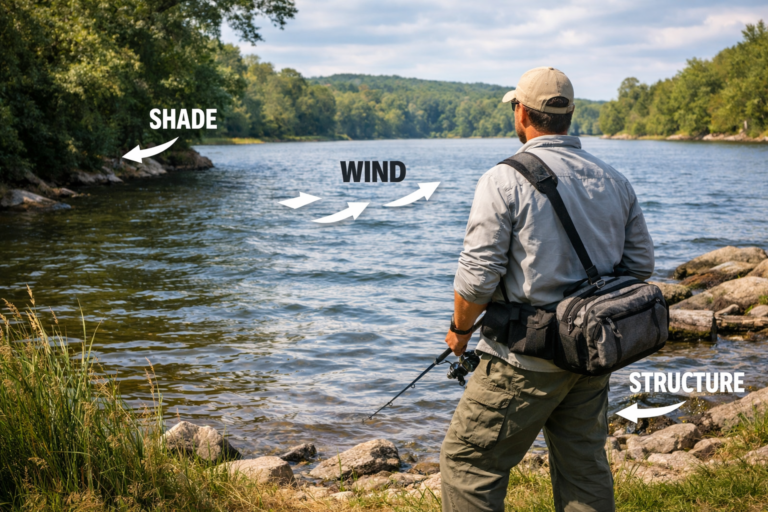
Look for wind direction first. Wind pushes small food, surface activity, oxygen, and warmer or cooler water movement, depending on the season. Fish may not always be directly in the roughest water, but wind often points you toward the more active side of the lake.
Then look for visible structure. This can include points, corners, shade lines, grass edges, riprap, dock edges, drains, small creek inflows, shallow flats, deeper banks, or any place where the shoreline changes shape.
Finally, look for life. Baitfish flicking near the surface, birds working the bank, bluegill pecking in the shallows, and small ripples near cover can all be clues.
When you only have 2 hours, the first cast should be based on what the lake is showing you.
Step 2: Start Where Wind Meets Structure
The best short-trip starting spot is often where wind and structure overlap.
A plain windy bank can be useful. A good point can be useful. But a wind-blown point, corner, pocket, or shoreline edge can be even better because it combines movement with a natural place for fish to feed.
For bank anglers, this matters because your reach is limited. You want to stand where a short cast gives you access to something valuable.
Good 2-hour starting zones include:
- A wind-blown bank with visible cover nearby
- A point where shallow water drops into slightly deeper water
- A shaded bank during bright conditions
- A corner where floating debris, ripples, or baitfish collect
- A shoreline transition, such as grass to rock or mud to gravel
- A stocked-lake access area shortly after fish have been added
This is also where local lake knowledge becomes powerful. If you fish smaller community lakes, ponds, reservoirs, or Kentucky bank-access lakes, your best spots often repeat under similar conditions. For more beginner-focused shoreline advice, read lake bank fishing tips for beginners in Kentucky.
Step 3: Choose a Simple Bait Plan Before You Start
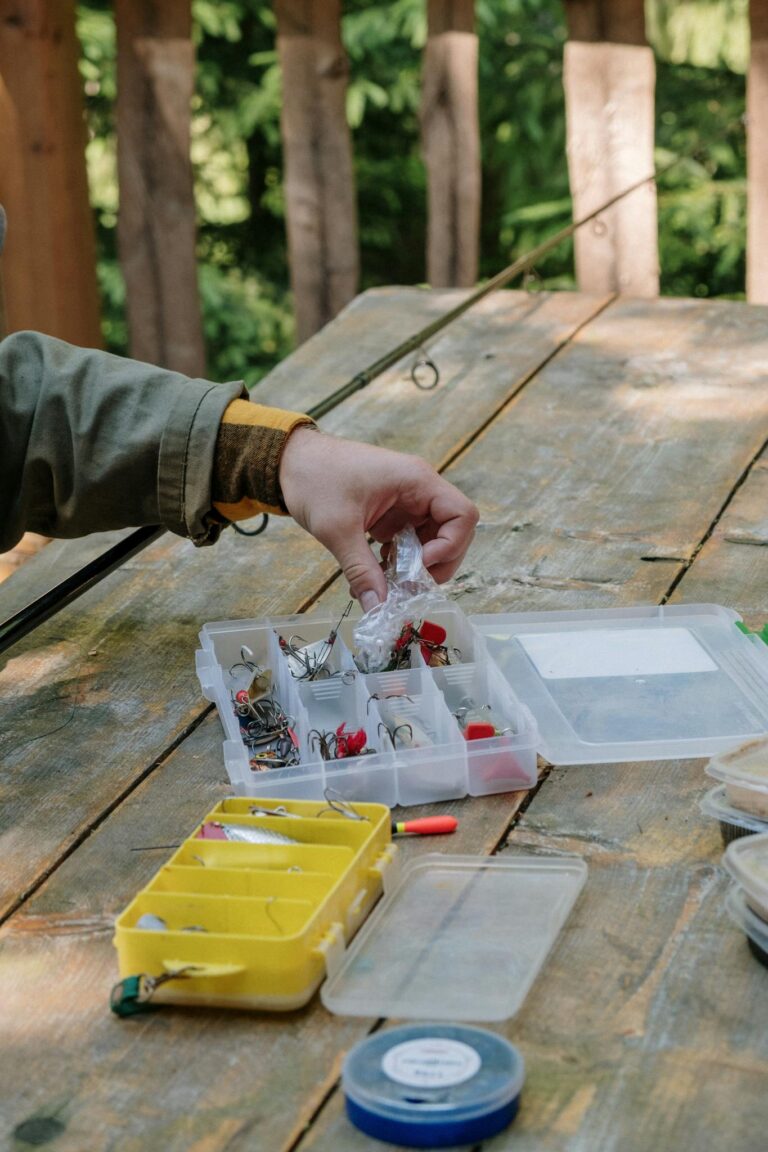
A short trip is not the time to empty the tackle box.
Pick one search bait and one slower follow-up bait. That is usually enough.
The search bait helps you cover water and find active fish. The slower bait helps you work a promising area more carefully once you get a bite, see movement, or reach a high-percentage spot.
For bass, that might mean a small spinnerbait, swim jig, crankbait, or soft plastic. For bluegill, it might mean a small jig, live bait under a float, or a simple worm setup. For catfish, it might mean a simple bottom rig placed near likely travel routes. For stocked trout, it might mean a small spoon, an inline spinner, trout dough bait, or natural bait where allowed.
The exact bait depends on the lake, season, rules, and species. The bigger point is this: do not let lure switching eat your trip.
EveryLakeGuide Tip
When time is short, your bait should match your plan. Do not pick a lure first and then hunt for a place to use it. Pick the best water first, then choose the bait that fits that water.
A Simple 2-Hour Fishing Plan
Here is a clean way to organize a short trip without overthinking it.
Minutes 0–5: Observe Before Casting
Check the wind. Look for shade. Watch the bank. Notice where other anglers are fishing, but do not automatically copy them. Sometimes the obvious parking-lot bank is convenient, not productive.
Minutes 5–30: Fish Your Best Starting Zone
Start with your highest-confidence area. Make controlled casts. Cover different angles. Work near visible structure first, then fan-cast the open water around it.
Do not leave after three casts unless the spot is clearly wrong. Also, do not stay forever just because it looks good. Give it a fair test.
Minutes 30–55: Adjust Based on Clues
If you get bites, slow down and fish the area more carefully. If you see baitfish, swirls, or follows, stay nearby and change your angle before changing your lure.
If the area feels dead, move to your backup zone. Do not wander randomly. Move with a reason.
Minutes 55–90: Fish the Best Water More Thoroughly
This is the heart of the trip.
By now, you should have a better sense of what the lake is doing. If fish are shallow, stay shallow. If the bank is too bright, look for shade. If the wind is pushing into one corner, give that corner real attention.
This is also the time to use your slower follow-up bait. Work the spot more carefully. Let the bait stay in the strike zone longer. Many short-trip catches happen after the first adjustment, not on the first cast.
Minutes 90–115: Return to Your Best Clue
Near the end of the trip, go back to the strongest clue you found.
That might be the only place you got a bite. It might be the bank with the most baitfish. It might be the shaded pocket that looked better as the sun moved. It might be the wind-blown edge that needed more time.
Short trips often improve when you stop chasing new water and return to the best evidence.
Minutes 115–120: Make Your Last Cast Count
End with intention. Make your final casts around the best structure, shade, wind edge, or bite window you found. Do not finish by randomly tossing into empty water while packing up.
What to Avoid When You Only Have 2 Hours
Short trips punish common beginner mistakes.
The biggest one is moving too much without learning anything. Another is refusing to move when the first spot shows no signs of life. Both mistakes come from the same problem: fishing without a plan.
Other common mistakes include casting from the easiest access point without looking around, using gear that is too heavy for small fish, making loud movements along shallow banks, changing lures too often, and ignoring wind direction.
For a fuller breakdown, read 7 beginner fishing mistakes that kill your chances of catching fish. That article pairs well with this 2-hour plan because it shows how small habits can quietly cost you bites.
The Best Mindset for a Short Fishing Trip
A 2-hour trip should not feel rushed. It should feel focused.
You are not trying to solve the whole lake. You are trying to make the smartest decisions possible with the time you have.
That means watching before casting. Choosing water before choosing bait. Fishing your best zones with purpose. Adjusting when the lake gives you information. And avoiding the temptation to turn a simple trip into a guessing game.
This is where beginners can improve quickly. You do not need years of experience to start noticing wind, shade, shoreline shape, access points, and fish behavior. You just need a simple system that helps you look at the lake differently.
A Simple Checklist Before Your Next 2-Hour Trip
- Pick your target species before leaving home.
- Check the weather and wind direction.
- Choose one main shoreline zone and one backup zone.
- Bring one search bait and one slower follow-up bait.
- Spend the first few minutes observing the lake.
- Start where wind, shade, structure, or access overlap.
- Move with a reason, not from frustration.
- Return to the best clue before the trip ends.
Want a Lake-Specific 2-Hour Plan?
EveryLakeGuide is built for anglers who do not have all day to guess. The guides help you understand where to stand, how wind changes the lake, what shoreline zones matter, and how to make a short trip more productive.
Learn the lake. Follow the wind. Catch more fish.
Final Thoughts: Two Hours Is Enough When You Fish With a Plan
You do not need a full day to have a good fishing trip.
Two hours is enough to relax, learn, explore, and catch fish if you treat your time like it matters. The key is to stop fishing randomly. Read the lake first. Follow the conditions. Choose high-percentage water. Keep your bait choices simple. Then let the lake tell you what to do next.
The more you practice this approach, the better short trips become. You start seeing patterns. You stop wasting casts. You begin to understand why one bank feels alive while another feels empty.
And that is the real goal of EveryLakeGuide.
Not just more fishing information. Better fishing decisions.
Frequently Asked Questions
Can you really catch fish in only 2 hours?
Yes, but a short trip needs a focused plan. Start with high-percentage water, watch the wind, fish visible structure, and avoid wasting time changing lures too often.
What is the first thing I should do when I get to the lake?
Spend a few minutes observing. Look for wind direction, shade, baitfish, shoreline changes, points, corners, and signs of activity before making your first cast.
Should I move around a lot during a short fishing trip?
Move when the lake gives you a reason. If a spot shows no signs of life after a fair test, shift to your backup zone. But avoid random wandering, because that can waste more time than it saves.
What bait should I use when I only have 2 hours?
Use a simple plan. Bring one bait that covers water and one slower bait for promising spots. The best choice depends on your target species, season, lake rules, and local conditions.
Is bank fishing harder when time is limited?
Bank fishing can be more limited because you cannot reach every part of the lake. But it can also be very productive when you choose shoreline zones carefully and focus on wind, shade, structure, and access.
Tight lines!