How to Remove a Fishing Hook Without Hurting the Fish
Most anglers learn how to cast before they learn how to release a fish cleanly. This simple guide shows you how to stay calm, use the right tools, remove the hook with less damage, and get the fish back in the water stronger.
Remove the hook the same way it went in, use the least force possible, keep the fish wet, and do not dig around just to “win” the hook back.
The part of fishing many beginners are never taught
Catching a fish is exciting. But the moment after the catch matters too.
A lot of new anglers know how to bait a hook, cast from shore, and reel in a fish. Then the fish comes in, flops on the bank, and everything feels rushed. The hook is stuck. The fish is twisting. Someone grabs the line. Someone else reaches for the hook. The fish gets dropped, squeezed, or torn up before it ever gets back to the water.
This page is here to slow that moment down.
You do not need to be an expert to release fish better. You only need a few tools, a calm process, and a little respect for the fish. The goal is not perfection. The goal is a clean release whenever possible.
Graphic: The clean release sequence
Fish release knowledge check
Before you read the full guide, test what you already know. Tap each question to reveal the answer.
1. Should you grab a dry fish with dry hands?
No. Wet your hands first when possible. A fish has a protective slime coat, and dry hands can remove more of it.
2. Is it better to yank a hook out quickly or back it out carefully?
Back it out carefully. Fast does not mean rough. The best removal is quick, calm, and controlled.
3. What tool should every bank angler carry for hook removal?
Needle-nose pliers, forceps, or a hook-removal tool. Fingers alone are often not enough, especially with small hooks, treble hooks, catfish, or toothy fish.
4. Are barbless hooks only for expert anglers?
No. Barbless hooks are one of the simplest beginner-friendly upgrades because they can make release faster and cleaner.
5. What should you do if removing the hook will cause more damage?
Do not dig around. In many deeply hooked situations, cutting the line close may be better than tearing tissue to recover the hook.
The fast answer: how to remove a fishing hook from a fish
What you should have ready before the first cast
The worst time to look for pliers is after the fish is already on the bank. Make hook removal part of your setup before you ever cast.
| Tool | Why it helps | Beginner tip |
|---|---|---|
| Needle-nose pliers | Gives you grip and reach for most lip-hooked fish. | Keep them clipped to your bag or belt, not buried in a tackle box. |
| Forceps or hemostats | Excellent for small hooks, panfish, trout, and tight spaces. | A locking pair gives better control when your hands are wet. |
| Line clippers | Useful when cutting the line is safer than digging out a deep hook. | Small nail clippers work in a pinch for light line. |
| Rubber landing net | Helps keep fish wet and controlled while reducing slime loss. | Rubber or coated mesh is usually gentler than rough knotted mesh. |
| Small towel for your hands | Helps you dry your hands after release, not before handling the fish. | Do not use a dry towel to wipe the fish unless you are keeping it. |
| Barbless hooks or crimped barbs | They can make release faster and reduce tearing. | Use pliers to flatten the barb on many standard hooks. |
Why I prefer barbless hooks
I have used barbless hooks for years because they make release easier. A barbed hook is designed to resist backing out. That can help keep a fish pinned, but it can also make removal rougher when you plan to release the fish.
A barbless hook, or a hook with the barb pinched down, usually slides out with less force. That matters when the fish is small, bleeding, deeply hooked, or twisting in your hand.
Barbed hook
The barb can catch on tissue during removal. If the angler pulls hard, the hook may tear a larger opening on the way out.
Barbless hook
The hook can back out with less resistance. That often means less handling time and a cleaner release.
Graphic: Barbed vs. barbless hook
How to crimp a barb
You do not always need to buy new hooks. On many hooks, you can use pliers or forceps to pinch the barb flat against the hook shank.
- Hold the hook firmly with pliers.
- Place the jaws of the pliers over the barb.
- Squeeze until the barb is flat or nearly flat.
- Run a fingernail lightly over the barb area. If it still catches hard, flatten it more.
How to remove a hook from the mouth
Most clean releases happen when the fish is hooked in the lip, corner of the mouth, or just inside the mouth. These are the easiest situations to handle.
Lip-hooked fish
This is the best-case situation. Grip the hook with pliers or forceps. Push slightly toward the entry angle to loosen pressure, then back the hook out the same way it went in.
Do not twist the fish around the hook. Move the hook, not the fish.
Corner-of-the-mouth hook
These hooks usually come out cleanly if you control the fish and use pliers. Keep the fish low and supported. Back the hook out slowly, especially if the hook is near the jaw hinge.
If the fish shakes, pause. Let it settle, then continue.
Graphic: Back the hook out the way it entered
What to do when the hook is deeper
Deep hooks are where many fish get hurt. This is also where anglers often make the wrong decision because they want the hook back.
If the hook is deep in the throat, gullet, gills, or stomach area, do not start digging with pliers. That can cause more damage than the original hookset.
Try removal only when you can see the hook clearly
If you can reach the bend of the hook without crushing or tearing tissue, you may be able to back it out carefully.
Cut the line when removal gets risky
If the hook is too deep or removal would cause heavy bleeding, cut the line as close to the mouth as possible and release the fish gently.
For bait fishing, deep hooking is more common because fish may swallow the bait before the angler feels the bite. To reduce this, watch your line, keep slack under control, and set the hook sooner when fishing with worms, corn, cut bait, minnows, or dough-style baits.
When a fish is bleeding
A little blood around the lip is different from heavy bleeding near the gills or throat. If the fish is bleeding heavily, the release decision becomes harder.
If the fish is legal to keep and you planned to harvest fish for the table, keeping a badly bleeding legal fish may be the most responsible choice. If the fish is not legal to keep, or you are practicing catch and release, handle it gently and release it as quickly as possible.
Never keep a fish that regulations require you to release. Always follow the current rules for that waterbody.
Special situations from the bank
Bluegill and small panfish
Small fish can swallow small hooks quickly. Use forceps, not fingers. If the hook is deep, cut the line instead of tearing the throat.
Bass
Support larger bass properly. Do not bend the jaw downward while holding the fish vertically. Remove the hook quickly and avoid laying the fish on dry ground.
Catfish
Watch the spines. Catfish can twist hard, and the hook may be near tough mouth tissue. Use pliers, control the head, and keep your fingers away from the hook point.
Stocked trout
Trout can be delicate, especially in warm weather. Wet your hands, keep the fish in the water when possible, and release quickly if you are not keeping it.
Treble hooks
Treble hooks increase the chance of multiple hook points in the fish, net, or your hand. Consider swapping to single hooks or pinching barbs down on lures you often release fish with.
Fish hooked outside the mouth
If a fish is hooked in the body, fin, or gill plate area, keep it wet and remove the hook only if it comes out cleanly. Do not rip through tissue.
The fish-friendly hook removal method
Use this process for most mouth-hooked fish.
Hold it over the water, over a wet net, or close to the ground. A dropped fish gets hurt fast.
Wet hands help protect the fish’s slime coat. Avoid squeezing the belly.
Grip the hook with pliers or forceps. Take one calm breath before pulling.
Reverse the hook path. Do not rip sideways or tear a larger hole.
Place it in the water. Let it regain balance and swim away under its own power.
Quick checklist: before you release the fish
| Question | Best action |
|---|---|
| Is the hook in the lip or corner of the mouth? | Use pliers or forceps and back the hook out gently. |
| Is the fish flopping on dry ground? | Move it to wet grass, a wet rubber net, or the water’s edge. |
| Are your hands dry? | Wet them before handling the fish. |
| Is the hook deep or near the gills? | Do not dig. Cut the line close if removal will cause more damage. |
| Are you using treble hooks? | Be extra careful. Consider crimping barbs or switching to single hooks where practical. |
| Is the fish legal and badly bleeding? | Follow regulations. If legal and you planned to keep fish, harvest may be more responsible than release. |
Common hook-removal mistakes
Pulling the line to remove the hook
The line does not give you enough control. It can tear the mouth or snap and leave the hook in a worse position.
Holding the fish in dry hands
Dry hands can remove more slime. Wet your hands first when you plan to release the fish.
Letting the fish bounce on the bank
Rocks, gravel, dry grass, and hot pavement can damage scales, eyes, fins, and slime coat.
Digging for a swallowed hook
If the hook is deep and removal is not clean, cutting the line may give the fish a better chance than forced removal.
Taking too long for photos
If you want a picture, have the camera ready first. Lift, click, and return the fish quickly.
Throwing the fish back
Place the fish back in the water. A gentle release is better than a toss.
Should you take a photo before release?
Photos are fine when they are quick. The problem is turning a release into a long photo shoot.
Before you lift the fish, have the camera ready. Keep the fish low, hold it securely, take one or two photos, and put it back. For larger fish, support the body with two hands instead of hanging the fish from the jaw alone.
How to release the fish once the hook is out
A good release does not end when the hook comes out. The fish still needs to get back into the water in good condition.
- Place the fish in the water gently. Do not throw it.
- Point the fish into calm water or light current. Let water move naturally over the gills.
- Support the fish until it balances. If it rolls, give it a moment.
- Let the fish swim away on its own. Do not push it hard like a toy boat.
- Watch for a clean departure. A strong kick is a good sign.
Most small, lip-hooked fish swim away quickly. Fish that fought hard, were handled longer, or came from warmer water may need a little more time.
Warm weather makes clean release even more important
Warm water can hold less dissolved oxygen than cold water, and fish may already be stressed after a fight. That means summer bank fishing calls for faster handling, shorter photo time, and better release habits.
When the water is warm, try to land the fish efficiently. Have your pliers ready. Keep the fish wet. Release it quickly if you are not keeping it.
Safety note: when the hook is in a person
This page is mainly about removing hooks from fish. But hooks end up in hands, hats, shirts, ears, and sometimes worse places.
If a hook is deeply embedded in a person, near the eye, in the face, near a joint, or causing serious bleeding, do not yank it out. Get medical help. For an embedded object in the eye, do not try to remove it.
For minor skin punctures, clean the wound properly and watch for infection. When in doubt, get professional care.
Beginner-friendly gear setup for better releases
You do not need a giant tackle bag. For most bank anglers, a small “release kit” is enough.
Minimal release kit
- Needle-nose pliers
- Forceps or hemostats
- Line clippers
- A few barbless hooks or crimped hooks
- Small first-aid kit
Even better setup
- Rubber landing net
- Hook-removal tool
- Split-ring pliers for changing treble hooks
- Spare single hooks for lures
- Small wet measuring board if you measure fish often
Should beginners use barbless hooks?
Yes, especially if the goal is catch and release.
Barbless hooks make the release process less intimidating. They are also helpful for kids, new anglers, stocked trout, panfish, and small bass because the hook usually comes out with less force.
The tradeoff is that you need to keep steady pressure on the fish. Do not give slack. Keep the rod bent and reel smoothly. That habit will make you better at fighting fish anyway.
How this fits the EveryLakeGuide method
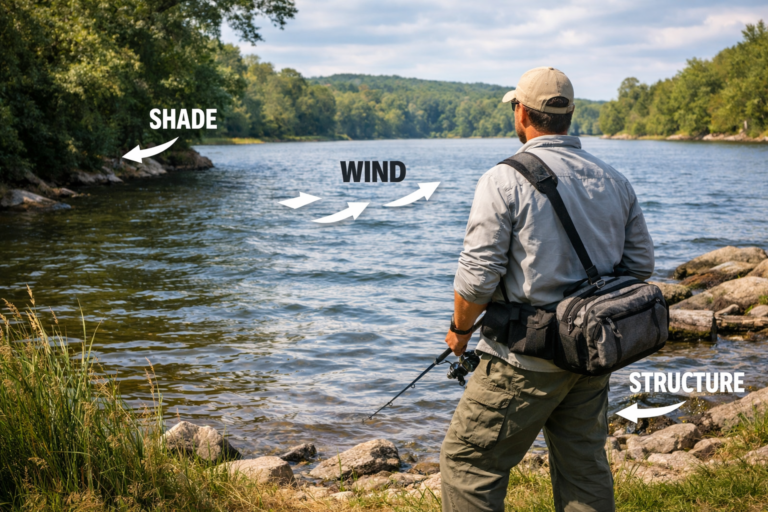
EveryLakeGuide is built around a simple idea: start with the lake, not the lure. Learn the bank. Watch the wind. Read the water. Pick the best spot before you start changing baits.
But better fishing is not only about catching more fish. It is also about handling the fish you catch with more skill.
That is why this page belongs beside the beginner lake-reading guides. It gives anglers confidence during the moment that often creates the most stress: the release.
Keep learning the lake-first system:
Start with the water, not the lure · How to find fish in a lake · Lake bank fishing tips for beginners in Kentucky
Fish-Friendly Release FAQs
What is the easiest way to remove a hook from a fish?
The easiest way is to keep the fish wet and controlled, grip the hook with pliers or forceps, and back the hook out the same way it entered. Do not yank the line or rip sideways.
Are barbless hooks better for catch and release?
For many anglers, yes. Barbless hooks or crimped barbs can make hook removal faster and easier. That can reduce handling time and help the fish get back into the water sooner.
Do barbless hooks lose more fish?
They can lose fish if you give slack, but steady pressure solves most of that problem. Keep the rod bent, reel smoothly, and avoid letting the line go loose.
What should I do if a fish swallows the hook?
If the hook is too deep to remove cleanly, do not dig around. Cut the line close to the mouth and release the fish gently if regulations require or support release.
Should I use pliers or my fingers?
Use pliers, forceps, or a hook-removal tool whenever possible. Tools give more control, reduce handling time, and help protect your fingers from hooks and spines.
Can I hold a fish with a towel?
A dry towel can remove slime from a fish you plan to release. Wet hands or a wet rubber net are better. Use a towel for your own hands after the fish is released.
What if the fish is hooked in the gills?
Gill-hooked fish are delicate. Do not dig or pull hard. If the hook cannot be removed cleanly, cut the line close and handle the fish as little as possible.
Is it okay to keep a badly bleeding fish?
If the fish is legal to keep and you planned to harvest fish, keeping a badly bleeding legal fish may be responsible. But never keep fish that regulations require you to release.
Learn the lake. Catch more fish. Release them better.
Better fishing is not only about the cast. It is about reading the water, making smarter decisions, and handling the fish with confidence once it reaches the bank.
Start with the lake, not the lure. Then release the fish like it matters.
Sources and helpful references
This page is written for beginner anglers and bank fishermen. It is not a substitute for current fishing regulations, local rules, or medical advice. Always check current Kentucky fishing regulations and the rules for the water you are fishing.
- NOAA Fisheries: Catch and Release Fishing Best Practices
- NOAA National Marine Sanctuaries: Catch and Release
- Iowa DNR: Fishing Tips and Safety
- Take Me Fishing: Catch and Release Hooks
- National Park Service: Catch and Release Safely
- Kentucky Department of Fish & Wildlife Resources
- Mayo Clinic: Foreign Object in the Skin First Aid
- Mayo Clinic: Foreign Object in the Eye First Aid