
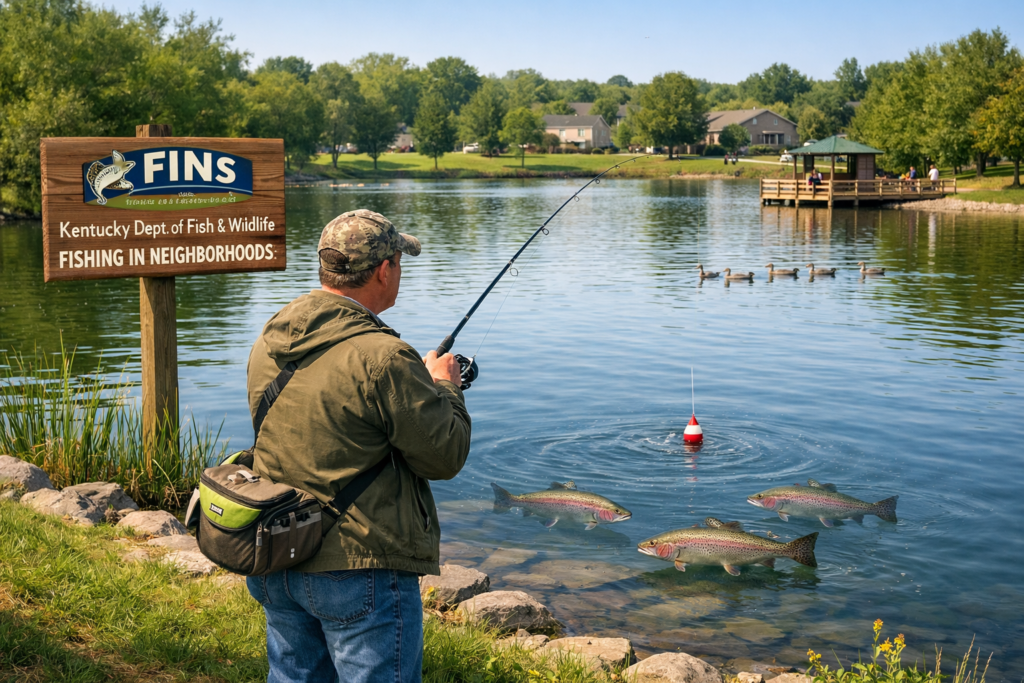
Stop Fishing the Whole Lake. Start With the Water That Has a Reason.
A cove can offer shelter. A flat can become a feeding shelf. A drop-off can give fish quick access to deeper, more comfortable water. The challenge is not merely recognizing those features—it is deciding which one deserves your limited fishing time.
Start With the Lake, Not the Lure.
Coves, flats, and drop-offs help bank anglers understand where fish may feed, pause, travel, or retreat. The best starting water usually combines one of those features with another useful clue—such as cover, wind, shade, baitfish, a bottom change, or nearby depth. You do not need to map the entire lake. You need to compare the water you can safely reach and begin where several clues overlap.
Many beginners arrive at a Kentucky lake, choose the first open patch of bank, and begin changing lures when nothing happens. The problem may not be the lure. The problem may be that the water never gave the fish a strong reason to be there.
This article will help you recognize three important shoreline features and ask better questions before the first cast. The companion ebook, Kentucky Shore Fishing: How to Fish Coves, Flats, and Drop-Offs, goes further by turning those clues into a repeatable field system you can carry to unfamiliar water.
First, Separate Lake Structure From Cover
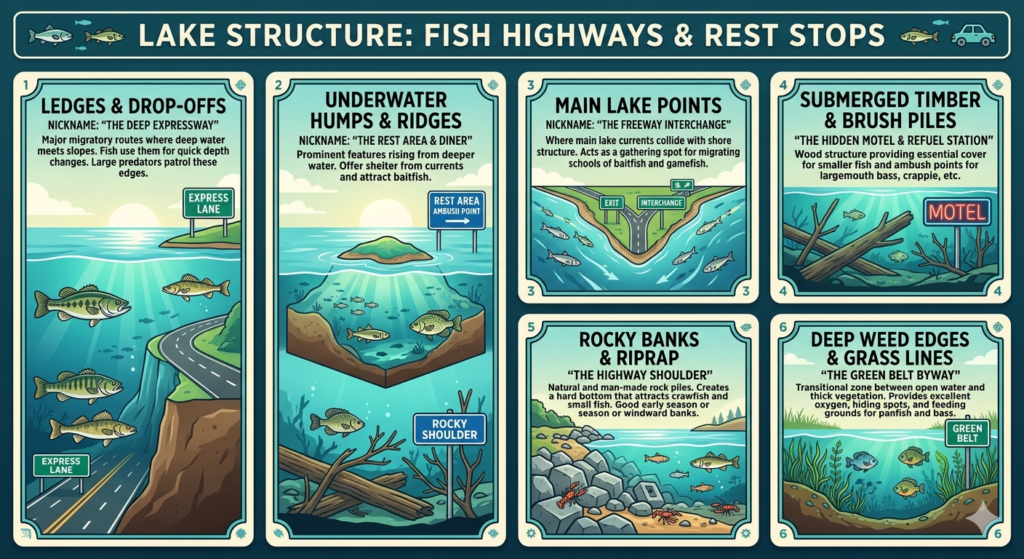
Structure is the shape of the lake and its bottom. Coves, flats, slopes, channels, ledges, and drop-offs are structure. Cover is what sits on or above that shape, including weeds, brush, laydowns, docks, rocks, flooded grass, and shade.
Why the difference matters: Structure helps organize movement. Cover gives fish a place to stop, hide, rest, or feed. A useful piece of structure becomes more interesting when cover, food, comfort, and nearby depth meet in the same reachable area.
A long, featureless bank may still produce a fish. A cove mouth with a small weed edge, wind moving across it, and deeper water just outside offers a stronger explanation. Better bank fishing begins with choosing the stronger explanation before opening the tackle box.
What Coves, Flats, and Drop-Offs Tell a Bank Angler
Coves Create Choices
A cove is not one fishing spot. Its mouth, sides, and back can offer different combinations of wind, warmth, shade, runoff, cover, food, and access to the main lake.
Instead of walking directly to the quietest water, compare the sections. The back may be useful when bait, warmth, insects, or flooded cover collect there. The mouth may be stronger when fish want a short route between shallow water and depth.
Best beginner clue: a productive-looking shallow section sits close to a deeper escape route.
Flats Become Feeding Shelves
A flat is a broad area where depth changes gradually. It can look empty until you find the small difference that makes one part more useful than the rest.
Look for isolated weeds, scattered rock, a dark bottom patch, a stump, a ditch, a drainage path, a shade line, or the outer edge where the flat begins to fall away. That “spot within the spot” often matters more than the size of the flat.
Best beginner clue: something interrupts the flat and gives fish a reason to pause.
Drop-Offs Offer Fast Depth Changes
A drop-off is a transition from shallow water toward greater depth. It may be a sharp ledge, a steady slope, the outer edge of weeds, or the first noticeable break beyond a feeding area.
Bank anglers can test for depth changes by comparing shoreline slope, lure fall time, bottom contact, vegetation edges, and the feel of the retrieve. You are not trying to draw a perfect underwater map. You are looking for a useful transition.
Best beginner clue: fish can move between feeding water and deeper comfort without traveling far.
Ask Three Questions Before You Choose the First Cast
1. Can a fish find food here?
Look for baitfish, insects, wind-driven surface activity, runoff, vegetation, small prey, birds watching the water, or a transition where food could collect.
2. Can a fish feel comfortable or protected here?
Cover, shade, water clarity, temperature, current, wave action, fishing pressure, and oxygen can all influence whether fish remain in an area long enough for you to reach them.
3. Can a fish change depth without traveling far?
A shallow feeding area becomes more dependable when a slope, channel, cove mouth, weed edge, or first drop gives fish a nearby route toward different conditions.
The strongest water usually answers more than one question well. A flat with food but no cover or nearby depth may be temporary. A cove mouth with shade, brush, baitfish, and a slope gives you a much stronger reason to slow down.
Use the L.A.K.E. Method to Keep the Trip From Becoming Random
Recognizing structure is only the beginning. The L.A.K.E. Method helps you turn what you see into a practical decision without pretending that one feature works every day.
Look Before You Cast
Observe wind, clarity, shade, cover, access, baitfish, insects, and visible activity.
Analyze the Lake
Identify reachable coves, flats, drop-offs, inflows, vegetation, and other useful edges.
Key In on Productive Water
Narrow the bank to the areas where food, comfort, safety, depth, and movement overlap.
Execute a Simple Plan
Test the strongest explanation, make one understandable adjustment, and move when the evidence weakens.
This article introduces the method. The ebook provides the complete shoreline-reading sequence, feature comparisons, practice examples, and field tools for using it consistently.
How the Same Feature Changes With Conditions
| Feature | When It May Improve | What to Compare | Common Mistake |
|---|---|---|---|
| Cove | Useful warmth, mild runoff, shade, bait, protected cover, or wind entering at an angle | Mouth, both sides, back, nearest depth, and water-color changes | Assuming the back is always the best section |
| Flat | Low light, cloud cover, useful wind, feeding activity, flooded cover, or nearby depth | Outer edge, isolated cover, bottom changes, drains, and bait movement | Fishing the entire flat as though every yard is equal |
| Drop-Off | Bright light, cooling weather, pressure, changing water levels, or fish moving between depths | Top, slope, bottom edge, nearby cover, and the closest feeding water | Casting over it without testing multiple angles and depths |
These are starting clues, not guarantees. Season, recent weather, water clarity, available food, oxygen, fishing pressure, and the exact lake can change which feature matters most. The lake gets the final vote.
How a Two-Hour Shore Trip Can Use These Clues
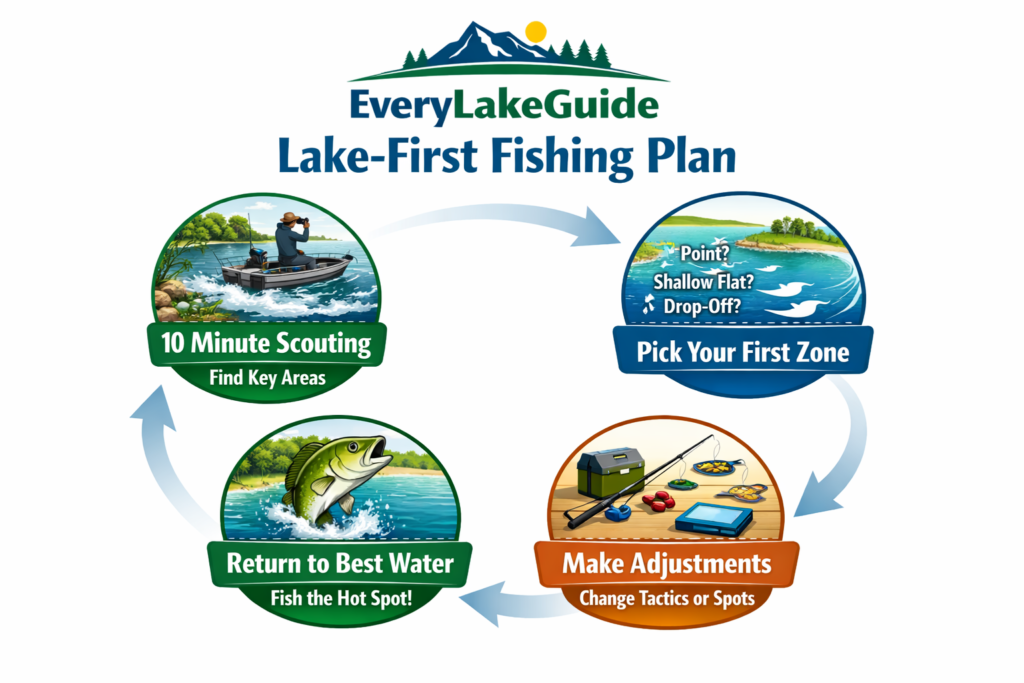
A short trip does not need to feel rushed. Give each part of the outing a job, then let the evidence—not habit—decide where you finish.
Observe
Compare safe access, wind, shade, cover, visible activity, and shoreline shape before casting.
Fish the Best Explanation
Choose the cove section, flat edge, or drop-off that combines the most useful clues.
Try Different Water
Move to a second feature or a bank with a different depth, wind, cover, or shade relationship.
Follow the Evidence
Return to the area that produced the clearest clue, whether it was a bite, follow, baitfish, cover, or useful bottom information.
The ebook expands this preview into a complete trip sequence with feature-ranking guidance, adjustment rules, field notes, and reusable planning tools.
Turn Coves, Flats, and Drop-Offs Into a Repeatable Kentucky Shore-Fishing System
The free article helps you recognize the water. The ebook helps you decide what to do when several promising features compete for your time—or when the obvious spot produces no response.
Compare the Parts of a Cove
Learn how to evaluate the mouth, sides, back, cover, inflow, wind, and nearby depth instead of treating the entire cove as one spot.
Find the Spot Within a Flat
Use edges, isolated differences, cover, bottom changes, and nearby depth to shrink broad shallow water into manageable targets.
Test Depth Without a Boat
Use shoreline clues, lure fall time, bottom feel, vegetation, and casting angles to investigate the first useful drop from shore.
Rank Conflicting Clues
Build a stronger first decision when one bank has wind, another has shade, and a third offers cover beside deeper water.
Follow a Field Sequence
Move from observation to testing, adjustment, comparison, and trip review without changing everything after a few quiet casts.
Use Printable Tools
Carry the process to the water with simple planning, observation, and trip-review resources designed for bank anglers.
Can You Read the Shoreline More Clearly Now?
Choose an answer, then open each question to check your reasoning.
1. Is the back of a cove always the best place to begin?
No. Compare the mouth, sides, and back. Wind, shade, runoff, cover, bait, temperature, and nearby depth should shape the decision.
2. What usually makes one part of a flat more promising than the rest?
A useful difference. Look for isolated weeds, rock, a ditch, a dark patch, shade, baitfish, a drain, or the edge leading toward deeper water.
3. Do bank anglers need sonar to investigate a drop-off?
No. Shoreline slope, lure fall time, bottom feel, vegetation edges, rock, and repeated casting angles can reveal a useful depth change.
4. What should you do when two features both look promising?
Compare the full explanation. Favor the reachable water where food, comfort, cover, depth, movement, and current conditions overlap most strongly—then test and learn from the response.
Safe Access and Fish-Friendly Release Come First
A promising cove, flat, or drop-off is never worth unsafe or unauthorized access. Stay on recognized public property, respect posted rules, watch for steep or unstable banks, and leave before lightning becomes a close threat. During hot weather, carry water, use sun protection, and shorten the trip when heat becomes the main risk.
- Wet your hands before touching a fish you plan to release.
- Keep the fish close to the water and away from dry grass, gravel, or pavement.
- Use pliers or forceps for efficient hook removal.
- Consider barbless hooks or crimping the barb.
- Support larger fish horizontally rather than hanging them by the jaw.
- Limit air exposure, especially during warm weather.
- Pack out line, hooks, bait containers, and other trash.
Frequently Asked Questions About Kentucky Shore Structure
Which feature is easiest for a beginner to recognize?
A cove is often easiest because the shoreline pocket is visible. The important next step is dividing it into the mouth, sides, and back instead of assuming every part fishes the same way.
Are shallow flats worth fishing from shore?
Yes, when fish have a reason to move shallow. Low light, wind, cloud cover, vegetation, food activity, flooded cover, and nearby deeper water can make a flat more useful.
How can I tell whether deep water is close to the bank?
Steep shoreline slopes, dam faces, bluff banks, riprap, sharp shoreline turns, vegetation edges, and longer lure fall times can suggest nearby depth. Use several clues together rather than trusting one sign.
How long should I stay at one feature?
Stay while the area gives you evidence or a strong explanation. Test more than one angle and make one understandable adjustment. When the water produces no response or useful information, compare the next planned feature.
What is the biggest mistake beginners make around lake structure?
The biggest mistake is treating the name of a feature as the answer. A cove has several sections. A flat has small differences and edges. A drop-off has a top, slope, and lower edge. Compare the parts instead of fishing the label.
What does the ebook add beyond this article?
The ebook connects feature recognition to a more complete decision process, including how to compare competing clues, investigate structure from shore, make controlled adjustments, organize a short trip, and record what the lake teaches you.
Continue Building Your Kentucky Fishing Foundation
Learn to See More From the Same Stretch of Bank
You do not need a boat, sonar, or a tackle box full of guesses to begin reading Kentucky water more clearly. Learn what a cove, flat, and drop-off can offer, compare the clues around each one, and build a repeatable plan for the shoreline in front of you.
Final Takeaway: Fish the Reason, Not Just the Feature
A cove is not automatically productive because it is protected. A flat is not automatically productive because it is shallow. A drop-off is not automatically productive because it is deep. Each feature becomes more useful when it connects food, comfort, cover, depth, and movement in a way fish can use under the current conditions.
Look before you cast. Analyze what you can safely reach. Key in on the strongest overlap. Execute a simple plan and let the lake correct your assumptions. You do not need to solve every acre. You need to make the next decision better than random.
Start With the Lake, Not the Lure.
Official Kentucky Planning and Regulation Resources
Access, licenses, stocking schedules, size limits, daily limits, and waterbody-specific restrictions can change. Confirm current information before fishing or keeping fish.