
Every Lake Guide · Bank-Fishing Strategy
A Safer, Smarter Plan for Busy Shorelines
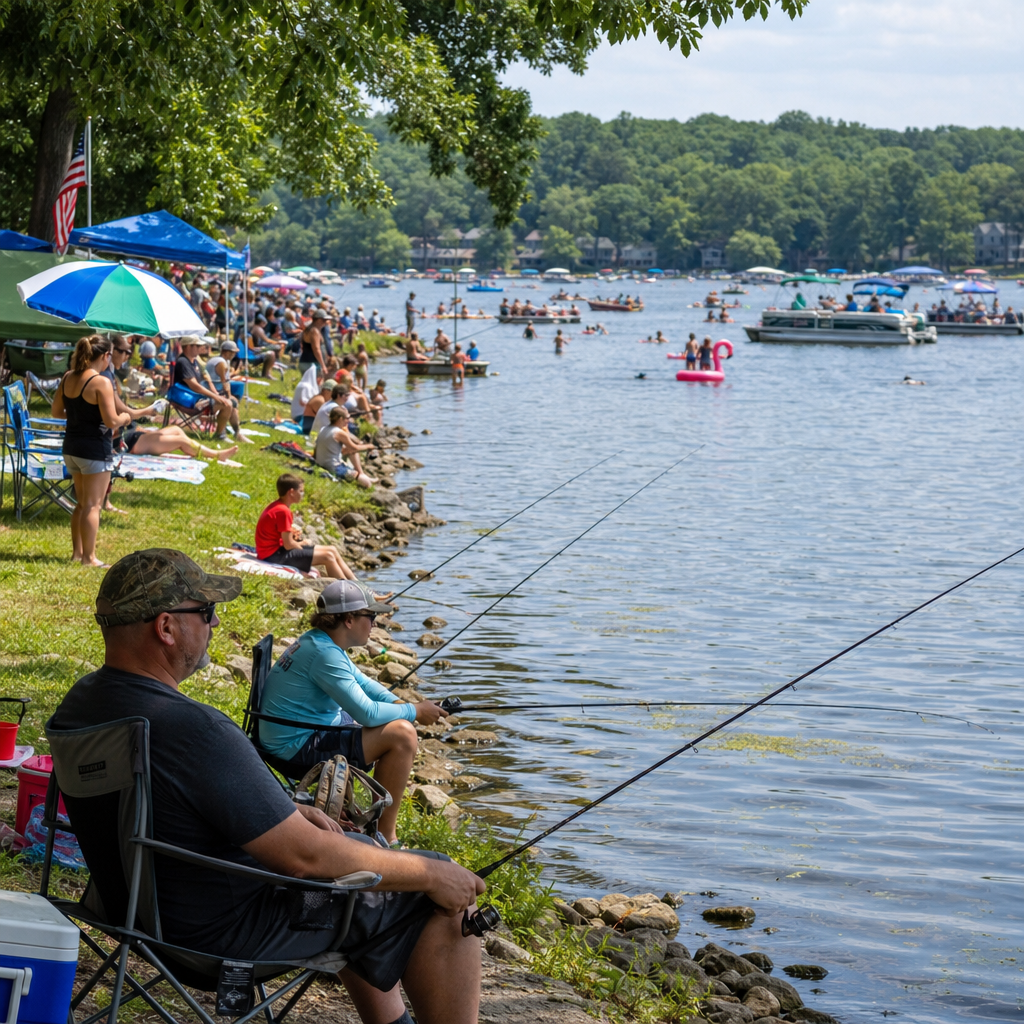
A busy parking lot does not automatically mean a bad fishing trip. Skip the urge to squeeze into the first opening. Read the pressure, protect your casting space, and look for quieter shoreline water where fish still have a reason to feed, travel, or hold.
Start With the Lake, Not the Lure.
Quick answer
Where should you fish when the bank is crowded?
Look for the first safe, legal shoreline edge beyond the heaviest pressure that still gives fish a reason to be there. Good starting options include shade beside cover, a wind-touched point, a cove mouth, a weed edge, a steeper bank, or nearby depth with enough room to cast responsibly.
You do not need an empty lake. You need fishable water, a clear explanation, and enough space to work it without interfering with other anglers or lake users.
Read pressure as another lake condition
Crowds change access, noise, and usable shoreline
On a busy day, the easiest bank may also be the most disturbed. Foot traffic, repeated casting, dogs, swimmers, boat wake, music, and shoreline activity can make convenient water harder to fish safely—and sometimes less attractive to fish.
Your job is to compare the water you can reach and choose an area where pressure is lower or where cover, food, comfort, and depth still outweigh the disturbance.
Choose the best fishable water—not the most famous water.
Quick comparison
Should you stay, slide down the bank, or change lakes?
Use the conditions—not frustration—to decide.
| Situation | Best response | Reason | Avoid |
|---|---|---|---|
| The popular bank is packed | Slide to the first open edge with shade, cover, wind, or depth. | You gain safer casting room without abandoning useful water. | Squeezing between anglers or crossing their lines. |
| Boat wake is pounding the shoreline | Try a protected pocket or the seam between disturbed and calmer water. | Fish may use the calmer edge while food and debris shift nearby. | Slick rocks, unstable clay, or standing where wake can knock you off balance. |
| Families are using a shallow flat | Move to a separate legal fishing area. | Courtesy and hook safety come before the spot. | Casting near swimmers, children, pets, or picnic areas. |
| One small opening remains | Fish the near bank and parallel edges with compact casts. | Controlled angles can reach shade, weeds, and cover without risky backswing. | Wide sidearm casts where people may walk behind you. |
| The lake is too chaotic | Switch to a smaller lake, pond, FINs water, or another verified access point. | A closer, quieter lake may give your limited time more value. | Forcing the trip simply because the destination is popular. |
Need help choosing water that fits the time you actually have? Use the Guide for Busy Anglers.
A calmer way to decide
Use the L.A.K.E. Method on a busy shoreline
This field version helps you make the immediate decision while reserving the ebook’s complete ranking system, exercises, lake scorecard, and printable tools for the full guide.
Look Before You Cast
Check safe casting room, crowd movement, posted rules, wind, shade, water color, visible cover, baitfish, and your route back to the vehicle.
Analyze the Lake
Separate the shoreline into heavily disturbed water, safe overlooked water, and water where structure or activity still gives fish a reason to stay.
Key In on Productive Water
Choose the strongest overlap: shade with cover, wind with a point, vegetation near depth, or a cove mouth away from the busiest traffic.
Execute a Simple Plan
Fish one small area cleanly, adjust angle or depth, compare one backup area, and move when safety, access, or courtesy becomes the main problem.
For the complete decision system, explore How to Read Any Lake: A Beginner’s Fishing System. For reachable shoreline features, read Kentucky Shore Fishing: How to Fish Coves, Flats, and Drop-Offs.
A practical short-trip plan
A two-hour crowded-lake plan
Use this when the shoreline is busier than expected and you still want the trip to have a purpose.
Pause before unloading everything
Check parking, posted rules, weather, heat, footing, crowd flow, and casting room. Identify the obvious bank and two alternatives.
Compare three reachable areas
Rank them by safety, pressure, shade, cover, wind, nearby depth, and visible activity. Do not let the closest opening win automatically.
Test the best overlooked edge
Fish the closest water first. Work parallel to shade, weeds, rock, or wood, then test a second angle before changing presentations.
Change the explanation
Move to a different kind of water—point instead of pocket, shade instead of wind, vegetation instead of rock, or depth instead of flat.
Return to the strongest evidence
Focus where you saw a strike, follow, baitfish, useful shade, cleaner water, or a better combination of cover and depth.
Pack out clean and record one lesson
Pick up line, hooks, bait containers, and trash. Note how pressure, wake, shade, access, or timing changed your decision.
For lower-light planning, see Best Time to Bank Fish Kentucky Lakes in Summer. For hot-weather shoreline choices, continue with How to Find Cooler Water From the Bank.
Safety and courtesy
Protect people before protecting the fishing spot
- Keep clear of boat ramps, swimming areas, playgrounds, picnic crowds, and posted closures.
- Give other anglers enough room to cast and land fish normally.
- Use compact casts when someone could walk behind you.
- Confirm legal access instead of following an informal path across private property.
- If you hear thunder, leave for a substantial building or enclosed hard-topped vehicle.
- Remain sheltered for at least 30 minutes after the last thunder.
Fish-friendly release
Keep handling calm and brief
- Wet your hands before touching the fish.
- Keep pliers or forceps within reach.
- Keep the fish off dry grass, gravel, and pavement.
- Support the fish rather than hanging a larger fish by the jaw.
- Limit air exposure, especially during summer heat.
- Let the fish regain balance and swim away under its own power.
Before fishing, verify current licensing, site rules, hours, species limits, and access conditions. Kentucky Fish & Wildlife maintains a searchable access guide covering more than 900 places to fish, launch, or put in a canoe.
Interactive knowledge check
Can you save the crowded-lake trip?
Select one answer for each question, then check your score.
Continue learning
Related articles and ebooks
How to Read Any Lake
Learn how edges, wind, cover, depth, food, comfort, and movement work together before your first cast.
Read the Free GuideHow to Read Any Lake Ebook
Go deeper with the complete system, field routines, practice examples, lake scorecard, and printable tools.
Explore the EbookKentucky Shore Fishing
Study coves, flats, visible cover, shoreline transitions, and the first nearby drop-off.
Explore the EbookKentucky Fishing Guide
Build a broader foundation around species, seasonal conditions, public access, and beginner-friendly planning.
Start With KentuckyFrequently asked questions
Crowded-lake bank-fishing FAQs
Should I still fish when the lake is crowded?
Yes, when you can fish legally, safely, and respectfully. Skip the most congested water and compare quieter edges with shade, cover, wind, vegetation, or nearby depth.
Is the farthest walk always the best choice?
No. Walking farther helps only when it gives you safer room, lower pressure, or better water. A close overlooked edge can beat a long walk to featureless shoreline.
How much room should I give another bank angler?
Give enough room that neither person has to change normal casting angles, retrieves, or fish handling. When uncertain, ask politely or choose another opening.
Should I fish from a busy boat ramp?
Do not block launching, loading, vehicles, or trailers. Fish nearby only where it is permitted and where you can remain completely clear of ramp users.
What lure works best on a crowded bank?
Choose the water first. Then use a presentation you can cast accurately and safely. Controlled placement, angle, depth, and speed usually matter more than choosing the loudest lure.
When should I leave and try another lake?
Leave when safe casting room, legal access, weather, or crowd conditions prevent a reasonable plan. Changing water is a smart adjustment, not a failed trip.
Final takeaway
Do not let the parking lot choose your fishing spot
Read the pressure the same way you read wind, shade, cover, and depth. Find room to fish responsibly, test one useful edge, compare a second explanation, and leave knowing more about the lake than when you arrived.
Start With the Lake, Not the Lure.
Build the Complete Lake-Reading System