
Every Lake Guide · Kentucky FINs Bank Fishing
Stop Feeding the Tiny Bluegill First
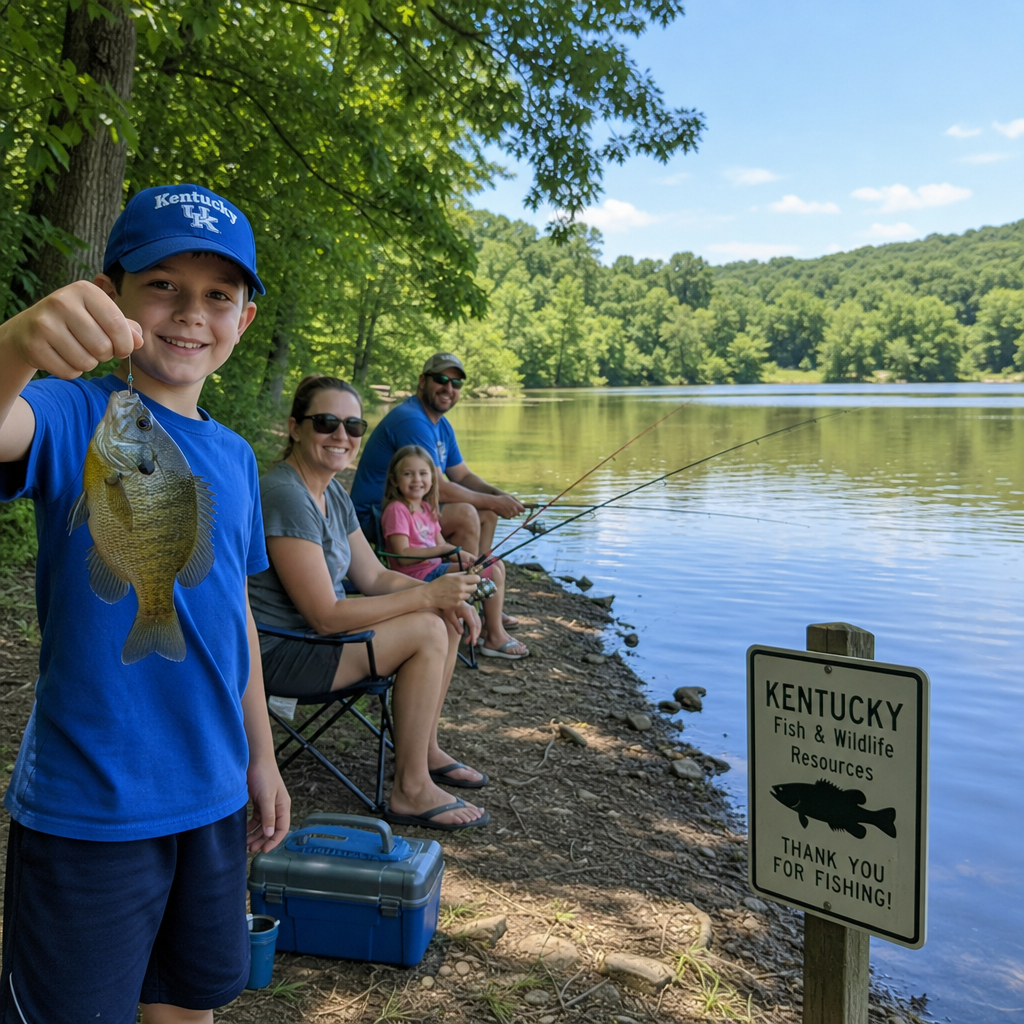
Bluegill are one of the best beginner fish in Kentucky, but the smallest ones often live closest to the obvious bank. If you want better bluegill from shore, do not just toss bait beside the first dock, pier, or shallow opening. Read shade, cover, weed edges, depth, and pressure before you cast.
Start With the Lake, Not the Lure.
Quick answer
How do you catch bigger bluegill from the bank?
Move one step beyond the easiest shallow water. Bigger bluegill are more likely near shade, weed edges, wood, rock, deeper pockets, pier corners, and the first drop beyond the tiny fish. Use a small hook, light line, a small float or simple bottom presentation, and bait you can control.
The beginner mistake is feeding the first school of little bluegill until the trip is over. Catch a few, learn where the small fish are, then slide toward the next edge where better fish have cover, food, and a quick route to deeper water.
Best timely FINs angle
Best FINs lake pick for bluegill: Lake Pollywog
For a bluegill-focused FINs trip in the Every Lake Guide region, Lake Pollywog in Grant County is the strongest starting point from the current Kentucky Fish & Wildlife forecast. It stands out because the forecast notes an exceptional number of bluegill in the 6- to 8-inch range, plus redear sunfish up to 11 inches.
Leary Lake, also in Grant County, is a close second for a bluegill-style trip, with bluegill in the 6- to 9-inch range and redear up to 10 inches. For a Campbell County trip, Alexandria Community Park Lake remains a very practical beginner-friendly choice because it is accessible, bank-focused, and already fits the Every Lake Guide learning style.
Forecasts help choose a destination, but they do not guarantee a catch. Weather, pressure, water clarity, access, timing, and your ability to read the bank still matter.
Quick comparison
Where should a beginner cast first?
| Bank clue | Why it helps | Best first cast | Beginner mistake |
|---|---|---|---|
| Shade beside cover | Shade and cover can make better fish feel safer while feeding. | Cast just outside the shade line, then work inward. | Dropping bait straight into branches and breaking off. |
| Weed edge or grass line | Vegetation can hold insects, small fish, and cover. | Fish the clean outside edge or pocket. | Casting into the thickest weeds first. |
| Rock, riprap, or hard bank | Hard edges can hold food and give bluegill a defined route. | Cast at an angle along the transition. | Standing on unstable rocks or using too much weight. |
| Pier corner or dock edge | Corners create shade, vertical edges, and ambush points. | Start beside the edge, not under every board. | Blocking walkways or crossing other anglers’ lines. |
| First drop beyond small fish | Better bluegill may hold slightly deeper than tiny shoreline fish. | Set the float deeper or cast just beyond the shallow school. | Assuming all bluegill are in six inches of water. |
For more on shoreline features, read Kentucky Shore Fishing: How to Fish Coves, Flats, and Drop-Offs. For grass-line decisions, use How to Fish Grass Lines and Weed Edges From the Bank.
Read beyond the first nibble
Six clues that can help you find better bluegill
During summer heat, pair this article with Where Do Fish Go When the Lake Gets Hot? and Dawn, Dusk, or Dark?.
Use the Every Lake Guide framework
Apply the L.A.K.E. Method to bluegill water
Look Before You Cast
Check shade, visible bluegill, tiny fish activity, weeds, rock, pier corners, depth, bank pressure, and safe casting space.
Analyze the Lake
Separate easy shallow water from better edges: shade plus cover, weeds plus depth, rock plus access, or a pier corner with a clean lane.
Key In on Productive Water
Choose the best overlap of food, cover, depth, and safe casting room. Do not let the first school of tiny fish choose for you.
Execute a Simple Plan
Catch a few, adjust depth, slide to the next edge, and stop when the bank becomes unsafe, crowded, or unproductive.
Build the complete system with How to Read Any Lake: A Beginner’s Fishing System. For a shoreline-feature deep dive, explore Kentucky Shore Fishing: How to Fish Coves, Flats, and Drop-Offs.
A practical family-friendly plan
A two-hour bigger-bluegill plan from the bank
Walk before baiting hooks
Find two or three safe areas with shade, weeds, rock, pier corners, or nearby depth. Check signs, footing, other anglers, and casting lanes.
Let beginners catch a few
Use a small hook, small bait, and a simple float near visible activity. Early bites build confidence and show where the smallest fish are holding.
Adjust for better fish
Set the bait slightly deeper, cast just beyond the tiny fish, or work the outside edge of shade, weeds, rock, or a pier corner.
Move to the second edge
Compare a different clue. If you started with shade, try weeds. If you started on a pier, try the first drop or rocky bank.
Return to the best evidence
Finish where the best fish came from, not necessarily where the most bites happened. Keep the presentation simple and controlled.
Count, clean up, and learn
Check the legal limit, release fish carefully, pack out line and bait containers, and note which edge produced the better bluegill.
Rules and access
Know the limit before the first keeper
- At Kentucky FINs lakes, the current daily limit for bluegill and other sunfish is 15 fish.
- Statewide sunfish rules may differ from FINs rules, so check the exact waterbody before fishing.
- Follow posted park hours, pier rules, bait restrictions, and access signs.
- Keep hooks and rods out of walkways, picnic areas, and crowded pier corners.
- Leave immediately for a substantial building or enclosed hard-topped vehicle if you hear thunder.
Fish-friendly handling
Keep bluegill handling simple
- Wet your hands before handling fish.
- Use small pliers or hemostats for tiny hooks.
- Keep fish off dry pavement, dusty ground, and gravel.
- Release unwanted fish quickly and gently.
- Consider crimping barbs when teaching beginners.
- Do not keep more fish than you can legally and responsibly use.
Interactive knowledge check
Can you move from tiny bluegill to better bluegill?
Continue learning
Related Every Lake Guide resources
FINs Lakes in Kentucky
Learn how neighborhood fishing lakes fit beginner bank trips, family outings, and seasonal stocking decisions.
Explore FINs LakesHow to Read Any Lake
Learn how edges, wind, cover, depth, food, comfort, safety, and movement work together before your first cast.
Read the Free GuideHow to Read Any Lake Ebook
Use the complete L.A.K.E. Method, practice examples, scorecard, and printable tools on unfamiliar water.
Explore the EbookKentucky Shore Fishing Ebook
Study coves, flats, first drop-offs, cover, and shoreline routes as part of a larger bank-fishing decision.
Explore the EbookFrequently asked questions
Bluegill bank-fishing FAQs
Which Kentucky FINs lake is best for bluegill?
Lake Pollywog is the strongest current bluegill pick from the forecast information used for this article. Leary Lake is close behind, and Alexandria Community Park Lake remains a practical Campbell County beginner option.
How do I avoid catching only tiny bluegill?
Use the tiny fish as a clue. Then move slightly deeper, fish the outside edge of shade or weeds, or cast beside cover where better fish can hold without sitting in the most obvious shallow water.
What is a simple beginner bait for bluegill?
Small pieces of nightcrawler are hard to beat for beginners. The key is using a small enough piece that the fish can actually take the hook instead of stealing the bait.
Do I need special tackle for bigger bluegill?
No. A light rod, small hook, light line, small float, and controlled bait placement are enough for most beginner bank trips.
Are bluegill good for kids and new anglers?
Yes. Bluegill can provide quick action, clear feedback, and a safe learning pace when adults manage hooks, casting lanes, fish handling, and legal limits.
Should I keep every legal bluegill?
No. Follow the legal limit, but only keep fish you can responsibly use. Release unwanted fish promptly and gently.
Final takeaway
The first bite is information—not the whole plan
Small bluegill can make a trip fun, but better bluegill usually reward the angler who reads one layer deeper. Start with safe access, then compare shade, weeds, cover, depth, and fishing pressure before settling in.
Start With the Lake, Not the Lure.
Build the Complete Lake-Reading System