
Most families start with a quick morning on the water and then wonder how to stretch it into a weekend. The answer is pacing. A Kentucky weekend fishing trip for families works when the fishing happens in short blocks, the breaks are planned before anyone is tired, and every day has a backup if the weather or the fish say no.
This plan uses three fishing blocks (Friday evening, Saturday morning, Saturday evening) and an optional short session on Sunday. Everything happens around one lake region, so you spend the weekend fishing instead of driving.
Pick one lake region and one home base before you plan anything else
Choose the region first, then the place you will sleep, then the banks. Doing it in that order keeps each drive short, and short drives are what make evening and early-morning sessions possible with kids.
Look for a home base within about 20 to 30 minutes of two or three bank access points. A campground, cabin, or motel near the water all work. What matters is that the car ride from bed to bank is short enough that a sleepy child does not fall apart on the way.
If you have not settled on a region, the post on Kentucky bank fishing spots for families walks through the options region by region. Once you have a region, shortlist three banks: one with easy parking and a gentle slope for Friday, one for your main Saturday block, and one with different water for Saturday evening. A fourth, close to your lodging, is a good fallback.
Check the current Kentucky fishing license and regulation rules for everyone in your group before you leave, and look up any rules specific to the lake or the park you choose. Handle this at home, not on the bank.
Friday evening: a short, easy session to shake off the car ride
Friday is not the main event. Its job is to let everyone out of the car, stretch, and enjoy being near water. Plan for 45 minutes to an hour, and keep it close to where you are staying.
Pick the easiest bank on your list. Flat ground, a short walk from the car, and room for kids to move around matter more than where the fish are. Set up simple rigs, such as a bobber and a hook with bait, so the first cast happens quickly.

Do not aim for a catch. Let the kids cast, watch the bobber, skip rocks, and look at what is along the shoreline. If a fish bites, good. If not, you have learned how the bank feels, where the shade falls, and whether the spot works for a longer session.
Head back to eat while everyone is still in a good mood. Ending Friday early leaves Saturday’s patience intact.
Saturday morning: your main fishing block and how long kids really last
Saturday morning is your longest session, and “long” still means short. Plan on 60 to 90 minutes of actual fishing for younger children. Kids vary, and an older child who is catching fish may go much longer, but it is easier to extend a good session than to rescue a bad one.
Plan the block in small pieces:
- First 10 minutes: rod setup, bait, and a quick safety talk about where to stand and how to cast with space around you.
- Next 30 to 40 minutes: the steadiest fishing of the day, while attention is high.
- After that: watch for signs of wandering. Kids who start throwing rocks, digging, or asking how much longer are telling you the block is ending.
When you see those signs, you can change the activity without ending the trip. Let them reel in and re-cast a few times, hand them the net to carry, or have them pick the next spot to try. A small job often buys another 15 minutes.
If the bank is the main constraint, the post on where to cast first is useful here. Kids tend to want to cast as far as they can, and the first casts near the shoreline often cost nothing and give a quicker first bite.
Stop while someone is still having fun. A block that ends on a good note makes Saturday evening easier to sell.
Saturday midday: the break that saves the afternoon
Midday is where most weekend plans fall apart. Families keep fishing through lunch, the sun gets high, the kids get tired and hot, and the whole afternoon is lost to crankiness. Schedule a real break instead.
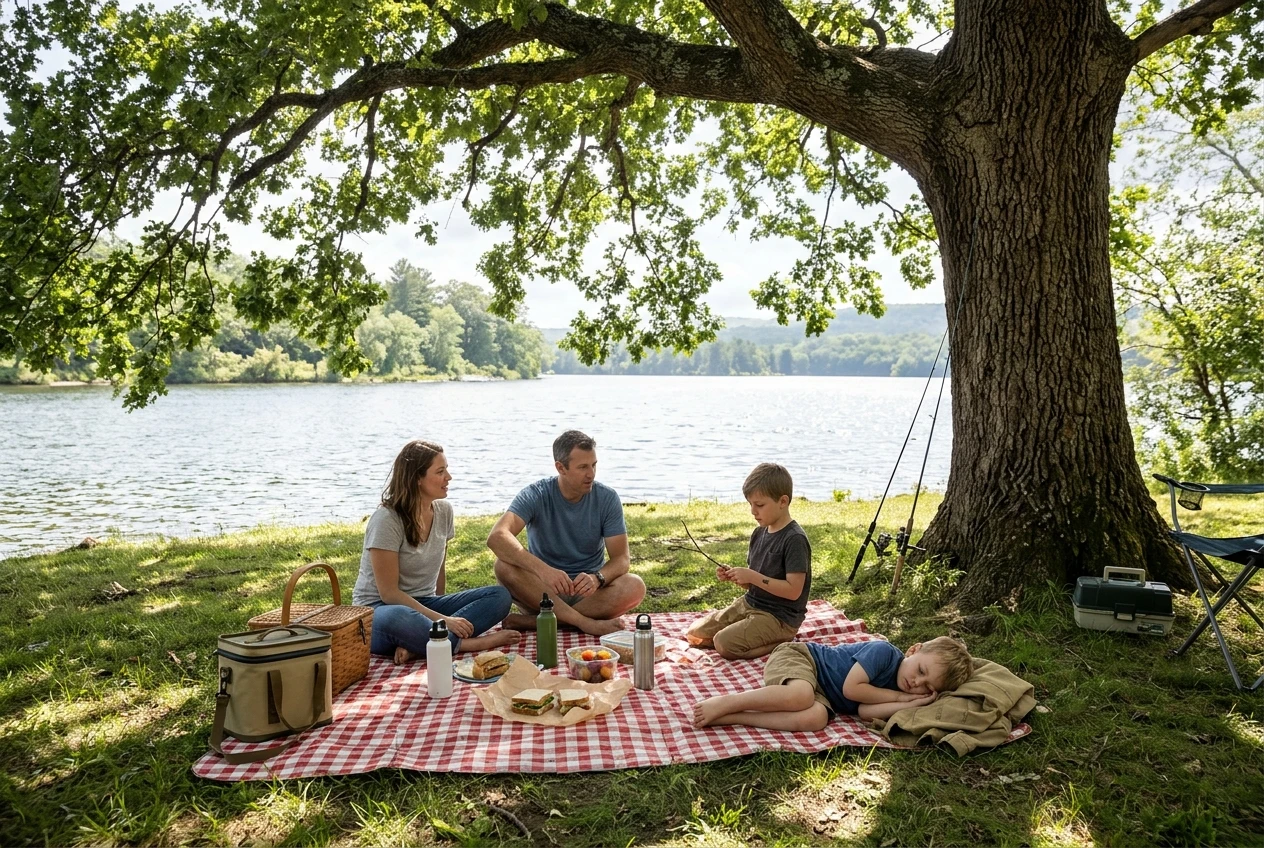
Go back to your lodging or find a shaded picnic spot. Eat a proper lunch, drink water, and let everyone rest for an hour or two. Nap time for younger kids falls naturally here. For older kids, a card game or a walk is enough.
Use part of the break to sort out the morning’s gear. Rinse hands, check line for tangles, refill the bait container, and put the rods in the shade. It also helps to ask each child what they liked best so far. Their answers help you choose where to go that evening.
Do not call this break wasted time. It resets everyone so the evening session can start fresh.
Saturday evening: a second bank with different water to try
The late-afternoon and evening hours are often a good time to fish, and the light is easier on the eyes. Plan to arrive about an hour and a half before sunset, so there is time to set up and fish without a rush to get back before dark.
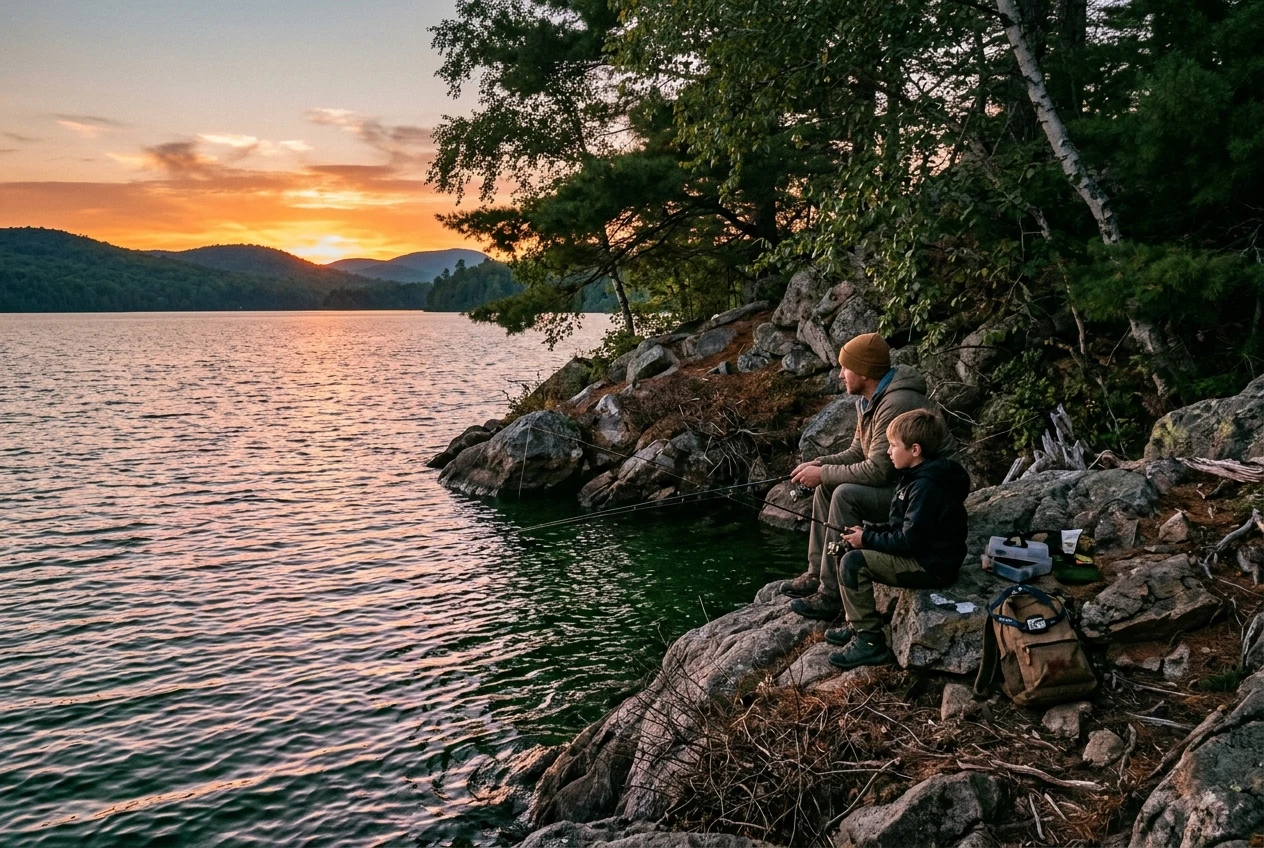
Choose a bank with different water from the morning. If you fished an open, shallow shoreline, try a spot with deeper water close in, a point, or a shaded stretch with overhanging trees. The change gives the kids a new view and gives you a way to learn which kind of water works better on this lake. Ask yourself whether the fish were closer or farther out, and what depth worked for your bobber. The post on how deep to set your bobber covers testing depth before you move spots.
Keep this block to about an hour. Bring flashlights or headlamps for the walk back, and keep everyone close to the car as the light drops. If your family wants to try fishing after dark, do it another weekend, once you have done it in daylight first.
Sunday: a lighter session and a clean pack-up
By Sunday, everyone is a little tired, and that is normal. Make this session optional and short, 30 to 45 minutes at the most convenient bank, ideally the one nearest your lodging or on the route home.
Do the pack-up first. Check out, load the car, and put the rods and tackle where you can reach them. Then fish. This way, if the kids are done after 20 minutes, you are ready to go and the trip ends calmly instead of in a scramble.
Let the kids lead on Sunday. Maybe the youngest wants to go back to the first bank because that is where the first bite happened, and that is a fine choice. If someone wants to skip the fishing and play near the water, that works too.
Before you leave, take a few minutes to:
- Collect all line, hooks, and bait containers, and leave the bank cleaner than you found it.
- Rinse and dry what you can, and bag wet items separately from dry ones.
- Write down what worked: which bank, what time of day, what bait, and what the kids liked. This note makes your next weekend easier to plan.
When you get home, the post on how to store fishing gear between trips helps you keep everything ready for the next one.
Backup plans for rain, slow bites, and a crowded bank
Each of these can happen on any weekend, and having a plan for each keeps the trip from falling apart.
Rain. Light rain is workable with rain jackets and a covered spot to wait. Heavy rain, lightning, or high wind means you stop. Keep a short list of indoor options near your lodging: a visitor center, a library, a museum, a swimming pool, or a board game. Move the fishing block to the next window of dry weather, and do not insist on keeping the original schedule. Review the post on bank fishing safety gear before you go, so weather is not the only thing you have prepared for.
Slow bites. Fish do not bite on a schedule, and some blocks produce nothing. Change one thing at a time: the bobber depth, the bait, or the spot along the bank. Give each change 10 to 15 minutes. If nothing works, switch the activity. Look for tadpoles, minnows, turtles, or birds, or have the kids skip rocks. A slow block can still be a good outing if the kids have something else to do.
A crowded bank. If your chosen spot is full, move to your fallback bank instead of squeezing in. Crowded banks mean tangled lines and less space for kids to cast safely. The post on what to do when the closest bank is crowded covers how to decide where to go next.
Write the backup for each day on the same page as your schedule. Friday’s backup can be the bank closest to your lodging, Saturday’s can be an indoor activity or a second bank, and Sunday’s can be skipping the fishing entirely and heading home early.
What to pack once so you are not repacking all weekend
Pack one bag for fishing, one for food and water, and one for comfort, and keep them by the door or in the car all weekend. Every session starts by grabbing the same three bags, so there is nothing to repack between blocks.
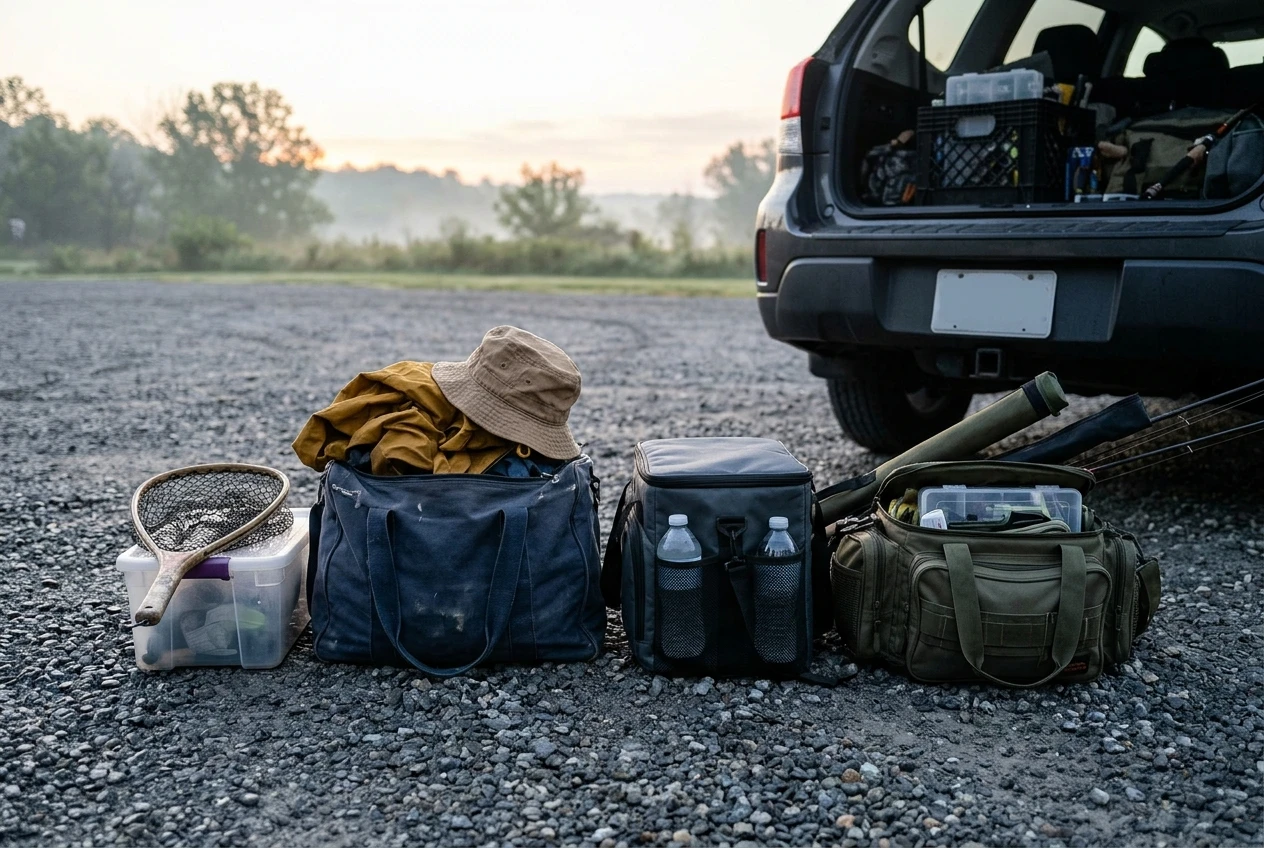
The fishing bag holds rods, tackle, bait, a small net, pliers, and a first-aid kit. The comfort bag holds sunscreen, bug spray, hats, rain jackets, and a spare set of dry clothes for each child. The food bag holds water, snacks, and lunch items that do not need much preparation.
For a full list, the Kentucky bank fishing gear checklist is meant to be ticked off in the driveway, and the packing list for a two-hour family trip covers the shorter outing in more detail. For a weekend, add extra clothing, more snacks than you think you need, and a bin or tote for wet items on the drive home.
Ready to pin down the lake for your weekend? Browse the Kentucky bank fishing ebooks and lake guides to find the one that matches your family’s trip.